Part 6: A Mother’s Choice
Vega called the facility while state police raced toward it.
A night nurse answered.
Room Twelve was empty.
June Holloway had vanished.
Her bed was still warm.
The rear door alarm had been disabled.
For two hours, we believed Martin had taken her.
Then Vega received a call from a bus station clerk in Millhaven. An elderly woman had arrived wearing slippers and carrying a locked metal box.
June had escaped through the laundry exit after seeing Martin in the corridor.
She had taken a taxi to the bus station and asked the clerk to call Rose Mercer.
By noon, June sat beside Mom’s hospital bed.
She was thin, sharp-eyed, and furious.
“Thomas told me Martin would eventually come,” she said. “I thought he meant years ago. I did not think the coward would wait until I needed a walker.”
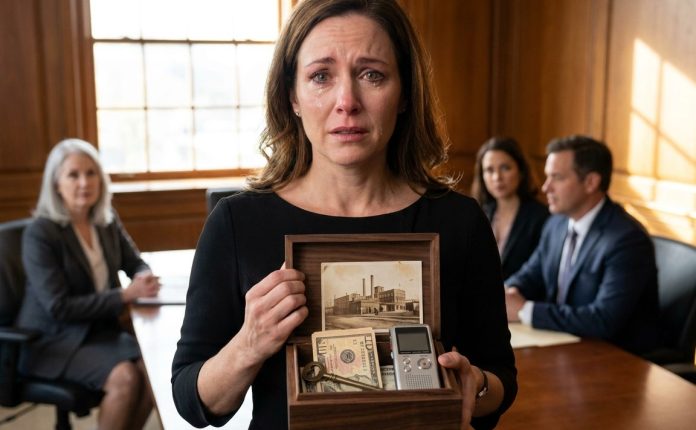
The brass key opened her metal box.
Inside were original bank records, notarized affidavits, property-transfer files, audio cassettes, and a sealed letter addressed to me.
I recognized Dad’s handwriting.
Anna,
Martin knows how to make good people doubt what they have seen. Do not argue with his version of you. Follow the records. Numbers do not feel shame, and paper does not become afraid.
If I fail to finish this, protect your mother. She is stronger than either of us, but strength should never become an excuse for leaving someone alone.
Love,
Dad
I read the final line three times.
He had written it before our last argument.
Before telling me I always ran away.
The letter did not erase the argument, but it gave me something grief had denied me for eight years: proof that his final anger had not been the whole truth of his love.
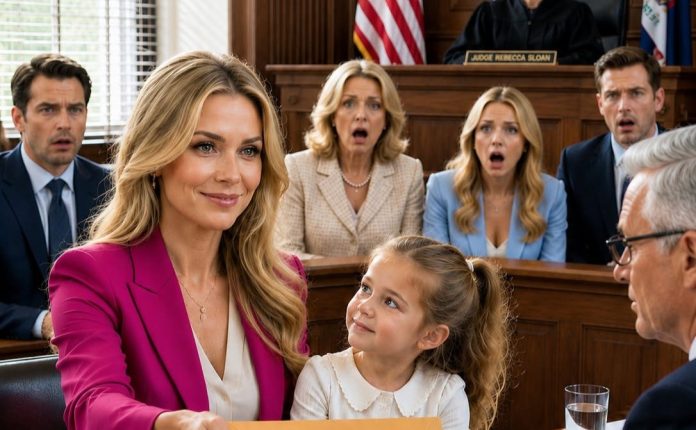
The emergency hearing took place that afternoon in a secured courtroom.
Mom insisted on attending in person.
She wore a pale blue dress borrowed from the hospital social worker. The brown coat remained folded over my arm.
Martin appeared through a video connection from an attorney’s office. He had contacted authorities through counsel, claiming he feared an unlawful arrest.
His voice remained calm.
His watch was gone.
Celia sat at the defense table in county custody.
Daniel sat behind us with his attorney.
The judge reviewed the medical evidence first.
Dr. Patel testified that Mom’s confusion had been aggravated by dangerous medication levels.
Dr. Whitaker appeared remotely. Under questioning, he admitted increasing prescriptions based primarily on reports submitted by Celia. He had not personally examined Mom before the final two increases.
Celia’s attorney argued that mistakes had been made during a difficult caregiving situation.
Then Vega presented photographs from Wade’s phone.
The courtroom became silent.
Mom closed her eyes when the image of her bound to the chair appeared.
I wanted to cover the screen.
She stopped me.
“No,” she whispered. “Let them look.”
June testified next.
For fifteen years, she had managed accounts for Martin’s law practice. She described transfers from elderly clients, false legal fees, manipulated guardianship petitions, and coordinated property purchases.
“Mr. Mercer discovered the irregularities,” she said. “He asked me to make copies.”
Martin’s attorney suggested Dad had been confused before his fatal accident.
June smiled without humor.
“Thomas Mercer knew exactly what he was reading. That was why your client was afraid of him.”
The audio recordings followed.
On one cassette, Dad confronted Martin.
“You are stealing houses from people who cannot defend themselves.”
Martin replied, “I am reorganizing distressed assets.”
“They are human beings.”
“They are dying human beings whose families have abandoned them.”
The words filled the courtroom.
I felt them strike me personally.
Martin had built his scheme on a cruel truth: families became busy, moved away, believed reassuring phone calls, and left vulnerable people in the hands of whoever remained.
People like me had made his crimes easier.
But guilt did not make me his accomplice.
Silence did.
And I was no longer silent.
Mom testified for forty minutes.
She described the medication, threats, forged documents, nighttime interrogations, and forced signature.
Martin’s attorney questioned her memory.
“Mrs. Mercer, did you not previously claim your late husband was alive?”
“I said his voice was still in the house.”
“So you believed he was physically present?”
“No. I believed his recordings were hidden there. As you have now heard, I was correct.”
A murmur moved through the courtroom.
“Did you strike your daughter-in-law with a fireplace poker?”
“No.”
“Did you threaten her?”
“I told her I would report her.”
“Were physical restraints used because you attempted to leave during dangerous weather?”
“They were used because I would not tell them where the ledger was.”
The attorney displayed a medical note describing aggression.
“Are you saying everyone lied except you?”
Mom looked at Celia, Martin’s image on the screen, and finally Daniel.
“No,” she said. “My son has begun telling the truth.”
Daniel was called.
His testimony lasted nearly two hours.
He admitted signing false invoices, helping obtain the guardianship, hiding information from me, and participating in the restraints.
He described Martin’s threats but did not use them as an excuse.
“I could have called the police,” he said. “I could have called my sister. I could have taken my daughters and left. I did none of those things.”
His attorney asked whether he had eventually gathered evidence.
“Yes.”
“Did you intend to expose the scheme?”
“Yes.”
“Did you love your mother?”
Daniel looked at Mom.
“Yes.”
The attorney allowed the answer to settle.
Then Mom’s lawyer stood.
“Mr. Mercer, when you tightened the restraint around your mother’s wrists, did your love prevent you from injuring her?”
Daniel’s face collapsed.
“No.”
“Did love stop you the second time?”
“No.”
“The third?”
“No.”
“Then would you agree that love, without courage or action, did not protect her?”
Daniel wiped his eyes.
“Yes.”
Martin’s attorney attempted to portray Daniel as the central criminal.
Daniel responded by producing one final recording.
The audio began with Celia’s voice.
“Hold her still.”
Mom was crying in the background.
Daniel said, “The rope is cutting her.”
Martin answered, “Then she will remember the cost of resisting.”
The courtroom erupted.
Martin’s video connection abruptly ended.
Within minutes, a warrant was issued for his arrest.
The judge suspended the guardianship, blocked the orchard sale, froze relevant accounts, and placed Mom under temporary independent protection pending full restoration of her rights.
It should have felt like victory.
But the hardest moment had not yet arrived.
The judge asked Mom whether she wanted protective orders against Celia, Martin, Wade, and Daniel.
Daniel sat motionless.
Mom looked at him for a long time.
I knew she remembered the boy he had been.
The son she had fed, defended, forgiven, and loved.
I also knew she remembered the rope.
“Yes,” she said.
The judge asked whether she wanted Daniel included in the criminal investigation.
Daniel began to shake.
Mom reached for my hand.
Her voice remained steady.
“I want every person who hurt me held responsible.”
“Even your son?”
Tears moved down her face.
“Especially my son. If I protect him from the truth, then I become another person teaching him that my pain matters less than his fear.”
Daniel lowered his head.
The judge turned toward the prosecutor.
Mom squeezed my fingers and delivered the final words that ended our old family forever.
“I want my son charged.”
Part 7: What Remained
Martin Shaw was arrested three days later at a private airfield sixty miles from the state border.
He carried two passports, forty thousand dollars in cash, and a suitcase containing files from twelve guardianship cases.
The investigation expanded quickly.
Twenty-three elderly clients had been targeted over nine years. Some had lost savings. Others had lost homes. Several had died while heavily medicated in facilities connected to Golden Years Home Support.
Investigators could not prove that Martin had caused my father’s tractor accident.
The machinery had been destroyed years earlier, and no reliable physical evidence remained.
But June’s records proved Dad had been preparing to expose him.
Phone logs showed Martin called him seven times on the day he died.
Martin never explained why.
Celia pleaded guilty to elder abuse, unlawful imprisonment, fraud, medication tampering, and conspiracy. Wade pleaded guilty to unlawful restraint and evidence destruction.
Martin went to trial.
The jury found him guilty of financial exploitation, conspiracy, fraud, coercion, obstruction, and multiple guardianship-related crimes.
He was sentenced to twenty-eight years.
When the sentence was announced, he showed no emotion.
Mom watched from the front row.
She did not look triumphant.
She looked tired.
Daniel pleaded guilty to unlawful restraint, criminal neglect, falsifying business records, and conspiracy to commit financial exploitation.
Because he cooperated, surrendered recordings, and testified against Martin, the prosecutor recommended a reduced sentence.
He received three years in prison, with the possibility of release after eighteen months, followed by probation and mandatory restitution.
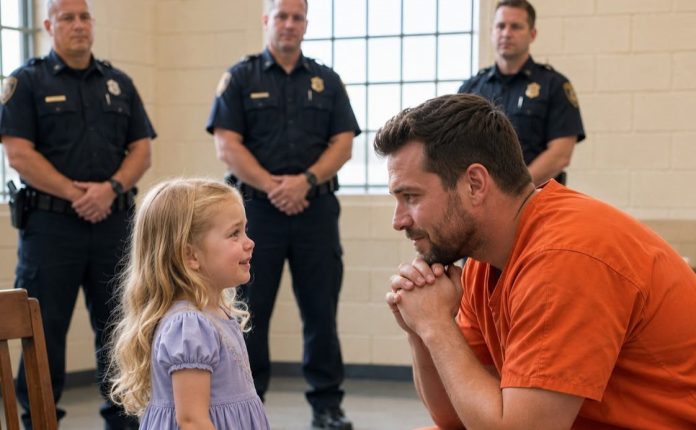
Before sentencing, Daniel stood and addressed Mom.
“I have spent months trying to find a sentence that makes what I did sound understandable,” he said. “There isn’t one. I was afraid of losing my business, my home, my daughters, and my reputation. So I helped take away your freedom instead.”
Mom listened without looking away.
“I loved you,” he continued, his voice breaking. “But I loved the life I was trying to save more than I loved your safety. I am ashamed that it took losing everything for me to understand what I had already taken from you.”
The judge asked Mom whether she wished to speak.
She walked slowly to the podium.
“I forgive my son for being frightened,” she said. “I do not forgive the choices merely because fear was present. Perhaps one day forgiveness will grow large enough to hold both. Today, accountability must come first.”
Daniel nodded through his tears.
He did not ask her to change her mind.
That mattered.
Mom’s legal competency was restored after independent evaluations. Doctors concluded that she had mild cognitive impairment, but she remained capable of managing her personal decisions with limited assistance.
The first thing she did was revoke every document Martin had prepared.
The second was appoint a licensed fiduciary rather than either of her children to manage complex financial affairs.
At first, that hurt me.
Then I understood.
She needed independence, not a new version of control.
I took a six-month leave from the hospital and moved into the farmhouse, but I did so under conditions she helped write.
I would not open her mail without permission.
I would not speak to doctors behind her back unless there was an emergency.
I would knock before entering her bedroom.
If we disagreed, her age would not be treated as proof that she was wrong.
“You made rules for me when I was sixteen,” I said.
She smiled.
“You were more dangerous at sixteen.”
Her recovery came slowly.
For weeks, she slept with the brown coat beside her.
She wore it during meals, medical appointments, and warm afternoons.
The coat was not clothing anymore.
It was armor.
One morning, I prepared a bath and placed clean towels beside the tub.
When I mentioned it, her face tightened.
“We can wait,” I said.
She stared at the bathroom doorway.
“Will you stay?”
“Right outside.”
“No. Inside.”
I sat on the closed toilet lid while she undressed.
The bruises had faded to yellow shadows. The rope marks were pale lines.
She stepped into the water and gripped the sides of the tub.
I washed her hair as gently as she had washed mine when I was a child.
Halfway through, she began crying.
“Did I hurt you?”
“No.”
“Is the water too hot?”
“No.”
“Then what is it?”
She wiped her face.
“I had forgotten what gentle hands felt like.”
I bowed my head over her wet hair and cried with her.
Afterward, she put on a soft blue robe.
The coat remained on the chair.
That afternoon, we carried it downstairs together.
She hung it beside the front door.
She did not wear it again.
Our relationship did not heal through one conversation.
There were days she blamed me for leaving.
There were days I defended myself.
I reminded her that she had told me not to come.
She reminded me that I had accepted those words too easily.
Both things were true.
“I thought Daniel was there,” I said once.
“He was.”
“I thought that meant you were safe.”
“So did I.”
Her answer contained no accusation, which made it more painful.
I returned to therapy for the first time since my divorce. I confronted the habit that had shaped much of my life: when love became complicated, I created distance and called it independence.
Mom confronted her own habit of disguising fear as strength.
She began attending a support group for survivors of elder abuse. At first, she sat silently. Later, she spoke.
The orchard remained protected.
June’s documents revealed that Dad had revised the trust shortly before his death. The land could not be sold without Mom’s informed consent and an independent review.
Mom decided not to preserve the entire property as a monument to suffering.
“Land should serve the living,” she said.
She donated twelve acres and part of Martin’s restitution payments to create Rose House, a legal-aid and temporary-respite center for vulnerable older adults and overwhelmed families.
The center offered financial reviews, caregiver training, temporary housing, and confidential abuse reporting.
“We need a better name,” she complained during the planning meeting. “Naming it after me makes me sound dead.”
“You rejected every other suggestion,” I reminded her.
“I liked Mercer House.”
“That is also your name.”
“That is different.”
June became an honorary board member. She attended meetings wearing bright scarves and correcting everyone’s arithmetic.
Dr. Patel helped design medication-review procedures.
Vega trained volunteers to recognize coercive control, financial exploitation, and signs of improper restraint.
Daniel’s daughters visited Mom throughout their father’s sentence.
She never spoke badly about him to them.
But she did not lie.
“Your father did something wrong,” she told them. “He is accepting the consequences. You may love him and still tell the truth.”
When Daniel was released after twenty months, he did not return to the farmhouse immediately.
He rented a room in town and worked for a roofing crew.
His construction license had been revoked.
For several weeks, he wrote letters to Mom without asking for answers.
She read each one.
Eventually, she agreed to meet him at Rose House.
I sat in the garden nearby, close enough to intervene but far enough to give them privacy.
Daniel had lost weight. Prison had added gray to his hair.
Mom looked small beside him.
He did not touch her.
“I don’t expect things to go back,” he said.
“They cannot.”
“I know.”
“I will not be alone with you yet.”
“I understand.”
“You will not manage my money.”
“I don’t want to.”
“You will not decide what I remember.”
“No.”
She studied him.
“Then we can begin with coffee.”
It was not forgiveness.
It was not reconciliation.
It was a door left unlocked.
Over the next year, Daniel attended counseling, paid restitution, and volunteered at Rose House doing repairs under supervision.
Some survivors refused to be around him.
He accepted that.
Some staff believed he should not be allowed inside.
Mom listened to them.
Accountability, she reminded us, did not require permanent exile, but rebuilding trust could never be demanded from those who had been harmed.
Daniel and I also began again.
Our conversations were awkward and often angry.
He resented that I had been absent.
I resented that he had used my absence to justify becoming complicit.
Both resentments held pieces of truth.
“I envied you,” he admitted one evening. “You left, and I stayed. Everyone called me the good child.”
“You liked being called that.”
“I did.”
“And when being the good child became difficult, you chose appearances.”
He nodded.
“I did.”
Three years after I first removed the coat, Rose House opened officially.
Mom stood beneath the orchard trees while reporters, neighbors, survivors, police officers, nurses, and families gathered around her.
She refused a prepared speech.
Instead, she walked to the microphone and looked across the crowd.
“People ask why I did not leave sooner,” she said. “They ask why I did not call for help. They ask why I signed documents, swallowed pills, or obeyed people I knew were hurting me.”
The crowd became silent.
“The answer is that fear changes the size of the world. It makes one locked room feel like the whole earth. It makes a telephone seem farther away than another country.”
She glanced toward me.
“Sometimes the person who needs help does not know how to ask. Sometimes she asks by wearing a coat in a warm room. Sometimes she says she is fine. Sometimes she tells you not to come.”
Her voice trembled, but she continued.
“Listen to the fear underneath the words.”
After the ceremony, we sat together on the porch.
The orchard glowed in the late-afternoon sun.
Daniel’s daughters chased each other between the rose bushes. June argued with a caterer about an incorrect bill. Vega stood near the gate, laughing with Dr. Patel.
Mom leaned her head against my shoulder.
“Your father would have liked this,” she said.
“He would have complained about the cost.”
“He would have complained while paying for it.”
We laughed.
She died peacefully eighteen months later.
There was no hospital alarm, no locked bedroom, and no one controlling which pills she swallowed.
She spent her final morning in the garden.
That evening, she asked me to open the windows so she could smell the roses.
Daniel sat on one side of her bed.
I sat on the other.
She held both our hands.
Her final words were not about the abuse, the trial, the orchard, or the years we had lost.
“Do not make fear your inheritance,” she whispered.
Then she closed her eyes.
After the funeral, Daniel and I stood in the farmhouse hallway.
The old brown coat still hung beside the front door.
“Should we throw it away?” he asked.
I touched the worn sleeve.
“No.”
We donated it to Rose House.
It was placed inside a glass display near the entrance, beside a small plaque containing Mom’s words:
Fear often hides beneath ordinary things. Pay attention.
I visit the display whenever I return to Briar Glen.
I remember the afternoon I unfastened those buttons and discovered how completely I had misunderstood my mother’s life.
I remember Daniel’s shame, Martin’s confidence, Celia’s rehearsed kindness, and my own dangerous willingness to believe that someone else was handling everything.
But most of all, I remember Mom walking into the sunlight without the coat.
The scars remained.
So did love.
Neither erased the other.
And that became the final truth our family learned: love is not proven by what we feel while someone suffers. It is proven by what we are willing to see, what we refuse to excuse, and what we choose to do after the truth is uncovered.
The coat remained behind glass, empty at last—not a hiding place, not a prison, not armor.
Only cloth.