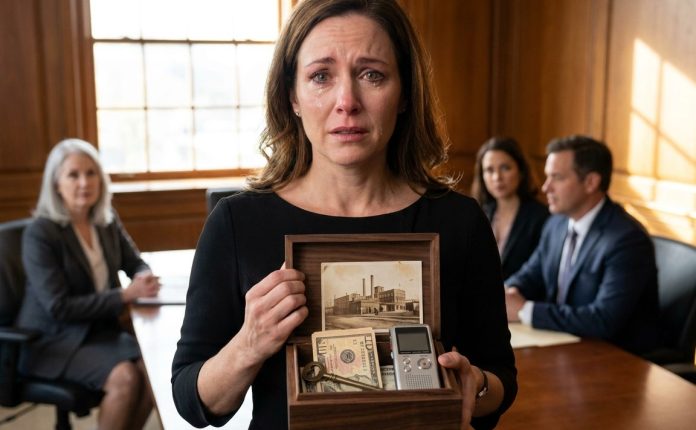
My mother had always been stubborn about accepting help, but she had never been afraid of me. That was why her terror felt so wrong. When I suggested a warm bath, she pressed both hands against the thick wool coat she was wearing indoors and backed into the kitchen wall. “Please, Anna,” she whispered. “Don’t take it off.” Her lips trembled while her eyes darted toward the hallway, as though someone might be listening. I promised I would stop if she asked, then carefully eased the coat from her shoulders. Beneath it, dark bruises covered her ribs and arms. Raw rope marks circled both wrists. Before I could call for help, she seized my hand and breathed, “You cannot let them know you saw.”
Part 1: The Coat
I had driven six hours through freezing rain to reach Briar Glen, carrying two grocery bags, a suitcase, and enough guilt to fill the empty passenger seat beside me.
For almost a year, every conversation with my mother had been brief.
“I’m fine,” she would say.
“Daniel is taking good care of me.”
“No, you don’t need to visit.”
My younger brother lived less than ten minutes from her farmhouse. He stopped by every day, handled her bills, arranged her prescriptions, and took her to medical appointments. At least, that was what he told me.
I lived in another state and worked as an emergency-room nurse. Twelve-hour shifts became sixteen-hour shifts. Weeks passed. Then months. Whenever guilt rose in my throat, Daniel reassured me.
“You’re doing important work, Anna. Mom understands.”
But when I pulled into the gravel driveway that afternoon, I knew immediately that something was wrong.
The rose bushes my father had planted along the porch were dead and tangled. Newspapers lay beneath the mailbox, swollen with rain. One shutter hung crooked beside the upstairs window.
My mother had always cared for the farmhouse as though it were another child.
I knocked twice before trying the door.
It was unlocked.
“Mom?”
No answer.
The house smelled of damp wool, cold ashes, and something medicinal.
I found her standing beside the kitchen table.
At seventy-nine, Rose Mercer had grown smaller, but she had never looked fragile to me. She had survived breast cancer, buried my father, repaired fences during storms, and once chased a black bear away from her vegetable garden with a saucepan.
Now she stood motionless in a heavy brown coat, though the kitchen was warm.
Her silver hair was unwashed. Her cheeks looked hollow. A yellow pill organizer sat beside an untouched bowl of oatmeal.
When she saw me, confusion moved across her face before recognition returned.
“Anna?”
I put down the bags.
“Surprise.”
She did not smile.
Instead, she looked past me toward the door.
“Did Daniel bring you?”
“No. I told him I might come later this month, but my schedule changed.”
Her fingers tightened around the coat.
“You shouldn’t have come without telling him.”
The words stung more than I wanted them to.
“I wanted to see you.”
“I’m tired.”
“I can see that.”
I moved toward her, but she flinched.
I stopped immediately.
“Mom, it’s me.”
“I know.”
“Are you hurting somewhere?”
“No.”
“Have you fallen?”
“No.”
Her answers came too quickly.
I touched the pill organizer. Several compartments were empty, though the labels did not match the prescriptions she had mentioned during our calls.
“Who filled this?”
“Celia.”
Daniel’s wife.
Celia worked part-time for Golden Years Home Support, a private caregiving service operated by a local charity. She had always been polished, efficient, and almost aggressively helpful.
“She comes in the mornings,” Mom continued. “Sometimes evenings.”
“Does anyone else come?”
My mother stared at the hallway.
“Mom?”
“I need to sit down.”
She lowered herself into a chair.
I prepared tea and warmed soup, speaking gently about ordinary things. Work. The drive. My apartment. A neighbor who kept stealing my parking space.
She barely listened.
Every few minutes, she touched the coat buttons, checking that they were fastened.
When she tried to lift her spoon, her hand trembled so badly that broth spilled onto the table.
“Let me help you clean up,” I said.
“I can do it.”
“You’re exhausted. Why don’t I run you a bath?”
Her chair scraped violently against the floor.
“No.”
I stared at her.
“All right.”
“No bath.”
“That’s okay.”
“Don’t take off my coat.”
Her voice rose sharply.
I stepped away.
“I won’t.”
She backed toward the kitchen wall, one hand pressed against her chest.
“Please, Anna. Please don’t take it off.”
I had treated frightened patients for twenty years. I knew the difference between embarrassment, confusion, and terror.
This was terror.
I lowered my voice.
“Mom, are you afraid someone will see your body?”
She shut her eyes.
I waited.
Rain tapped against the windows.
Finally, she gave the smallest nod.
“Did someone hurt you?”
Her eyes opened.
“Do not say that loudly.”
My stomach turned cold.
I approached slowly.
“I need to see whether you’re injured. I will stop the second you ask me to.”
She resisted at first, gripping the collar.
Then something inside her seemed to collapse.
Her hands fell to her sides.
I unfastened the coat one button at a time.
The first bruise appeared above her collarbone.
The second covered the inside of her upper arm.
When I slid the coat from her shoulders, I forgot how to breathe.
Bruises in different stages of healing spread across her ribs, back, and forearms. Some were purple and black. Others had faded to sickly yellow. Narrow red abrasions circled her wrists and crossed one ankle.
They were not injuries from a single fall.
Someone had restrained her.
There were finger-shaped marks along her left arm.
A dark bruise curved beneath her ribs.
“Oh, Mom.”
She snatched the coat back and held it against herself.
“Don’t cry,” she whispered. “They don’t like crying.”
I forced myself to remain calm.
“Who are they?”
She shook her head.
“I need to call the police.”
“No.”
“I have to get you out of here.”
“No hospital.”
“You may have broken ribs.”
“They’ll send me back.”
“Who will?”
“The people who have the papers.”
“What papers?”
She pulled the coat around her and began fastening it with clumsy fingers.
I knelt in front of her.
“Listen to me. Nobody is taking you anywhere. I’m here now.”
“You don’t understand.”
“Then help me understand.”
For a moment, she looked like the mother I remembered—fierce, clear-eyed, determined.
Then a floorboard creaked upstairs.
We both froze.
I had assumed we were alone.
My mother’s hand clamped over my mouth.
Her face drained of color.
We listened.
A second creak came from the hallway above us.
I reached for my phone.
Mom shook her head frantically.
The sound stopped.
After several minutes, I searched the house room by room. I found no one, but the back door stood slightly open. Mud marked the floor near the laundry room.
Someone had been inside.
When I returned to the kitchen, Mom was staring at the back door.
“Was it Celia?” I asked.
She said nothing.
“Martin Shaw?”
That name produced the faintest reaction.
Martin had been my father’s lawyer and closest friend. Since Dad’s death, Martin had managed the orchard trust and advised Daniel about our mother’s finances.
“Was it Martin?”
Mom looked at me pleadingly.
“Daniel will be here soon.”
“That doesn’t answer me.”
“You have to pretend everything is normal.”
“I’m not pretending.”
“If you love me, you will.”
The desperation in her voice stopped me.
“Why?”
“Because they watch the house. They read my mail. They know when I miss a pill.”
“Who does?”
She glanced at the clock.
Three forty-seven.
“Mom, who put those marks on your wrists?”
Her mouth opened, but no sound came.
Headlights swept across the kitchen wall.
A truck pulled into the driveway.
My brother’s truck.
Mom grabbed my wrist.
“You didn’t see anything,” she said.
The front door opened.
“Mom?” Daniel called. “I brought your groceries.”
His footsteps approached.
My mother leaned close enough for me to feel her breath against my cheek.
Then, with her eyes fixed on the hallway, she whispered the words that shattered what remained of my family.
“Daniel was the one holding the rope.”
Part 2: The Papers
Daniel entered the kitchen carrying a paper sack and wearing the smile I had seen in every family photograph since childhood.
For one irrational second, I wondered whether I had misheard her.
Then Mom stepped away from me and fastened the top button of her coat.
My brother looked from her to me.
“Anna.”
He set the groceries down.
“You said you were coming next month.”
“I changed my plans.”
His smile remained, but something in his eyes hardened.
“You should have called.”
“That seems to be everyone’s opinion.”
He hugged me.
I kept my arms at my sides.
Daniel smelled of sawdust, rain, and the peppermint gum he had chewed since high school. He looked older than forty—gray at his temples, exhaustion beneath his eyes—but otherwise familiar.
“What happened to the house?” I asked.
“Winter happened.”
“The newspapers?”
“I’ve been busy.”
“With what?”
He glanced at Mom.
“Why don’t we talk outside?”
“I’m comfortable here.”
Mom lowered herself into a chair.
Daniel studied her coat.
“Are you cold, Mom?”
She did not answer.
He touched her shoulder.
She flinched so violently that the chair legs scraped across the floor.
Daniel pulled his hand back.
I watched his face.
Shame appeared there.
Not confusion. Not surprise.
Shame.
“You need to leave,” I said.
“Excuse me?”
“I’m staying with Mom tonight.”
“That isn’t a good idea.”
“Why?”
“She becomes agitated when her routine changes.”
“She became agitated when you touched her.”
His jaw tightened.
“Anna, you have been here for less than an hour.”
“That was enough.”
I wanted to tear off the coat and force him to look at what had been done, but Mom’s terrified expression stopped me.
Daniel moved closer and lowered his voice.
“She has vascular dementia.”
I stared at him.
“No, she doesn’t.”
“She was diagnosed eight months ago.”
“By whom?”
“Dr. Whitaker.”
“Why didn’t you tell me?”
“We tried.”
“I received no calls.”
“You received emails.”
“I received messages saying she was forgetful.”
“She accused Celia of poisoning her. She claimed Dad was alive. Last month, she wandered onto the highway in her nightgown.”
Mom looked down at the table.
“Is that true?” I asked her.
She said nothing.
Daniel took a folder from his bag and placed it in front of me.
Medical evaluations. Prescription lists. Reports describing agitation, paranoia, nighttime wandering, and aggressive behavior.
Some pages contained Mom’s signature.
Others contained mine.
I picked up a document titled FAMILY CONSENT FOR SUPERVISED CARE.
My name appeared at the bottom.
Anna Louise Mercer.
The signature resembled mine, but the second “n” curved incorrectly. Whoever had copied it had studied old records but had not understood that I changed my handwriting after college.
“I didn’t sign this.”
Daniel glanced at the page.
“You must have.”
“I did not.”
“You signed several forms online.”
“No, Daniel.”
Mom began rubbing her hands together.
“Stop,” she whispered.
Daniel ignored her.
“There were so many forms. You probably forgot.”
“I don’t forget legal consent forms.”
“You work nights. You’ve admitted you barely sleep.”
“You forged my signature.”
His face changed.
“Be careful.”
“Did you forge it?”
“No.”
“Did Celia?”
“Of course not.”
“Martin?”
He picked up the folder.
“This is exactly why I didn’t want you arriving without warning. You come in, see ten minutes of her life, and accuse everyone who has been helping.”
I grabbed the folder before he could remove it.
“Why is she wearing a coat indoors?”
“She refuses to take it off.”
“Why?”
“Because she is ill.”
“Why are there locks outside her bedroom door?”
Daniel went still.
I had noticed them while searching the house: a sliding bolt mounted in the hallway, positioned to lock someone inside.
He looked toward Mom.
“She wanders.”
“You lock her in?”
“For her safety.”
“With ropes?”
Mom made a small sound.
Daniel’s eyes snapped toward her.
The silence that followed answered more than words could have.
I stood.
“Take off your jacket.”
“What?”
“Take it off.”
“This is ridiculous.”
“Mom says you held her down.”
He looked at our mother.
She stared at the floor.
“Mom gets confused.”
“Did you restrain her?”
“She tried to attack Celia with a fireplace poker.”
“Did you tie her wrists?”
“We used a soft safety strap.”
My stomach twisted.
“A rope left abrasions around her skin.”
“It wasn’t rope.”
“You admit restraining her.”
“Once.”
Mom whispered, “Three times.”
Daniel closed his eyes.
“Mom.”
“Three times,” she repeated.
I stepped between them.
“You’re leaving.”
“You don’t understand what she has become.”
“She is not a thing.”
“I didn’t say she was.”
“You talk about her as if she isn’t sitting here.”
He ran both hands over his face.
For a moment, he looked broken rather than dangerous.
“I was trying to keep her alive.”
“By tying her to a chair?”
“She was hallucinating. She was hitting herself. She tried to leave during a snowstorm.”
“Then you call a doctor. You call emergency services. You do not bind an elderly woman and hide the bruises under a coat.”
“I called people.”
“Who?”
“Celia. Martin. Dr. Whitaker.”
“All people connected to the guardianship forms.”
Daniel stared at me.
I had not noticed the word until then.
Guardianship.
I searched the folder and found a temporary court order naming Daniel and Celia as Mom’s legal guardians.
The order gave them control over her healthcare, finances, residence, and property decisions.
A second document authorized Martin Shaw to negotiate the sale of seventy-two acres of my mother’s orchard.
I looked at the number printed on the offer.
Four million eight hundred thousand dollars.
The buyer was Meadow Ridge Development Group.
“They’re selling the orchard,” Mom said.
Daniel turned toward her.
“Nothing has been finalized.”
“Dad’s orchard?” I asked. “The land he left to Mom?”
“The operation is losing money.”
“Then why wasn’t I informed?”
“You moved away.”
“I am still a beneficiary of the family trust.”
“Not while Mom is alive.”
“Does she want to sell?”
“She isn’t competent to decide.”
Mom lifted her head.
“I said no.”
Daniel’s face tightened.
“You don’t understand the taxes.”
“I understand thieves.”
He slammed his palm onto the table.
Mom screamed.
I shoved him backward.
“Get out.”
Daniel stared at me in shock.
Then his expression became cold.
“You cannot stay here alone with her.”
“Watch me.”
“If she has an episode, you won’t know what to do.”
“I’m a nurse.”
“You are not a dementia specialist.”
“And you are not a jailer.”
I opened the front door.
Rain blew into the hallway.
Daniel picked up his keys but left the folder.
At the threshold, he turned.
“Do not stop her medications.”
“I’ll have them reviewed.”
“Do not take her off the property.”
“Are you threatening me?”
“I’m warning you. Legally, I am responsible for her.”
“You may be responsible for what happened to her, but not in the way you think.”
Pain flashed across his face.
Then he left.
I locked the door behind him.
Mom began crying silently.
I knelt beside her.
“We’re leaving tonight.”
“No.”
“I’m taking you to a hospital outside town.”
“They’ll find us.”
“I’ll call the state police and Adult Protective Services.”
“Martin knows judges.”
“He doesn’t know everyone.”
“He knew your father.”
“I know.”
“No,” she said. “You don’t.”
I asked what she meant, but she refused to continue.
I photographed every bruise with her permission. I documented the wrist abrasions, the ankle marks, and the swelling beneath her ribs.
Then I examined her medications.
Along with blood-pressure tablets and thyroid medication, she was receiving two sedatives, an antipsychotic, and a high dose of sleeping medication.
The combination could cause confusion, falls, memory impairment, and hallucinations.
“Do you take all of these?”
“Celia crushes them in yogurt.”
“Do you know what they are?”
“She says they make me cooperative.”
The word made me sick.
I packed a small bag while Mom sat in the kitchen.
At five fifteen, the landline rang.
Mom recoiled at the sound.
I answered.
“Hello?”
For several seconds, I heard only breathing.
Then a woman’s voice, electronically distorted, spoke.
“You should have stayed in Seattle.”
My eyes moved toward the windows.
“Who is this?”
“You have a good job, Anna. A license. A clean reputation.”
“Come here and say that to my face.”
“Your mother is sick. Sick people bruise.”
“Not like this.”
A pause.
“You think taking her away will save her?”
“I know it will.”
The caller laughed softly.
“Then check the brake fluid before you leave.”
The line went dead.
I ran to the front window.
No vehicle was visible on the road.
My mother stood behind me, holding her coat closed.
“They know,” she whispered.
I looked at the car parked outside, then at the rain-darkened road beyond it.
The telephone rang again.
This time, the distorted voice did not laugh.
“Put the coat back on her, Anna, or the next bruises will be inside where no one can see.”
Part 3: The Blue Ledger
I did not use my car.
Dad’s old pickup still sat inside the equipment shed behind the farmhouse. The battery was weak, but the engine turned over after three attempts.
Before leaving, I photographed the threatening number on the caller display, though it appeared as UNKNOWN.
I wrapped Mom in blankets and helped her into the passenger seat.
“Where are we going?” she asked.
“Saint Catherine’s Hospital.”
“That’s forty miles away.”
“Far enough that Martin won’t control everyone.”
Her eyes moved toward the house.
“What?”
“My coat.”
“You’re wearing it.”
“No. The other one.”
She pointed toward the laundry room.
An old green raincoat hung behind the door.
I retrieved it.
She insisted I place it beneath the seat.
“Why?”
“Because it belonged to your father.”
There was no time to question her.
I drove slowly along the service road behind the orchard, avoiding the main highway. My hands shook every time the brakes responded.
At Saint Catherine’s, the emergency physician ordered X-rays, bloodwork, toxicology screening, and a full injury assessment.
Mom had two cracked ribs, severe dehydration, an untreated urinary infection, and medication levels far higher than prescribed.
The sedatives explained some of her confusion, but not all of it.
Dr. Priya Patel spoke to me privately.
“Your mother may have mild cognitive impairment,” she said, “but what I am seeing is not advanced dementia. Someone has been heavily medicating her.”
“Can you document that?”
“I already have.”
An Adult Protective Services investigator named Marisol Vega arrived before midnight. She was calm, direct, and careful not to push Mom beyond what she could tolerate.
“Who caused your injuries?” Vega asked.
Mom stared at the blanket.
“My son was there.”
“Daniel?”
“Yes.”
“Did he tie you?”
Her breathing became shallow.
“He said it would be easier if I stopped fighting.”
“Who else was present?”
“Celia.”
“Your daughter-in-law?”
Mom nodded.
“Was anyone else involved?”
She looked toward the door.
“Mr. Shaw makes the papers.”
Before she could say more, voices rose outside.
A nurse entered.
“Anna, there are people here claiming legal authority over your mother.”
Daniel appeared behind her.
Celia stood beside him in a cream-colored coat, her blond hair perfectly arranged despite the late hour. Martin Shaw followed, holding a leather briefcase.
Martin had aged since my father’s funeral, but he still carried himself with the same polished confidence. He wore a charcoal suit, silver cuff links, and my father’s watch.
I recognized it immediately.
A square-faced Longines with a brown leather strap.
Dad had worn it every day of his life.
After his death, the watch had disappeared.
I stared at Martin’s wrist.
He noticed.
“Your father gave it to me,” he said.
“No, he didn’t.”
Martin smiled sadly.
“Grief alters memory.”
Celia moved toward the bed.
“Rose, sweetheart, we’ve been worried sick.”
Mom began trembling.
I blocked Celia’s path.
“Do not touch her.”
Celia sighed.
“Anna, this hostility is not helping.”
“You threatened me.”
“I have no idea what you’re talking about.”
Martin handed documents to the charge nurse.
“We have an emergency guardianship order. Mrs. Mercer must be discharged into the care of Daniel and Celia Mercer.”
“She has documented signs of abuse,” I said.
“Allegations,” Martin corrected. “Made by a daughter who removed an incapacitated adult from her residence in violation of a court order.”
Dr. Patel stepped forward.
“This patient is not medically stable for discharge.”
“I am not asking you to discharge her tonight,” Martin replied. “I am establishing that her guardians will control subsequent placement.”
Vega studied the documents.
“I’ll verify these with the court.”
“You are welcome to do so.”
Martin’s confidence frightened me more than open anger would have.
He had expected this.
Daniel stood near the wall, unable to look at Mom.
“Tell them,” I said to him. “Tell them about the rope.”
Celia answered for him.
“Rose became violent during an episode. Daniel prevented her from injuring herself.”
“She has restraint marks around her wrists.”
“Soft restraints were briefly used under telephone guidance from a medical professional.”
“Which medical professional?”
“Dr. Whitaker.”
Dr. Patel frowned.
“Dr. Whitaker’s notes contain no restraint order.”
Celia’s expression shifted for less than a second.
Vega noticed.
“So you admit restraints were used?” she asked.
Celia folded her hands.
“I admit we prevented a confused woman from wandering into traffic.”
Mom turned her face toward the window.
Martin approached me.
“You are exhausted,” he said softly. “Go home. Let professionals handle this.”
“Professionals did this.”
His smile disappeared.
“You have always been impulsive, Anna. Your father worried about that.”
“Take off his watch.”
“It was a gift.”
“He would never have given you anything.”
“That isn’t what he believed during his final months.”
The words struck an old wound.
Dad and I had argued before his death. He wanted me to move home after my divorce. I refused. Our last telephone conversation ended with him accusing me of running away whenever people needed me.
He died two days later in a tractor rollover.
I had carried his final words ever since.
Martin knew that.
He leaned closer.
“Your mother’s condition is painful, but turning it into a conspiracy will not absolve you for being absent.”
I wanted to hit him.
Instead, I said, “You should leave before I forget I’m in a hospital.”
Vega separated us.
Martin, Celia, and Daniel were escorted to a waiting area while the order was reviewed.
Mom remained awake but disoriented.
Near dawn, she asked for the green raincoat.
I placed it across her lap.
She ran her fingers along the torn lining.
“Your father sewed badly,” she murmured.
“What?”
“He hid things where no one would look.”
She tugged at a loose seam.
Inside the lining was a folded piece of paper.
The handwriting was hers.
BLUE LEDGER. THIRD HIVE. UNDER THE FALSE BASE.
Below it, she had written:
DO NOT TRUST DANIEL UNTIL HE TELLS YOU ABOUT APRIL 14.
I looked at her.
“What happened on April fourteenth?”
She closed her eyes.
“The night he chose them.”
At eight in the morning, Martin’s guardianship order was confirmed as valid, though the hospital maintained authority while Mom remained admitted.
Vega told me an emergency review hearing could be requested, but evidence would be essential.
“Photographs and medical reports establish abuse,” she said. “They do not establish who caused it.”
“What about her statement?”
“Her credibility will be challenged because of the diagnosis.”
“So whoever drugged her can use the drug-induced confusion to silence her?”
Vega’s expression tightened.
“That is why we need corroboration.”
I left the hospital through a side entrance and drove to the orchard.
The beehives stood beyond the north field, abandoned since Dad’s death.
The third hive was empty.
Beneath a removable wooden base, I found a blue bookkeeping ledger wrapped in plastic.
Inside were names, dates, bank transfers, property descriptions, and handwritten notes.
Several names belonged to elderly residents I recognized from Briar Glen.
Beside each name were payments to Golden Years Home Support, Martin Shaw’s legal trust account, or Meadow Ridge Development Group.
Some entries were marked DECEASED.
Others were marked INCOMPETENT.
My mother’s name appeared on the last page.
Rose Mercer—orchard acquisition.
Medication compliance inconsistent.
Increase pressure before competency hearing.
A small flash drive was taped inside the back cover.
I had just placed it in my pocket when I heard footsteps behind me.
Daniel stood ten feet away.
He held a shovel.
Mud covered his boots.
His eyes were red from crying or lack of sleep.
“Give me the ledger,” he said.
I stepped backward.
“Stay away from me.”
“Anna, you don’t know what you’re holding.”
“I know Mom hid it from you.”
His hands tightened around the shovel handle.
“Give it to me.”
“You forged my signature. You drugged her. You tied her to a chair.”
“I didn’t drug her.”
“But you held the rope.”
He looked away.
“That ledger will destroy everything.”
“Good.”
“No, not good. People will get hurt.”
“People are already hurt.”
He took another step.
I pulled out my phone.
“Come closer and I call the police.”
“They won’t reach you in time.”
I stared at my brother, searching for the boy who had once slept on my bedroom floor because he was afraid of thunderstorms.
He lowered the shovel.
His voice broke.
“Please, Anna.”
“For what?”
“For once in your life, trust me before it’s too late.”
I backed toward the truck.
Daniel’s face hardened with desperation.
Then he raised the shovel and said, “Give me that ledger. I should have burned it the first time Mom gave it to me.”