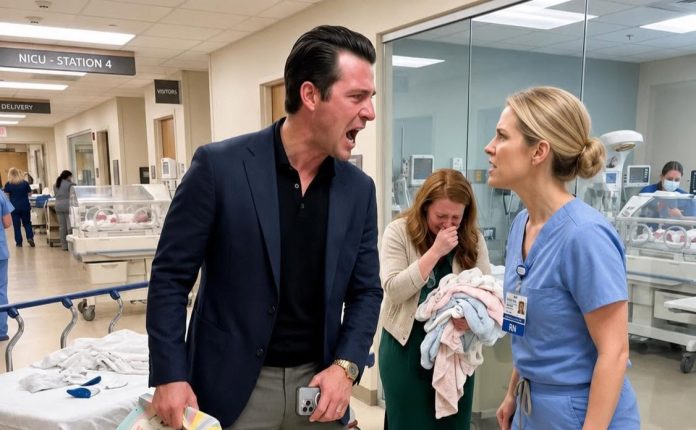
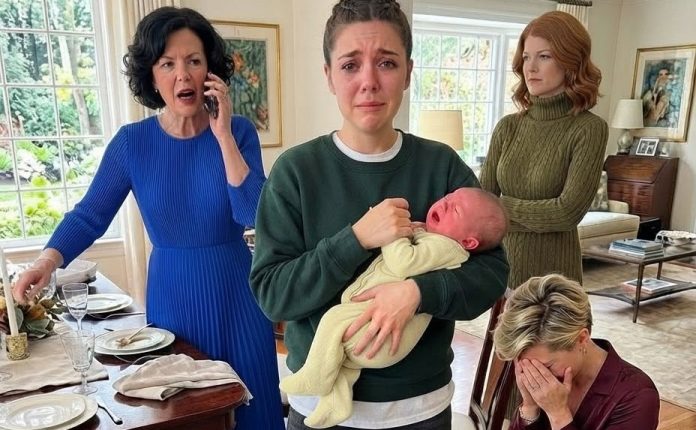
The young man came to Eleanor Ward’s house every afternoon at exactly four, carrying groceries, flowers, or a paper bag from the pharmacy. Everyone on our street praised him for caring about a lonely eighty-three-year-old woman. I wanted to believe them—until the evening I found Eleanor’s front door open and heard a chair scraping across her dining room floor. I stepped inside and saw her slumped unconscious at the table. The young man stood over her with an empty syringe, her bank cards, and a document titled LAST WILL AND TESTAMENT. At the bottom of the page was a witness signature written in my name. I had never signed it. Then he looked directly at me and whispered, “Please don’t call the police. The person trying to kill her already knows you’re here.”
Part 1 — The Visitor at Four O’Clock
I first noticed the young man on a Tuesday afternoon in early September, although Eleanor later told me he had already been visiting for nearly two weeks. He arrived in an old silver sedan with a dented rear door and parked beneath the maple tree between our houses. He was perhaps twenty-six or twenty-seven, tall but slightly stooped, as though he had spent years trying not to take up too much space. He wore plain jeans, clean white sneakers, and a green jacket despite the lingering heat. In one hand he carried two grocery bags. In the other, a bouquet of yellow chrysanthemums.
From my front window, I watched him walk up Eleanor’s path.
She opened the door before he knocked.
Eleanor Ward was eighty-three years old, five feet tall on a generous day, and fiercely proud of living alone. Her husband had died almost twenty years earlier. She had no children that I knew of, and the only relative she ever mentioned was a nephew named Thomas, who handled her taxes and occasionally took her to medical appointments.
I had lived beside Eleanor for eleven years. We were not family, but we were more than casual neighbors. I checked her roof after storms. She fed my cat whenever I visited my daughter. Every Sunday morning, we drank coffee on her sun porch while she complained about politicians, television commercials, and the declining quality of supermarket peaches.
Eleanor did not welcome strangers easily.
Yet when the young man reached her porch, she touched his cheek with both hands.
Then she hugged him.
That alone should have reassured me.
Instead, it made me curious.
The next afternoon, he returned with a paper bag from Bell’s Pharmacy. The day after that, he arrived with a toolbox and spent two hours repairing the loose railing beside her back steps. On Friday, I saw them sitting together near the garden. Eleanor was speaking animatedly while he listened with his head bowed.
People on our street noticed.
Mrs. Keller from across the road told me she thought he was a volunteer from the senior center. Mr. Brooks believed he belonged to a church group. Someone else said he might be a distant relative.
“He’s sweet, whoever he is,” Mrs. Keller said. “Most young people don’t have time for the elderly.”
I agreed because disagreeing would have made me sound suspicious and unkind.
But something bothered me.
The young man never introduced himself.
Whenever I stepped outside while he was arriving, he avoided my eyes. Once, as I brought Eleanor’s recycling bin back from the curb, I saw him leaving through her side door with a large brown envelope tucked under his jacket. The moment he noticed me, he moved the envelope behind his back.
“Good afternoon,” I called.
He stopped.
“Hello.”
“You’ve been helping Eleanor quite a bit.”
“I try.”
His voice was soft. His face was pleasant but guarded.
“I’m Claire Bennett,” I said. “I live next door.”
“I know.”
The answer unsettled me.
He seemed to realize it and quickly added, “Eleanor talks about you.”
“I’m afraid she hasn’t told me your name.”
For a moment, he looked toward Eleanor’s front window.
“Noah,” he said. “Noah Hale.”
“Are you related to her?”
His expression changed so briefly I might have imagined it.
“I’m trying to find out.”
Before I could ask what that meant, Eleanor opened the door.
“Noah, you forgot your bag.”
She came down the path carrying an empty canvas shopping bag. Her smile faded when she saw us speaking.
“Claire,” she said, “I see you’ve met.”
“Only just.”
Eleanor handed Noah the bag. “You should go before traffic gets bad.”
He nodded. “I’ll call tonight.”
“I’ll be fine.”
His eyes rested on her face. “Promise me you’ll lock the back door.”
“Yes, dear.”
He walked toward his car.
I waited until he had driven away.
“Who is he?” I asked.
Eleanor’s smile returned, but it looked carefully constructed. “A friend.”
“You don’t make mysterious twenty-six-year-old friends every day.”
“He’s twenty-eight.”
“That explains everything.”
She laughed, though her fingers tightened around the edge of her cardigan.
“Come inside,” she said. “I made lemon cake.”
In her kitchen, I asked more questions than good manners allowed. Eleanor avoided nearly all of them. Noah had contacted her by letter. He had information about someone from her past. She was still deciding whether to believe him.
“Is he asking you for money?”
“No.”
“Has he asked about your house?”
“No.”
“Your will?”
Her cup paused halfway to her mouth.
“Why would you ask that?”
“Because elderly people are targeted every day.”
“I am aware of my age, Claire. The mirror reminds me each morning.”
“I’m not trying to insult you.”
“You are treating me as though kindness must be a trick because it is directed toward an old woman.”
I felt ashamed.
Eleanor reached across the table and covered my hand.
“I know you worry because you care,” she said more gently. “But Noah has not harmed me.”
“Then tell me who he is.”
“When I understand that myself, I will.”
That was the end of the conversation.
Over the following weeks, Noah’s visits became part of the rhythm of the street. Four o’clock. Silver sedan. Groceries, flowers, medicines, library books, or small repair supplies.
Eleanor seemed healthier at first.
She spent more time outdoors. She had her hair trimmed and began wearing lipstick again. Once, I heard music from her house and saw her teaching Noah to dance in the living room. He was awkward, and she was laughing so hard she had to hold his shoulders for balance.
I started to feel foolish for distrusting him.
Then Eleanor began forgetting things.
She called me one morning and asked why I had not come for Sunday coffee. It was Wednesday. A few days later, she left a pot burning on the stove. Noah arrived before the smoke alarm activated and carried it outside.
He became increasingly protective.
He changed the lock on her back door. He began sorting her mail. I saw him remove several bank statements and place them in his backpack. When Eleanor’s nephew Thomas visited, Noah stayed inside the house for the entire two hours.
Thomas Ward Mercer was a polished man in his late fifties who drove a black luxury car and wore expensive coats. He was not warm, but he had always appeared responsible. He arranged Eleanor’s home repairs, managed her investments, and spoke to her doctors when necessary.
After one visit, I saw Thomas and Noah arguing beside the garage.
Thomas pointed a finger at Noah’s chest.
“You have no legal standing here,” he said.
Noah lowered his voice, but I caught part of his reply.
“Neither will you when she remembers what you did.”
Thomas grabbed Noah’s jacket.
Noah did not strike him. He simply removed Thomas’s hand and stepped backward.
Eleanor appeared on the porch.
“Both of you stop it!”
Thomas turned toward her. His expression changed instantly.
“Aunt Eleanor, this man is manipulating you.”
“Noah has done nothing wrong.”
“He is going through your financial documents.”
“At my request.”
Thomas looked toward my house and noticed me standing behind the curtain. I moved away, embarrassed to be caught watching.
That evening, he knocked on my door.
“Claire,” he said, “may I speak with you?”
I let him inside.
He declined coffee and remained standing in my entryway.
“You’ve seen the young man visiting my aunt.”
“Yes.”
“His name is Noah Hale, assuming that is his real name. He contacted Eleanor claiming to be connected to a family matter from more than fifty years ago.”
“What kind of family matter?”
“He refuses to say clearly. He has shown her photographs, letters, and some questionable genealogy report. Since he arrived, she has become confused and emotionally unstable.”
“I noticed the confusion.”
Thomas’s face softened.
“That is what worries me. Eleanor has always been independent. She would rather fall down the stairs than admit she needed assistance. But her doctor believes she may be developing vascular dementia.”
“Her doctor told you that?”
“I have medical authorization.”
I thought of Eleanor laughing with Noah in the living room.
“Has Noah asked for money?”
“Not directly. People like him rarely begin with money. They create emotional dependence first.”
“What does he want?”
“My aunt’s house is worth nearly nine hundred thousand dollars. She also owns investments left by my uncle.”
Thomas handed me a business card.
“If you see anything unusual, please call me. Especially documents, medication changes, or attempts to isolate her.”
The card identified him as a partner at Mercer, Vale and Ward, Attorneys at Law.
“Why don’t you call the police?” I asked.
“Because Eleanor insists Noah is welcome. Until he commits an obvious crime, there is little anyone can do.”
For the next several days, I watched more carefully.
Noah continued arriving at four. He sometimes stayed until after dark. Twice, a woman in blue medical scrubs visited while he was there. Eleanor told me she was Diane, a private nurse hired by Thomas.
One rainy evening, Noah came to my door.
He looked exhausted.
“If Eleanor calls you tonight,” he said, “please don’t let anyone take her anywhere.”
“What are you talking about?”
“Her nephew is trying to have her declared incompetent.”
“Thomas says she has dementia.”
“She is being made to look like she has dementia.”
My stomach tightened.
“By whom?”
Before he could answer, his phone rang.
He read the screen and ran back toward Eleanor’s house without another word.
I stood in my doorway watching him disappear through the rain.
At seven thirty, the lights in Eleanor’s dining room came on.
At eight, I heard something fall.
It was not loud enough to be furniture, but heavy enough to make me cross my living room and look outside. Eleanor’s front door stood open by several inches. Rain blew across the porch.
I called her phone.
No answer.
I called again.
Still nothing.
Taking my coat, I hurried across the yard.
“Eleanor?” I shouted from the doorway.
A chair scraped somewhere inside.
Then I heard Noah’s voice.
“Stay with me. Eleanor, open your eyes.”
I stepped into the dining room.
Eleanor sat slumped at the table, her head tilted against the chair. One sleeve had been pushed above her elbow. A dark bruise marked the inside of her arm.
Noah stood over her holding an empty syringe.
On the table lay her wallet, two bank cards, a bottle of pills, several property documents, and a legal paper titled LAST WILL AND TESTAMENT OF ELEANOR ROSE WARD.
I moved closer.
The will left Eleanor’s house and financial assets to Noah Hale.
At the bottom were two witness signatures.
One belonged to Diane, the nurse.
The other said Claire Bennett.
It looked almost exactly like my handwriting.
I had never signed that document.
My entire body turned cold.
Noah saw me.
“Claire, listen to me.”
I reached for my phone.
“Don’t.”
“You forged my signature.”
“No.”
“You’re standing over an unconscious woman with a syringe.”
“The syringe isn’t mine.”
“I’m calling the police.”
He stepped between me and the door, not touching me but blocking my path.
“Please don’t call yet.”
“Move.”
“The person trying to kill Eleanor already knows you’re here.”
I stared at him.
Then Eleanor’s eyes opened.
She grabbed Noah’s wrist and whispered one name.
“Thomas.”
A shadow moved across the frosted glass of the front door.
Someone was standing on the porch.
Part 2 — The Signature That Wasn’t Mine
Noah turned off the dining room light.
The sudden darkness inside the room frightened me more than the shadow outside. I opened my mouth to shout, but he placed one finger against his lips and pointed toward the kitchen.
The person on the porch knocked.
“Eleanor?” Thomas called. “It’s me.”
Eleanor tried to sit upright.
Noah caught her before she fell.
Thomas knocked again, harder.
“I know you’re home.”
I whispered, “Why are we hiding?”
Noah leaned close enough for me to hear.
“Because he thinks Eleanor is alone.”
The door handle turned.
It was locked.
Thomas stepped away from the porch. A few seconds later, his footsteps moved along the side of the house toward the kitchen entrance.
Eleanor’s breathing became rapid.
“No,” she whispered. “Don’t let him give me anything.”
I looked at Noah.
“What happened to her?”
“The nurse gave her an injection twenty minutes ago.”
“Diane?”
He nodded.
“She said it was a vitamin shot Thomas ordered. Eleanor became confused almost immediately. Then Diane left through the back door.”
“And you did nothing?”
“I called emergency services. They’re already coming.”
As if summoned by his words, sirens sounded in the distance.
The footsteps outside stopped.
A car engine started.
Through the front window, I saw Thomas’s black sedan leave the curb without headlights.
Noah switched on the dining room light again.
“You can call now,” he said.
I did.
Within minutes, paramedics crowded Eleanor’s house. She was conscious but weak, her speech slow and slightly slurred. They checked the empty syringe and medication bottles while a police officer questioned Noah and me separately.
When I showed the officer the forged will, his expression changed.
“Did you ever give anyone permission to sign on your behalf?”
“Absolutely not.”
“Did you witness Mrs. Ward signing this?”
“No.”
The officer placed the document in an evidence envelope.
Noah stood in the hallway, answering questions calmly. He gave his full name, address, driver’s license, and phone. Nothing about his behavior suggested escape.
Still, I could not forget what I had seen.
“Why were you holding the syringe?” I asked when the officer allowed us to speak.
“I found it beside Eleanor’s chair.”
“And the bank cards?”
“I was checking whether anything had been taken.”
“The will leaves everything to you.”
“I know.”
“You expect me to believe you had nothing to do with it?”
“Noah,” one of the paramedics called, “do you know what medications Mrs. Ward normally takes?”
He immediately listed them, including dosages and times.
I stared at him.
He knew more about Eleanor’s medical routine than I did.
The paramedics transported her to the hospital. Noah asked to ride with her, but Thomas arrived before the ambulance left.
He had changed coats, as though he wanted us to believe he had been elsewhere.
“What happened?” he demanded.
Noah stepped toward him. “Diane injected her with something.”
Thomas looked shocked. “Diane was following the doctor’s instructions.”
“What doctor?”
“Eleanor’s physician.”
“Then why did you run when the ambulance came?”
Thomas’s eyes narrowed. “I was never here.”
“I saw your car,” I said.
He turned toward me.
For one instant, the charm disappeared from his face.
Then it returned.
“Claire, you are understandably distressed. I came as soon as the hospital called.”
“No one from the hospital called. The ambulance hasn’t left.”
Thomas opened his mouth but did not answer.
The police officer noticed.
“Mr. Mercer, I’d like you to remain available for a few questions.”
Thomas looked toward Noah. “This is exactly what he wants. Confusion. Accusations. He has been preparing Eleanor to turn against her family.”
The officer held up the evidence envelope.
“Do you recognize this will?”
Thomas barely glanced at it.
“No.”
“It appears to contain a forged witness signature.”
“Then you should ask the person who benefits.”
Noah’s jaw tightened.
The ambulance departed.
Thomas was not arrested. Neither was Noah. The syringe was sent for testing, and the officers advised us not to enter Eleanor’s house until investigators had finished photographing the room.
At the hospital, Eleanor’s condition stabilized. Doctors believed she had been given a strong sedative that dangerously interacted with one of her blood-pressure medications. They could not yet determine whether the dose had been accidental.
Thomas tried to exclude Noah from the waiting area.
“He is not family,” he told the receptionist.
Noah said nothing.
I watched his face as the doors to Eleanor’s treatment room opened and closed. His fear looked real.
After two hours, Eleanor was allowed one visitor.
She asked for Noah.
Thomas left the waiting room without speaking.
I followed him into the corridor.
“Did you hire Diane?” I asked.
“Yes.”
“Why?”
“Because my aunt requires medical supervision.”
“Did you authorize an injection tonight?”
“I am not a physician.”
“That isn’t an answer.”
He stopped walking.
“You saw Noah with the syringe, did you not?”
“Yes.”
“You saw a will benefiting him.”
“Yes.”
“Then perhaps you should consider the simplest explanation.”
“Why did you say you had just arrived when I saw you on her porch?”
He studied me.
“Eleanor’s street has poor lighting. You saw a black vehicle in the rain.”
“I heard your voice.”
“Stress alters memory.”
He spoke the words with almost clinical patience.
I suddenly understood how he might convince a court that Eleanor was confused. He made certainty sound irrational.
Thomas moved closer.
“My aunt has become vulnerable. Noah knows it. If you care about her, do not help him isolate her from the people who can protect her.”
He walked away.
When Noah emerged from Eleanor’s room, I confronted him.
“Tell me the truth.”
He looked toward the nurses’ station. “Not here.”
“Then where?”
“The hospital cafeteria.”
It was nearly midnight. The cafeteria was empty except for a vending-machine attendant restocking drinks.
Noah sat across from me.
“My mother’s name was Anna Hale,” he began. “She died three years ago.”
“I’m sorry.”
“She was adopted as a baby. She spent most of her life trying to find her birth family, but the records were sealed or missing. Before she died, she took a genealogy test. Afterward, I received a possible family match connected to Eleanor’s late husband.”
“Eleanor’s husband was your grandfather?”
“I don’t know.”
“What does Eleanor believe?”
“At first, she thought I might be the child of her daughter.”
I stared at him.
“Eleanor had a daughter?”
“Lydia. She died in 1988.”
Eleanor had never mentioned her.
Noah removed an old photograph from his wallet. A young woman stood beside Eleanor on a beach. She had Eleanor’s eyes and Noah’s mouth.
“Lydia gave birth to a boy when she was seventeen,” he continued. “Her parents told everyone the baby died. Lydia never believed them. She spent years trying to locate him.”
“And you think that child was your father?”
“Possibly. My mother believed her adoption was connected to the same private maternity home where Lydia gave birth.”
I struggled to follow.
“Why would Eleanor’s will leave everything to you?”
“It shouldn’t.”
“Yet it does.”
“The document you saw is not the will Eleanor asked to prepare. She wanted to leave the house to a historical trust and divide her investments between several charities. Two weeks ago, she showed me a draft. Today, I found that version replaced with one naming me.”
“Who replaced it?”
“I think Thomas did.”
“That makes no sense. Why would he create a will benefiting you?”
“To make me look like a predator.”
I thought of my forged signature.
“Why use my name?”
“Because you are Eleanor’s closest independent witness. If the document appeared valid, Thomas could accuse me of coercing both of you. If it appeared fraudulent, I would still be the obvious suspect.”
“And Diane?”
“She has access to the house, Eleanor’s medication, and her signatures.”
“Why didn’t you tell the police all this?”
“I did. But without evidence, it sounds like a story invented by the man named in a fraudulent will.”
He looked exhausted rather than defensive.
“What did you mean when you said the person trying to kill Eleanor knew I was there?”
“I found a small camera hidden beneath the dining-room shelf.”
My skin prickled.
“Show me.”
“The police have it now.”
“Who installed it?”
“I don’t know. But someone has been recording Eleanor’s conversations.”
A nurse entered the cafeteria.
“Mr. Hale?”
Noah stood.
“Mrs. Ward is asking for both of you.”
We followed her upstairs.
Eleanor looked small beneath the hospital blankets. Her eyes were clearer than before, but shame clouded her expression.
“Claire,” she said, “I owe you an explanation.”
“You owe yourself rest.”
“No. I waited too long to speak once before. People suffered.”
She turned toward Noah.
“Tell her about the house.”
“What house?” I asked.
Eleanor looked at me.
“The maternity home my husband’s family owned. The place where babies disappeared.”
Before she could continue, an alarm sounded in the hallway.
Nurses rushed past the door.
The lights flickered once, then went out.
Emergency lighting glowed red along the floor.
From the corridor came the sound of running footsteps.
Noah moved toward the door.
Eleanor reached for him.
Then a woman’s voice whispered from the dark corner behind the privacy curtain.
“You should have stayed away from this family.”
Diane stepped into view holding another syringe.
Part 3 — The House Where Babies Disappeared
Diane did not look like a criminal.
That was what frightened me.
She was in her late forties with sensible shoes, tired eyes, and the calm expression of someone trusted to enter bedrooms, handle medicine, and speak softly to frightened families. She stood beside Eleanor’s bed as though preparing a routine treatment.
Only the syringe in her hand revealed the danger.
Noah moved between her and Eleanor.
“What is that?”
Diane’s gaze shifted toward the door.
The hospital emergency lights remained on, but the corridor beyond us was chaotic. Someone had triggered a fire alarm on another floor. Staff members were moving patients while security tried to determine whether there was an actual fire.
“It’s medication,” Diane said.
“No one called you.”
“Mr. Mercer asked me to check on Eleanor.”
“He isn’t her doctor.”
Diane’s voice remained calm. “You are upsetting her.”
I reached behind me and pressed the nurse-call button repeatedly.
Nothing happened.
Diane stepped closer.
Noah caught her wrist.
She struck him across the face with her free hand. The syringe fell onto the bed.
I grabbed it and threw it across the room.
Diane twisted away from Noah and ran.
He followed her into the corridor, shouting for security.
I stayed beside Eleanor.
She was trembling.
“Was she the one who injected you at home?”
“Yes.”
“Why did you let her?”
“Thomas said I needed vitamins. I have been so tired lately.”
The fire alarm stopped.
Power returned less than a minute later.
Hospital security found Diane in a stairwell attempting to remove her uniform. She claimed she had panicked because Noah attacked her. The syringe contained another sedative.
This time, police detained her.
Thomas could not be located.
By morning, investigators treated the incident as attempted poisoning rather than medical error. Eleanor was moved to a secured room under an assumed name. Noah and I gave formal statements.
I wanted to believe the danger was under control.
Then a detective showed us a preliminary report from Eleanor’s house.
They had found three additional hidden cameras, medication bottles with altered labels, and copies of financial documents bearing signatures Eleanor did not remember making. More disturbing, someone had accessed the house through the basement several times without activating the alarm.
“Thomas knows the security code,” Eleanor said.
“So does Diane,” Noah added.
The detective asked Eleanor whether Thomas controlled her finances.
“He has managed some accounts since my husband died.”
“Does he have power of attorney?”
“A limited one.”
The detective placed a document on the hospital table.
“This appears to give him broader authority.”
Eleanor examined it.
“I never signed this.”
The signature looked convincing.
So did the notarization.
Thomas had been building a legal cage around her.
By afternoon, Noah and I were permitted to enter Eleanor’s house with a detective. The legal documents were gone from the dining table, but investigators had photographed everything. The forged will remained in evidence.
Noah searched beneath the shelf where he had discovered the camera.
“There was a notebook here,” he said.
“What notebook?”
“Eleanor kept names, dates, and fragments of memories. She was afraid the medication was affecting her.”
The detective checked the evidence list.
“No notebook was collected.”
Someone had removed it.
In Eleanor’s bedroom, drawers had been opened and clothing disturbed. The small wall safe behind a framed landscape painting stood empty.
“What was inside?” I asked.
Eleanor sank onto the edge of the bed.
“Letters from Lydia. Photographs. Records from St. Agatha’s.”
“The maternity home?” the detective asked.
She nodded.
St. Agatha’s Home for Women had operated outside our town from the 1940s through the late 1970s. Officially, it provided shelter for unmarried pregnant women. Eleanor’s father-in-law owned the property. Her husband, Richard Ward, managed its finances before becoming a respected local businessman.
According to Eleanor, many women were pressured to surrender their babies. Some were told their children had died. Birth certificates were altered. Adoptions were arranged privately for wealthy couples willing to pay.
“My husband always said the women had agreed,” Eleanor told us. “I wanted to believe him.”
“When did you learn otherwise?” I asked.
“When Lydia became pregnant.”
She looked toward Noah.
“My daughter was seventeen. Richard sent her to St. Agatha’s because he said no one could know. After the delivery, he told us the baby had died from breathing complications. Lydia begged to see him, but Richard said the body had already been taken.”
“Did you believe him?”
“For a time.”
Her voice broke.
“Lydia did not. She found a nurse who remembered the birth. The baby had been healthy.”
Noah sat beside her.
“What happened to Lydia?”
“She spent years searching. Richard threatened to cut her off, then threatened the nurse. Lydia left home. We spoke secretly whenever she could call.”
Eleanor covered her face.
“In 1988, she was killed when her car went off a bridge.”
“Was it an accident?” I asked.
“That is what the police said.”
“But you don’t believe it.”
“She called me the night before. She said she had found evidence connecting Richard and his brother William to dozens of illegal adoptions. William was Thomas’s father.”
Noah looked toward the empty safe.
“The records would implicate Thomas’s family.”
“And possibly Thomas himself,” Eleanor said. “He began working for William’s law office as a teenager. He carried files between St. Agatha’s and the courthouse.”
The detective took notes.
“Why keep this secret for so long?”
“Fear. Shame. Cowardice.”
Eleanor’s words came harshly.
“After Lydia died, Richard told me that if I spoke, the adoptive families would lose their children, innocent people would be ruined, and I would be blamed. He said no one would believe a grieving mother.”
“Did Thomas know you kept records?”
“Yes. He began asking about them after Richard died.”
Noah walked toward the window.
“My mother had a file from St. Agatha’s,” he said. “Most pages were missing, but one contained Lydia’s name.”
Eleanor looked at him.
“That is why I thought you might be connected to her son.”
“Did you ever have proof?”
“No.”
The detective asked whether there were copies of the safe’s contents.
Eleanor hesitated.
“Lydia hid duplicates.”
“Where?”
“I don’t know. She wrote that if anything happened to her, I should look where the lost children learned their names.”
The phrase meant nothing to me.
Noah searched the room, opening books and examining framed photographs.
I noticed an old wooden alphabet hanging above Eleanor’s desk. Each letter had been hand-painted with flowers and animals.
“Did Lydia own that as a child?” I asked.
Eleanor looked up.
“Yes. She learned to read with those letters.”
Noah removed the alphabet from the wall.
Behind it was a narrow compartment cut into the plaster.
Inside lay a brass key and a folded page.
Eleanor recognized the handwriting immediately.
“Lydia.”
I opened the note carefully.
Mother, if you are reading this, Richard has found me or I am no longer able to return. The original ledger is not in this house. It is where the lost children first received new names. Do not trust William. Do not trust his son. Thomas knows what happened to the other babies, and he knows what happened to mine.
At the bottom, Lydia had drawn a small bell beside the number seventeen.
The detective photographed the note.
“What does the bell mean?” he asked.
Eleanor stared at it.
“I don’t know.”
Noah turned the brass key in his hand.
“It opens something.”
A car door slammed outside.
The detective moved toward the window.
Thomas stood on the front lawn with two uniformed officers and a woman carrying a legal folder.
He looked up at us.
Then he smiled.
Within minutes, he entered the house holding an emergency guardianship order.
A judge had temporarily declared Eleanor mentally incompetent.
The order named Thomas as her legal guardian.
“You must leave,” he told Noah and me. “And my aunt is coming home under my supervision.”
The detective examined the document.
“It appears valid.”
Eleanor gripped my hand.
“No,” she whispered. “If he takes me out of this room, I will disappear.”