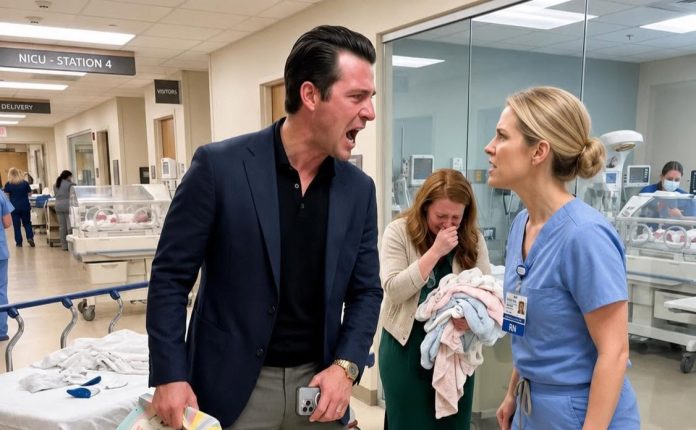
When my grandmother saw me standing in my aunt’s marble entrance hall with my nine-month-old daughter asleep against my faded hoodie, she stared as though she had seen a ghost. Then she asked the question that tore our family apart: “Wasn’t the $180,000 I sent you enough?” I had survived my husband’s death by selling furniture, skipping meals, and counting coins for diapers. I had never received a dollar from her. Before anyone could explain, Grandma called her attorneys and ordered every person in the house to stay. But the missing money was only the first secret. Someone had opened accounts in my name, forged my signature, intercepted my mail—and my husband had discovered the truth before he died.
Part 1: The Question That Silenced Thanksgiving
The question seemed to silence the entire entrance hall of my aunt’s house in Denver, Colorado.
My nine-month-old daughter, Lily, slept peacefully against my shoulder, one tiny hand wrapped around the collar of my worn gray hoodie. My jeans were faded at the knees, and my old sneakers were still damp from the rain outside. Across the room, my grandmother, Margaret Whitmore, studied me as though she had just walked into a scene that made no sense.
We had not seen each other in almost two years.
She had traveled from Boston for Thanksgiving, and I had agreed to attend only because my cousin Emily had repeatedly encouraged me. She said Grandma was getting older and often asked about Lily and me.
At first, Grandma had smiled warmly when I entered. Then she noticed my clothes. Her gaze moved from my hoodie to Lily’s secondhand blanket and finally back to my face. The warmth disappeared.
“Wasn’t the $180,000 I sent for you enough?” she asked again, quieter this time.
I searched her face, convinced I had misunderstood.
“What money?”
Near the dining room, my aunt Patricia dropped the candle she was holding. It rolled across the wooden floor and struck the baseboard.
Grandma immediately turned toward her.
“Patricia?”
My aunt’s face lost all color.
Uncle Robert appeared from the kitchen, drying his hands on a towel. My mother, Denise, followed with a glass of wine in her hand. One by one, the conversations in the dining room faded as everyone sensed that something serious had just been uncovered.
I looked directly at Grandma.
“I never received a single dollar.”
The silence that followed felt heavy enough to press against my chest.
Grandma touched the gold chain around her neck, something she always did when forcing herself to remain calm.
“I transferred $180,000 after your family emergency,” she said. “Patricia told me you needed help with medical expenses, housing, childcare, and time away from work. She also said you were too proud to contact me yourself.”
The room seemed to shift beneath my feet.
After losing my husband, Evan, in a road accident, I had been left alone with a newborn, hospital bills, funeral costs, and no steady income. I sold jewelry, furniture, and almost anything valuable enough to cover rent. I calculated every grocery purchase before reaching the checkout counter. I accepted secondhand baby clothes, skipped meals, and took whatever freelance bookkeeping work I could manage while caring for Lily.
There had been nights when I sat alone inside my car, counting the few bills left in my wallet and wondering how I would survive another week.
All that time, my grandmother had believed I was financially secure.
Grandma slowly removed her phone from her handbag.
“Margaret,” Patricia said quickly, forcing a nervous smile. “There has obviously been some kind of misunderstanding.”
Grandma did not even look at her. She selected a contact and lifted the phone to her ear.
“Richard,” she said when the call connected, her voice calm but firm. “I need you and Clara at Patricia’s house immediately.”
Patricia’s fingers tightened around the edge of the dining table.
“Bring the bank-transfer records, the family-trust documents, and everything necessary to determine where the money went,” Grandma continued. “Be prepared to take legal action tonight.”
Then she ended the call.
My aunt looked as though her knees might give way.
My mother set her glass down without speaking.
Uncle Robert stared at Patricia, his expression slowly changing from confusion to suspicion.
Grandma turned back toward me. Her eyes softened when they fell on Lily, who was still sleeping peacefully against my shoulder, unaware that the room around her had changed completely.
“Please stay,” Grandma said. “You and Lily are not leaving until we understand exactly what happened.”
Patricia opened her mouth.
Grandma raised one hand.
“No excuses. No private conversations. And no one leaves this house until my attorneys arrive.”
“For heaven’s sake, Margaret,” Uncle Robert said, looking from his wife to Grandma. “You cannot imprison people in my house.”
“I am not imprisoning anyone,” Grandma replied. “You are all free to leave. But anyone who leaves before we examine those records should understand how that decision will appear.”
No one moved.
Emily came quietly to my side and touched Lily’s blanket.
“Come sit down,” she whispered.
She led me into the sitting room, where a fire glowed behind a glass screen. The decorations looked almost painfully perfect: gold leaves on the mantel, polished candlesticks, cream-colored pillows arranged without a wrinkle. I could smell roasted turkey and cinnamon from the kitchen, but my stomach had closed.
My mother sat across from me, twisting her wedding ring.
“Mom,” I said. “Did you know about the money?”
She looked down.
That movement frightened me more than an answer would have.
“Denise?” Grandma said sharply.
“I knew Margaret wanted to help,” my mother replied. “Patricia said she was handling it.”
“Handling what?” I demanded.
“She said you were emotionally overwhelmed. She said direct contact might make things worse.”
“Contact from my grandmother would have made things worse?”
“I did not say I agreed with everything.”
“Then what did you agree with?”
My mother’s eyes filled, but I felt no sympathy yet. I had spent months believing my family had forgotten me. I had called her twice after Evan’s funeral and asked whether I could stay with her temporarily. Both times she told me her apartment was too small and that I needed to learn to stand on my own.
While she was saying that, she apparently knew Grandma had sent enough money to change everything.
The doorbell rang forty minutes later.
Richard Hale entered first, tall and silver-haired, wearing a dark overcoat still beaded with rain. He had been Grandma’s attorney for more than twenty years. Clara Bennett, a younger lawyer from his firm, followed carrying two leather cases and a laptop bag.
Neither of them looked surprised to find the family gathered in rigid silence.
Richard greeted Grandma and then looked at me.
“Claire Mercer?”
“Yes.”
“I’m sorry we’re meeting under these circumstances.”
Patricia crossed her arms.
“This is absurd. There is a simple explanation, and Margaret is turning Thanksgiving into a criminal investigation.”
Richard removed a folder from his case.
“If there is a simple explanation, Mrs. Whitmore, the records should establish it quickly.”
He placed the folder on the coffee table and opened it.
The first page showed a transfer from the Whitmore Family Trust in the amount of $180,000. The recipient was listed as Claire Denise Mercer.
My full legal name.
Below it appeared the last four digits of an account number at Mountain Crest Bank.
“That isn’t my bank,” I said.
Richard nodded.
“We confirmed the account is still open, although most of the funds have been removed.”
Clara turned the laptop toward me. On the screen was a scanned account-opening document.
My name appeared at the top.
My Social Security number was printed beneath it.
My old address was listed, but the mailing address was Aunt Patricia’s house.
The signature at the bottom looked like mine from a distance. Up close, the loops were wrong.
“I didn’t sign that.”
“I know,” Richard said.
“How could they open an account without me?”
“Someone supplied a copy of your driver’s license, your Social Security number, your date of birth, and a notarized authorization claiming Patricia Whitmore was acting as your temporary financial representative during a medical crisis.”
My eyes moved toward Patricia.
She had backed against the mantel.
“You opened a bank account in my name?”
“I opened it for you,” she said.
“You used my identity.”
“You were not answering calls. You had just given birth, Evan had died, and the family was worried.”
“No one called me.”
Patricia looked toward my mother.
“Denise said Claire did not want to speak with anyone.”
Every face turned to my mother.
“I never said that,” she whispered.
“Yes, you did.”
“I said she was grieving.”
“You said she did not want Margaret involved.”
My mother stood abruptly.
“Stop twisting my words.”
Grandma’s voice cut through both of them.
“Where is the money now?”
Richard took out another statement.
“The original transfer arrived on February 18. Within forty-eight hours, thirty thousand dollars was moved to a company called Blue Aspen Consulting. Another twenty-five thousand was withdrawn through a cashier’s check. Over the next four months, additional transfers were made until fewer than seven thousand dollars remained.”
Uncle Robert stared at the company name.
“Blue Aspen?”
Patricia looked away.
Robert’s face hardened.
“That is the consulting company you created for the house renovation.”
Patricia said nothing.
He stepped toward her.
“You told me your father left you that money.”
“I can explain.”
“Did you use Claire’s money to renovate this house?”
“It was temporary.”
A sound escaped me that was somewhere between a laugh and a sob.
I looked around at the marble entrance, the imported light fixtures, the custom cabinets visible through the kitchen doorway. I thought of the apartment where Lily and I slept beside a radiator that stopped working twice a week.
“You put my daughter’s money into these walls?”
“It was not Lily’s money,” Patricia snapped. “It came from the family trust.”
“It was sent to me.”
“And you would have wasted it while you were grieving.”
The room went completely still.
Even Patricia seemed shocked by what she had said.
Grandma rose slowly from her chair.
“You will not speak to her that way again.”
Patricia’s chin trembled, but she held her ground.
Grandma turned to Richard.
“Freeze the account. Contact the bank’s fraud department. I want every transfer traced.”
Clara was already typing.
Richard removed one more page from the folder.
“There is something else.”
I almost told him I had heard enough, but his expression stopped me.
He placed a color copy of an identification document on the table. It was the driver’s license someone had used to open the account.
The photograph was mine.
I recognized it immediately. It had been photocopied years earlier for the emergency-information folder Grandma required every family member to keep at her Boston home.
Only four people had access to that file.
Grandma.
My mother.
Aunt Patricia.
And Evan.
Richard pointed to the bottom of the notarized authorization.
“The document appointing Patricia as your representative required a witness who claimed to have watched you sign it.”
I followed his finger.
Beneath the forged version of my signature was another name.
The witness was my mother.
Part 2: The Account Opened in My Name
I stared at my mother’s signature until the letters blurred.
“Tell me that isn’t yours.”
Denise pressed one hand over her mouth.
“Claire, I can explain.”
Those words had already been used too many times that evening.
“Did you sign this?”
“I signed something.”
“What does that mean?”
“Patricia brought documents to my apartment. She said Grandma was sending emergency money for you and that the bank needed a family witness because you were recovering from childbirth.”
“I was not recovering from childbirth. Lily was already four months old.”
“I did not know the date on the form.”
“You did not read it?”
My mother’s face crumpled.
“I trusted my sister.”
The answer was so weak that it made me angrier.
“You trusted her more than you cared whether I received the money?”
“That is not fair.”
“Fair?” I shifted Lily in my arms, lowering my voice so I would not wake her. “I mixed formula with the last clean water in my apartment after the pipes froze. I slept in the car with her one night because the landlord changed the locks when my rent was late. You knew Grandma was trying to help me, and you signed whatever Patricia put in front of you without asking where the money went.”
“I thought you had it.”
“You never once asked.”
My mother began to cry.
Grandma remained standing near the fire, but something in her posture had changed. Her anger had not disappeared; it had become colder.
Richard asked Patricia to turn over all records related to the account.
“I don’t have them here,” she replied.
“Online banking can be accessed from your computer,” Clara said.
“My computer is private.”
Grandma looked at her.
“The account is in Claire’s name. Nothing related to it is private from Claire.”
Patricia folded her arms.
“You have no authority to search my computer.”
“That is correct,” Richard said. “You may provide the records voluntarily, or we can request them through the bank and pursue a court order. Refusal will not prevent us from obtaining them.”
Uncle Robert walked to the desk in the corner of the sitting room, opened a drawer, and removed a silver laptop.
“Robert,” Patricia warned.
He placed it on the table.
“The password is probably Whitmore1974.”
Her face tightened.
Clara entered it. The screen unlocked.
For the next hour, the house remained unnaturally quiet. No one returned to preparing dinner. The turkey stayed in the oven until Emily finally remembered it and hurried into the kitchen. She turned off the heat but did not attempt to serve anything.
Clara searched Patricia’s email while Richard contacted a bank representative and requested an emergency fraud hold. Because the account had been opened in my name, I had to answer identification questions over speakerphone. Hearing a stranger ask whether I had authorized transactions I had never seen made the situation feel even more unreal.
At last, Clara turned the laptop around.
“I found emails from Mountain Crest Bank confirming each transfer.”
Patricia looked toward the hallway as though calculating whether she could reach the front door before anyone stopped her.
The statements showed that the money had not simply paid for the renovation. Forty-two thousand dollars had gone to Blue Aspen Consulting. Twenty-six thousand had been transferred to an account belonging to Patricia. Eighteen thousand had paid a contractor. Twelve thousand had covered property taxes. Nine thousand had gone to a private school in Boulder.
Emily’s private school.
Her face collapsed when she saw the payment.
“Mom?”
Patricia shook her head.
“Do not blame yourself.”
“You said Grandma paid my tuition.”
“She did, indirectly.”
Grandma’s expression became almost unrecognizable.
“I paid Emily’s college tuition separately. I never paid that school.”
Emily began to cry quietly.
Another payment covered a luxury cruise Patricia and Robert had taken the previous summer. Robert stared at the statement as if it were written in another language.
“You told me we used your inheritance.”
“I intended to put the money back.”
“With what?”
“When the property increased in value.”
“You stole from a widow and planned to repay her if the housing market was favorable?”
Patricia’s voice rose.
“I was trying to hold this family together. Robert’s business was collapsing. Emily needed stability. The house was losing value because it had not been updated in twenty years. Claire had disappeared and refused to speak to anyone. The money was sitting there.”
“It was not sitting there,” I said. “It was mine.”
“You were barely functioning.”
“I was still capable of owning my own life.”
Grandma stepped between us before I could move closer.
“What about the remaining transfers?” she asked.
Clara opened another document.
“Thirty-eight thousand dollars was withdrawn through cashier’s checks payable to cash. We do not yet know who deposited them. There is also a transfer labeled ‘Mercer settlement processing.’”
My breath caught.
“Mercer?”
Richard leaned closer.
The amount was $17,500.
The transfer date was three days after Evan’s funeral.
“What settlement?” I asked.
No one answered.
Richard looked at Patricia.
“Mrs. Whitmore?”
“I do not remember every banking description.”
“You created the description.”
“I handled many expenses at the time.”
“What expenses connected to Evan?”
Patricia’s eyes moved toward my mother.
It was brief, but everyone saw it.
“Mom?” I said.
Denise looked physically ill.
“After the accident,” she began, “there were insurance documents.”
“I know. Evan’s auto insurer paid for part of the funeral.”
“There were other documents.”
“What other documents?”
My mother gripped the back of a chair.
“Patricia said there might be a supplemental benefit through Evan’s employer.”
I felt a cold sensation spread through my chest.
Evan had worked as a financial analyst for a regional construction company. He had mentioned basic life insurance when we married, but he had never believed it was enough to matter. After his death, I called his employer’s human-resources department. A woman told me the company had received notice of the accident and that someone from the benefits provider would contact me.
No one ever did.
I had assumed Evan had failed to complete the enrollment paperwork.
“Did a payment arrive?” I asked.
Denise began crying harder.
“I do not know.”
“You signed something else, didn’t you?”
“Patricia said the insurer needed confirmation of your address.”
Richard’s voice became sharper.
“What did you sign?”
“I don’t remember.”
Clara searched the computer again.
Patricia moved suddenly.
She reached for the laptop, but Uncle Robert caught her wrist.
“Don’t,” he said.
For the first time, real fear entered her expression.
Clara opened a folder labeled Claire—Emergency.
Inside were scanned copies of my driver’s license, Social Security card, marriage certificate, Lily’s birth certificate, and Evan’s death certificate.
I felt as if someone had opened my body and arranged my organs on the table.
Patricia had everything required to impersonate me.
There were also draft letters written in my name.
One thanked Grandma for the financial assistance.
Another told Evan’s employer that I had appointed Patricia to handle all communication because I was experiencing severe postpartum depression.
“I never wrote that.”
Clara continued scrolling.
A third letter instructed the benefits company to send all correspondence to a post-office box in Denver.
Richard immediately called someone at his office and asked them to contact the insurer’s emergency fraud division.
Patricia sank onto the couch.
“You do not understand,” she said.
“Then make us understand,” Grandma replied.
Patricia looked toward the windows. Rain streaked the dark glass, reflecting the warm lights inside the room.
“Evan had debts.”
“No, he didn’t,” I said.
“You did not know everything about your husband.”
“We shared our accounts.”
“He was investigating Robert’s company. He believed Robert had misused investor funds.”
Uncle Robert’s face turned red.
“What are you talking about?”
“Evan came to me before the accident. He threatened to report discrepancies he found while reviewing the company books.”
Robert stared at her.
“You told me Evan was helping us refinance.”
“He was, at first.”
“What discrepancies?”
Patricia closed her eyes.
Richard’s phone rang.
He answered, listened, and then looked directly at me.
“The benefits provider has located the policy.”
I stood so quickly that Lily stirred against my shoulder.
“How much?”
Richard hesitated.
“Two hundred and forty thousand dollars.”
The room seemed to lose all sound.
“And where did it go?”
“The benefit was issued four months ago to an account authorized by your designated financial representative.”
His gaze moved toward Patricia.
“The same Mountain Crest account.”
I could not breathe.
Grandma had sent $180,000.
Evan’s insurance had paid $240,000.
More than four hundred thousand dollars had been directed into an account opened in my name.
Richard’s expression grew even more serious.
“The insurer also sent a confirmation letter before releasing the funds. According to their records, the letter was signed for at this address.”
Uncle Robert turned slowly toward his wife.
Patricia said nothing.
Then Emily spoke from behind me.
“I saw that letter.”
Everyone looked at her.
She wiped her face with both hands.
“It came in a white envelope with Evan’s company name on it. Mom told me it was private business.”
“When?” I asked.
“A few weeks after the funeral.”
“Where is it now?”
Emily hesitated.
“Mom burned it in the fireplace.”
Part 3: What My Husband Knew
Lily began to cry.
The sound cut through the room and pulled me back into my body. I carried her upstairs to the guest bedroom, closed the door, and sat on the edge of the bed with her against my chest.
For several minutes, I could do nothing except rock her.
Four hundred and twenty thousand dollars.
The number was too large to understand. I had been choosing between diapers and electricity while money meant to protect Lily had paid for marble counters, tuition, a cruise, property taxes, and whatever else Patricia had decided mattered more than we did.
I remembered the day I sold Evan’s watch. He had worn it at our wedding. I received six hundred dollars from a pawn shop and cried in the parking lot afterward, telling myself he would understand because Lily needed formula and rent was due.
All that time, an insurance benefit he had arranged for us was sitting in an account controlled by my aunt.
There was a knock.
Grandma entered carrying a bottle of warmed milk. She had removed her pearl earrings and set aside the elegant jacket she had worn earlier. Without them, she looked older and more tired.
“I thought she might need this.”
I accepted the bottle.
“Thank you.”
Grandma sat beside me but left a careful space between us.
“I should have contacted you directly.”
“Yes.”
She flinched at the bluntness of my answer, but I could not comfort her.
“I allowed Patricia to convince me that you blamed me for Evan’s death.”
I turned toward her.
“What?”
“She said you were angry because I had encouraged Evan to accept the Denver position. She said you believed the move placed him on the road where the accident happened.”
“That never crossed my mind.”
“I should have known.”
“Why didn’t you call?”
“I did.”
I shook my head.
“No, you didn’t.”
“I called the number Patricia gave me. A woman answered twice and said you were unavailable. Later, I received an email from your account asking me to stop contacting you until you were ready.”
“I never sent that.”
“I know that now.”
She looked down at her hands.
“I accepted a convenient explanation because I was afraid you truly wanted nothing to do with me.”
Her honesty hurt more than an excuse would have. Grandma had always been commanding, certain, and difficult to challenge. The idea that fear had kept her silent seemed almost impossible.
“Patricia stole more than money,” I said. “She made everyone believe I had chosen to disappear.”
Grandma nodded.
“And she made you believe we had abandoned you.”
After Lily finished the bottle, I laid her in the center of the bed surrounded by pillows. Grandma stood near her for a moment, watching her sleep.
“She has Evan’s mouth,” she said.
I looked at Lily’s tiny face.
“Yes.”
Downstairs, the lawyers had begun constructing a timeline. Richard advised everyone that law enforcement would need to be contacted immediately. Patricia refused to answer further questions without her own attorney.
Uncle Robert sat alone at the dining table, staring at the cold Thanksgiving meal. Emily stood near him, but they did not speak.
My mother approached me when I came down.
“Claire, please.”
“Not now.”
“I need you to know I never took the money.”
“You helped her take it.”
“I did not understand what I was signing.”
“You signed more than once.”
She had no answer.
Richard asked whether Evan had kept personal business records at home. I told him I still had two boxes of his belongings in a storage unit. Patricia had offered to help me sort them after the funeral, but I had refused because I was not ready.
Her reaction to that answer was immediate. Her eyes lifted, and for one second the careful control disappeared.
Richard noticed.
“What might be in those boxes?” he asked her.
“I have no idea.”
“Then why are you concerned?”
“I am not.”
Emily suddenly walked toward the hallway.
“Wait.”
She disappeared upstairs before returning with an old phone.
“This belonged to me,” she said. “I replaced it last year, but I kept it because there are pictures from high school.”
Patricia stood.
“Emily, this does not involve you.”
“It already involves me.”
Emily unlocked the phone and opened a messaging application.
“A few days before Evan died, he contacted me. He asked if my mother had ever used my name on business documents.”
Patricia’s expression became rigid.
“What did you tell him?” Robert asked.
“I said I didn’t know.”
Emily scrolled.
“He sent me a voice message the night before the accident. I never listened to the whole thing because Mom came into my room while it was playing. She told me Evan was confused and under a lot of pressure.”
She handed the phone to Richard.
He connected it to a portable speaker.
At first, there was only static. Then Evan’s voice filled the room.
“Emily, I’m sorry to involve you. I know this is your family, and I know Patricia is your mother, but I found documents connected to Blue Aspen Consulting. Claire’s information is attached to one of the accounts. I don’t think she knows. I’m meeting someone tomorrow to turn over copies. If anything happens or Patricia says I misunderstood, don’t believe her. There is an envelope in—”
The message ended.
“That is all?” I asked.
Emily nodded.
“He sent another one, but it’s missing.”
Clara examined the phone.
“It may have been deleted. We might be able to recover it.”
Patricia stared at the floor.
“What account was he talking about?” I demanded.
No response.
Uncle Robert stood.
“Patricia, answer her.”
She looked at him with something close to hatred.
“You would not understand what I had to do to save your company.”
“My company?”
“You were about to lose everything.”
“That did not give you permission to use Claire’s identity.”
“I did it for this family.”
“You did it without telling me.”
“Because you were weak.”
The words struck him visibly.
Patricia continued, her composure cracking.
“You signed contracts without reading them. You trusted partners who laughed behind your back. You nearly lost the house, Emily’s education, our retirement—everything. Someone had to act.”
“So you created Blue Aspen?”
“Yes.”
“Using whose money?”
“At first, mine.”
“And later?”
She remained silent.
Richard turned to me.
“Did Evan ever mention concerns about Patricia or Robert’s business?”
I tried to remember our conversations during the weeks before Lily’s birth. Evan had been distracted, often staying awake at the kitchen table with spreadsheets open on his laptop. He told me he was helping Uncle Robert review company finances because Robert’s business partner had left unexpectedly.
One evening, Evan said something strange.
He told me that in wealthy families, theft rarely looked like someone breaking through a window. It looked like paperwork. It looked like signatures people assumed were legitimate because the names belonged to relatives.
At the time, I thought he was speaking generally.
“He told me to check my credit report,” I said.
“When?” Clara asked.
“Two weeks before Lily was born. I laughed because I had no credit cards except one with a low limit. He said identity theft could happen inside families.”
Patricia stood abruptly.
“I will not sit here while a dead man’s vague comments are turned into accusations.”
Grandma stepped toward her.
“Your own records are the accusations.”
Patricia picked up her handbag.
“I am calling an attorney.”
“You should,” Richard replied. “The police are already on their way.”
Her eyes widened.
“You had no right.”
“Claire reported identity theft to the bank. The bank notified its fraud division. Given the amount involved, they were legally required to act.”
Patricia turned toward the front door.
Robert moved in front of it.
“Do not make this worse.”
She stared at him.
“You think you are innocent? You enjoyed every dollar. You slept in the renovated bedroom. You drank champagne on that cruise. You accepted the school payments.”
“I did not know where the money came from.”
“You never asked because you did not want to know.”
Robert stepped back as though she had slapped him.
Sirens were not visible, but headlights soon swept across the front windows.
Two detectives arrived with a uniformed officer. They separated us and began taking preliminary statements. Patricia refused to speak without counsel. The detectives did not arrest her that night, but they instructed her not to destroy records or access the disputed accounts.
Before leaving, Detective Marisol Vega asked me about Evan’s belongings.
“We need to locate that envelope,” she said. “Do not search the storage unit alone. If your husband was documenting financial crimes, we want the contents preserved properly.”
The next morning, Detective Vega, Clara, and I drove to the storage facility.
The unit was colder than I remembered. Evan’s boxes were stacked behind a crib, two dining chairs, and the lamp from our old apartment. Seeing our life reduced to labeled cardboard containers nearly broke me.
We found the box marked Office.
Inside were notebooks, tax documents, and Evan’s old external hard drive. At the bottom lay a sealed brown envelope.
My name was written across the front.
Detective Vega photographed it before opening it with gloved hands.
Inside were copies of bank statements, company ledgers, emails, and notarized documents.
Several accounts were connected to Blue Aspen Consulting.
One belonged to me.
Another had been opened in Emily’s name.
A third used Grandma’s trust identification number.
Evan had highlighted transfers totaling nearly nine hundred thousand dollars over four years.
Clara turned pale.
“This goes far beyond Claire’s emergency fund.”
At the bottom of the envelope was a handwritten note.
Claire, if you are reading this, I was not able to explain in person. Patricia has been using family identities to move money through Robert’s company. I confronted her. She told me I would destroy everyone if I exposed it. I am meeting Richard’s investigator tomorrow morning. Keep Lily safe. Trust Emily. Do not trust any document Patricia gives you.
My legs weakened.
The meeting had been scheduled for the morning Evan died.
Detective Vega picked up the final item in the envelope: a small digital recorder.
“There is one audio file,” she said.
She pressed play.
Patricia’s voice came first.
“You have no idea what you’re doing, Evan.”
Then my husband answered.
“I know exactly what I found.”
“If you take those files to Margaret, Robert loses his company. Emily loses her future. Claire will blame you for destroying her family.”
“I’m not protecting theft.”
“You think being righteous makes you safe?”
There was a pause.
Evan’s voice became quieter.
“Is that a threat?”
Patricia’s answer came clearly through the speaker.
“It is a warning. Accidents happen every day.”