PART 4 — THE WEDDING THAT NEVER HAPPENED
I hired an attorney named Naomi Brooks.
She specialized in trust abuse and disability-rights cases.
Naomi was small, direct, and unimpressed by emotional excuses.
After reviewing the documents, she said, “Your father did not misunderstand the trust. He committed fraud.”
The forged medical letters were serious.
So were the false incapacity statements and unauthorized withdrawals.
The fact that some money had been used for family expenses did not make it legal.
My parents had acted as trustees.
They were required to use the funds solely for my benefit.
Naomi obtained an emergency court order freezing the remaining balance and removing my parents from control.
She also contacted the wedding vendors.
Because several payments had been made only days earlier, some were still refundable.
The reception venue agreed to return eighteen thousand dollars.
The florist returned part of the deposit.
The bridal salon refused because the gown had been altered and worn.
When Emily learned the refunds would go back into the trust, she came to my apartment again.
This time Daniel was with her.
He stood several feet behind her.
“Tell her,” Emily said.
Daniel looked uncomfortable.
“I told her she needed to speak to you directly.”
Emily turned toward me.
“You canceled the reception.”
“I recovered my money.”
“You knew the venue would release the date.”
“I did not reserve the date.”
“Daniel and I were trying to repair things.”
Daniel spoke quietly.
“We were discussing whether repair was possible.”
Emily ignored him.
“Now the entire wedding is gone.”
“You used money meant for my medical care.”
“You are not in treatment anymore.”
I looked at her.
I underwent surgery every two or three years to release scar contractures.
My wheelchair required maintenance.
My insurance did not cover every therapy or adaptive device.
She knew that.
“I have another operation scheduled in November.”
“Mom said insurance would cover it.”
“Mom says many things.”
Emily folded her arms.
“You were not using the money.”
“It was mine.”
“You always say that.”
“Because people keep taking my things.”
Daniel looked at her.
“Emily.”
She turned on him.
“What? Are you going to pretend you didn’t benefit too?”
His face changed.
“I did not know where the money came from.”
“You didn’t ask.”
“Your parents told my family they had saved for years.”
“And you believed them.”
“Because normal people do not steal from an injured daughter to fund a wedding.”
Emily flinched.
I had never heard Daniel raise his voice before.
She turned back to me.
“If you press charges, Dad could go to prison.”
“That decision belongs to prosecutors.”
“You reported him.”
“My attorney reported forged medical documents.”
“You know what that means.”
“Yes.”
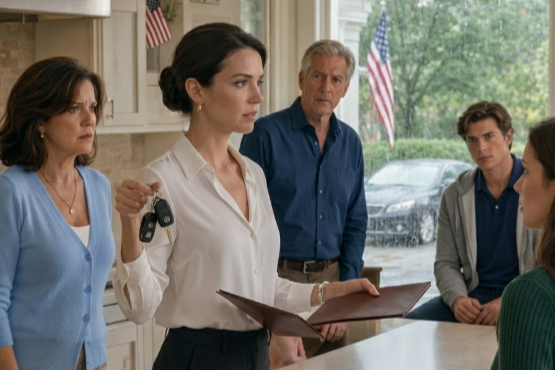
Mom and Dad arrived before I could end the conversation.
They had followed Emily.
Dad entered without waiting for permission, but Naomi, who had been working at my dining table, stood immediately.
“You need to leave,” she said.
Dad stopped.
“Who are you?”
“Claire’s attorney.”
His expression darkened.
“This is a family dispute.”
“No,” Naomi replied. “It is a legal matter involving breach of fiduciary duty, forgery, and financial exploitation.”
Mom began crying.
“Claire, please don’t do this.”
I looked at her.
“Did you ever plan to tell me the trust still existed?”
“We thought you were happier not worrying about money.”
“I worried every month.”
“You always managed.”
“I delayed procedures because I thought I could not afford them.”
Mom looked at Dad.
He avoided her eyes.
I continued.
“I used a damaged wheelchair for eight months because insurance denied the replacement. You watched me struggle with it.”
“We had expenses,” Dad said.
“So did I.”
“You had housing.”
“I paid for it.”
“You had a job.”
“Yes.”
“Then you were fine.”
Naomi placed both hands on the table.
“That is not a legal defense.”
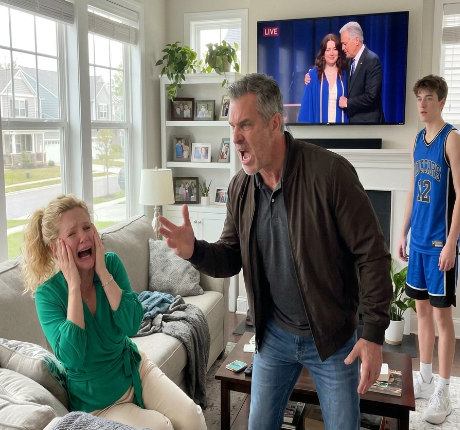
Dad pointed toward me.
“Do you understand what we gave up after the fire? Your mother stopped working. I lost promotions. We spent years in hospitals.”
“I was in those hospitals.”
“You think it was easy watching you?”
The room went still.
There it was again.
My suffering mattered most as something they had witnessed.
Emily sat on the edge of the couch.
“If the money is returned, will you stop?”
“There is not enough money to return.”
Dad’s face changed.
I turned toward him.
“What happened to the remaining forty thousand before the account was frozen?”
Naomi answered.
“Twenty-five thousand was transferred yesterday.”
Mom looked startled.
“Transferred where?”
Dad said nothing.
Naomi held up a bank record.
“To an account in Mark Whitmore’s name.”
Mom stared at her husband.
“What did you do?”
“I was protecting the family.”
“From whom?” I asked.
“From you.”
The honesty of it stunned everyone.
Dad had attempted to empty the trust before the court order took effect.
Emily stood.
“You said the money would cover the vendors.”
Dad did not look at her.
Mom’s face collapsed.
“You told me you were moving it temporarily.”
“I did what was necessary.”
Daniel stepped closer to Emily.
“Did you know?”
“No.”
For once, I believed her.
Dad looked around the room as though expecting someone to defend him.
No one did.
He pointed at Naomi.
“You people see numbers. You do not see what this family survived.”
Naomi’s voice remained calm.
“Claire survived it.”
That ended the argument.
Dad was arrested two days later after investigators found additional forged records.
He was released pending trial, but he was ordered not to contact me.
Mom filed for separation within a month.
She claimed the final transfer had been the moment she realized who he had become.
I did not remind her of the previous nineteen years.
Emily and Daniel did not marry.
At first, they called it a postponement.
Then Daniel moved out of their shared condominium.
Three months later, the engagement ended.
Emily blamed me publicly.
She posted a long message about family betrayal, unresolved trauma, and people who weaponized generosity.
She did not mention the trust.
She did not mention the lie about the fire.
She did not mention asking me to sit in the back.
The post received hundreds of sympathetic comments.
Then someone uploaded a video from the church.
The photographer’s camera had continued recording after Margaret stood.
The clip included Emily’s whisper.
It included Daniel asking whether she had lied.
It included Margaret’s five words.
Within two days, millions of people had watched it.
Emily deleted her post.
For the first time, she could not control the photograph.
PART 5 — WHAT SURVIVING DID NOT MEAN
The legal case lasted nearly a year.
Dad eventually pleaded guilty to forgery, fraud, and misuse of protected funds.
Because he returned part of the money and had no previous criminal record, he received eighteen months in a minimum-security facility, followed by probation.
He was also ordered to sell several assets.
My parents’ house was sold.
The remaining proceeds repaid part of the trust.
Emily sold her condominium because the down payment had come from my money.
The court did not leave her homeless.
After the unauthorized amount was calculated, she received credit for payments she had made herself and kept enough equity to rent an apartment.
She called it cruelty.
I called it accounting.
The recovered funds did not restore everything.
Money spent on tuition, vacations, investments, and years of family expenses could not all be traced or returned.
But the trust regained enough to cover my upcoming surgery, replace my wheelchair, and create long-term medical stability.
For the first time in my adult life, I could schedule treatment without wondering which bill would remain unpaid.
My surgery took place in November.
Margaret came to the hospital.
She brought white roses and a stuffed Dalmatian.
“I found the same kind Thomas gave you,” she said.
I held the toy against my chest.
“His was named Ember.”
“What will you name this one?”
“Thomas.”
Margaret cried.
So did I.
She did not try to become my mother.
She did something simpler.
She showed up.
She came to appointments when I asked.
She called before visiting.
She learned how to fold my wheelchair without treating me like a child.
She never told me I was inspiring.
That was one reason I trusted her.
Daniel visited once after surgery.
He stood near the window holding a paper cup of coffee.
“I should thank you,” he said.
“For what?”
“For not telling me what to do about Emily.”
“That was your decision.”
“Yes.”
He looked down.
“I kept waiting for her to take responsibility. She apologized for the wedding, then explained why it was understandable. She apologized for the lie, then reminded me she was ten when it started. She apologized for the money, then said your parents offered it.”
“She has always believed an explanation cancels a choice.”
He nodded.
“I loved her.”
“I know.”
“Part of me still does.”
“That does not mean you should marry her.”
He gave a sad smile.
“You said you would not tell me what to do.”
“I changed my mind.”
He laughed for the first time.
Then his expression became serious.
“My father wrote about you in other letters.”
Margaret had found them after the wedding.
Thomas had described visiting the burn unit.
He wrote that my parents seemed overwhelmed, but he was troubled by the way Dad answered every question for me.
In one letter, he said I kept asking whether Emily was safe.
No one told me that Emily had already been discharged.
They feared I would become agitated.
For weeks, I believed she might still be dying.
That was how my family protected me.
By withholding the truth until fear became normal.
My relationship with Mom became complicated.
She apologized often.
At first, every apology ended with a request.
Please write to your father.
Please speak kindly at sentencing.
Please tell Emily you forgive her.
Please understand how frightened I was.
Eventually, I told her, “An apology that requires me to comfort you is another demand.”
She stopped calling for several weeks.
Then she asked to meet with a family therapist.
I agreed to one session.
Mom sat across from me in a small office and admitted she had known about the trust withdrawals.
Not all of them.
Enough.
“Why?” I asked.
She twisted a tissue in her hands.
“Your father said the money belonged to the family because the family suffered too.”
“And you believed him.”
“I wanted to.”
“Why?”
“Because we were drowning.”
“So you held me under the water.”
She began crying.
The therapist did not interrupt.
Mom looked at my hands.
“I could not look at your scars without remembering the night.”
“So you stopped looking at me.”
Her face crumpled.
“Yes.”
It was the first completely honest thing she had said.
She had favored Emily not only because Emily was easier.
Emily looked untouched.
Emily could stand in family photographs and allow everyone to pretend the fire belonged to the past.
I carried the evidence into every room.
Mom’s guilt had hardened into avoidance.
Avoidance had become neglect.
Neglect had become resentment.
“I do love you,” she said.
“I believe you.”
Hope appeared in her eyes.
“But love did not stop you from harming me.”
The hope changed.
I did not offer immediate forgiveness.
I offered boundaries.
We could speak once a week.
She could not discuss Dad’s case.
She could not carry messages from Emily.
She could not visit without asking.
If she defended the theft, the call would end.
Mom agreed.
Sometimes she failed.
When she did, I ended the call.
Eventually, she learned that my boundaries were not threats.
They were instructions for remaining in my life.
Emily took longer.
Nearly eighteen months passed before I heard from her directly.
She sent a letter rather than a text.
Claire,
I have written twelve versions of this, and every version tried to explain me.
My therapist said that explanation is where I hide.
So I will not explain.
I lied about the fire.
I let Daniel believe you caused it because the truth made me feel small.
I asked you to sit in the back because I wanted photographs without your scars.
I knew some wedding money came from the trust. I told myself Mom and Dad had the right to use it.
I treated your survival as something that belonged to me and your injuries as something that embarrassed me.
You saved my life.
I repaid you by asking you to disappear.
I am sorry.
There was no request at the end.
No plea for forgiveness.
No demand for a meeting.
I folded the letter and placed it beside Thomas Callahan’s.
Then I waited another month before replying.
I am not ready to have a close relationship. I appreciate that this apology did not ask me to erase the consequences. Continue therapy. Build a life that does not require someone else to become invisible.
She wrote back only once.
I will.
PART 6 — THE FRONT ROW
Three years after the wedding that never happened, I returned to the same church.
Not for Emily.
Margaret had created a memorial fund in Thomas’s name for young burn survivors and families needing accessible housing during long hospital stays.
The church hosted the first annual ceremony.
I had helped design the program.
The fund did not use photographs of injured children without permission.
It did not call them heroes simply for surviving.
It paid for wheelchair ramps, hotel rooms, transportation, counseling, and the thousands of practical things people forgot when they told families to be strong.
I sat in the front row.
Not at the end.
Not angled away from the aisle.
At the center.
My new wheelchair was lighter and fitted properly to my body. I wore a dark blue dress with short sleeves.
For most of my life, I covered my arms at formal events.
That afternoon, I did not.
The scars remained.
They were softer after surgery but still visible, running from my wrists to my shoulders.
People looked.
I let them.
Margaret stood at the podium.
Behind her was a photograph of Thomas in his fire-service uniform.
“When my husband came home after the Tradd Street fire,” she began, “he did not talk about flames or smoke. He talked about a fifteen-year-old girl.”
My throat tightened.
“He said courage was not the absence of fear. It was choosing another person while fear was consuming everything.”
Margaret looked at me.
“But surviving should not become a lifelong obligation to sacrifice.”
That line had been mine.
We had written the speech together.
“A survivor is not public property. Gratitude does not give families the right to control them. Heroism does not cancel their need for care.”
The church was full.
Doctors.
Firefighters.
Burn survivors.
Families.
Daniel sat several rows behind me.
He had married the previous year in a small ceremony in Savannah. His wife, a pediatric nurse named Camille, held his hand.
I had attended.
Emily had not.
She was living in Atlanta and working for a nonprofit that supported children displaced by house fires.
When I first heard, I suspected she was trying to repair her public image.
Perhaps part of her was.
Then I learned she had refused interviews and never mentioned our story.
She worked quietly.
That mattered.
After Margaret’s speech, I approached the podium.
I could stand for short periods after my latest surgery, but I chose to remain seated.
A microphone was adjusted to my height.
“When I was fifteen,” I began, “I entered a burning house because my sister was inside.”
The room became still.
“For years, people called me brave. My family called me difficult.”
A few people shifted uncomfortably.
“They praised the moment I saved someone else, but resented the lifetime of care my body required afterward.”
I looked toward the stained-glass windows.
“I used to think surviving the fire was the hardest thing I would ever do. It was not.”
My hands rested openly on my lap.
“The hardest thing was learning that being needed is not the same as being loved. That sacrifice can become a role people expect you to keep performing. That some families are grateful for what you give them but angry when you begin to belong to yourself.”
Margaret watched from the side of the altar.
“The fire changed my body. Silence changed my family. Truth changed my life.”
I paused.
“I am not grateful for the fire. I do not believe everything happens for a reason. Some things happen because alarms are disconnected, adults make mistakes, and danger arrives before help.”
Several firefighters lowered their heads.
“But I am grateful for the people who arrived afterward and told the truth.”
I looked at Thomas’s photograph.
“A firefighter who carried me out.”
At Margaret.
“A woman who stood up when my own family remained silent.”
At Naomi, seated near the aisle.
“An attorney who understood that disability does not make someone incapable of owning their life.”
Then I looked across the audience.
“And every survivor who has decided they do not need to make others comfortable with what happened to them.”
When I finished, the audience stood.
For years, applause had made me uncomfortable.
It felt too close to pity.
That day, I received it differently.
Not as praise for entering the fire.
As recognition that I had finally walked out of everything that followed.
After the ceremony, I saw a familiar figure near the back of the church.
Emily.
She wore a simple gray dress.
No camera.
No makeup beyond a little mascara.
She had not told me she was coming.
For a moment, anger rose.
Then she remained where she was.
She did not approach.
She waited for permission.
I finished speaking with a family from North Carolina whose son had recently left the burn unit.
Then I looked toward Emily.
I raised one hand.
She walked slowly down the aisle.
When she reached me, her eyes moved over my uncovered arms.
Not with shame.
Not with pity.
She looked directly at them.
“You were wonderful,” she said.
“Thank you.”
“I can leave if this is not okay.”
“You can stay for a few minutes.”
She nodded.
That was all I offered.
That was all she accepted.
We moved into the courtyard beneath the same oak tree where Margaret had given me Thomas’s letter.
Emily sat on the stone bench.
I remained in my chair.
For a while, neither of us spoke.
Finally, she said, “I remember more than I used to admit.”
I waited.
“I remember waking up under the curtain. I remember calling for Mom. Then I remember you.”
Her voice broke.
“You put your hands over my face.”
“To protect you from the smoke.”
“I remember your skin burning.”
I looked toward the fountain.
“I did not want you to remember that.”
“I know.”
“I wanted you to have a life beyond that night.”
“And I used that life to pretend you were the problem.”
“Yes.”
She wiped her eyes.
“I am not asking you to forgive me.”
“I know.”
“I used to think your scars took something from me.”
She looked at her hands.
“Then I realized they were proof of what you gave.”
I breathed slowly.
For years, I imagined this conversation.
In some versions, I forgave her immediately.
In others, I told her never to contact me again.
Reality was less dramatic.
Healing usually was.
“I do not want you to spend the rest of your life worshiping what I did,” I said.
She looked up.
“I also do not want you hiding from it.”
“I won’t.”
“You cannot build your life around owing me.”
“What can I build it around?”
“Being honest.”
She nodded.
We sat beneath the oak tree until the shadows lengthened.
When Margaret appeared in the doorway, she did not interrupt.
She simply waited.
Eventually, Emily stood.
“Can I hug you?”
I considered it.
Then I said, “Not today.”
Pain crossed her face, but she nodded.
“Okay.”
That response mattered more than the request.
She walked toward the parking lot alone.
Margaret came beside me.
“How are you?” she asked.
“Tired.”
“Would you like to go home?”
“Yes.”
She moved behind my chair.
Then she stopped.
“May I?”
I smiled.
“You may.”
As she pushed me toward the front doors, I looked across the church one final time.
The second row where I had been placed.
The back row where Emily wanted me hidden.
The front row where I had sat that day.
For most of my life, other people had decided where I belonged.
Near the edge of photographs.
Behind closed doors.
Inside stories that made them look innocent.
At the back of rooms where my body would be less visible.
They had mistaken my silence for agreement.
They had mistaken my survival for permission.
But I no longer needed anyone to offer me a better seat.
I had learned to choose my own place.
And I would never sit in the back again.