The Master of the House
Chapter 1: The Shadow of the Golden Son
The comparison didn’t start when I graduated, or when I started my first job, or even when I went to college. It started before I could walk. Derek Rivera was born first, three years my senior, and for those three years, he was the undisputed center of a universe that my arrival supposedly threw out of orbit. According to family legend—the kind told at every Thanksgiving while the wine flows and the filters drop—I was the one who “ruined the streak.”
“Derek was such an easy baby,” my mother, Eleanor, would say, her eyes glazing over with a nostalgic warmth she rarely directed at me. “He slept through the night at six weeks. He smiled at everyone. Then we had Jason, and we forgot what sleep was. It was like he was constantly observing us, judging us, even from the crib.”
Derek was the archetype of the American Dream. He was athletic, the captain of every team he touched, a boy who moved through the world with the effortless grace of someone who knew the doors would always open for him. I was the boy in the corner with a book, or the one in the garage taking apart the lawnmower just to see how the gears meshed. While Derek was out winning trophies, I was fascinated by systems. I was quiet, observant, and far more comfortable with the intricate logic of a well-oiled machine than the chaotic social hierarchy of high school.
By the time I was ten, the narrative was etched in stone: Derek was destined for greatness. I was… well, we’d see.
The gap widened in our twenties. Derek went to Duke University on a partial athletic scholarship. He played lacrosse, joined the most prestigious fraternity on campus, and graduated with a finance degree that practically guaranteed a six-figure starting salary. He was a shark in a tailored suit, a creature of Manhattan’s glass towers. He chose a firm on Wall Street and started at $95,000 plus bonuses that could pay for a small house in the Midwest.
I, on the other hand, chose a state school two hours from home. I studied Hospitality Management.
“You’re going to school to learn how to check people into hotels?” my father, Robert, had asked, his brow furrowed in genuine confusion. He was a retired civil engineer who believed in tangible things like bridges and steel. “Jason, you have the brains for engineering or law. Why are you choosing to be a glorified bellhop?”
“It’s a respected program, Dad. Cornell has one, too,” I countered, though I knew it was a losing battle.
“But you’re not going to Cornell,” he reminded me.
He was right. I wasn’t going to Cornell. I was going to a state university with a practical, grueling program that taught me the business I was obsessed with. I had been fascinated by hotels since I was sixteen. Not staying in them—we couldn’t afford luxury travel—but understanding the sheer, terrifying complexity of them. To me, a hotel wasn’t just a building; it was a living organism. It was a machine and an art form simultaneously. The way the front desk interacted with housekeeping, the way revenue management adjusted rates in real-time based on local events, the way the kitchen’s timing dictated the guest’s entire mood—it was a symphony of logistics.
I worked my way through college, not in internships at fancy firms like Derek, but behind the front desk of a Hampton Inn at 2:00 AM. I learned guest services by dealing with angry travelers whose flights had been canceled. I learned night audit, sweating over spreadsheets to ensure the day’s books balanced to the penny. I even worked as a breakfast attendant when the regular staff didn’t show up, flipping waffles and refilling coffee for people who didn’t even see me.
Derek came home for Christmas my sophomore year driving a brand-new Audi A4. He sat in our living room, swirling a glass of expensive scotch, talking about his Manhattan apartment and his expense account dinners at restaurants I’d only seen in glossy magazines.
“Jason’s working at a Hampton Inn,” he told his college friends over the phone while I was in the room, his voice dripping with playful condescension. “Living the dream, right? Making sure the continental breakfast has enough oatmeal.”
They laughed. I didn’t. I just kept my head down, thinking about the occupancy reports I’d been studying. While Derek was learning how to move numbers on a screen, I was learning how to manage people, overhead, and the volatile nature of the public.
After graduation, I stayed in the trenches. I got hired as an assistant manager at a mid-tier hotel in Charlotte. My salary was $38,000. I worked 60-hour weeks. I lived in a studio apartment where the heater rattled like a dying tractor. But I was learning. I learned revenue optimization, staff training, and crisis management. I learned what to do when the pipes burst at 3:00 AM on a sold-out Saturday night. I wanted to understand every single gear in the machine.
Meanwhile, Derek’s life was an escalating montage of success. He got engaged to Courtney, a corporate lawyer from a family with “old money”—the kind of money that came with a family crest and stories about ancestors on the Mayflower.
The engagement party was held at an exclusive country club in Connecticut. I drove down from Charlotte in my aging sedan, wearing my only suit, which was slightly too big because the stress of the job had melted twenty pounds off my frame.
“Jason!” Derek grabbed me in a hug that felt more like a performance for his future in-laws. “Everyone, this is my little brother. He works at a hotel.”
“I’m an assistant manager at—”
“He’s in the hospitality industry,” Derek interrupted, translating for his friends as if I were a curious specimen from a foreign land.
Courtney’s father, Richard, shook my hand with a grip that was meant to dominate. “Hotels, eh? Derek tells us you work the front desk. Good for you. Character building, starting at the bottom.”
He said it kindly, but I could see the calculation in his eyes. He was measuring my net worth and finding it wanting. He looked at my slightly baggy suit and my tired eyes and saw a “service worker.” He didn’t see a competitor. He didn’t see a threat.
And that was exactly how I wanted it.
As I watched my brother toast to his future, surrounded by the elite of Manhattan, I felt a strange, cold clarity. They were all looking at the gold leaf on the ceiling, but none of them knew who owned the foundation.
Chapter 2: The Silent Architect
The next three years were a blur of calculated moves. I moved up from assistant manager to manager, then to senior manager. I left Charlotte for a better property in Atlanta, and my salary climbed to $67,000. For my family, this was the pinnacle. They figured I’d reached my ceiling—a comfortable, mid-level manager who got a free room once a year.
But they didn’t know about the spreadsheets. They didn’t know about the thousands of hours I spent studying commercial real estate, distressed assets, and tax-lien foreclosures. I lived like a monk. I drove a ten-year-old Honda, ate meal-prepped chicken and rice, and wore the same three suits in rotation. Every extra dollar went into a high-yield investment account or a fund I’d set aside for a very specific purpose.
I wasn’t just working in hotels anymore. I was hunting them.
At twenty-nine, I found my first target: a struggling boutique hotel in Asheville that was three months from foreclosure. The owner was a visionary but a terrible businessman. The property was beautiful—rustic stone, mountain views, incredible bones—but the operations were a disaster.
I used every cent I’d saved—$118,000—and took out a small business loan that felt like a noose around my neck. I didn’t tell my parents. I didn’t tell Derek. When they asked how work was, I just said, “Same old, same old. Busy as always.”
I spent a year living in a tiny office in the basement of that Asheville hotel. I fired the dead weight, retrained the remaining staff to treat service like a religion, and renovated the key areas with my own hands. I rebuilt the reputation from the ground up. Two years later, I sold it to a larger group for a 280% profit.
That was the spark that lit the fire.
By thirty-two, I bought my second property. Then a third. I formed Riverside Hospitality Group. I developed a system: identify properties with good bones and atrocious management, acquire them, fix the operations, and either hold them as cash-flow machines or flip them for a massive gain.
By thirty-five, I owned seven properties across four states. I had a management company with forty-three employees. My net worth was approximately $23 million.
But to my family, I was still “Jason, the hotel guy.” When I went home for holidays, the conversation always revolved around Derek’s latest promotion to Vice President or the new custom home he and Courtney had bought in Westchester.
“It’s a five-bedroom, Jason,” my mother told me over dinner, her voice hushed with awe. “Professionally decorated. You really should ask Derek for some career advice. Maybe he could help you get a corporate job in New York. You’ve been in the trenches so long, honey. Wouldn’t you like to sit in a nice office for once?”
I looked at her, then at my father, who was nodding in agreement. I looked at Derek, who was basking in the praise, looking like the king of the world.
“I’m happy where I am, Mom,” I said, taking a sip of water. “I like the work.”
“We just want you to be successful, son,” my father said. “Like your brother.”
“I understand,” I replied.
I didn’t correct them. There was something liberating about being underestimated. No one asked me for money. No one had expectations. I could build my empire in the shadows while they focused on the shiny, gold-plated life Derek was living. It was a perfect arrangement.
Until Derek announced the wedding.
It was going to be “The Wedding of the Century.” A destination event at a luxury resort in Virginia Wine Country. Two hundred guests. A full weekend of events. The invitation arrived four months in advance. It was heavy cardstock with hand-pressed gold calligraphy. The venue was listed in bold letters: The Belmont Estate Resort.
I stared at the invitation for a long time.
I had acquired The Belmont Estate Resort eighteen months earlier for $8.4 million. It was a historic property, a stunning 1920s mansion that had been criminally mismanaged by its previous owners. I had spent an additional $3.2 million renovating it, turning it into the highest-rated luxury resort in the region. It was my crown jewel. It was currently booked at 89% capacity year-round with an average room rate of $1,850 per night.
The wedding coordinator Derek and Courtney were working with had no idea who I was. I kept an extremely low profile. My properties operated under the Riverside banner, and I only dealt with the General Managers. To the world, I was invisible.
I checked my calendar. I checked my bank account. Then, I RSVP’d “Yes.”
I wondered if Derek knew that every time he’d bragged about the “exclusive” venue he’d secured, he was actually putting money directly into my pocket.
Chapter 3: The Motel Insult
Three weeks before the wedding, the phone rang. It was my mother. Her tone was hesitant, the way it usually was when she was about to deliver news she thought would hurt my feelings.
“Jason, hi honey. We need to discuss the hotel situation for the wedding.”
“What situation, Mom?” I asked, sitting in my office in Charleston. My office was the top floor of a renovated textile mill, overlooking the harbor. It was understated but cost more per square foot than Derek’s house in Westchester.
“Well, Derek reserved a room block at the Belmont Estate for the family,” she began, “but the rooms are… well, they’re very expensive. Even with the discount, it’s $2,000 per night for the wedding weekend.”
“Okay,” I said, leaning back in my chair.
“Jason, that’s $6,000 for three nights. Plus, there are resort fees, dining minimums… it’ll be close to $9,000 total for the weekend. We know your salary doesn’t really cover that kind of luxury.”
I felt a familiar sting, but I kept my voice neutral. “I can handle it, Mom.”
She laughed—not a mean laugh, but that patronizing, “oh-you-sweet-child” laugh that had defined our relationship for decades. “Honey, be realistic. That’s more than you probably make in a month. We don’t want you going into debt just to keep up appearances.”
“Mom, I’m fine.”
“We’ve already made a decision, Jason. We found a very nice budget motel about eight miles down the road from the Estate. The Countryside Inn. It’s $110 a night. Much more appropriate.”
“Appropriate for what?”
“For your budget, sweetie. We’re all staying there—me, your father, and your cousins. We don’t want you to feel left out. Derek and Courtney, of course, have the bridal suite at the Belmont, and Courtney’s parents are staying there too. But for the rest of us, the Countryside Inn is perfectly fine.”
I looked at my computer screen. It was showing real-time occupancy rates for the Belmont. We were fully booked.
“You’re staying at a motel eight miles away while the wedding is at a five-star resort?”
“It’s about being sensible, Jason. Not everyone can afford to live like Derek. There’s no shame in being practical.”
I closed my eyes for a second. “Sure, Mom. The Countryside Inn sounds… fine.”
“Oh, good! I’m so glad you’re being reasonable. Derek and Courtney will be so relieved. They felt terrible about the cost, but they really wanted the Belmont.”
Two days later, Derek called.
“Hey, J. Mom told me about the motel. Look, I’m not trying to be a jerk, but I wanted to give you a heads-up. The Belmont is… it’s really upscale. Like, ‘black-tie optional but actually black-tie’ upscale. The spa requires reservations weeks in advance. The restaurant is world-class.”
“I’ve heard,” I said.
“I just don’t want you to feel out of place, you know? Maybe stick to the motel restaurant for your meals if the Belmont menu is a bit much. I think the burgers at the Belmont start at $45. I’d hate for you to get stuck with a bill you can’t pay.”
“I appreciate the concern, Derek.”
“Cool. Also, there’s a pre-wedding cocktail hour for Courtney’s law partners. It’s pretty exclusive. If you feel like skipping it to save some cash, no one will judge you. It’s $150 a head just for the entry.”
“I’ll keep that in mind.”
After I hung up, I sat in the silence of my office. I pulled up the internal management portal for the Belmont Estate. I found the reservation for the Morrison-Bennett Wedding. I saw the total bill: $127,000. I saw the list of special requests: upgraded linens, a specific vintage of champagne, and a demand for a private security detail for the gift suite.
Then I texted Thomas, the General Manager of the Belmont.
Thomas, I’ll be attending the Morrison wedding this weekend as a guest. Maintain absolute confidentiality regarding my ownership. I’ll be checking into the Countryside Inn under my own name. Monitor the wedding party for any issues. Document everything.
His response was immediate. Understood, Mr. Rivera. Should I reserve the Owner’s Suite just in case?
I hesitated. Yes. Keep it off the books. I’ll decide whether to use it when I get there.
The pieces were on the board. The golden son was about to host his grandest performance in my house, and he didn’t even know I held the keys.
Chapter 4: The Welcome Dinner
The wedding weekend arrived with the kind of oppressive heat that only Virginia in mid-summer can produce. I drove up in my three-year-old Lexus. It was a nice car, but compared to the Porsches and Range Rovers pulling into the Belmont’s valet circle, it was invisible.
I drove right past the grand stone gates of the Belmont, past the manicured vineyards and the historic white mansion, and headed eight miles down the highway to the Countryside Inn.
It was exactly what you’d expect for $110 a night. The neon sign flickered with a rhythmic hum. The parking lot was a patchwork of cracked asphalt and weeds. My room smelled like a combination of industrial lemon cleaner and forty years of hidden cigarette smoke. The air conditioner rattled so loudly I could barely hear my own thoughts.
I hung my suit—a classic, well-tailored navy piece that had cost me $2,000 but looked unremarkable to the untrained eye—in the cramped closet. Then I checked my phone.
I had seventeen emails. My property in Savannah was seeing a 15% jump in ADR (Average Daily Rate). My manager in Atlanta was dealing with a minor flood in the laundry room. A private equity firm was sniffing around, asking if I was interested in selling the entire Riverside portfolio for a number that started with a six and had seven zeros behind it.
I handled it all sitting on a lumpy bedspread with a floral pattern from 1994.
The welcome dinner on Friday evening was held on the Belmont’s East Terrace. As I pulled my Lexus into the lot, I saw the transformation I had paid for. The outdoor lighting was subtle and warm, casting a magical glow over the limestone balustrades. The gardens were immaculate, the scent of blooming jasmine heavy in the air.
I walked into the reception hall. The crystal chandeliers, which I’d had restored by a specialist in Venice, sparkled like diamonds. The parquet floors were polished to a mirror finish.
Derek was standing near the bar, looking every bit the Vice President in a custom-tailored light grey suit. Courtney was beside him, draped in silk.
“Jason! You made it!” Derek shouted, pulling me into a hug that smelled like expensive cologne and arrogance. “How’s the… what was it? The Countryside?”
“It’s a place to sleep, Derek. Congratulations. The resort looks incredible.”
“Doesn’t it?” He gestured grandly to the room. “Worth every penny. The rooms here are insane, J. Our suite has a private terrace and a copper soaking tub. It’s $2,000 a night, but hey, you only get married once, right? I wanted the best.”
“You certainly got it,” I said.
My mother approached, looking lovely in a pale blue dress. She patted my cheek. “Are you doing okay, Jason? Do you need anything? I brought some extra snacks in case the motel doesn’t have a vending machine.”
“I’m fine, Mom. Really.”
“Oh, look at you, trying to be so brave,” she sighed. “Come, have a drink. It’s an open bar. Derek paid for the top-shelf package.”
I walked to the bar. I knew the “top-shelf package” Derek had bought. It was the $85-per-head option. I also knew that because I was the owner, the bar was currently serving a $40-per-pour bourbon that wasn’t actually included in that package. Thomas had clearly instructed the bartenders to “accidentally” upgrade the selection for the family.
I ordered a bourbon and moved toward the edge of the terrace. Courtney’s father, Richard, joined me.
“Quite a place Derek picked,” Richard said, swirling his ice. “I’ve stayed in hotels all over the world, but this… the attention to detail is remarkable. The service is invisible but perfect. That’s hard to find.”
“It is,” I agreed. “It takes a very specific culture to maintain this level of quality.”
Richard looked at me, a glimmer of curiosity in his eyes. “Derek says you’re in management. Ever think about trying to get a job at a place like this? A flagship property?”
“I like where I am, Richard. I prefer the independent side of things.”
He chuckled, a dry, dismissive sound. “Well, to each his own. But there’s no shame in admitting when a place is out of your league. Derek, now… he belongs in a place like this. He fits the furniture.”
He clapped me on the shoulder and walked away to talk to a group of men who looked like they owned small countries.
I spent the rest of the night as a ghost. I sat at the “overflow” table during dinner—Table 14, tucked near the service entrance. My parents and Derek were at Table 1, the center of the universe. I ate the Chilean sea bass I had personally approved during the menu tasting four months ago. It was cooked to perfection.
As I was leaving, I saw Thomas, the GM, standing near the entrance. He caught my eye and gave a nearly imperceptible nod. I walked past him without a word.
Back at the Countryside Inn, the Wi-Fi was down. I sat in the dark, listening to the truck traffic on the highway, and checked my messages.
Thomas: Mr. Rivera, a quick update. Mr. Derek Morrison had a confrontation with the front desk this evening. He was demanding a late checkout for the entire 50-room block on Sunday without additional fees. When informed of the policy, he became… let’s say, expressive. He cited the cost of the wedding and demanded to see the owner.
I smiled. And?
Thomas: I told him the owner was unavailable but that the policies were firm. He told me he’d ‘have my job’ by Monday. He’s currently running a tab at the bar that exceeds his credit limit. Should we intervene?
Me: No. Let him run the tab. Document everything. I’ll handle it tomorrow night.
I realized then that Derek wasn’t just staying in my hotel. He was proving exactly why I had never told him the truth. He didn’t respect the people who built the world he enjoyed. He only respected the price tag.
Chapter 5: The Glass House
Saturday was the main event. The ceremony was set for 4:00 PM on the South Lawn, overlooking the Blue Ridge Mountains.
I arrived early, parking my Lexus in the back of the overflow lot. The setup was breathtaking. Twenty-three thousand dollars worth of white roses formed an archway that framed the mountains perfectly. A string quartet played softly in the background.
I sat in the back row, next to a distant cousin who spent the entire ceremony complaining about the heat and the lack of a shaded area. I didn’t mind. I was looking at the grass. My grounds crew had spent weeks ensuring the lawn was a perfect, uniform emerald.
The ceremony was a masterclass in performative success. Derek’s vows were a long list of his achievements and how Courtney was the “perfect partner for a man on his trajectory.” Courtney’s vows were about the “legacy” they were building. It felt less like a wedding and more like a merger.
After the ceremony, the guests moved to the Grand Ballroom for the reception. This was the room that had cost me $1.4 million to renovate. The floor-to-ceiling windows were polished so clearly they seemed to disappear, bringing the sunset directly into the room.
I sat at Table 19. Even further back than the night before. I was seated between a great-aunt who was hard of hearing and a college friend of Derek’s who kept trying to sell me crypto.
The toasts began. Richard stood up first.
“When I first met Derek, I knew he was a winner,” Richard boomed into the microphone. “He understands value. He understands excellence. And choosing this venue… well, it shows he knows how to pick the best. This resort is a testament to the kind of life my daughter and Derek will lead. High-end, uncompromising, and successful.”
Everyone clapped. Derek beamed, leaning back in his chair like a king.
Then my father stood up. “We’re so proud of Derek. He’s always been the one to lead the way. And while we love both our sons,” he added, throwing a quick, pitying glance toward Table 19, “it’s clear that Derek has reached a level of success that most of us only dream of.”
I felt the eyes of the few people who knew me turn in my direction. They weren’t looking with admiration. They were looking with that soft, agonizing pity you give to a stray dog.
Around 8:30 PM, the atmosphere shifted.
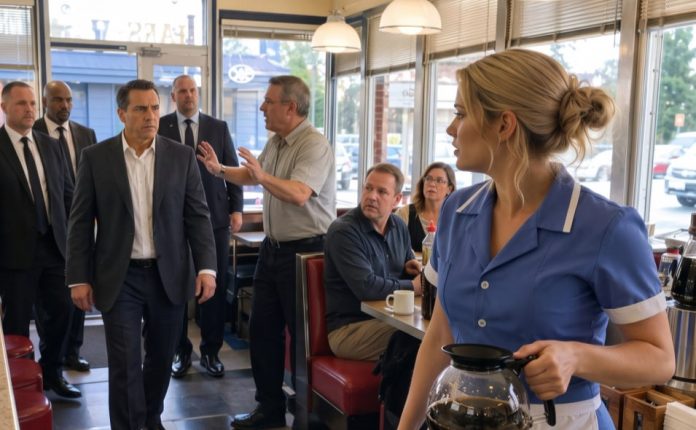
I noticed a commotion at the head table. Derek was standing up, his face flushed a deep, angry red. He was gesturing wildly at a server. Courtney was crying. Richard was shouting.
The music faltered and then stopped. The ballroom went silent, save for Derek’s voice, which was now carrying across the room.
“I don’t care about your ‘policy’! I’ve spent over a hundred thousand dollars here! I want the owner on the phone right now! You’re charging me $4,000 in ‘incidental fees’? For what? The mini-bar? The extra towels? This is a scam!”
Thomas appeared then, moving with the cool, practiced grace of a man who had handled much worse than a drunk groom. He approached the head table, two security guards trailing discretely behind him.
“Mr. Morrison,” Thomas said, his voice calm but amplified by the sudden silence of the room. “We have discussed this. The charges are for the premium services requested outside of your contract, including the vintage champagne you ordered for your private suite and the damages to the furniture in the groomsmen’s lounge.”
“I am a Vice President at a major Manhattan firm!” Derek roared. “Do you know who I am? I will burn this place down in the reviews! I want to speak to the owner. Now!”
Thomas didn’t flinch. “The owner is actually on the premises tonight, Mr. Morrison.”
“Then get him! Bring him here so I can tell him exactly how incompetent you are!”
Thomas paused. He looked around the room, his eyes scanning the tables until they landed on Table 19. He began to walk.
The guests parted like the Red Sea. Two hundred pairs of eyes followed Thomas as he walked past the VIP tables, past the law partners, past the “old money” relatives, all the way to the back of the room.
He stopped in front of me. He bowed his head slightly.
“Mr. Rivera,” Thomas said, his voice ringing out clearly. “I apologize for the interruption. The guest at Table One is requesting a meeting with ownership regarding his bill and our service standards. How would you like to proceed?”
I stood up slowly. I buttoned my navy suit jacket. I could feel the air leave the room.
“Thank you, Thomas,” I said quietly. “I suppose I should handle this.”
I walked toward the head table. With every step, the silence deepened. I saw my mother’s mouth drop open. I saw my father’s glass slip from his hand, spilling wine across the white linen. And I saw Derek. For the first time in my life, my brother looked small.
Chapter 6: The Unmasking
I stopped five feet from the head table. Derek was still standing, his hand gripping the back of his chair so hard his knuckles were white.
“Jason?” he whispered, the word barely a breath. “What is this? What is he talking about?”
“He’s talking to me, Derek,” I said. My voice was steady, devoid of the anger I’d expected to feel. Instead, I just felt a profound sense of completion.
“You’re… the owner?” Courtney asked, her voice trembling. “This is your hotel?”
“I acquired the Belmont Estate eighteen months ago,” I said, addressing the table but loud enough for the room to hear. “I also own Riverside Hospitality Group, which operates this property and six others across the Southeast.”
Richard stood up, his face a mask of confusion. “Riverside? I’ve heard of Riverside. They just bought that boutique chain in Florida. That’s a multi-million dollar company.”
“Seven properties, forty-three employees, and an annual revenue of thirty-one million,” I supplied. “But I’m sure that’s just ‘character building’ work, right Richard?”
Richard looked like he’d been slapped. He sat back down, speechless.
My mother moved toward me, her eyes wide with a mixture of shock and something that looked like fear. “Jason… why? Why didn’t you tell us? You let us think… you let us put you in that motel!”
“I didn’t ‘let’ you do anything, Mom,” I said gently. “You and Dad decided that $110 a night was ‘appropriate’ for my budget. You assumed you knew what I was capable of. You assumed I was the failure that made Derek look better by comparison. I just didn’t see the point in correcting a narrative you were so comfortable with.”
Derek finally found his voice, though it was high and cracked. “You own this place? You let me pay $127,000 to you? You’re my brother! You should have given this to me for free!”
“This is a business, Derek. Not a charity for ‘Golden Sons.’ You wanted the best, and you got it. You signed a contract. You used the services. And now, you’re complaining about the incidental charges because you’ve lived your whole life thinking the rules don’t apply to you.”
“I’ll sue you,” Derek hissed, the arrogance returning in a desperate wave.
“On what grounds? For providing the exact service you contracted for? Thomas has documented every interaction. The damages to the lounge, the $800 bottles of wine you took from the private cellar without authorization, the verbal abuse of the staff… if you want to take this to court, I’m happy to have my legal team meet yours. But I suspect your firm wouldn’t appreciate a Vice President being sued for trashing a resort.”
Derek went pale. He looked around the room, realizing that two hundred people—his colleagues, his new in-laws, his friends—had just watched him get dismantled by the brother he’d spent his life mocking.
I turned to Thomas. “Regarding the requests for refunds and the late checkout?”
“Yes, sir?”
“Denied,” I said. “All charges stand. Checkout is at 11:00 AM sharp tomorrow. If the rooms are not vacated, standard overstay fees will be applied. No exceptions.”
“Understood, Mr. Rivera.”
I looked at my family one last time. “The dessert course is about to be served. I highly recommend the chocolate lava cake. I spent three weeks working with the pastry chef to get the texture right. Enjoy the rest of your evening.”
I didn’t wait for a response. I turned and walked out of the ballroom. I didn’t head for the exit, though. I walked to the private elevator and swiped my keycard for the Penthouse Suite.
The suite was silent, a sanctuary of marble, silk, and glass. I walked out onto the private terrace and looked down at the estate. The lights were twinkling, the music had started again—a hesitant, awkward song—and the world I had built was continuing to turn.
My phone started buzzing.
Mom: Jason, please come back. We didn’t know. We’re so sorry. Let’s talk.
Dad: I’m proud of you, son. I should have said it years ago. Please pick up.
Derek: You’ve ruined my wedding. I hope you’re happy.
I ignored them all. I poured myself a glass of the thirty-year-old scotch I kept in the owner’s cabinet and sat in the dark, watching the stars.
For fifteen years, I had lived in the shadow. I had built an empire in the silence. And tonight, for the first time, the shadow was gone. But as I sat there, I realized I didn’t need their apologies. I didn’t need their shock. I just needed the quiet satisfaction of knowing that the house I built was strong enough to hold even the heaviest truths.
Chapter 7: The View from the Top
The next morning, the Belmont was a hive of activity. Guests were checking out, valets were sprinting to fetch cars, and the wedding staff was already beginning the breakdown of the ballroom.
I had breakfast on my terrace. Thomas brought the morning report personally.
“The Morrison party has checked out, sir,” Thomas said, setting a fresh pot of coffee on the table. “Mr. Derek Morrison was very quiet this morning. He paid the bill in full, including the incidentals, without saying a word.”
“Good.”
“Your parents are in the lobby. They’ve asked to see you before they leave for the airport. They’ve declined the shuttle to the Countryside Inn.”
I took a sip of coffee. “Tell them I’ll meet them in the library in ten minutes.”
When I walked into the library, my parents were sitting on the edge of the leather sofas, looking small amidst the towering shelves of first editions. My father stood up as soon as I entered.
“Jason,” he said, his voice thick. “We… we didn’t sleep much last night.”
“I imagine not,” I said, taking a seat opposite them.
“We feel like fools,” my mother whispered, her eyes red from crying. “All those years, we pushed you toward Derek’s path. We looked down on what you were doing because we didn’t understand it. We thought we were ‘helping’ you by being ‘realistic.’ But we were just blind.”
“You weren’t blind, Mom. You were just looking at the wrong things. You valued the title and the flash. I valued the foundation.”
“Can you forgive us?” my father asked. “For the motel? For everything?”
I looked at them. I saw the genuine regret in their eyes, but I also saw the lingering shock. They didn’t know how to talk to me anymore. The power dynamic had shifted so violently that the old language of “parent and struggling child” was obsolete.
“I’m not angry,” I said, and I meant it. “But things have to change. If we’re going to have a relationship, it has to be based on who I actually am, not the version of me you invented to make yourselves feel better about Derek.”
“We want that,” my mother said. “We really do.”
“Then go home. Reflect on that. I’ll call you next week.”
They left, walking out through the grand lobby of the hotel I owned, looking like tourists in their own lives.
A few minutes later, Derek walked in. He looked terrible. His suit was wrinkled, his hair was a mess, and his eyes were hollow.
“I’m leaving,” he said, standing by the door.
“Safe travels, Derek.”
He looked around the room, then back at me. “How did you do it? Really? I’ve been working eighty-hour weeks at the firm for a decade, and I’m still just an employee. You… you own all of this.”
“I stopped looking for someone to give me a seat at the table, Derek. I just started building my own table. While you were busy making sure everyone knew how successful you were, I was busy actually being successful. There’s a difference.”
Derek nodded slowly. “I think I hate you a little bit. But I also think I’ve never respected you more.”
“I don’t need your respect, Derek. But I’ll take the honesty.”
He turned to leave, then stopped. “The cake was actually really good. You were right about the texture.”
“I know,” I said.
He walked out.
I stayed at the Belmont for another two days. I walked the grounds, talked to the staff, and reviewed the revenue projections for the next quarter. I felt a sense of peace I hadn’t known in years. The secret was out, the ghost was gone, and the empire was still standing.
As I drove out through the stone gates on Monday afternoon, heading back to my life in Charleston, I passed the Countryside Inn. The neon sign was still flickering. The weeds were still growing in the parking lot.
I didn’t feel the need to look back. I didn’t need to prove anything else. I had built a world where I was no longer the shadow. I was the master of the house.
And the view from the top was exactly as I had imagined it would be.
If you want more stories like this, or if you’d like to share your thoughts about what you would have done in my situation, I’d love to hear from you. Your perspective helps these stories reach more people, so don’t be shy about commenting or sharing.