Michael looked down at his hands. Dust from the roadside had settled into the crease of one knuckle when he had touched the door handle. He had not noticed until that moment.
“Both,” he said. “But I think I already know which direction the lie points.”
David began with the hospital trail, because records leave footprints even when people try to sweep them away. Patient intake forms. Call logs. Billing notes. Payment stamps. One clerk who remembered a pregnant woman crying quietly at the counter because she had no insurance card and no husband answering the phone.
At 6:48 p.m., David called back.
“I found a county hospital intake form from eleven months ago. Emily checked in pregnant. Your name was listed as emergency contact. Your private office line was listed. The call log shows three attempts were made. Two to the house. One to your office. All three marked completed.”
Michael closed his eyes. “I never got them.”
“I know. The office call was rerouted. Someone changed the forwarding rule for twenty-six minutes that night. And the hospital intake record was removed from the active system three days later. Someone paid a records clerk in cash.”
Michael stood so fast his chair rolled back into the credenza.
David sent the scan. Michael opened it and read Emily’s name at the top and her shaky signature at the bottom. Under emergency contact was his full name, his office number, his old house line, and his relationship to patient.
Husband.
He stared at that word until it blurred.
The payment stamp for the record removal had been disguised as a records correction request. The authorization number was tied to an access card from his own household account. The same access level he had given Ashley after she moved into the guest wing during the divorce, because she had claimed reporters were bothering her.
Michael remembered handing her that card. He had called it practical. Emily had called it strange. He had told Emily not to be jealous.
The word jealous now tasted obscene.
By 8:12 p.m., David had found the first crack in the wire transfers. They had not been initiated from Emily’s laptop. They had been initiated from an administrative tablet kept in the house office. The device had logged in at 11:09 p.m. on the night Emily was supposedly at the hotel. But the hotel photos had metadata from 9:42 p.m., and the security gate had scanned Emily’s car at 9:47 p.m. entering their own driveway.
The woman in the photos had not been Emily. The angle had hidden the face. The coat had been Emily’s. The hair was close enough.
Close enough had ruined her life.
The security safe had been opened with Michael’s master code at 1:03 a.m. Michael had been out of state that night. Only two people knew the backup code. Emily and Ashley. Emily had been locked out of the house security system at 10:18 p.m. after Michael revoked her access during their argument. Ashley’s guest code remained active.
Michael put his hand over his mouth.
At 9:06 p.m., his phone buzzed with a text from Ashley.
Dinner tomorrow? Wear the navy suit. I want us to look perfect.
He typed back one word. Sure. He hated himself for it, but he needed her unworried. He needed one more day.
David found Emily the next morning through a recycling center receipt stamped 7:22 a.m. with a signature that looked like it had been written while holding a baby. She was staying in a small apartment above a laundromat with a woman from a church pantry who let her pay what she could. There was no formal lease. No crib receipts. No bank account with more than forty dollars in it.
There was a hospital discharge paper for twins.
No father listed.
The babies’ names were Noah and Ethan.
Michael read the names three times. He sat with both hands pressed flat to the desk because some grief is too heavy to hold standing up. He had sons. For almost a year, he had had sons. And Emily had carried them through hunger and heat and sleepless nights and humiliation because he had trusted a woman who smiled while throwing money at them in the dirt.
David urged him not to rush. Not because Ashley deserved fairness, but because Emily deserved more than another emotional explosion.
Michael knew he was right.
He documented everything. He had David preserve the intake form, certify the call logs, pull the household access reports from the security vendor, copy and timestamp the wire transfer ledger, match the necklace safe logs against Ashley’s access card, and have the hotel photo metadata reviewed by an independent analyst.
At 10:30 a.m., he called a different attorney. Not the one who had helped him remove Emily from the house.
By noon, he was parked across from the laundromat apartment. He did not go in. He watched Emily come down the narrow stairs with one baby in a sling and the other in a secondhand stroller whose front wheel wobbled. She had a diaper bag over one shoulder and a paper grocery bag hooked over the handle. She moved like someone whose body had been tired for so long that tired had become the baseline.
He could have stepped out. Could have said her name. Could have fallen apart on the sidewalk. But he had already done enough harm by making his feelings the center of her life. This time, he waited.
Emily refused the first call from the neutral advocate. Michael did not blame her. She refused the second. He did not blame her for that either. On the third call, the advocate told her only one thing. He knows about the hospital record. He knows someone blocked your calls. He is asking permission to meet in a public place, with your advocate present.
Emily agreed to twenty minutes.
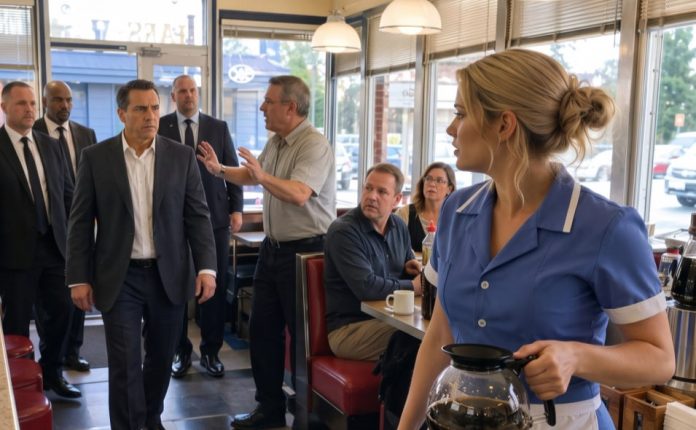
They met in a diner off a main road because Emily wanted witnesses and Michael deserved that condition. She arrived with the twins in their stroller, her face pale and guarded. Michael stood when she entered, then sat back down because the look in her eyes told him not to perform remorse where strangers could see it.
“I’m not here to ask you to forgive me,” he said.
“Good.”
The word was quiet. It still cut clean through him.
He slid the hospital intake copy across the table. Then the call log. Then the security access report. Emily did not touch them at first. She looked at the papers like they might bite.
“I called you,” she said.
Michael’s throat closed. “I know.”
“I called from the hospital. I called when they said both heartbeats were there. I called when they told me I might need to stay overnight. I called when I had nowhere to go.”
He lowered his eyes.
“You don’t get to say that like knowing now repairs not knowing then,” she said, and her voice was shaking.
He nodded once. “You’re right.”
One of the babies stirred. Emily reached down automatically, her hand gentle before she even looked. That small motion broke him more than any accusation could have. Care had become her reflex. His had become suspicion.