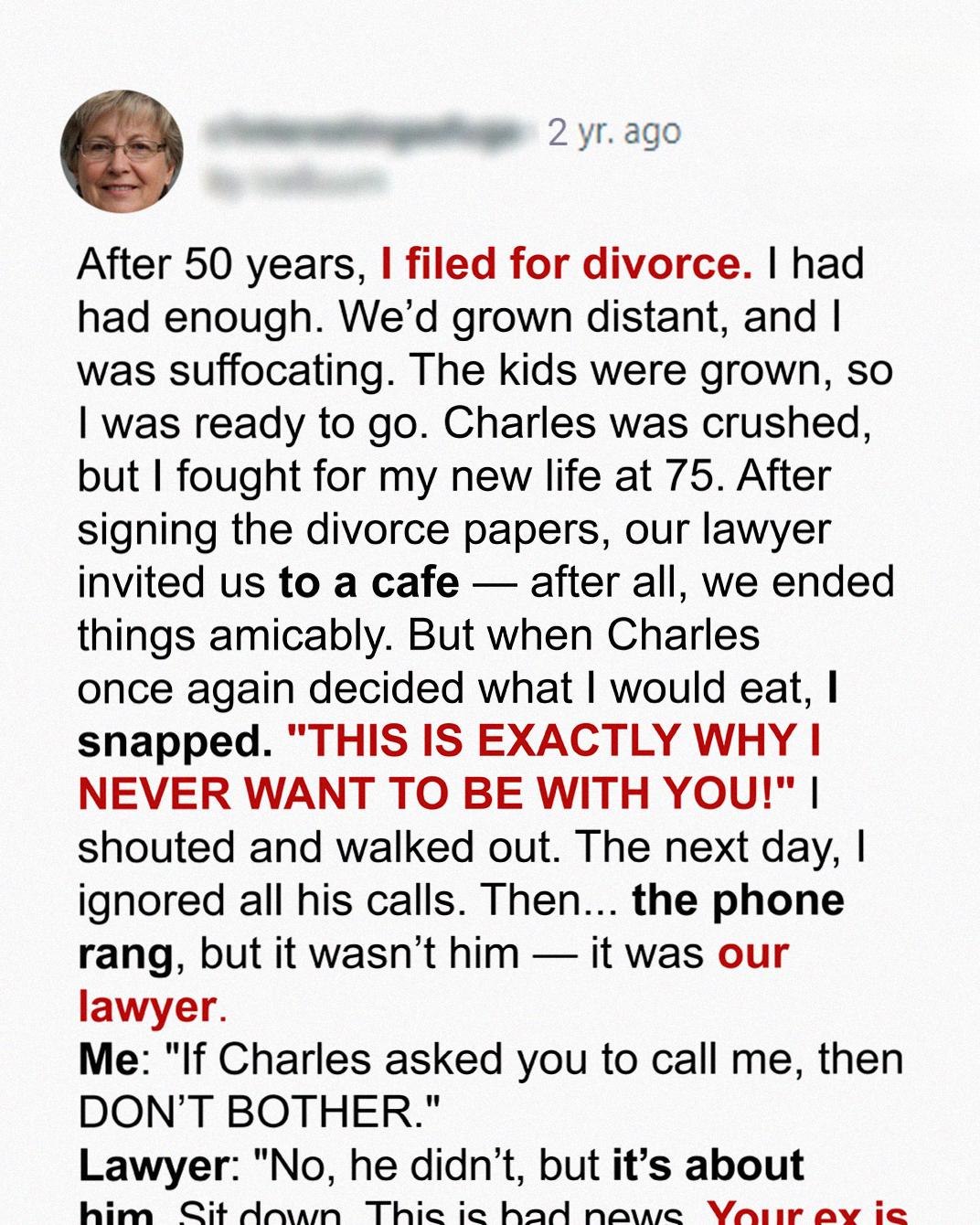
After 50 years, I filed for divorce. I had had enough. We’d grown distant, and I was suffocating. The kids were grown, so I was ready to go. Charles was crushed, but I fought for my new life at 75. After signing the divorce papers, our lawyer invited us to a cafe—after all, we ended things amicably. But when Charles once again decided what I would eat, I snapped. “THIS IS EXACTLY WHY I NEVER WANT TO BE WITH YOU!” I shouted and walked out.
The next day, I ignored all his calls. Then… the phone rang, but it wasn’t him—it was our lawyer.
Me: “If Charles asked you to call me, then DON’T BOTHER.”
Lawyer: “No, he didn’t, but it’s about him. Sit down. This is bad news. Your ex is… he’s gone.[1][2] Charles passed away this morning from a massive coronary.“
I felt the air leave my lungs. The silence on the other end of the line was deafening. Just twenty-four hours ago, I had screamed my hatred at him in a crowded cafe over a plate of salmon. Now, the man I had shared half a century with was a memory.
The Weight of Fifty Years
To understand why I walked out of that cafe, you have to understand the fifty years that preceded it. Charles and I married in the summer of 1974. We were young, hopeful, and entirely unaware of how the slow erosion of time works on a relationship. For the first twenty years, we were a team. We raised three children, navigated career changes, and built a home.
But as the children left the nest, the silence between us grew. Charles, always a man of few words, became increasingly rigid. He didn’t just want to lead; he wanted to control every facet of our domestic life. What movies we saw, which route we took to the grocery store, and most irritatingly, what I ate. He would look at a menu, scoff at my choice of a decadent pasta or a fried appetizer, and simply tell the waiter, “She’ll have the grilled chicken and the steamed vegetables.”
At sixty, it was annoying. At seventy, it felt like a cage. I felt like a child in my own home, a passenger in my own life. When I turned seventy-five, a switch flipped. I realized I might only have ten or fifteen years left, and I didn’t want to spend them being told what to order for dinner.
The Final Outburst
The divorce process was surprisingly smooth. We didn’t have much to fight over; the assets were split down the middle, and the house was sold. Charles didn’t fight me legally, but his eyes followed me with a wounded, confused look every time we met. He didn’t understand why “the way it had always been” wasn’t enough anymore.
After the final signatures were dried, our lawyer, a man who had become a reluctant witness to our dissolution, suggested a “peace meal” at the cafe across the street. We sat in a booth we had occupied a hundred times before.
When the waitress arrived, I opened my menu, my heart racing with the thrill of my new-found freedom. I was going to order the shrimp scampi—buttery, garlic-heavy, and exactly the kind of thing Charles had spent decades telling me was “too heavy for my digestion.”
Before I could speak, Charles leaned forward. “She’ll have the poached whitefish, no butter, and a side of spinach,” he told the waitress.
The snap wasn’t a sound; it was a physical sensation in my chest. I didn’t just stand up; I surged. The words “THIS IS EXACTLY WHY I NEVER WANT TO BE WITH YOU!” didn’t feel like they came from my throat; they came from the very core of my exhausted soul. I left him sitting there with the poached fish on the way, and I didn’t look back.
The Lawyer’s Office and the Final Revelation
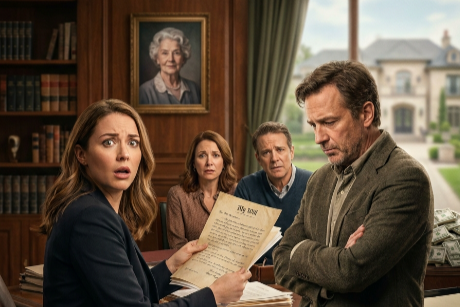
Two days after the lawyer’s call, I sat in his office again. This time, there was no “peace meal.” There was only a thick manila envelope.
“Charles came to see me yesterday morning, before… well, before it happened,” the lawyer said softly. “He knew you weren’t taking his calls. He wanted me to give you this if anything happened to him. He seemed to have a premonition.”
With trembling hands, I opened the envelope. Inside was a letter, written in Charles’s shaky, utilitarian script, and a stack of medical records I had never seen before.
“Dearest Martha,” the letter began. “I know you hate me right now. I know you feel like I’ve been holding your breath for you for fifty years. But there is something I never told you, and I did it because I couldn’t bear to see you afraid.”
As I read on, the world began to tilt. The medical records weren’t his. They were mine.
Seven years ago, during a routine check-up I had barely remembered, the doctors had found a severe, hidden cardiovascular condition. It was a rare form of sensitivity to certain fats and sodium levels that could trigger an immediate, fatal stroke or heart failure. The doctor had pulled Charles aside, knowing that I was already struggling with the early stages of age-related memory fog—a “forgetfulness” I had laughed off, but Charles had watched with terror.
Charles hadn’t told me because he knew my mother had died in a state of clinical paranoia after a similar diagnosis. He knew that the knowledge of my “ticking clock” would have turned my golden years into a nightmare of anxiety.
So, he took the burden on himself.
The “Control” of Love
Every time he chose my food, he wasn’t being a tyrant; he was being a bodyguard. He had memorized every ingredient that could hurt me. He had spent hours talking to my doctors behind my back, learning how to manage my diet without me ever realizing I was a patient. He had turned himself into the villain of my story so that I could live in a world where I felt healthy and strong.
The shrimp scampi I had craved in the cafe? It was loaded with exactly the type of shellfish toxins and sodium my heart couldn’t process. When he ordered the whitefish, he wasn’t trying to stifle my joy; he was trying to ensure I had a tomorrow.
He wrote in the letter: “I figured it was better for you to be mad at a bossy husband than for you to be a terrified woman waiting to die. If you’re reading this, I’ve failed to keep the secret. Please, Martha, keep eating the greens. I won’t be there to order them for you anymore.”
The Grief of the Misunderstood
The weight of my “freedom” suddenly felt like a mountain. I had spent years resentful of a man who was performing a silent, daily act of heroism. I had mistaken his vigilance for vanity, his protection for pride.
I realized then that in long marriages, we often stop communicating not because we have nothing to say, but because we think we already know everything our partner is thinking. I thought I knew Charles. I thought he was a man who wanted to be the boss. In reality, he was a man who was terrified of a world without me.
The divorce wasn’t just a legal separation; it was a tragic misunderstanding. He had lost his wife because he loved her too much to tell her the truth, and I had lost my husband because I was too tired of the truth to see the love.
Starting Over in the Shadow of the Past
Now, at 75, I am truly alone. I have my “new life,” but it is haunted by the poached fish and the steamed spinach. Every time I look at a menu, I feel a pang of longing for someone to tell me what to eat.
This experience taught me that the “mental load” of a marriage is often shared in ways we cannot see. While I was carrying the emotional weight of our children and our social lives, Charles was carrying the physical weight of my very survival. We were both working, but we were working in silos, unable to bridge the gap of our own intentions.
To the younger generations, I say this: Do not let your “suffocation” go unexamined. If you feel controlled, ask why. If you feel unheard, speak louder. Secrets, even those kept out of the purest love, have a way of poisoning the well. Charles thought he was protecting my peace of mind, but he accidentally destroyed our partnership.
Final Reflection
I went to the cafe one last time a month after the funeral. I sat in our booth. The waitress remembered me.
“The usual?” she asked tentatively.
I looked at the menu. I looked at the shrimp scampi, the fried calamari, the heavy pastas. Then, I thought of Charles’s shaky handwriting.
“No,” I said, a tear finally escaping and hitting the laminate tabletop. “I’ll have the poached whitefish. No butter. And a side of spinach.”
It tasted like salt and regret, but as I ate, I felt a strange sense of closeness to him. For the first time in fifty years, I wasn’t being told what to do. I was choosing to be cared for. And in that choice, I finally found the peace that the divorce papers never could provide.