Three years after Noah exposed the “secret even the police couldn't know,” the garage looked ordinary again.
No red lights.
No photographs on twine.
Michael’s tools.
Bicycles.
Storage bins.
One shelf full of Noah’s half-finished projects.
The camera remained.
My old camera.
Emma gave it back after asking.
“Do you want it?”
I held it.
For decades I claimed I lost it.
Then it returned carrying proof that my certainty had been wrong.
“I think Noah should have it someday.”
Emma smiled.
“Ask him when he's older.”
I laughed.
“Yes.”
Ask.
That word had become almost sacred.
Stephen was seventy-three by then.
Slower.
Healthy enough.
He saw Emma regularly.
Sometimes Dad.
Sometimes Stephen.
Both fine.
Noah called him Grandpa Stephen without thinking.
Linda stopped overhugging.
Selena visited once.
She and I sat on Emma’s porch and argued about whether mustard had ruined our lives.
Stephen insisted it was my temper.
I insisted his face had been too close.
Emma told us all to stop.
Family.
Messy.
Present.
Emma and I repaired too.
Not back to before.
Better than before in some ways.
She told me things she once softened.
I asked before advising.
Usually.
When I forgot, she said:
“Is this information or instruction?”
I hated that phrase.
Because it worked.
I had retired fully from teaching.
Started helping at the community literacy center twice a week.
Not running it.
Helping.
Growth.
One afternoon, a young woman came in furious with her mother.
Different issue.
Different life.
But I recognized certainty.
She said:
“I know exactly what happened.”
I nearly offered advice.
Then stopped.
Instead:
“What did the other person say?”
She frowned.
“I didn't ask.”
The universe has a sense of humor.
I smiled.
“Maybe start there.”
Stephen’s old letters remained in Emma’s possession.
At her request.
She occasionally read them.
Not to investigate.
To understand the two young people whose mistake created part of her life.
She once told me:
“You two were ridiculous.”
“Yes.”
“But you loved each other.”
“Yes.”
“I'm glad.”
That surprised me.
“Why?”
“Because I came from something real.”
My throat tightened.
She quickly added:
“That you then handled terribly.”
“Thank you.”
“Accuracy.”
Emma had also developed a relationship with Diane’s memory.
Through stories.
Photographs.
Her veterinary work.
Emma donated annually to an animal shelter in Diane's name.
Stephen cried the first time.
Naturally.
Emma said:
“She didn't get to be my stepmother.”
“No.”
“But she mattered to my father.”
“Yes.”
“So she matters to my story.”
That maturity humbled me.
Families do not become more legitimate by erasing the people who came before.
One summer, we returned to the lake.
The original picnic site.
Noah was eight.
He had finally learned to use film without photographing mostly shoes.
Stephen brought the restored camera.
I almost objected.
Then didn't.
Noah asked:
“Whose is this?”
Stephen looked at me.
Permission.
I nodded.
“Grandma Alana’s.”
“From when?”
“Before dinosaurs.”
Noah grinned.
He took photographs all afternoon.
Emma.
Michael.
Stephen.
Me.
A dragonfly.
Half a sandwich.
His thumb.
Of course.
At sunset, he lined us up.
“Family picture.”
I almost laughed at the composition.
Former lovers.
Secret daughter.
Son-in-law.
Grandson.
No traditional label could make it cleaner.
No need.
Noah set the camera on a bench using the timer.
Ran toward us.
The shutter clicked.
A frozen second.
This time nobody asked the photograph to explain everything.
A month later we developed it.
Stephen’s eyes were closed.
Emma was laughing.
Michael looked surprised.
Noah was mid-jump.
I was looking toward Stephen instead of the lens.
Imperfect.
True.
Emma framed it.
On the back she wrote:
The Next Frame
I cried.
“You're becoming sentimental.”
“Genetic.”
“Rude.”
She hugged me.
Not because the past had been erased.
Because hugs belonged to the present.
There were still days Emma felt angry.
She told me.
There were days Stephen grieved.
He told me.
There were days I woke imagining the life that might have happened.
Then I let it go.
Imagined lives can become another form of disloyalty to the one you actually lived.
I raised Emma.
We struggled.
We laughed.
We built something.
She married Michael.
Had Noah.
Stephen married Diane.
Loved her.
Built his own life.
None of those years were fake because they contained a missing truth.
They were incomplete.
Different.
That was harder and more honest.
On my sixty-ninth birthday, Emma invited everyone to dinner.
Stephen.
Linda.
Michael.
Noah.
Selena visiting from New Mexico.
Nobody told me it was a surprise.
Thank God.
After cake, Emma handed me a small package.
Inside was the original faded sticker from the camera, preserved behind glass.
Beneath it:
LOOK AT THE NEXT FRAME.
I laughed.
Then cried.
“You people have become unbearable.”
Noah asked:
“Grandma, why is that important?”
I looked around the table.
At Stephen.
Emma.
The lives affected by one judgment.
“Because sometimes the first thing you see is true.”
I said.
“And sometimes it isn't enough.”
He waited.
“You look again.”
“You ask.”
“You listen.”
“You let people answer for themselves.”
Noah considered.
“Like when Mom says my room is messy but it's actually organized?”
“No.”
Everyone laughed.
He frowned.
“I think it counts.”
“It doesn't.”
Later that night, after everyone left, Emma stayed.
We washed dishes together.
She handed me a plate.
“Mom?”
“Yes?”
“I forgive you.”
I stopped.
Not because I had been waiting.
By then, I had stopped measuring our relationship against the word.
Still, hearing it mattered.
I turned.
Emma’s eyes filled.
“That doesn't mean what you did was okay.”
“I know.”
“It doesn't mean I never get angry.”
“I know.”
“It means I don't want the decision you made at twenty-five controlling me at forty-three.”
My throat closed.
“That sounds familiar.”
She smiled.
“I had good teachers.”
I cried.
Then she did.
We stood in my kitchen laughing and crying over a wet plate.
No orchestral music.
No grand reunion.
Just two women.
Mother.
Daughter.
Both finally allowed to decide what came next.
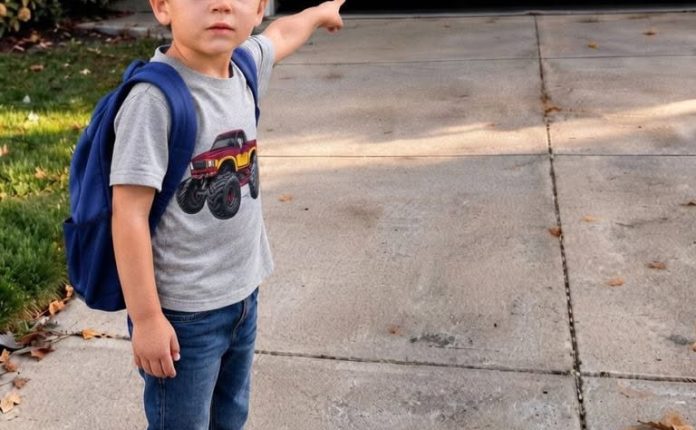
The following Saturday, I picked Noah up.
Same kindergarten route was long gone.
He was in third grade now.
He climbed into the back seat carrying three books, one shoe untied.
“Grandma?”
“Yes?”
“I have a secret.”
I looked at him through the mirror.
My heart did not race.
I smiled.
“Are you allowed to tell me?”
He thought.
“Yes.”
“Then tell me.”
“Mom is making you a cake.”
I laughed.
“So much for the secret.”
He grinned.
Then:
“Don't tell her I told.”
“No promises.”
We drove home.
No detour.
No panic.
No garage glowing red.
Just afternoon sunlight across the road.
For forty years, I believed the worst mistake I had made was misreading a photograph.
It wasn't.
People misunderstand moments all the time.
The real mistake was refusing to ask the next question because I was afraid the answer might change the story I had already chosen.
Then I made a second mistake.
I protected that story long after I had enough life behind me to know certainty is not the same as truth.
Emma broke the pattern by asking.
Stephen broke it by answering without demanding.
Selena broke it by admitting her own silence.
And I broke it when I finally stopped believing love gave me the right to decide what other people could handle.
The camera came back after forty years.
It did not give us the past.
Nothing can.
It gave us something smaller.
And better.
Evidence.
A second look.
The next frame.
The chance to stop losing time simply because we had already lost so much.
That was enough.
More than enough.
It was the truth.
And this time, I let everyone see it.
END PART 10