The word came during an argument.
Naturally.
Emma and Stephen were discussing his driving.
He had backed into a mailbox.
Minor.
No injury.
Mailbox lost.
Emma wanted him to stop driving at night.
Stephen thought one mailbox did not constitute retirement.
“Dad, you can't even see well after dark!”
Silence.
Emma froze.
Stephen froze.
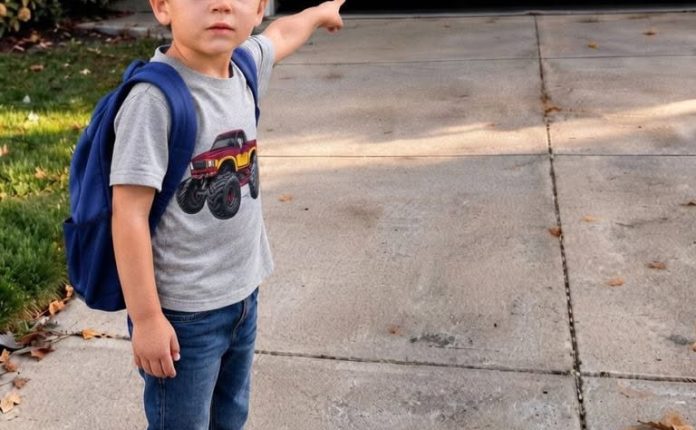
I was sitting at the other end of the room with Noah.
Noah looked up.
“You finally said it.”
Children are brutal.
Emma's face turned red.
Stephen’s eyes filled immediately.
That made it worse.
“Do not cry.”
He nodded while crying.
“I’m not.”
“You are.”
“Old eyes.”
“Stop.”
She laughed.
Then cried too.
No one made a speech.
Later, Emma told me:
“I didn't plan it.”
“That is probably why it mattered.”
She nodded.
“He didn't make a big deal.”
“Internally, he is probably building a monument.”
“Definitely.”
After that, Dad appeared occasionally.
Not constantly.
Stephen never corrected her when she used his name.
Good.
Titles followed relationship instead of trying to manufacture it.
Around the same time, I received an unexpected letter from Selena.
Actual paper.
She wrote:
I have spent years thinking loyalty meant keeping other people's confidence even after the confidence started hurting someone else. I don't believe that anymore.
She apologized again.
To me.
Not for the picnic.
For helping silence become permanent.
I called her.
We talked for two hours.
Our friendship did not return to twenty-five.
It became sixty-six.
Better in some ways.
Less demanding.
She told me Carl had died seven years earlier.
Cancer.
She missed him.
We talked about aging.
Grief.
Grandchildren.
Then she said:
“You know Stephen loved you.”
“I know.”
“He also loved Diane.”
“I know.”
“You okay with that?”
“Yes.”
And I was.
That was another surprise.
The imaginary alternate life had lost its grip.
Stephen had not spent forty years frozen waiting for me.
Good.
He had lived.
I had lived.
Emma’s existence connected us, but did not invalidate everything that happened between separation and discovery.
Then an issue arose around Emma’s birth certificate.
She wanted to add Stephen.
Legal process varied and required proper documentation.
DNA result.
Affidavits.
Administrative steps.
She asked him.
Stephen cried again.
Predictable.
Then she asked me:
“Does this bother you?”
“No.”
“Really?”
I thought.
“A little.”
She waited.
“Because it changes a document that has looked the same for forty years.”
“That’s fair.”
“But it is your document.”
She smiled.
“Therapy.”
“Very expensive.”
We completed the process correctly.
No drama.
When the updated copy arrived, Emma held it for a long time.
Father:
Stephen Cole
Mother:
Alana Mercer
Two names.
One page.
Forty years late.
She gave Stephen a photocopy.
He framed it.
Of course.
Then Noah asked whether this meant he needed a new last name.
No.
Whether he could have three grandpas if Michael’s father counted.
Yes.
Whether there was a legal limit.
Probably not.
He seemed satisfied.
Our family expanded not by replacing anyone.
That mattered.
Michael’s father remained Grandpa Tom.
Stephen became Grandpa Stephen.
No competition.
No rewriting.
One Christmas, Stephen invited his sister Linda and her sons.
Emma agreed.
Cautiously.
Linda was intense.
Too much hugging.
Too many photographs.
Emma escaped into the kitchen after twenty minutes.
I followed.
“Want me to intervene?”
She stared.
“Did you ask before offering?”
“Yes.”
“Look at you.”
“Answer.”
“Yes.”
I went to Linda.
“Slow down.”
Linda looked hurt.
“She’s my niece.”
“She met you three hours ago.”
“I’ve waited forty years.”
“She hasn't.”
That sentence became useful.
The people around Emma had decades of imagined relationship.
Emma had months.
Their longing did not accelerate her timeline.
Linda understood eventually.
She apologized.
Christmas improved.
Stephen gave me one present.
A photograph.
The picnic sequence.
All six frames printed together.
Selena.
Carl.
Stephen.
Me.
From misleading instant to obvious context.
Beneath it, he had written:
Always look at the next frame.
I cried.
“You're dramatic.”
“So were you.”
“Were?”
He smiled.
I put it in my study.
Not as regret.
Reminder.
The next frame.
The next question.
The next fact.
Do not sentence people based on one captured second.
But also do not romanticize uncertainty.
Ask.
Listen.
Confirm.
Emma saw it.
“You like it?”
“Yes.”
“Good.”
Then she looked at me seriously.
“Do you forgive yourself?”
I had avoided that question.
“I don't know.”
She nodded.
“Okay.”
No pressure.
Weeks later, I told Dr. Reeves.
She asked:
“What would self-forgiveness mean to you?”
“Pretending it was okay.”
“Why?”
“Because guilt keeps the moral record.”
She challenged that.
Maybe accountability can remain without constant self-punishment.
I resisted.
Then understood.
My suffering did not return Emma’s childhood.
It did not give Stephen back time.
It did not improve the present.
Remorse should inform behavior.
Not become identity.
That spring, I apologized to Emma one more time.
Not because I discovered new language.
Because I wanted to state something without asking for relief.
“I am sorry.”
She nodded.
“I know.”
“I’m not asking you to tell me it's okay.”
“Good.”
“I’m learning to stop punishing myself as though that helps you.”
Emma looked at me for a long time.
Then:
“I’m glad.”
No absolution.
No need.
That was enough.
END PART 8