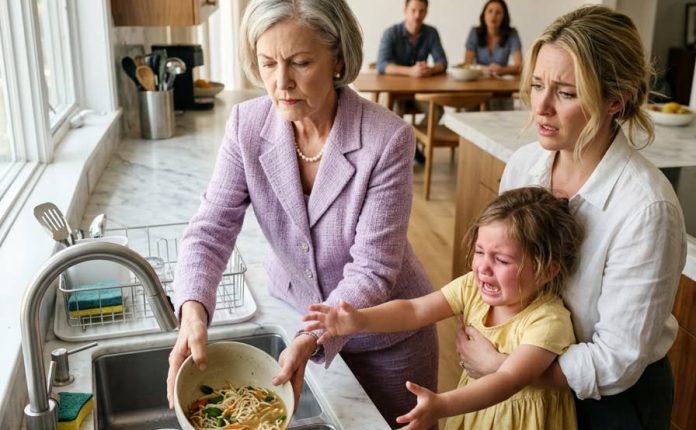
Mark and I did not resolve everything that evening. There were things said in that kitchen that opened doors which then needed to be walked through carefully, over days and weeks and eventually months, in conversations that were sometimes difficult and sometimes productive and sometimes both simultaneously.
What we resolved that evening was the immediate question.
Diane would stay in the guest room for three weeks while she and Mark and Lisa investigated the senior community in Lanexa more seriously, and while they looked at other options, and while the question of what she actually wanted and what was actually available was examined with the thoroughness it deserved.
She moved in the following day.
She brought the peace lily, which I put in the kitchen window where it gets morning light, and where it is thriving.
The guest room was the back bedroom, the one with the good view of the yard, which Diane stood at for a moment when I showed it to her and said that she could see why I had bought the house.
I said: yes.
She said: it’s yours. I understand that now.
I said: I know you do.
She said: I should have asked.
I said: yes. But so should Mark.
She said: I think Mark has a lot of asking to catch up on.
I said: he does.
She said: will he?
I said: I think he’s beginning to understand what not asking costs.
She said: good.
She put the peace lily on the windowsill in her room.
She said: I’m going to try not to be difficult.
I said: I know you are.
She said: I am difficult, though. Ask anyone.
I said: I know that too.
She almost smiled.
She said: Lisa says I’m exhausting.
I said: Lisa drives you places, so she can’t find you too exhausting.
She said: she finds me precisely that exhausting.
I said: yes.
She said: Claire.
I said: yes.
She said: I asked Mark, years ago, why the house was in your name.
I went still.
She said: he told me it was a tax thing. That it was simpler. I didn’t ask again.
I said: Diane.
She said: I’m not making excuses. I could have asked you directly. I chose to accept his explanation because it was convenient.
I said: we all accept convenient explanations sometimes.
She said: even you?
I said: especially me. I accepted that your comments were just old-fashioned for nine years because confronting what they actually meant was complicated.
She said: what did they actually mean?
I said: they meant you believed this was Mark’s house and I was here because of him.
She said: yes.
She said: I think I did believe that.
I said: I know.
She said: and now?
I said: now you know what’s true.
She said: yes.
She said: you built this.
I said: yes.
She said: and you let him in.
I said: yes.
She said: and he should have told me that. He should have said: Mom, Claire built this, and I’m the lucky one.
I said: yes. He should have said that.
She said: I’ll have a conversation with him about that.
I said: I appreciate it.
She said: he needs to hear it from me too. Not because you can’t handle it yourself. You clearly can. But because it means something different coming from his mother.
I said: yes. It probably does.
She said: he’s a good man.
I said: he is.
She said: but he needs work.
I said: yes. Don’t we all.
She looked at the yard again.
She said: what did you plant out there?
I said: the beds along the left side are herbs. The back corner is a kitchen garden. The roses on the right side were here when I bought it. I kept them.
She said: roses need pruning.
I said: yes.
She said: I used to prune Mark’s grandmother’s roses. She had a row of them along the fence.
I said: I could use someone who knows what they’re doing with them. I’ve been cutting them wrong.
She said: you’ve probably been cutting them too short.
I said: yes.
She said: people always cut them too short. You have to trust that the long cut is the right one even when it looks wrong.
I said: I’ll keep that in mind.
She said it without any apparent awareness that she had made a metaphor.
I left her to unpack.
I went to find Mark.
He was in the kitchen, where the kettle was still warm, where the cups from the conversation were still on the table. He was standing at the counter in the specific way of someone who has been standing in one place long enough that they have forgotten they are standing.
He said: how is she?
I said: I think she’s all right.
He said: are you?
I said: I’m working on it.
He said: that’s fair.
I said: yes.
He said: I should have asked you.
I said: yes.
He said: I should have told her. About the house. Years ago.
I said: yes.
He said: I don’t have a good explanation for why I didn’t.
I said: I know. I’ve been thinking about it.
He said: and?
I said: I think you liked the version where you were the provider.
He was quiet.
I said: I don’t think you manufactured it deliberately. I think you didn’t correct it because the not-correcting was comfortable and the correcting would have required explaining something that might have complicated how you saw yourself.
He said: that’s.
He said: that’s uncomfortably accurate.
I said: yes.
He said: I’m sorry.
I said: I know you are.
He said: is sorry enough?
I said: it’s not nothing. What comes after it matters.
He said: what comes after it is that I fix the narrative. With my mother, with Lisa, with anyone else who has been operating on the wrong version.
I said: yes.
He said: and that when decisions involve this house, I ask you. Every time. Before I say anything to anyone else.
I said: yes.
He said: and that when a question comes up that requires an honest answer, even an uncomfortable one, I give it.
I said: yes.
He said: even when the honest answer makes me look less.
I said: the honest answer never actually makes you look less. The avoidance of it does.
He said: I know that now.
I said: okay.
He said: can we start from there?
I said: yes. We can start from there.
He said: the house in Lanexa. The senior community. I’m going to take Mom next week and actually look at it with her. Not try to make her go. Look at it with her.
I said: that sounds right.
He said: and if she wants to stay here longer than three weeks.
I said: we talk about it. Together. Like adults who share a life.
He said: yes.
He said: I’m going to prune those roses wrong my entire life, aren’t I.
I said: what?
He said: I heard what she said. About the roses.
I said: I cut them too short.
He said: so do I.
I said: well. Apparently we’ve been doing it wrong together. We can learn to do it right together.
He said: is that a metaphor?
I said: your mother made the metaphor. I’m just following her lead.
He almost smiled.
It was the smile that had been one of the first things I had loved about him, the timing of it, the way it arrived slightly after the thing that caused it, the specific lag of a person who is genuinely amused rather than performing amusement.
I said: go check on your mother.
He said: okay.
He went.
I stood in the kitchen for a while.
I looked at the house.
Twelve years in this house, the walls I had chosen and the kitchen I had updated and the yard I had gardened and the roses I had been cutting incorrectly, and the file cabinet in the office with the deed in my name and the mortgage statements in my name and the tax records going back to 2011.
The house was mine in every legal and practical sense.
It was also, in the ways that matter when you have spent nine years becoming a family with someone, ours.
The distinction between those two things had not been clearly enough drawn, and the drawing of it was the work that was still ahead.
But the work was possible.
That was what the Thursday had given me, which was the specific knowledge of what was still possible and what needed to happen to make it possible. Not the confrontation I had not wanted to have for nine years, but the version of our marriage that could exist after the confrontation had happened and the truth had been named and everyone in the kitchen had adjusted their understanding of what was true.
The peace lily was in the guest room window.
The roses needed proper pruning.
We had work to do.
I put the cups in the dishwasher and I started dinner, because dinner was the next thing, and the next thing is always the right place to begin.
THE END!
Disclaimer: This fictional story is for entertainment only. It does not represent any person or organization and does not encourage inappropriate behavior.