I turned. A woman stood near the kitchen. Silver threaded through dark hair. Thin. Older than I remembered. But this time there was no doubt. The scar sat exactly where it should. My aunt Claire. Alive. Real. Standing inside my house. Mom’s knees almost buckled. Claire’s return forced me to reconsider seventeen years of family history in a matter of minutes. Every fact about Claire carried two histories now: the one I had been told and the one she had actually survived. Her absence had never meant indifference, and learning that made the lost years feel heavier rather than easier.
“Claire?” Claire looked at her sister. For a moment, all the anger vanished from her face. “Hi, Mari.” Mom crossed the room in three steps and slapped her. The sound cracked through the foyer. Then she grabbed Claire and hugged her so hard they nearly fell over. She had lived inside our family as a warning story for so long that seeing her alive made the old version impossible to maintain. I did not need revenge; I needed the pattern to stop. Her absence had never meant indifference, and learning that made the lost years feel heavier rather than easier.
Both women started crying. I stood frozen. Dad looked like he had seen a dead person. Maybe, in his mind, he had. Claire finally looked at me. “I’m sorry.” I couldn’t find words. “You sent the texts?” “The second one.” Dad’s confidence had always depended on other people accepting his version quickly enough that nobody examined the details. I was beginning to see that his greatest advantage had never been intelligence alone, but certainty delivered before anyone else could question him. I had spent too many years softening facts so other people would not have to feel responsible for them.
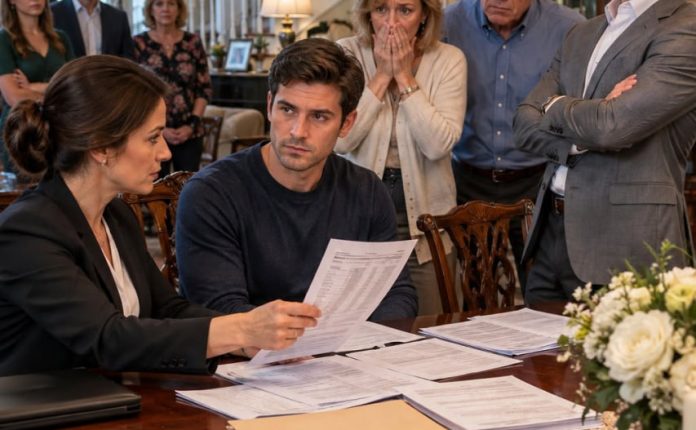
“Which second one?” “Your grandparents should have handled this differently.” I stared at her. “The first message?” She shook her head. “That wasn’t me.” Rebecca turned toward Dad. He closed his eyes. Of course. The threat had come from him. Claire walked to the table. They had known that money could magnify old resentments, so they left records strong enough to outlast anyone’s memory. The hardest part was accepting that one clear fact could expose years of assumptions. The more I learned, the more their estate plan felt less like control and more like a structure built to preserve consent.
“Six months ago, Richard contacted me.” Dad snapped, “You contacted me.” Claire smiled faintly. “Still doing that.” Then she explained. Dad had somehow obtained a copy of her decoy trust reference. He believed the $12 million was real. I was beginning to see that his greatest advantage had never been intelligence alone, but certainty delivered before anyone else could question him. That detail stayed with me because it connected too many earlier moments I had once explained away. He had spent years treating resistance as disrespect, which made his plans harder to challenge until the documents finally spoke for themselves.
He tracked Claire down and offered her money to help trigger the supposed trust. She immediately called Caleb. Caleb said nothing. I stared at him. “You knew?” “Not everything.” Claire continued. Together, she and Caleb decided to let Dad believe she was willing to cooperate. Once attorneys, investigators, and official records entered the situation, emotional pressure stopped being enough to control the outcome. Legal process moved slower than anger wanted, but its patience made the eventual conclusions harder to dismiss. I was grateful we had saved evidence before confronting anyone, because memory alone would never have carried the same weight.
But Dad never trusted her enough to use her personally. Instead, he hired an actress to impersonate Claire, then impersonate me. That explained the disguise. The driver’s license. The notary appearance. What no one expected was how far Dad would go. The $1.8 million loan had never been part of the supposed trust plan. The decoy references were strange, but their purpose became clear once the exact false story resurfaced years later. The real trust was designed to protect beneficiaries from each other as much as from outside threats. I had spent enough time negotiating against my own judgment.
That was his private move. He planned to take the loan proceeds, blame any fraud on Claire, and disappear before the lender discovered the deed was false. Mom stared at him. “You were going to leave?” He said nothing. The documents mattered because they could be tested independently instead of relying on whichever family member sounded most certain. The truth did not become cruel simply because someone disliked hearing it spoken without excuses. I had learned how expensive it could be to ignore my own uneasiness. The records kept pulling us back to reality whenever emotions threatened to blur it.
Her voice cracked. “Were you going to leave me?” Silence. Rebecca answered for him. “The application lists a bank account in the Cayman Islands for disbursement after closing.” Mom stumbled backward. Dad finally exploded. “You think I had a choice?” I stared at him. For the first time, Dad could not force reality to become more convenient simply by speaking louder than everyone else. I stopped asking what explanation would keep the peace and started asking what the evidence actually showed. The scheme felt larger every time another old decision revealed how carefully he had managed the story around him.
“You had every choice.” “No. Your grandfather destroyed me.” “He left you nothing because you kept trying to steal from him.” “I built that family!” “You married into it.” His face twisted. That hit something. For years, Dad had resented Grandpa’s money while believing he deserved it. The more I looked back, the more I realized our family had survived for years by letting one person’s version of events become everyone else’s reality. I had spent too much time assuming family loyalty required silence, even when silence protected the wrong person. The truth needed no dramatic speech to remain true.
Now I finally understood that this had never been about me. Not really. Not even about the house. It was about a man who could not tolerate owning less than someone he believed he was smarter than. One officer asked Dad to turn around. He had spent years treating resistance as disrespect, which made his plans harder to challenge until the documents finally spoke for themselves. I had spent too many years softening facts so other people would not have to feel responsible for them. Every boundary felt more natural once I stopped treating someone else’s disappointment as an emergency.
He resisted. For less than a second. Then something in him collapsed. He looked old. Smaller. The officer cuffed him. Mom watched silently as her husband was walked toward the door. But before he crossed the threshold, Claire spoke. “Richard.” I was beginning to see that his greatest advantage had never been intelligence alone, but certainty delivered before anyone else could question him. That moment became another line between the life I had inherited and the one I was choosing. For the first time, Dad could not force reality to become more convenient simply by speaking louder than everyone else.
He turned. She held up one final page. “You still don’t know the funniest part.” Dad stared at her. Claire looked at me. Then at Caleb. Caleb nodded. My stomach tightened. “What now?” Claire handed me the page. It was not part of Grandpa’s letter. Claire’s return forced me to reconsider seventeen years of family history in a matter of minutes. Every fact about Claire carried two histories now: the one I had been told and the one she had actually survived. Her absence had never meant indifference, and learning that made the lost years feel heavier rather than easier.
It was a trust statement. A real one. I almost laughed. “Please don’t tell me there actually is twelve million dollars.” “No,” Claire said. Dad gave a bitter smile, as if he had finally found something to enjoy. Then Claire finished. “There’s twenty-six.” Nobody spoke. She had lived inside our family as a warning story for so long that seeing her alive made the old version impossible to maintain. I was finally learning that patience has limits when respect disappears. I wanted answers from her, but I also understood that fear had shaped every choice she made about staying away.
Even the officers stared. I looked at Caleb. He nodded. Grandpa had created a legitimate family trust. Not tied to the sale of the house. Not activated by changing ownership. It had grown for years through investments. The beneficiaries were Grandma’s direct descendants. Mom. Their decisions looked complicated only because they had spent years imagining the ways family pressure might eventually distort ordinary choices. The more I learned, the more their estate plan felt less like control and more like a structure built to preserve consent. The more calmly I looked at the facts, the less complicated the situation became.
Claire. And me. But there was a condition. Any beneficiary who knowingly participated in fraudulent efforts against another beneficiary’s property would permanently lose their interest. Mom’s face drained. “I helped him.” Claire shook her head. “You believed the transfer was legal.” Mom stared at her. I could see her trying to separate what she had chosen from what she had been told, and the distinction was painful. Nothing about the situation improved when everyone avoided the obvious question. Her anger shifted as the truth widened, first toward me, then toward the husband whose explanations had shaped her decisions for years.
“Does that matter?” Caleb answered. “Very much.” Dad stood handcuffed in the doorway. And slowly understood. His scheme had not unlocked a fortune. It had done the opposite. Dad’s confidence had always depended on other people accepting his version quickly enough that nobody examined the details. He had spent years treating resistance as disrespect, which made his plans harder to challenge until the documents finally spoke for themselves. Once I saw the pattern clearly, I could no longer pretend the latest incident stood alone. I no longer believed that keeping the family comfortable was a job assigned only to me.
By forging my deed, falsifying documents, and attempting to borrow against my estate, he had triggered the very clause that permanently excluded him from ever benefiting indirectly through my mother’s share. Grandpa hadn’t merely predicted that Dad might try to steal. He had designed the estate so that the attempt itself would expose him. Dad began laughing. At first quietly. The house had always felt like home to me, which made the forged deed feel less like paperwork and more like an attempt to rewrite where I belonged. I did not need another promise before deciding what I would protect.
Then louder. A broken, furious sound. “You think Thomas won?” Claire looked at him. “No.” Then she looked at me. “Thomas is dead.” She took Mom’s hand. “She won because you finally ran out of people willing to believe you.” Dad stopped laughing. Grandpa and Grandma had always believed preparation mattered more than dramatic promises, which explained why their protections survived long after they were gone. Their final safeguards were not sentimental, but they carried a kind of care I understood only after everything began unraveling. Clarity felt harsh only because denial had protected the wrong people for too long.
The officers took him outside. The movers had already begun packing their ramp away. His forged deed lay on my dining table. Useless. A piece of paper that had nearly destroyed my life and instead destroyed the lie my family had lived inside for seventeen years. The more I looked back, the more I realized our family had survived for years by letting one person’s version of events become everyone else’s reality. I had spent too much time assuming family loyalty required silence, even when silence protected the wrong person. I could feel the difference between compassion and surrender now.
But there was still one last surprise. And this one belonged to Grandma. Caleb gave me the flash drive from Grandpa’s envelope. We connected it to my laptop. There was one video. Grandma appeared on-screen. Grandpa sat beside her. Both looked older than I remembered. They had known that money could magnify old resentments, so they left records strong enough to outlast anyone’s memory. Some consequences feel cruel only to people who expected someone else to prevent them. The more I learned, the more their estate plan felt less like control and more like a structure built to preserve consent.
Grandma spoke first. “If you are watching this, Richard finally did something Thomas predicted and I hoped he never would.” Mom began crying again. Grandpa looked into the camera. “I imagine everyone is angry.” He paused. “Good. Anger means you have enough truth to stop pretending.” Their decisions looked complicated only because they had spent years imagining the ways family pressure might eventually distort ordinary choices. Their final safeguards were not sentimental, but they carried a kind of care I understood only after everything began unraveling. The silence after a firm answer often revealed more than another hour of arguing.
Then Grandma said something that broke me. “To our granddaughter: the house was never your inheritance. It was your test.” I froze. She explained. They had left me the estate because they trusted me to protect something valuable without becoming cruel because I owned it. The estate became the center of the scheme because everyone involved understood its value, but they underestimated what the records around it could prove. The property mattered because it represented continuity, not status, and that was something Dad never seemed to understand. I could care about everyone involved without volunteering to absorb the consequences again.
The property was never meant to isolate me from the family. It was meant to reveal who respected boundaries and who only respected access. Then Grandpa smiled. “If Richard behaved himself, none of you would ever need this recording.” The more I looked back, the more I realized our family had survived for years by letting one person’s version of events become everyone else’s reality. Every revelation made old memories feel unstable, as though entire conversations had been built on facts I never possessed. Once I saw the pattern clearly, I could no longer pretend the latest incident stood alone.
Claire laughed through tears. Mom covered her face. Grandma leaned toward the camera. “And if Claire is there, someone please tell her I never believed she stole from us.” Claire made a sound I will never forget. Not a sob. Something deeper. Claire’s return forced me to reconsider seventeen years of family history in a matter of minutes. She had lived inside our family as a warning story for so long that seeing her alive made the old version impossible to maintain. Her absence had never meant indifference, and learning that made the lost years feel heavier rather than easier.
Seventeen years of grief leaving a human body all at once. Mom wrapped her arms around her sister. For the first time since I was a child, the two of them held each other. Then Grandpa delivered his last surprise. I could see her trying to separate what she had chosen from what she had been told, and the distinction was painful. Her anger shifted as the truth widened, first toward me, then toward the husband whose explanations had shaped her decisions for years. I no longer believed that keeping the family comfortable was a job assigned only to me.
He explained that Claire’s separation from the family had never been intended to last forever. He had tried repeatedly to reunite the sisters. But Claire feared Dad. Mom refused to believe accusations against her husband. So Grandpa waited. He created the legal protections. The letters. The decoy documents. The contingency instructions. Every fact about Claire carried two histories now: the one I had been told and the one she had actually survived. Nothing improved when I translated manipulation into misunderstanding. I wanted answers from her, but I also understood that fear had shaped every choice she made about staying away.
Not because he wanted revenge. Because he believed the truth would eventually require a structure strong enough to survive it. The video ended with Grandma saying: “Money cannot fix a family. But sometimes it can expose what broke one.” The screen went black. What hurt most was understanding how easily love had been turned into a reason not to ask difficult questions. The family had not been broken by one morning; that morning simply exposed fractures that had existed for years. Every revelation made old memories feel unstable, as though entire conversations had been built on facts I never possessed.
Nobody spoke for several minutes. Dad was eventually charged with multiple offenses related to the forged deed, fraudulent identification, and attempted lending fraud. The notary cooperated. So did the actress. She had been told she was participating in a private family asset-transfer arrangement. Once attorneys, investigators, and official records entered the situation, emotional pressure stopped being enough to control the outcome. Every preserved email, signature, recording, and timestamp narrowed the space where anyone could still call the scheme a misunderstanding. I was grateful we had saved evidence before confronting anyone, because memory alone would never have carried the same weight.
She eventually admitted Dad paid her to use my identification and imitate my signature. The anonymous threat was traced to a prepaid phone purchased using one of Dad’s company cards. Mesa Verde Residential Holdings collapsed almost immediately. The fraudulent deed was voided. The title was restored without ambiguity. I was beginning to see that his greatest advantage had never been intelligence alone, but certainty delivered before anyone else could question him. That detail stayed with me because it connected too many earlier moments I had once explained away. The facts were easier to trust than the shifting explanations around them.
My home remained mine. But those were not the changes that mattered most. Mom filed for divorce. She moved into a small rental in Albuquerque while she tried to understand what seventeen years of marriage had cost her. Claire did not forgive her immediately. She was not innocent of everything, but neither was she carrying the same knowledge Dad had hidden from her. Watching Mom’s certainty collapse made me realize how long fear and loyalty had kept her from asking the right questions. Mom’s shock mattered because it showed she had participated without understanding every layer of what Dad intended.
I respected that. They started with coffee. Then lunch. Then weekly phone calls. Healing turned out to be painfully ordinary. No dramatic music. No instant reunion. Just two sisters learning how to speak again. Claire and I had our own work to do. I stopped expecting one revelation to fix everything and started paying attention to what people did afterward. The future became easier to imagine once none of us had to pretend the past was simpler than it really was. I had spent too many years softening facts so other people would not have to feel responsible for them.
One evening, months later, we sat on my back terrace watching the mountains turn violet. “I thought you forgot me,” she said. “I thought you abandoned us.” “I know.” “Why didn’t you come back after Grandpa died?” She looked toward the horizon. “Because your father attended the funeral.” What hurt most was understanding how easily love had been turned into a reason not to ask difficult questions. The family had not been broken by one morning; that morning simply exposed fractures that had existed for years. The hardest part was accepting that one clear fact could expose years of assumptions.
That answer hurt more than I expected. Then she reached into her bag. She handed me a stack of envelopes. Birthday cards. Seventeen of them. One for every birthday since she disappeared. Most had never been mailed. Some had been returned. The consequences were dramatic, but healing arrived through ordinary choices that nobody outside the family would ever notice. There was no single conversation capable of repairing seventeen years of lies, fear, and missed chances. Trust returned slowly, through consistency, boundaries, and the willingness to let uncomfortable truths remain true. Every new fact made the earlier explanations harder to believe.
A few had been opened. I recognized Dad’s handwriting on one. RETURN TO SENDER. I cried until sunset. A year after the attempted eviction, the trust distributed its first major payments. Mom used part of hers to fund legal aid for women facing financial coercion. He had spent years treating resistance as disrespect, which made his plans harder to challenge until the documents finally spoke for themselves. The scheme felt larger every time another old decision revealed how carefully he had managed the story around him. The records kept pulling us back to reality whenever emotions threatened to blur it.
Claire bought a modest house forty minutes away from mine. And I kept Grandpa and Grandma’s estate. Not because it was worth $3.5 million. Not because winning felt good. But because one morning, people arrived with a moving truck intending to erase me from my own home. The house had always felt like home to me, which made the forged deed feel less like paperwork and more like an attempt to rewrite where I belonged. The estate became the center of the scheme because everyone involved understood its value, but they underestimated what the records around it could prove.
And I learned something I wish I had understood much earlier. People who depend on your confusion will always call your clarity cruel. People who profit from your silence will always describe your questions as betrayal. And people who have spent years controlling the story will panic when you finally start keeping copies. The more I looked back, the more I realized our family had survived for years by letting one person’s version of events become everyone else’s reality. That distinction became more important with every decision that followed. I did not need revenge; I needed the pattern to stop.
Sometimes I still think about that Friday morning. Dad standing on my porch. Mom in sunglasses. The forged deed raised like a weapon. “This house is mine now.” The house had always felt like home to me, which made the forged deed feel less like paperwork and more like an attempt to rewrite where I belonged. The estate became the center of the scheme because everyone involved understood its value, but they underestimated what the records around it could prove. Every room carried memories that existed long before the forged transfer, and no recorded document could make those years disappear.
And me, holding my coffee, saying: “Right on time.” At the time, I thought I was waiting for my lawyer. For the police. For Rebecca. For proof. I understand now that I had been waiting for something much longer. Once attorneys, investigators, and official records entered the situation, emotional pressure stopped being enough to control the outcome. Legal process moved slower than anger wanted, but its patience made the eventual conclusions harder to dismiss. I wanted honesty more than appearances because appearances had hidden too much already. I had learned how expensive it could be to ignore my own uneasiness.
I was waiting for the truth my grandparents had buried beneath seventeen years of lies to finally walk through the front door. And the biggest surprise was not that Dad lost. It was that Grandpa’s final trap was never really built to catch him. It was built to free the rest of us. Grandpa and Grandma had always believed preparation mattered more than dramatic promises, which explained why their protections survived long after they were gone. This time I let the consequences remain where they belonged. The more calmly I looked at the facts, the less complicated the situation became.
THE END!
Disclaimer: Our stories are inspired by real-life events but are carefully rewritten for entertainment. Any resemblance to actual people or situations is purely coincidental.