Eventually they began counseling. Whether their marriage survived wasn’t my decision. My relationship with my parents was easier. There wasn’t one. Mom sent letters. Robert sent nothing. Through attorneys, property was sold. Accounts were liquidated. Some money was recoverable. Much of it wasn’t. I never got back everything that had been taken. She had lost a son and then, through fear and distance, lost access to his child. I could not decide whether to feel grateful they had been saved or furious they were returned. Her reassurance reached a part of me that had always expected a bill after kindness.
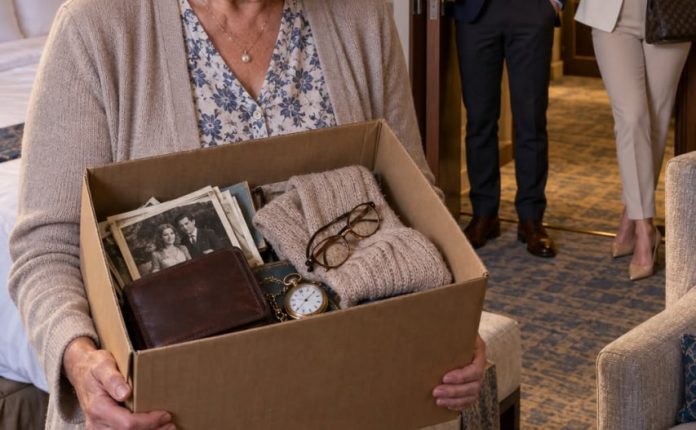
But money wasn’t the strangest thing I recovered. Three months before Jenna’s due date, Uncle Paul brought me a cardboard box. “This belonged to your grandfather.” Inside were old photographs. Letters. And one sealed envelope. My name was written across it. RYAN — WHEN HE IS READY. The returned birthday cards were harder to look at than the financial statements. That was one of the many differences between love and control I was learning. She offered history and let me decide what relationship could grow from it. That restraint made me trust her more than any grand gesture would have.
My hands shook as I opened it. Inside was a letter from Grandpa Morrison. He explained that he’d worried for years about Robert’s resentment toward me. He wrote that my mother had begged him not to tell me about Michael because she feared it would destroy the family. Each envelope represented an attempt to reach me that never arrived. When she revealed the investment account, my first instinct was to refuse it. Someone older had noticed the imbalance before I was capable of naming it. Her eyes, her photographs, and her stories turned Michael from a secret into a person.
Then came the sentence I reread at least twenty times. “If you are reading this because the money has disappeared, then unfortunately I was right about Robert—but I hope I was wrong about your mother.” I cried for the first time since the confrontation. I began imagining a future where Benjamin would never learn that lesson. It told me the lonely child inside those memories had not imagined everything. I could not decide whether to feel grateful they had been saved or furious they were returned. That was one of the many differences between love and control I was learning.
Not because of the money. Because someone had noticed. Someone had known I wasn’t imagining it. Someone had seen the little boy trying desperately to earn the same affection his sister received automatically. Jenna sat beside me while I finished the letter. At the bottom, Grandpa had written: The money mattered, but changing that inheritance of fear mattered more. I had expected meeting her to feel dramatic; instead, it felt strangely quiet. She offered history and let me decide what relationship could grow from it. Her reassurance reached a part of me that had always expected a bill after kindness.
“There is one person you should meet.” Below that was a name. Margaret Reynolds. Michael’s mother. My biological grandmother. I stared at Uncle Paul. “She’s alive?” He nodded. “She is.” Two weeks later, Jenna and I drove three hours to a small town outside Richmond. Grandpa’s letter gave language to feelings I had spent years doubting. That restraint made me trust her more than any grand gesture would have. Her eyes, her photographs, and her stories turned Michael from a secret into a person. She had lost a son and then, through fear and distance, lost access to his child.
I was thirty-two years old and about to meet a grandmother I hadn’t known existed. Margaret opened the door before we knocked. She was eighty-one. Silver hair. Small frame. Bright blue eyes. My eyes. She looked at me for perhaps half a second. Then her hand flew to her mouth. Margaret Reynolds was not an abstract relative once I saw her face. I had lost an entire branch of family without knowing it existed. When she revealed the investment account, my first instinct was to refuse it. Someone older had noticed the imbalance before I was capable of naming it.
“Oh, Michael.” I froze. She immediately shook her head. “No. I’m sorry. Ryan.” Then she hugged me. I didn’t know how to hug her back. But eventually I did. Inside her house were photographs. Michael at five. Michael at fourteen. Michael in college. The resemblance was unsettling. Margaret never demanded instant closeness because biology connected us. I began imagining a future where Benjamin would never learn that lesson. Her reassurance reached a part of me that had always expected a bill after kindness. I could not decide whether to feel grateful they had been saved or furious they were returned.
Same nose. Same eyebrows. Same crooked smile. Margaret had known about me. She told me she’d sent birthday cards until I was seven. Money too. Then everything started coming back unopened. My mother told her Robert wanted distance. Margaret eventually agreed because she feared forcing contact would make my home life worse. Her eyes, her photographs, and her stories turned Michael from a secret into a person. She had lost a son and then, through fear and distance, lost access to his child. I could not decide whether to feel grateful they had been saved or furious they were returned.
“That was my greatest mistake,” she said. Then she brought out another box. She had saved every returned birthday card. Every photograph she’d been sent when I was a baby. Every letter Michael had written after learning Mom was pregnant. There was even a list of baby names. It told me the lonely child inside those memories had not imagined everything. I had expected meeting her to feel dramatic; instead, it felt strangely quiet. The returned birthday cards were harder to look at than the financial statements. That restraint made me trust her more than any grand gesture would have.
Ryan was number three. I laughed through tears. “What was number one?” “Benjamin.” Jenna smiled. “We almost named our baby Benjamin.” Margaret stared at her. Then at me. Her eyes filled. “Maybe some things find their way back.” Our son was born six weeks later. Old training told me every gift created a debt. When she revealed the investment account, my first instinct was to refuse it. She had lost a son and then, through fear and distance, lost access to his child. I could not decide whether to feel grateful they had been saved or furious they were returned.
Healthy. Seven pounds, nine ounces. A head full of dark hair. We named him Benjamin Michael. Emma came to the hospital alone. She stood outside the room until I invited her in. She looked at Benjamin and immediately started crying. Then she looked at Jenna. Margaret recognized that reflex before I explained it. That was one of the many differences between love and control I was learning. She had lost a son and then, through fear and distance, lost access to his child. I could not decide whether to feel grateful they had been saved or furious they were returned.
“I’m sorry.” Jenna nodded. There were wounds apologies couldn’t instantly close. But some things could begin healing. Emma held her nephew. For once, there was no competition. No golden child. No forgotten child. Just two siblings staring at a newborn who had no idea he’d accidentally started a chain reaction before he was even born. Margaret Reynolds was not an abstract relative once I saw her face. She had lost a son and then, through fear and distance, lost access to his child. I could not decide whether to feel grateful they had been saved or furious they were returned.
Then, three days later, I received a certified envelope. It was from Margaret’s attorney. I called her immediately. “What is this?” She sounded amused. “Open it.” Inside were documents for an investment account. I stared at the balance. Then checked it again. $683,412. That recognition mattered in a way money never could. Her reassurance reached a part of me that had always expected a bill after kindness. She had lost a son and then, through fear and distance, lost access to his child. I could not decide whether to feel grateful they had been saved or furious they were returned.
I nearly dropped the papers. “Grandma…” Jenna looked over. “What?” I put the phone on speaker. Margaret explained. When Michael died, his parents had created the original custodial account. But Michael had also owned a modest life-insurance policy through his employer. Part had funded the account my mother and Robert eventually drained. Her eyes, her photographs, and her stories turned Michael from a secret into a person. She had lost a son and then, through fear and distance, lost access to his child. I could not decide whether to feel grateful they had been saved or furious they were returned.
Margaret and her late husband had kept the remainder invested separately. They intended to transfer it to me once I became an adult. But when my mother cut contact and refused their letters, they became afraid any money sent to me would simply be absorbed by Robert. Someone older had noticed the imbalance before I was capable of naming it. It told me the lonely child inside those memories had not imagined everything. I had expected meeting her to feel dramatic; instead, it felt strangely quiet. That was one of the many differences between love and control I was learning.
So they waited. And invested it. For decades. I sat on the edge of my bed, speechless. Margaret said: “That money was always meant for Michael’s child.” I swallowed. “You don’t have to do this.” “Yes, I do.” “No—” She interrupted gently. We were two people grieving decades we could never recover. Her eyes, her photographs, and her stories turned Michael from a secret into a person. She had lost a son and then, through fear and distance, lost access to his child. I could not decide whether to feel grateful they had been saved or furious they were returned.
“Ryan, they spent years teaching you that receiving something meant you owed somebody.” I went silent. Her voice softened. “You don’t owe me anything. You don’t have to earn this. You don’t have to rescue anyone. You don’t even have to thank me.” Jenna stayed beside me without trying to manage my reaction. That was one of the many differences between love and control I was learning. She had lost a son and then, through fear and distance, lost access to his child. I could not decide whether to feel grateful they had been saved or furious they were returned.
I started crying. Because those were words nobody in my family had ever said to me. Then Margaret added: “I only have one request.” “What?” “Use some of it to give that little boy of yours the childhood you deserved.” I looked across the room. That recognition mattered in a way money never could. The returned birthday cards were harder to look at than the financial statements. She had lost a son and then, through fear and distance, lost access to his child. I could not decide whether to feel grateful they had been saved or furious they were returned.
Jenna was holding Benjamin against her chest. Morning sunlight fell through the window onto his tiny face. And suddenly the irony became almost impossible to comprehend. My parents had humiliated my pregnant wife because they believed our baby wasn’t worth celebrating. The next morning, they demanded money from me to save Emma’s extravagant baby shower. I had lost an entire branch of family without knowing it existed. She had lost a son and then, through fear and distance, lost access to his child. I could not decide whether to feel grateful they had been saved or furious they were returned.
Their desperation exposed a suspicious bank transfer. That transfer exposed a stolen inheritance. The stolen inheritance exposed the truth about my father. And that truth led me to a grandmother who had been waiting three decades to meet me. All because my parents couldn’t cover one venue payment. Neither of us had created the secrets adults used to divide us. That became the foundation of whatever sibling relationship we rebuilt. We wanted fairness to be ordinary enough that our children never had to measure it. Emma beside me was proof that old roles did not have to become permanent identities.
But there was one final surprise. A week later, Emma called. She sounded strange. “Ryan, are you sitting down?” My stomach tightened. “What now?” “I got the results.” “What results?” After everything came out, Emma had become suspicious about something Robert had said during the confrontation. Robert’s categories of mine and not mine had poisoned years that belonged to children. My mother’s fear had preserved those categories long after truth could have changed them. I stopped trying to understand every choice she had made. Emma’s DNA result was the kind of twist no one could have invented without sounding cruel.
She secretly ordered DNA tests. One for herself. One using a sample from Robert. Her voice began shaking. “Ryan…” I stood. “What?” She started laughing. Then crying. “He’s not my biological father either.” I said nothing. For several seconds, neither of us could. He needed parents who would not make love something he had to earn. Jenna and I talked openly about the kind of home we wanted to build. My son would grow up knowing his worth before anyone else tried to assign it. The discovery did not make the damage funny, although the irony was impossible to miss.
Then I understood. All those years. All the favoritism. All the resentment. Robert had treated Emma like royalty because she was his “real” child. He had punished me for being another man’s son. He had stolen my inheritance to shower her with everything he believed belonged to his blood. Some answers explain behavior without creating forgiveness. That shared intention did more for us than pretending our childhood had been normal. We wanted fairness to be ordinary enough that our children never had to measure it. Emma beside me was proof that old roles did not have to become permanent identities.
Except Emma wasn’t his blood either. Mom eventually confessed. Years after Michael died, during a brief separation from Robert, she had reconnected with someone from work. Emma was conceived then. Robert never knew. Until now. When Emma confronted him with the DNA test, he packed a bag and left my mother’s house without saying goodbye. I no longer needed Robert’s approval to decide whether my life was worth celebrating. My son would grow up knowing his worth before anyone else tried to assign it. Emma’s DNA result was the kind of twist no one could have invented without sounding cruel.
The man who had spent thirty years dividing two children into “mine” and “not mine” discovered that neither child shared his DNA. And the daughter he’d favored above everyone? She wanted nothing to do with him. Emma called me again that evening. By Benjamin’s first birthday, the family around us looked smaller but healthier. The discovery did not make the damage funny, although the irony was impossible to miss. We wanted fairness to be ordinary enough that our children never had to measure it. Emma’s DNA result was the kind of twist no one could have invented without sounding cruel.
We stayed on the phone until almost midnight. At one point, she started laughing. Not because anything was funny. Because sometimes reality becomes so absurd that laughter is the only response left. “Our entire childhood,” she whispered. “All of it. For nothing.” Margaret holding her great-grandson felt like one lost branch reconnecting at last. Emma beside me was proof that old roles did not have to become permanent identities. My son would grow up knowing his worth before anyone else tried to assign it. Emma’s DNA result was the kind of twist no one could have invented without sounding cruel.
I looked down at Benjamin sleeping against my chest. “No.” “What do you mean?” “It wasn’t for nothing.” There was a long silence. Then I told her the truth. “It taught us exactly what we don’t want to become.” The discovery did not make the damage funny, although the irony was impossible to miss. We wanted fairness to be ordinary enough that our children never had to measure it. Emma beside me was proof that old roles did not have to become permanent identities. Emma’s DNA result was the kind of twist no one could have invented without sounding cruel.
Emma began crying again. And for the first time, I didn’t see the golden child. I saw my little sister. Just as manipulated as I had been, only in a different direction. I thought about Robert. About my mother. My son would grow up knowing his worth before anyone else tried to assign it. The discovery did not make the damage funny, although the irony was impossible to miss. We wanted fairness to be ordinary enough that our children never had to measure it. Emma’s DNA result was the kind of twist no one could have invented without sounding cruel.
About Michael, a man I’d never met but whose letters I now kept in my desk. About Grandpa Morrison trying to protect me. About Margaret saving birthday cards for twenty-five years. About Jenna standing beside me while my entire identity cracked open. Uncle Paul grilling nearby reminded me that truth had survived in unexpected places. Emma and I laughed sometimes because the alternative was being crushed by the absurdity. Emma beside me was proof that old roles did not have to become permanent identities. Emma’s DNA result was the kind of twist no one could have invented without sounding cruel.
And about Benjamin. My son. The baby my parents had called “another kid.” I kissed the top of his head. Someday he would know this story. But he would never have to wonder whether he mattered. He would never have to perform for love. That shared intention did more for us than pretending our childhood had been normal. I no longer needed Robert’s approval to decide whether my life was worth celebrating. Emma and I laughed sometimes because the alternative was being crushed by the absurdity. Robert’s categories of mine and not mine had poisoned years that belonged to children.
He would never be rewarded for being convenient. And if he someday had a brother or sister, neither of them would grow up measuring birthday presents, graduation parties, or wedding checks to figure out who was loved more. Empty chairs no longer represented failure to me. Robert had organized our childhood around blood that was never what he believed. Uncle Paul grilling nearby reminded me that truth had survived in unexpected places. My mother’s fear had preserved those categories long after truth could have changed them. Jenna and I talked openly about the kind of home we wanted to build.
Because I finally understood something my parents never did. Family isn’t the person who spends the most money on you. It isn’t DNA. It isn’t obligation. It isn’t the person who demands loyalty while betraying yours. They represented boundaries that made room for safer relationships. Robert had organized our childhood around blood that was never what he believed. I no longer needed Robert’s approval to decide whether my life was worth celebrating. Emma and I laughed sometimes because the alternative was being crushed by the absurdity. Robert’s categories of mine and not mine had poisoned years that belonged to children.
Family is the person who protects your dignity when you aren’t strong enough to protect it yourself. Jenna did that for me. Grandpa tried to do it. Margaret had waited decades for the chance. And strangely enough, in the end, Emma and I learned to do it for each other. Benjamin’s birth gave me a different place to put my attention. Margaret holding her great-grandson felt like one lost branch reconnecting at last. He needed parents who would not make love something he had to earn. My mother’s fear had preserved those categories long after truth could have changed them.
Months later, we celebrated Benjamin’s first birthday in our backyard. Nothing extravagant. Hamburgers. A grocery-store cake. Balloons tied to the fence. Margaret sat under an umbrella holding her great-grandson. Emma arrived carrying her daughter, who had been born five weeks after Benjamin. Neither of us had created the secrets adults used to divide us. My son would grow up knowing his worth before anyone else tried to assign it. The discovery did not make the damage funny, although the irony was impossible to miss. Emma’s DNA result was the kind of twist no one could have invented without sounding cruel.
The two babies crawled across a blanket together while Jenna and Emma laughed. Uncle Paul stood at the grill. At one point, I stepped back and looked at everyone. There were empty chairs. Benjamin’s birth gave me a different place to put my attention. Jenna and I talked openly about the kind of home we wanted to build. That shared intention did more for us than pretending our childhood had been normal. I no longer needed Robert’s approval to decide whether my life was worth celebrating. Emma and I laughed sometimes because the alternative was being crushed by the absurdity.
My mother wasn’t there. Robert certainly wasn’t there. For years, empty chairs would have felt like rejection. Now they felt like room. Room for people who wanted to be there. Room for honesty. By Benjamin’s first birthday, the family around us looked smaller but healthier. Uncle Paul grilling nearby reminded me that truth had survived in unexpected places. Robert’s categories of mine and not mine had poisoned years that belonged to children. My mother’s fear had preserved those categories long after truth could have changed them. Jenna and I talked openly about the kind of home we wanted to build.
Room for something better. Emma walked up beside me. “You okay?” I nodded. “Yeah.” She followed my gaze toward the kids. Then smiled. “Crazy, isn’t it?” “What?” “Mom said your baby wasn’t worth celebrating.” That became the foundation of whatever sibling relationship we rebuilt. That shared intention did more for us than pretending our childhood had been normal. I no longer needed Robert’s approval to decide whether my life was worth celebrating. Emma and I laughed sometimes because the alternative was being crushed by the absurdity. Robert’s categories of mine and not mine had poisoned years that belonged to children.
I looked at Benjamin. The little boy who had unknowingly blown open thirty years of secrets simply by existing. He grabbed his cousin’s party hat and immediately tried to eat it. Robert had organized our childhood around blood that was never what he believed. He needed parents who would not make love something he had to earn. My mother’s fear had preserved those categories long after truth could have changed them. Jenna and I talked openly about the kind of home we wanted to build. My son would grow up knowing his worth before anyone else tried to assign it.
Neither of us had created the secrets adults used to divide us. That shared intention did more for us than pretending our childhood had been normal. The discovery did not make the damage funny, although the irony was impossible to miss. We wanted fairness to be ordinary enough that our children never had to measure it. Emma’s DNA result was the kind of twist no one could have invented without sounding cruel. I laughed. Emma laughed too. Then I said: “Turns out he gave us more to celebrate than anyone ever imagined.” And this time, nobody in the family disagreed.
THE END!
Disclaimer: Our stories are inspired by real-life events but are carefully rewritten for entertainment. Any resemblance to actual people or situations is purely coincidental.