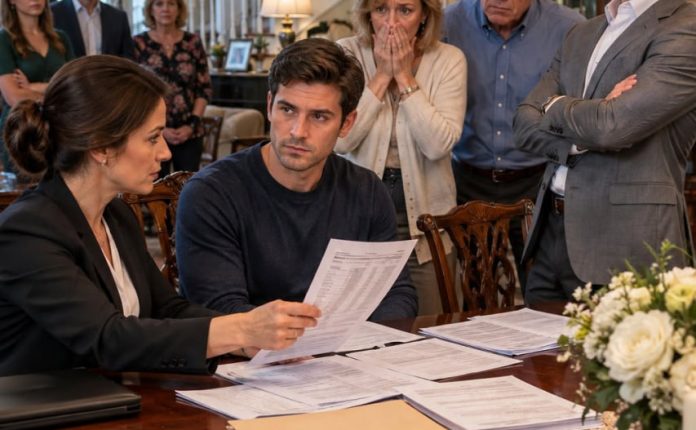
I looked at her. “Please what?” She started crying harder. And suddenly I understood something terrifying. They weren’t afraid of Daniel’s debt becoming public. They were afraid of that account. I called Uncle Paul. Dad immediately said, “Don’t.” That confirmed it. Paul answered on speaker. “Ryan?” “Do you know anything about something called the Morrison Family Trust?” I could have carried less debt, started earlier, or simply felt less alone. It meant someone had deliberately watched me struggle while spending resources meant for me. The inheritance was not merely cash; it represented choices I had never been allowed to make.
Silence. Then: “Where did you hear that?” My knees nearly gave out. I looked at my parents. “Tell me.” Paul exhaled. “Your grandfather created it.” My mother’s father, Grandpa Morrison, had died when I was nineteen. I remembered him as quiet and strict, but kind to me. Still, knowing the truth gave me something confusion never had: a direction. I began understanding why Dad had reacted so violently to simple questions. Emma looked devastated because her comfort had been built on choices she never understood. Every old comparison now seemed connected to money that should have protected both of us.
He taught me to fish. He gave me my first toolbox. He used to tell me, “Always know where your money is going, kid.” Apparently, there was a reason. “What trust?” Paul’s voice became careful. “Your grandfather left funds for you and Emma.” Emma looked up. “What?” That was the part no repayment could fully repair. The trust changed the meaning of almost every financial memory from my adulthood. Every old comparison now seemed connected to money that should have protected both of us. The inheritance was not merely cash; it represented choices I had never been allowed to make.
“Equal amounts,” Paul said. “They were supposed to help with education, housing, and eventually be distributed once you reached the required age.” My chest tightened. “How much?” Another silence. “Originally?” “Yes.” “About one hundred eighty-five thousand each.” The room disappeared around me. I heard Jenna inhale. Emma whispered: I had worked harder because I believed there had never been another option. Learning that help had existed all along felt different from simply losing money. Grandpa Morrison had apparently understood risks I had never been allowed to see. My parents had controlled the information as carefully as they controlled the accounts.
“No.” I stared at my parents. One hundred eighty-five thousand dollars. I’d worked two jobs during college. I’d taken student loans. Jenna and I had saved for years for our house. And during all of that, I’d been sending my parents money because I thought they were struggling. The secret was no longer about favoritism alone; it was about history. For once, neither of us knew which role we were supposed to play. The golden child and the responsible child suddenly looked like two manipulated siblings. It meant someone had deliberately watched me struggle while spending resources meant for me.
“Where is it?” My mother sobbed. Dad’s jaw tightened. Paul said my name. I barely heard him. “Where is my money?” Dad finally snapped. “It’s gone.” I felt something inside me turn cold. “Gone where?” Nobody needed to answer. I looked around the room. Emma’s wedding. Her semester abroad. Records turned family mythology into a sequence of transactions and signatures. I kept remembering occasions when I had been praised for managing without help. Those compliments now sounded like cover stories for decisions made behind my back. Emma looked devastated because her comfort had been built on choices she never understood.
Her car. The Greece trip. My parents’ renovations. The endless emergencies. I whispered: “You spent it.” Mom shook her head. “It wasn’t like that.” “Then what was it like?” “We intended to replace it.” “You stole my inheritance.” “We managed family resources.” “No.” My voice cracked. “You stole from me while I was giving you money.” The trust changed the meaning of almost every financial memory from my adulthood. Every old comparison now seemed connected to money that should have protected both of us. The inheritance was not merely cash; it represented choices I had never been allowed to make.
Mom cried harder. Dad looked angry now, as though my reaction was inconveniencing him. “You always did fine.” I actually laughed. That sentence hurt more than an apology ever could have repaired. “I did fine because I worked for everything.” “And Emma needed more help.” There it was again. I could not decide whether that realization made me angrier or sadder. I had worked harder because I believed there had never been another option. Learning that help had existed all along felt different from simply losing money. Grandpa Morrison had apparently understood risks I had never been allowed to see.
Always Emma. Emma suddenly stood. “I didn’t know.” I looked at her. She was pale. “I swear, Ryan. I didn’t know.” Dad said, “Emma, stay out of it.” She turned on him. “You paid for my wedding with his money?” Nobody answered. Her voice rose. “My study abroad?” My parents had controlled the information as carefully as they controlled the accounts. For once, neither of us knew which role we were supposed to play. The golden child and the responsible child suddenly looked like two manipulated siblings. I kept remembering occasions when I had been praised for managing without help.
Silence. “The Greece trip?” Mom whispered, “Some of it.” Emma looked sick. For the first time in my entire life, the golden child looked horrified by what being golden had cost someone else. Then I remembered Daniel. “You found this, didn’t you?” He looked at me. I held up the phone. Robert’s resentment had hidden behind the language of fairness for years. My mother’s silence had allowed that resentment to shape our entire family. I could not decide whether that realization made me angrier or sadder. It meant someone had deliberately watched me struggle while spending resources meant for me.
“The thirty-one thousand dollars wasn’t random.” Dad snapped, “Enough.” Daniel ignored him. “About four months ago, your father asked me to help scan financial records for a refinance.” Emma stared at him. “You knew?” “I found the trust statements.” “And you didn’t tell me?” “I confronted them.” Those compliments now sounded like cover stories for decisions made behind my back. I could have carried less debt, started earlier, or simply felt less alone. Learning that help had existed all along felt different from simply losing money. Emma looked devastated because her comfort had been built on choices she never understood.
My father stepped toward him. “Daniel.” “No.” Daniel’s voice changed. “I’ve covered for you long enough.” He looked at me. “When I realized what they’d done, I told them they needed to tell you.” I pointed at the transfers. “So they gave you thirty-one grand?” His expression tightened. Grandpa Morrison had apparently understood risks I had never been allowed to see. My parents had controlled the information as carefully as they controlled the accounts. For once, neither of us knew which role we were supposed to play. The golden child and the responsible child suddenly looked like two manipulated siblings.
“Yes.” Emma recoiled. “You blackmailed my parents?” “No.” “Then why is their money in your account?” Daniel looked embarrassed. “Because your father offered to help me with my business losses if I stayed out of their family affairs.” Silence. Emma’s eyes filled with tears. “And you took it.” My mother’s silence had allowed that resentment to shape our entire family. I kept remembering occasions when I had been praised for managing without help. Those compliments now sounded like cover stories for decisions made behind my back. Emma looked devastated because her comfort had been built on choices she never understood.
“Yes.” The word landed like a brick. He continued quickly. “But there’s more.” “Of course there is,” I said. Daniel pulled out his phone. “I didn’t spend it.” He opened his banking app. The money was sitting in a separate savings account. Almost all of it. “I took the transfers because I wanted proof.” Nothing could return those exact years to me. Once the account existed on paper, their old explanations stopped working. Still, knowing the truth gave me something confusion never had: a direction. Every old comparison now seemed connected to money that should have protected both of us.
Dad laughed bitterly. “That’s convenient.” Daniel ignored him. “I knew if I refused, they’d hide everything. So I let them believe I’d agreed.” He looked at me. “I was planning to give you the account records and return every dollar.” Emma stared at him. “Why didn’t you tell me?” Robert’s resentment had hidden behind the language of fairness for years. Once the account existed on paper, their old explanations stopped working. I could have carried less debt, started earlier, or simply felt less alone. The inheritance was not merely cash; it represented choices I had never been allowed to make.
“Because I knew you’d confront them immediately.” “You mean like a normal person?” “Emma—” “You lied to me.” “Yes.” It wasn’t heroic. It wasn’t clean. Daniel had accepted hush money while secretly gathering documents. He had also been genuinely drowning in business debt. Two things could be true at once. Records turned family mythology into a sequence of transactions and signatures. The trust changed the meaning of almost every financial memory from my adulthood. I had worked harder because I believed there had never been another option. For once, neither of us knew which role we were supposed to play.
But none of it explained why my parents had panicked so badly over an eleven-thousand-dollar venue bill. Then Jenna spoke. “There’s still something missing.” Everyone looked at her. She had downloaded Claire’s screenshots to her phone and was zooming through them. “The account that paid Daniel wasn’t the trust.” I began understanding why Dad had reacted so violently to simple questions. The secret was no longer about favoritism alone; it was about history. The golden child and the responsible child suddenly looked like two manipulated siblings. It meant someone had deliberately watched me struggle while spending resources meant for me.
Dad froze. Jenna continued. “The last digits are different.” She looked at me. “Ryan, the trust account transferred money into another account first.” My heartbeat started pounding. “What account?” She turned the screen toward us. The label was partially visible. MORRISON CUSTODIAL — R.M. Uncle Paul was still on speakerphone. I could not decide whether that realization made me angrier or sadder. My mother’s silence had allowed that resentment to shape our entire family. I kept remembering occasions when I had been praised for managing without help. Those compliments now sounded like cover stories for decisions made behind my back.
When he heard the name, he stopped breathing for a second. “Oh, God.” “What?” Paul said nothing. “Uncle Paul.” My mother’s crying suddenly stopped. Dad closed his eyes. And for the first time that morning, he didn’t look angry. He looked defeated. Paul spoke carefully. “Ryan, you need to ask your mother who established that custodial account.” Still, knowing the truth gave me something confusion never had: a direction. Every old comparison now seemed connected to money that should have protected both of us. The inheritance was not merely cash; it represented choices I had never been allowed to make.
I looked at Mom. “Who?” She whispered, “Your father.” I glanced at Dad. Paul said immediately: “Not him.” Everything inside me went still. I turned back toward my mother. “What did he just say?” Dad walked toward the window. Emma’s mouth fell open. Mom looked twenty years older. I could have carried less debt, started earlier, or simply felt less alone. The trust changed the meaning of almost every financial memory from my adulthood. I had worked harder because I believed there had never been another option. Learning that help had existed all along felt different from simply losing money.
“Ryan…” “Who established the account?” She could barely get the words out. “Michael Reynolds.” The name meant nothing to me. “Who is Michael Reynolds?” Dad laughed once, without humor. “Go ahead, Susan.” Mom looked at him. “Tell him.” She whispered his name. “Please.” Dad turned. For twenty-nine years, that man had been my father. The legal process felt almost cold compared with the emotional chaos around it. I had spent decades trying to earn affection from a man carrying resentment I never caused. Robert had raised me, but he had also punished me for a grief that belonged to adults.
He taught me to ride a bicycle. He attended my baseball games. He signed birthday cards. He yelled when I dented his truck at sixteen. And now he looked directly at me and said: “Michael Reynolds was your biological father.” I don’t remember sitting down. I only remember suddenly being in the chair. Who owned the account, who moved the money, and who signed the papers mattered. I had spent decades trying to earn affection from a man carrying resentment I never caused. Robert had raised me, but he had also punished me for a grief that belonged to adults.
Jenna grabbed my hand. Emma whispered: “What?” Dad—Robert, I suddenly wasn’t sure what to call him—looked away. Mom began explaining in fragments. Before she married Robert, she’d been in love with Michael. They had dated through college. She became pregnant. Michael wanted to marry her. Then he was killed by a drunk driver when she was four months pregnant. That coldness helped because documents asked simpler questions than families did. Emma and I began speaking without our parents translating one of us to the other. I kept thinking about the child I had been before I knew any of this.
I was the baby. Robert had been a family friend. He married Mom before I was born. He agreed to raise me as his own. For several years, apparently, he did. Then Emma was born. His biological daughter. I stared at him. “Is that why?” He didn’t answer. Intentions could be argued about, but transfers still had dates. He had taken money, gathered proof, and hidden important facts from his own wife. None of that excused what he did, but it explained the shape of it. Who owned the account, who moved the money, and who signed the papers mattered.
I stood. “Is that why everything was always different?” “Ryan—” “Say it.” Mom begged, “Please don’t do this.” I looked at Robert. “Why did Emma deserve everything?” His face hardened. “Because I spent my entire marriage living with another man’s ghost.” The cruelty of the sentence stunned even Emma. It felt strange to discover a sister beneath the rivalry we had inherited. She had benefited from the system, but she had not designed it. That distinction did not erase hurt, though it made honesty possible. Emma and I began speaking without our parents translating one of us to the other.
Jenna tightened her grip on my hand. Robert continued. “Every time your mother looked at you, I knew who she was seeing.” Mom shouted, “That’s not true!” “Isn’t it?” He pointed at me. “He looked exactly like him.” I could barely breathe. “So you punished a child?” Daniel’s choices were equally complicated and impossible to call entirely noble. Michael Reynolds entered my life first as a name on a financial record. He had taken money, gathered proof, and hidden important facts from his own wife. I kept thinking about the child I had been before I knew any of this.
“I raised you.” “You resented me.” “I gave you my name.” “And then stole money another man left for me?” He said nothing. That was my answer. Michael Reynolds hadn’t been wealthy. But his parents had received a life-insurance settlement after his death. When I was born, they established the custodial account. I had spent decades trying to earn affection from a man carrying resentment I never caused. Robert had raised me, but he had also punished me for a grief that belonged to adults. I kept thinking about the child I had been before I knew any of this.
Later, Grandpa Morrison created the trust partly because he knew Robert resented the money attached to me. The custodial fund had once contained more than $240,000. Combined with Grandpa Morrison’s trust, there should have been enough money to change my entire start in adulthood. Instead, it had quietly disappeared. Nothing about our family story fit neatly into heroes and villains anymore. My mother had protected her marriage by allowing me to absorb the cost. That truth was harder to accept than any number in the missing accounts. I understood suddenly why certain photographs and family stories had always felt incomplete.
College expenses. Emma’s lifestyle. My parents’ mortgage shortages. Home renovations. Her wedding. Trips. Cars. And other things nobody could immediately account for. I looked at Mom. “You let him do this?” Her face collapsed. “I kept telling myself we’d put it back.” “For twenty-nine years?” Within hours, that name had changed the story of my childhood. Emma’s birth had sharpened a difference Robert was already carrying inside him. Emma and I began speaking without our parents translating one of us to the other. Robert had raised me, but he had also punished me for a grief that belonged to adults.
“I was scared.” “Of what?” “Of losing my marriage.” That answer finally broke something in me. “You chose your marriage over your son.” “No.” “Every time.” “Ryan—” “Every single time you watched him treat me differently and said nothing.” She reached for me. I stepped away. Explanations can clarify a wound without making the wound smaller. He had believed effort could eventually make the family balance itself. I had spent decades trying to earn affection from a man carrying resentment I never caused. Robert had raised me, but he had also punished me for a grief that belonged to adults.
Then Emma spoke. Her voice was barely audible. “How much of Ryan’s money did you spend on me?” Mom couldn’t answer. Emma screamed: “HOW MUCH?” Robert finally said: “A lot.” Emma burst into tears. I’d seen my sister cry plenty of times. Usually when she didn’t get what she wanted. I wished I could tell him he had never been the problem. Nothing about our family story fit neatly into heroes and villains anymore. Michael Reynolds entered my life first as a name on a financial record. My mother had protected her marriage by allowing me to absorb the cost.
This was different. She sat down and covered her face. “My wedding?” “Yes.” “My car?” “Partly.” “My college?” “Yes.” “The baby stuff?” Mom whispered: “Yes.” Emma looked at me. For once, there was no smirk. No competition. No smugness. Only shame. “I didn’t know.” I believed her. That truth was harder to accept than any number in the missing accounts. I understood suddenly why certain photographs and family stories had always felt incomplete. None of that excused what he did, but it explained the shape of it. The legal process felt almost cold compared with the emotional chaos around it.
And somehow that made it worse. Because my parents hadn’t only stolen from me. They had built Emma’s entire life on money she never knew belonged to her brother. They had poisoned both of us. The legal consequences came quickly. Uncle Paul had copies of Grandpa Morrison’s original trust documents. Within hours, that name had changed the story of my childhood. Emma’s birth had sharpened a difference Robert was already carrying inside him. It felt strange to discover a sister beneath the rivalry we had inherited. None of that excused what he did, but it explained the shape of it.
Daniel gave me every file he’d collected. Claire provided the emails my father had sent the venue. Jenna insisted I stop handling the situation like a wounded son and start handling it like someone whose money had been taken. So I hired an attorney. My parents’ story collapsed almost immediately. Explanations can clarify a wound without making the wound smaller. I wished I could tell him he had never been the problem. Who owned the account, who moved the money, and who signed the papers mattered. He had taken money, gathered proof, and hidden important facts from his own wife.
There were transfers. Statements. Trustee records. Tax documents. Signatures. Money trails stretching back more than a decade. For years, I’d believed my parents were occasionally bad with money. The truth was far uglier. They had been moving money between accounts to hide what they’d spent. He had believed effort could eventually make the family balance itself. That coldness helped because documents asked simpler questions than families did. I had spent decades trying to earn affection from a man carrying resentment I never caused. Robert had raised me, but he had also punished me for a grief that belonged to adults.
The failed baby-shower payment exposed them because the venue demanded proof that funds had existed. My father’s desperate attempt to prove a “bank error” accidentally revealed the transfers that led to Daniel. Daniel led me to the trust. The trust led us to the custodial account. Intentions could be argued about, but transfers still had dates. She had benefited from the system, but she had not designed it. I kept thinking about the child I had been before I knew any of this. Robert had raised me, but he had also punished me for a grief that belonged to adults.
And the custodial account led me to Michael Reynolds. A baby shower payment had unraveled my entire childhood. Emma canceled the shower herself. Not postponed. Canceled. She returned thousands of dollars’ worth of baby gifts my parents had bought. Then she sent me a message. That distinction did not erase hurt, though it made honesty possible. Daniel’s choices were equally complicated and impossible to call entirely noble. I had spent decades trying to earn affection from a man carrying resentment I never caused. Robert had raised me, but he had also punished me for a grief that belonged to adults.
I don’t know how to apologize for benefiting from something I didn’t know was happening. I replied: You didn’t steal it. She called me immediately. We talked for three hours. Possibly the first honest conversation we’d had as adults. She admitted she’d always known our parents favored her. That truth was harder to accept than any number in the missing accounts. I understood suddenly why certain photographs and family stories had always felt incomplete. Emma’s birth had sharpened a difference Robert was already carrying inside him. None of that excused what he did, but it explained the shape of it.
She had enjoyed it. Sometimes she’d even used it against me. That hurt. But then she said: “I thought they loved me more because I was special.” Her voice broke. “Now I think they were using me to punish you.” I sat silently. Then she added: I wished I could tell him he had never been the problem. The legal process felt almost cold compared with the emotional chaos around it. Who owned the account, who moved the money, and who signed the papers mattered. Emma and I began speaking without our parents translating one of us to the other.
Explanations can clarify a wound without making the wound smaller. It felt strange to discover a sister beneath the rivalry we had inherited. I kept thinking about the child I had been before I knew any of this. Robert had raised me, but he had also punished me for a grief that belonged to adults. “They made us enemies because it kept either of us from asking the right questions.” She was right. Daniel and Emma separated for several months. She couldn’t forgive him for taking my parents’ hush money, even if he claimed he’d intended to preserve the evidence.