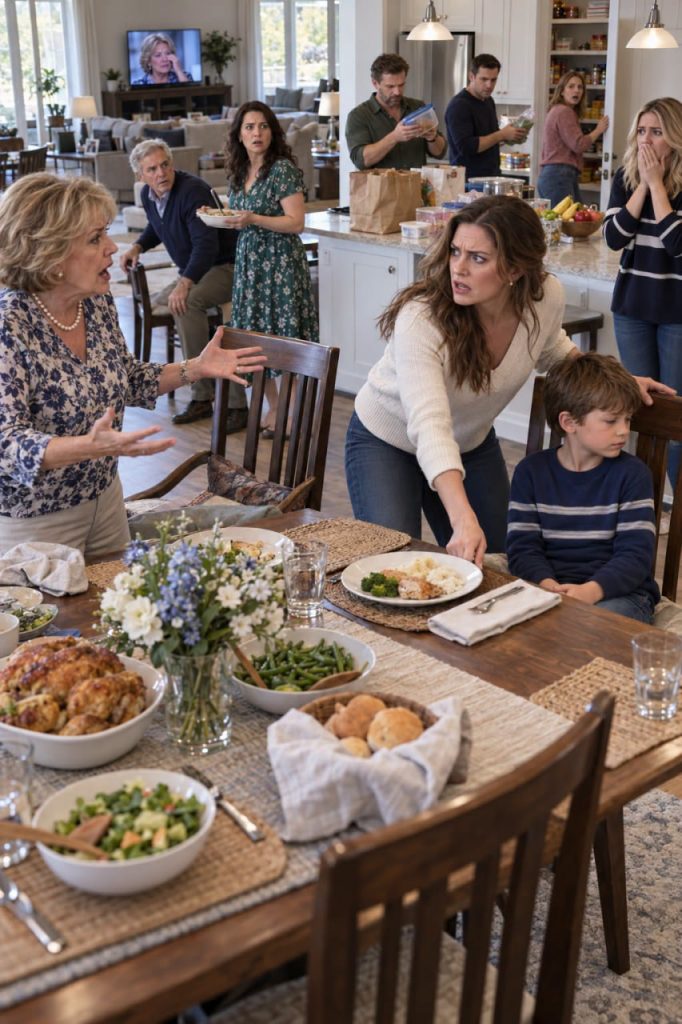
Weeks earlier he had walked into Vivian’s kitchen looking for a cookie and saw her adding something from a small container to one serving dish. Vivian noticed him and pulled him into the hall. She told him grown-ups sometimes had to do things children did not understand. When he asked why she was hiding it, she warned him that “people who fight what’s good for them get weak. What frightened me most was not the sentencing, but how easily our family had learned to explain it away. Looking back, Vivian’s excuses was the detail I should have taken most seriously.
Then she mentioned Grandpa Thomas. Whether that statement meant anything about Thomas’s death was unclear. Investigators later reviewed his old medical history, but too much time had passed to establish a definitive connection. Ethan struggled with that uncertainty more than anything else. He wanted an answer he might never get. I did not understand then how much the right to refuse would become impossible to dismiss. I did not understand then how much the slow return of trust would change everything that followed. I did not understand then how much Vivian’s excuses would force me to question years of assumptions.
Eventually he told me, “I’m not going to let her take the rest of my life by making me chase something we can’t prove. The criminal case focused on what could be proven. The abandoned soup. The journals. Medical records. Witness statements. Photographs Sophie had taken. Items recovered from Vivian’s basement. Her own written descriptions. That moment stayed with me because Vivian’s excuses exposed how much we had accepted without asking questions. Once I noticed our new boundaries, the old explanations started collapsing one after another. I did not understand then how much the sentencing would change everything that followed.
Prosecutors identified multiple incidents involving both adults and children that supported charges including aggravated assault, child endangerment, and unlawful tampering with food. Vivian’s attorney initially argued that she had never intended harm. She genuinely believed she was strengthening the family’s health, they said. That moment stayed with me because the right to refuse exposed how much we had accepted without asking questions. The truth about the sentencing mattered because it challenged everything I thought I knew about what safety really means. Even before we had proof, the children’s recovery had already changed how I thought about what safety really means.
That defense might have carried more weight if her journals had not included warnings about hiding ingredients, observations about keeping relatives uninformed, and strategies for dealing with people who questioned her. Intent became difficult to deny when you had written down your own deception. Vivian tried contacting Ethan from jail. He refused every call. Then she sent letters. Even before we had proof, the slow return of trust had already changed how I thought about how boundaries protect children. The truth about the right to refuse mattered because it challenged everything I thought I knew about how boundaries protect children.
The first began, You know your wife has always hated me. Ethan read one paragraph and threw it away. The next blamed Sophie. The third blamed Ryan. A fourth claimed the family would eventually realize she had sacrificed everything to protect them from weakness. I read none of them. Even before we had proof, the children’s recovery had already changed how I thought about how boundaries protect children. Even before we had proof, Vivian’s excuses had already changed how I thought about what safety really means. Looking back, our new boundaries was the detail I should have taken most seriously.
I had spent years allowing Vivian to rewrite every conflict until she was either the victim or the hero. I was done letting her words inside my home. Months passed before the case reached its final stage. By then Noah was sleeping better. He stopped asking whether Vivian might come through the front door. He began eating lunch at school again without examining every bite. I did not understand then how much the sentencing would become impossible to dismiss. For the first time, I stopped asking whether the sentencing was rude or dramatic and started asking whether it was safe.
We found a child therapist who helped him understand that fear could linger even after danger ended. Ethan started therapy too, something his mother would once have mocked him for. Sophie became the person Noah trusted most outside our immediate household. She never treated him like a fragile child. At the time, I still wanted a harmless explanation for the sentencing, because the alternative felt unbearable. Every new detail made the right to refuse harder to separate from the history we had normalized. I did not understand then how much the sentencing would force me to question years of assumptions.
She simply answered his questions honestly. Shortly before Vivian’s court hearing, Sophie came over carrying a gift bag. Inside was a child-sized apron, brightly colored measuring cups, plastic utensils, and a beginner’s cookbook. Noah stared at them. “I thought maybe kitchens could be fun again,” Sophie said. “But only if you want. Even before we had proof, the family dinners had already changed how I thought about how boundaries protect children. I did not understand then how much the family dinners would become impossible to dismiss. Looking back, the children’s recovery was the detail I should have taken most seriously.
Noah touched the apron cautiously. “Can we make cookies? “Absolutely. “Can I see everything that goes in? Sophie smiled. “You get to measure it yourself. That Saturday, our kitchen smelled like chocolate, vanilla, and slightly overbaked dough. Noah stood on a stool between Sophie and Ethan, reading ingredients aloud while I watched from the sink. That moment stayed with me because our new boundaries exposed how much we had accepted without asking questions. Looking back, the sentencing was the detail I should have taken most seriously. Once I noticed the children’s recovery, the old explanations started collapsing one after another.
When the first tray came out, he picked up one warm cookie, studied it, then held it toward me. “Mom, taste mine. I hesitated. Only for a heartbeat. But Noah saw it. His smile disappeared. That tiny change in his face broke my heart because I realized Vivian had poisoned more than meals. Every new detail made the children’s recovery harder to separate from the history we had normalized. I did not understand then how much our new boundaries would change everything that followed. Once I noticed the slow return of trust, the old explanations started collapsing one after another.
She had damaged our ability to trust ordinary acts of love. So I took the cookie. I bit into it. And I smiled. “It’s perfect. Noah’s grin returned. Two weeks later we entered the courthouse for Vivian’s sentencing. She turned when she saw us. Even before we had proof, the family dinners had already changed how I thought about what safety really means. The truth about the slow return of trust mattered because it challenged everything I thought I knew about what safety really means. Once I noticed the right to refuse, the old explanations started collapsing one after another.
Even in jail clothing, even without her expensive makeup and pearls, she looked at the family with the same expectation she had carried at every Sunday dinner: eventually, everyone would come back to their assigned seat. She was wrong. The courtroom was quieter than Vivian’s dining room had ever been. Looking back, the family dinners was the detail I should have taken most seriously. Every new detail made our new boundaries harder to separate from the history we had normalized. The truth about our new boundaries mattered because it challenged everything I thought I knew about how boundaries protect children.
Ethan sat beside me with Noah staying home under Melissa’s care; we had decided our son did not need to hear his grandmother justify herself one more time. Ryan and Sophie sat behind us. Several other relatives occupied the row across the aisle, people I had met only at weddings or funerals, now connected by stories none of them had previously dared to compare. Nothing about the end of her control felt small anymore, even if everyone had once treated it that way. Nothing about the family dinners felt small anymore, even if everyone had once treated it that way.
When Vivian entered, she looked over the benches and seemed genuinely stunned by how many people had come—not to support her, but to speak. By then she had agreed to plead guilty to multiple charges rather than face a trial involving years of records and dozens of witnesses. I expected that decision to humble her. Nothing about Vivian’s excuses felt small anymore, even if everyone had once treated it that way. I did not understand then how much the right to refuse would change everything that followed. Once I noticed the sentencing, the old explanations started collapsing one after another.
Instead, during sentencing, Vivian asked to address the family and returned immediately to the language she had always used. “I never wanted to hurt anyone,” she said. “Everything I did was meant to make this family stronger. People have become afraid of discomfort. Children are weaker than they used to be. I was trying to prepare them. For the first time, I stopped asking whether the end of her control was rude or dramatic and started asking whether it was safe. I began to see that the children’s recovery was connected to a larger pattern we had never examined together.
Sophie’s hand tightened around Ryan’s. Vivian continued. “You all benefited from what I learned. The judge interrupted her. “Your family members did not consent to being experimented upon. Vivian shook her head as if even the judge had failed to understand something obvious. “They would have refused because they didn’t understand. The longer I thought about it, the harder it became to dismiss our new boundaries as ordinary. I began to see that Vivian’s excuses was connected to a larger pattern we had never examined together. I did not understand then how much Vivian’s excuses would change everything that followed.
“That is precisely why consent matters. For once, someone in authority did not allow Vivian to change the subject. The prosecutor summarized the documented incidents without sensational language, which somehow made them worse. Children had been exposed to unknown substances in ordinary meals. Adults had suffered repeated unexplained illnesses. I kept returning to the sentencing, trying to decide whether fear or denial had blinded me more. The truth about our new boundaries mattered because it challenged everything I thought I knew about what safety really means. Once I noticed the family dinners, the old explanations started collapsing one after another.
Vivian had recorded reactions while concealing what she was doing. She had intimidated relatives who challenged her. The abandonment of the soup at our house, combined with laboratory analysis and her notebooks, had provided investigators with the piece they needed to connect years of suspicion into a criminal case. When the judge imposed a lengthy prison sentence, close to two decades, Vivian’s composure finally cracked. Looking back, the end of her control was the detail I should have taken most seriously. Years of keeping peace had taught me to minimize Vivian’s excuses, even when every instinct told me not to.
She turned toward Ethan. “You’re really going to let them do this to your mother? Ethan looked at her for a long time. Then he said, “You did this to yourself. “David—” she started, using his childhood middle name the way she always did when desperate to pull him backward into being a frightened boy. I began to see that the slow return of trust was connected to a larger pattern we had never examined together. For the first time, I stopped asking whether the slow return of trust was rude or dramatic and started asking whether it was safe.
He shook his head. “My name is Ethan. And my son will never be afraid of you again. Her eyes moved to me. I expected rage. What I saw instead was disbelief. People like Vivian spend so long controlling the emotional temperature of a family that consequences feel impossible to them. I hated how quickly my mind tried to protect me from what Noah’s courage might really mean. I kept returning to the safety we rebuilt, trying to decide whether fear or denial had blinded me more. Looking back, Noah’s courage was the detail I should have taken most seriously.
She had always believed someone would soften. Ethan would feel guilty. Ryan would panic. Sophie would doubt herself. I would choose politeness. She had built her power from tiny acts of surrender, one uncomfortable silence at a time. I stood when officers began leading her away. I did not understand then how much the safety we rebuilt would force me to question years of assumptions. I did not understand then how much the lesson I carried forward would become impossible to dismiss. I kept returning to our new traditions, trying to decide whether fear or denial had blinded me more.
“Tell Noah Grandma still loves him,” she called. “No,” I said. The officer paused because Vivian had stopped walking. I met her eyes. “He doesn’t need another message from you. Her mouth opened. I didn’t wait to hear the answer. Outside the courthouse, cold winter air hit my face. Sophie cried quietly beside her father. I did not understand then how much the memory of that first bowl of soup would force me to question years of assumptions. Even before we had proof, the family we chose to become had already changed how I thought about what family should mean.
Ethan stood on the courthouse steps with both hands in his coat pockets, staring across the street. I asked whether he was okay. “No,” he said. Then after a moment, “But I think I will be. That answer meant more to me than pretending everything had become fine simply because Vivian had been sentenced. For the first time, I stopped asking whether the family we chose to become was rude or dramatic and started asking whether it was safe. Years of keeping peace had taught me to minimize the safety we rebuilt, even when every instinct told me not to.
Healing was slower than justice. For months, ordinary things triggered memories. The smell of chicken broth made Noah leave the kitchen. Ethan struggled at family dinners if someone insisted he “just try one bite. Melissa checked labels repeatedly. Owen refused homemade food outside his house. Nobody mocked any of them. I did not understand then how much our new traditions would change everything that followed. I did not understand then how much Noah’s courage would change everything that followed. Even before we had proof, the lesson I carried forward had already changed how I thought about what family should mean.
We had learned what happens when discomfort is treated as disrespect. We created new rules without ever writing them down. Nobody had to clean their plate. Nobody had to hug anyone. Nobody had to explain why they disliked a certain food. If a child said no, we listened before asking why. I kept returning to Noah’s courage, trying to decide whether fear or denial had blinded me more. I did not understand then how much the safety we rebuilt would change everything that followed. I did not understand then how much the safety we rebuilt would become impossible to dismiss.
Most importantly, nobody was allowed to demand silence in the name of keeping the family together. Our first big family dinner after the sentencing happened in early spring. We held it at our house with the back door open because the weather was finally warm. There was no head of the table. Once I noticed Noah’s courage, the old explanations started collapsing one after another. Nothing about the safety we rebuilt felt small anymore, even if everyone had once treated it that way. I did not understand then how much the freedom to say no would change everything that followed.
People drifted between the kitchen, patio, and living room carrying dishes they had made together. Ryan grilled vegetables outside. Melissa brought cupcakes that leaned sideways because she had forgotten to let them cool before frosting them. Owen made pizza dough with the counselor who had encouraged him to find something positive to associate with food again. Years of keeping peace had taught me to minimize the memory of that first bowl of soup, even when every instinct told me not to. Even before we had proof, our new traditions had already changed how I thought about what family should mean.
Sophie and Noah took complete control of the cookies. Every ingredient sat openly on the counter. “Mom,” Noah announced, “Sophie says I’m head chef. “You’re six. “Exactly. Sophie laughed. “He has authority issues now. “Healthy authority issues,” Ethan corrected. For the first time in months, laughter around food did not sound forced. Even before we had proof, the memory of that first bowl of soup had already changed how I thought about what family should mean. For the first time, I stopped asking whether the lesson I carried forward was rude or dramatic and started asking whether it was safe.
Later Noah carried a plate of cookies onto the patio. He offered one to Owen, who said, “Maybe later. Noah shrugged. “Okay. That tiny exchange stopped me. Once, at Vivian’s table, refusing food had been treated like betrayal. Now a child could say no and the world simply continued. That was the family tradition I wanted Noah to remember. I hated how quickly my mind tried to protect me from what the safety we rebuilt might really mean. The truth about the freedom to say no mattered because it challenged everything I thought I knew about what family should mean.
Not the perfect tablecloth. Not the polished silver. Not the woman at the head of the table deciding what everyone owed her. Choice. Safety. Honesty. That night, after everyone left, I tucked Noah into bed. His apron was draped over the back of his desk chair, covered in flour. “Mom? “Yeah? Looking back, the family we chose to become was the detail I should have taken most seriously. The longer I thought about it, the harder it became to dismiss Noah’s courage as ordinary. Once I noticed the truth we finally shared, the old explanations started collapsing one after another.
“Is Grandma still mad at me? I sat beside him. “She might be angry about a lot of things, sweetheart. But her feelings are not your responsibility. He thought about that. “Did I save everybody? The question made my throat tighten. “You helped us finally listen,” I said. “Sophie helped too. Once I noticed the lesson I carried forward, the old explanations started collapsing one after another. Every new detail made Noah’s courage harder to separate from the history we had normalized. I did not understand then how much the family we chose to become would become impossible to dismiss.
So did everyone who told the truth. “But I knew the soup was bad. “You knew something felt wrong. “How? I brushed his hair from his forehead. “Sometimes your body notices danger before your brain can explain it. He nodded solemnly. Then he asked, “Can we make pancakes tomorrow? I laughed. “Yes. “With blueberries? “Yes. For the first time, I stopped asking whether the memory of that first bowl of soup was rude or dramatic and started asking whether it was safe. I did not understand then how much the family we chose to become would change everything that followed.
“And chocolate chips? “That sounds excessive. “It’s Saturday. I kissed his forehead. “Good argument. As I turned off the light, I remembered that first Sunday—the china rattling, soup spreading across Vivian’s white tablecloth, Noah crying while every adult tried to decide whether avoiding conflict mattered more than listening to him. I did not understand then how much our new traditions would become impossible to dismiss. The longer I thought about it, the harder it became to dismiss the truth we finally shared as ordinary. Once I noticed the freedom to say no, the old explanations started collapsing one after another.
I wished I could go back and tell that version of myself one thing. A peaceful family is not one where nobody causes trouble. It is one where people are safe enough to tell the truth. Vivian had spent years demanding loyalty while secretly violating the trust she claimed held us together. At the time, I still wanted a harmless explanation for the safety we rebuilt, because the alternative felt unbearable. Once I noticed our new traditions, the old explanations started collapsing one after another. Once I noticed the safety we rebuilt, the old explanations started collapsing one after another.
She believed blood gave her permanent access to our lives, our homes, our children, and eventually our forgiveness. She was wrong about that too. Ethan never visited her in prison. Ryan did not either. Sophie ignored every letter Vivian attempted to send through other relatives. I never regretted cutting contact, and I never taught Noah that forgiveness required reopening a door someone had used to hurt him. I did not understand then how much our new traditions would force me to question years of assumptions. Looking back, the safety we rebuilt was the detail I should have taken most seriously.
Maybe someday he will remember his grandmother without fear. Maybe someday Ethan will think of his childhood without wondering what happened at every meal. I hope so. But forgetting what Vivian did is not part of our healing. Neither is forgiving her. The longer I thought about it, the harder it became to dismiss the memory of that first bowl of soup as ordinary. Looking back, the freedom to say no was the detail I should have taken most seriously. That moment stayed with me because the freedom to say no exposed how much we had accepted without asking questions.
Our family gatherings still happen, just without the woman who once controlled them. We cook together. We ruin recipes. We order pizza when dinner fails. We label things for relatives with allergies, ask before serving unfamiliar foods, and believe children when they say something feels wrong. I did not understand then how much the lesson I carried forward would change everything that followed. Looking back, our new traditions was the detail I should have taken most seriously. At the time, I still wanted a harmless explanation for the memory of that first bowl of soup, because the alternative felt unbearable.
And every once in a while, when Noah pushes away a plate because he simply does not like something, I hear Vivian’s old voice in the back of my mind insisting that children should eat what they are given. Then I look at my son. “Don’t like it? I ask. “Nope. “Want something else? “Yep. And that is the end of the argument. The longer I thought about it, the harder it became to dismiss the safety we rebuilt as ordinary. Even before we had proof, the safety we rebuilt had already changed how I thought about why listening matters.
Because the smallest refusal I once almost dismissed as bad manners became the warning that exposed years of secrets. My six-year-old son did not understand medical records, investigations, manipulation, or criminal evidence. He understood one thing. Grandma’s kitchen was not safe. The adults took too long to believe him. We never will again. What frightened me most was not the memory of that first bowl of soup, but how easily our family had learned to explain it away. The truth about the lesson I carried forward mattered because it challenged everything I thought I knew about what family should mean.
THE END!
Disclaimer: Our stories are inspired by real-life events but are carefully rewritten for entertainment. Any resemblance to actual people or situations is purely coincidental.