I lay on a mattress directly on the floor, staring at the ceiling while silence filled the apartment.
At first, the quiet felt empty.
Then I realized it wasn’t emptiness at all.
It was peace.
Something I hadn’t felt in years.
The next morning, I opened my laptop and checked my bank account.
Three automatic transfers were scheduled.
One for my parents’ utility bills.
One for Ashley’s tuition.
Another toward the family mortgage.
I canceled all three.
My fingers trembled slightly when I pressed confirm.
But afterward, an unexpected lightness settled over me.
No explanation.
No apology.
Just finished.
Over the next few weeks, I slowly began building a life that belonged to me.
Work at the consulting firm accelerated quickly.
My manager assigned me a major restructuring project for a Fortune 500 technology company.
I threw myself into it—staying late, leading meetings, solving problems almost instinctively.
For the first time, I wasn’t working for anyone’s approval.
I was working for myself.
And people noticed.
I was invited into more meetings.
Asked for more input.
My ideas were taken seriously.
My name began circulating not as Ashley’s sister or the dependable daughter, but as Clare Adams, a rising consultant.
Evenings became my sanctuary.
I returned to my quiet apartment and slowly filled it with things that felt like pieces of myself.
A soft gray couch.
A tree-branch-shaped lamp.
A tall bookshelf where I finally unpacked the paperbacks I had kept boxed for years.
I lined the window with succulents, lit candles, and played jazz while cooking dinner for one.
It felt indulgent.
Almost selfish.
And wonderful.
One Saturday, Michael arrived with a bottle of wine and two enormous bags of Thai food.
“Still breathing?” he joked as he stepped inside like he had done it a hundred times.
I smiled. “I think I’m finally starting to live.”
We sat cross-legged on the floor, eating noodles, drinking cheap cabernet, and laughing about college.
For a while, life felt light again.
“I like this place,” he said, looking around. “It feels like you.”
I hesitated, then smiled faintly. “I think I’m still figuring out what that means.”
He lifted his glass.
“To figuring it out.”
Our glasses touched.
A gentle warmth moved through me.
It wasn’t pride.
It wasn’t relief.
Maybe it was the beginning of self-acceptance.
Later that night, while I folded a blanket across the couch, my phone began buzzing.
Mom.
Then Dad.
Ten missed calls in total.
I didn’t answer.
I didn’t even check for messages.
I silenced the phone, wrapped myself in the blanket, and watched the streetlights shimmer outside the window.
For years, they had demanded my silence.
Now I was giving them silence of my own.
One they would finally have to hear.
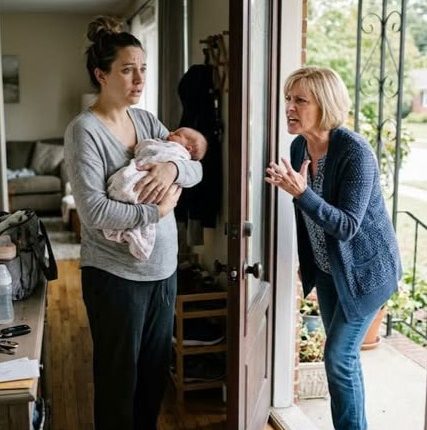
Then came a knock.
Not gentle.
Not hesitant.
Firm.
Demanding.
The kind of knock that expected the door to open.
I looked at the clock.
4:13 p.m.
Tuesday.
I had just returned from work, still wearing heels, my blazer slipping from my shoulders.
When I opened the door, I froze.
My parents stood outside.
Robert and Susan Adams.
Perfectly composed, as though nothing had happened.
They looked like people arriving at property they still believed belonged to them.
My father wore a crisp button-down and polished shoes.
My mother stood rigid in a beige trench coat, arms crossed tightly.
I said nothing.
“We need to talk,” my mother said.
The last time we spoke, she had accused me of humiliating the family.
Now she stood at my door as if that wound didn’t exist.
Without waiting for permission, they walked past me into the apartment.
I slowly closed the door.
They sat on my couch—the one I had purchased myself, inside the living room I had built from my own hard work and sleepless nights.
I stayed standing.
“Clare,” my father began, shifting into the polished professional tone he used in meetings. “Ashley’s run into some setbacks.”
Setbacks.
That was the word he chose.
“Her hospital internship had been terminated. Staff cuts,” my mother said curtly. “And as for her tuition, the remaining balance hasn’t been paid. If that doesn’t get resolved soon, Ashley might have to leave the program.”
“And?” I asked flatly.
My mother’s response came immediately.
“We need your help.”
There it was.
No apology.
No remorse.
Just another request.
“Help?” I echoed.
“Clare, you understand how critical this is?” my father said. “If she falls behind now, she could lose everything.”
“She?” I asked quietly. “Or you?”
My mother’s eyes hardened.
“Don’t be petty,” she hissed.
A dry laugh escaped me.
“I gave up years of my life for this family. Paid bills when the lights went out. Bought Ashley’s textbooks. Covered her rent, her groceries. I sacrificed so she could have it all. And the one time, just once, I asked for something back, you told me I disgraced you.”
“We were angry,” my father barked. “You were disrespectful.”
I stepped closer.
My heels struck the floor sharply.
“No,” I said evenly. “You disrespected me for years, quietly, consistently, until it became the rhythm of our family. You didn’t raise me. You drained me.”
My mother straightened.
“We’re your parents,” she said sharply. “We brought you into this world.”
“And I carried it,” I replied, the words rising from somewhere deep. “I carried it while you stood on my back and praise someone else for standing taller.”
The tension tightened between us.
“You don’t get to walk in here and pretend none of that happened,” I said quietly. “You don’t get to act like you never told me you wished I’d never been born.”
My father opened his mouth.
Then closed it.
His silence answered enough.
I walked to the door and opened it.
“If you came here to apologize, I’d listen. But if you came to ask for more, that conversation ended the night you disowned me.”
Neither moved.
“Clare, this is family,” my mother said, her voice rising. “Blood is blood.”
“Not when it’s toxic,” I said, nodding toward the hallway.
They finally stood.
Before leaving, my mother turned.
“You’ll regret this. Someday you’ll realize you need your family.”
I held her gaze.
“I already have one. It just doesn’t include you.”
The door closed behind them.
For the first time, I felt nothing except quiet.
No guilt.
No fear.
No doubt.
Just air.
Clean and free.
This time, I didn’t cry.
I smiled.
The following weeks settled into a quiet rhythm.
No calls.
No messages.
Only silence.
The same silence they once demanded from me.
Except now it wasn’t submission.
It was strength.
Not the silence of someone becoming smaller.
The quiet of someone finally learning to hear her own voice.
At work, I poured myself into everything.
I led meetings with confidence that initially felt unfamiliar, like wearing someone else’s jacket.
Then I realized it had always fit me.
People listened when I spoke.
Clients began asking for me by name.