PART 4
I stared at the folder without touching it.
“The inheritance?”
Grandma nodded.
“The inheritance.”
I looked at Andrew.
He remained completely still.
That frightened me more than anything.
Andrew was the kind of lawyer who could make bad news sound like a weather report. If he wasn’t smiling, there was usually a reason.
“Grandma,” I said slowly, “what exactly did my parents think didn’t exist?”
She sighed.
“Everything.”
She reached for the folder and opened it herself.
Inside were bank statements, property records, stock certificates, trust documents, old letters, and several photographs.
I recognized some of the properties.
One was a small commercial building downtown.
Another was a warehouse near the river.
Another was a piece of land outside the city that had sat empty for years.
I looked at Andrew.
“How much is this?”
He didn’t answer immediately.
Grandma did.
“Today?”
“Yes.”
“Approximately thirty-one million dollars.”
I stopped breathing.
“Thirty-one…”
“Million.”
I looked at the documents again.
“Grandma, I can’t accept this.”
She smiled.
“You already did.”
“What?”
“You’ve been accepting it for eleven years.”
I didn’t understand.
She pointed toward the trust document.
“The trust was established before Lucy was born.”
“But why?”
“Because I knew what your parents were capable of.”
I shook my head.
“No. They aren’t…”
Grandma raised an eyebrow.
I stopped.
The truth was sitting right in front of me.
They had sold Lucy’s cello.
They had taken $87,000.
They had lied.
They had tried to keep Grandma from finding out.
And if Grandma hadn’t intervened, they would probably have told Lucy to forget about it.
Grandma leaned back.
“Your father was always angry about money.”
“I know.”
“No,” she said. “You don’t.”
She opened another folder.
“This is where it gets complicated.”
Inside was an old financial statement.
The account belonged to my grandfather.
I recognized his name.
“What does this have to do with Dad?”
Grandma looked at me.
“Your father believed your grandfather left him the family business.”
“He did, didn’t he?”
“No.”
I frowned.
“He inherited management of it.”
She emphasized the last word.
“Management.”
I read the documents again.
The business had never actually belonged to my father.
It belonged to the family trust.
My father had been allowed to operate it, draw a salary, and manage its investments.
But the underlying assets belonged to the trust.
And after my grandfather died, Grandma remained the controlling trustee.
“Then why did Dad act like everything belonged to him?”
“Because I let him.”
I looked at her.
“Why?”
“Because I wanted to see what he would do when he believed nobody could take anything away from him.”
I stared at her.
“And?”
Grandma’s smile disappeared.
“He became exactly who I feared he would become.”
Andrew quietly placed another document in front of me.
“This is the part you should read carefully.”
I picked it up.
It was a transfer agreement.
My father’s signature was at the bottom.
The date was eighteen months earlier.
My stomach tightened.
“What did he transfer?”
Andrew answered.
“Assets from the family business.”
“How much?”
“Approximately four million dollars.”
My head snapped up.
“To where?”
Andrew looked at Grandma.
She nodded.
“Rachel.”
I felt sick.
“Why?”
“Your father wanted to help your sister start her business.”
I remembered Rachel’s green drinks.
Her designer clothes.
Her children’s expensive school.
The vacations.
The parties.
The endless renovations.
I had always assumed Rachel’s husband earned more than they did.
Maybe they had.
But now I realized something.
Rachel hadn’t simply been receiving help.
She had been receiving family assets.
For years.
“Does Rachel know?”
Grandma’s expression was sad.
“She knows some of it.”
“Some?”
“She believes your father was giving her money from his own investments.”
I looked at the transfer documents.
“Wasn’t he?”
“No.”
Grandma shook her head.
“He was giving her money that wasn’t his.”
I closed my eyes.
Suddenly, the pool made sense.
The reason Dad had been so casual about the $87,000.
The reason Mom had defended it.
The reason Rachel acted as though Lucy’s cello was an insignificant object.
They had been living under the assumption that family assets were theirs to distribute.
And apparently, Rachel had benefited from that assumption for years.
I looked at Grandma.
“What happens now?”
She was quiet.
“That’s up to you.”
“Me?”
“Yes.”
“Why?”
“Because I am old.”
Her voice softened.
“I don’t want to spend the rest of my life fighting my own children.”
She reached across the desk and held my hand.
“But I also refuse to leave you and Lucy unprotected.”
I swallowed.
“What do you want me to do?”
“Tell the truth.”
“To everyone?”
“To yourself first.”
I looked down at the folder.
Grandma continued.
“You spent your life thinking your parents were the people who had power over you.”
She paused.
“They aren’t.”
I felt tears forming.
“They’re still my parents.”
“I know.”
“And I still love them.”
“I know.”
“Even after this.”
Grandma squeezed my hand.
“That is why this is so difficult.”
I wiped my eyes.
“What happens to them?”
“That depends on whether they choose to make things right.”
Andrew opened another folder.
“There is a legal process available.”
I looked at him.
“What kind?”
“Recovery of misappropriated trust assets.”
My stomach tightened.
“You mean suing them?”
“If necessary.”
I shook my head.
“I don’t want to destroy my family.”
Grandma looked at me.
“Emily, they have already shown you what they are willing to destroy to get what they want.”
She paused.
“Your job isn’t to destroy them.”
“It isn’t?”
“No.”
She looked toward the window.
“Your job is to stop protecting them from the consequences of their own choices.”
That sentence stayed with me.
For the first time, I understood the difference.
I didn’t have to punish my parents.
I only had to stop rescuing them.
Two days later, I asked my parents to meet me at Grandma’s office.
They arrived together.
Rachel came too.
Nobody spoke much on the way in.
Dad looked nervous.
Mom looked angry.
Rachel looked confused.
Grandma sat behind the desk.
Andrew stood beside her.
I sat opposite them.
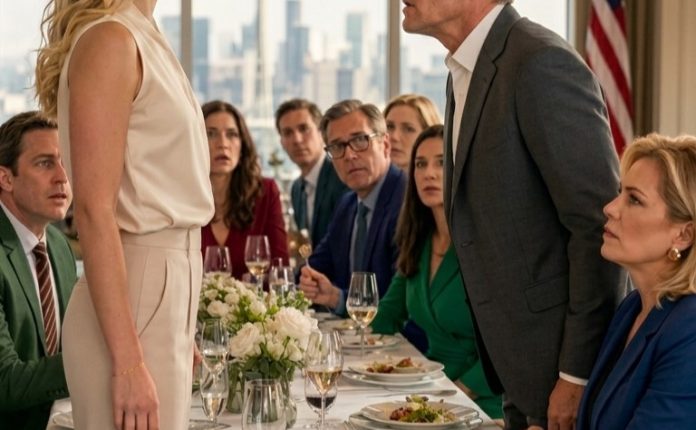
There were four folders on the table.
Dad noticed them immediately.
“What is this?”
I looked at him.
“The truth.”
He sighed.
“Emily, we’ve already apologized.”
“No.”
He looked confused.
“You said you were sorry about the cello.”
“That isn’t enough.”
Mom crossed her arms.
“What else do you want?”
I pushed the first folder toward them.
“Read it.”
Dad opened it.
Rachel leaned over.
The room became silent.
Her face changed first.
Then Dad’s.
Rachel looked up.
“What is this?”
“Your business funding.”
She looked at Dad.
“You told me that money came from your retirement investments.”
Dad said nothing.
Rachel turned the page.
Then another.
Her eyes filled with tears.
“You lied to me?”
Dad’s jaw tightened.
“I was trying to help you.”
“You stole it.”
“I didn’t steal anything.”
Andrew spoke calmly.
“You transferred assets belonging to the family trust without authorization.”
Rachel looked at him.
“How much?”
“Approximately four million dollars over several transactions.”
She stared at her father.
Four million.
The number seemed to physically knock the air out of her.
Mom suddenly spoke.
“This is ridiculous. Rachel’s business is successful.”
“That doesn’t make the transfers legal,” Andrew said.
Rachel turned toward Dad.
“You told me it was yours.”
Dad looked at the floor.
“I thought I could replace it.”
“You thought?”
Her voice cracked.
“You gave me four million dollars that wasn’t yours?”
Dad stood.
“Rachel, I did what I had to do.”
“No.”
She shook her head.
“You did what you wanted.”
That sentence hit him harder than anything I had said.
Mom stood too.
“Don’t turn against your father.”
Rachel stared at her.
“Mom, he lied to me.”
“He was helping you.”
“He was stealing for me.”
Nobody spoke.
Rachel started crying.
I watched her.
For the first time in years, she looked like my sister.
Not the confident woman who had everything.
Not the favorite child.
Just Rachel.
Scared.
Confused.
And finally realizing that the life she’d been living had been built partly on money that didn’t belong to her.
She turned toward me.
“Did you know?”
“No.”
She looked at Grandma.
“Did you?”
“Yes.”
Rachel covered her face.
“Why didn’t you tell me?”
Grandma’s voice softened.
“Because I wanted your father to tell you himself.”
Rachel laughed bitterly through her tears.
“He never would have.”
Grandma didn’t disagree.
Then Dad looked at me.
“What do you want?”
I took a breath.
“I want the money returned.”
He laughed.
“I don’t have four million dollars.”
“You have assets.”
“They aren’t liquid.”
“Then sell them.”
Mom looked horrified.
“You’re going to take our house?”
I shook my head.
“No.”
I pointed toward the papers.
“I’m asking you to return what doesn’t belong to you.”
Dad stared at me.
“And the cello?”
“The cello is already back.”
He looked down.
“I know.”
“You owe Lucy an apology.”
“I apologized.”
“You apologized to me.”
He looked toward the floor.
“You never apologized to her.”
Dad’s face tightened.
“She wouldn’t understand.”
“She understands more than you think.”
I stood.
“She’s eleven, Dad. She’s not stupid.”
The room became quiet.
Grandma slowly opened the final folder.
“This is the last matter.”
Dad looked at it.
“What now?”
Grandma removed a document.
“This is the resignation of Harold Carter as managing trustee of the family business.”
Dad’s face went blank.
“What?”
“You heard me.”
“You can’t do this.”
“I can.”
“You need me.”
“No.”
Grandma shook her head.
“The family needs someone it can trust.”
Dad stared at her.
“I’ve run that business for twenty years.”
“And now you won’t.”
He looked at me.
“You’re replacing me with Emily?”
I hadn’t expected that.
I turned toward Grandma.
“Me?”
She nodded.
“You.”
I laughed nervously.
“I don’t know how to run a business worth millions of dollars.”
“You don’t need to know everything.”
Andrew smiled.
“You’ll have professional management.”
Grandma continued.
“What you need is something your father lost.”
“What?”
“Restraint.”
She closed the folder.
“You know the difference between what belongs to you and what belongs to someone else.”
I looked at my parents.
Dad sat down slowly.
Rachel was still crying.
Mom stared at Grandma with disbelief.
Then Dad said something that surprised all of us.
“I’ll do it.”
Grandma frowned.
“Do what?”
“I’ll return the money.”
Rachel looked up.
Dad swallowed.
“I’ll sell the vacation property.”
Mom turned toward him.
“No.”
“We’ll sell it.”
“You can’t.”
“We can.”
He looked at me.
“I don’t want Lucy growing up thinking her grandfather is a thief.”
I didn’t know what to say.
Dad’s eyes filled with tears.
“I made a terrible mistake.”
He looked at Grandma.
“I made more than one.”
Grandma’s expression softened slightly.
“That is the first honest thing you’ve said today.”
But then Rachel stood.
“I have something to say.”
Everyone looked at her.
She wiped her cheeks.
“I’ll return it too.”
Dad stared at her.
“Rachel…”
“No.”
She shook her head.
“I used the money.”
“You didn’t know.”
“I know now.”
She looked at me.
“I treated Lucy like she didn’t matter.”
My throat tightened.
“I shouldn’t have.”
She looked toward Grandma.
“And I was jealous.”
Nobody moved.
Rachel laughed quietly.
“I’ve been jealous of Emily my entire life.”
Mom looked shocked.
Rachel continued.
“Because she always seemed stronger.”
She looked at me.
“Even when she had less.”
I didn’t know how to respond.
Rachel took a breath.
“I thought getting more things would make me feel like I was winning.”
She glanced toward the pool.
“It didn’t.”
Then she looked at Lucy, who had been waiting outside the office.
I hadn’t realized she was there.
Rachel walked toward her.
She knelt.
“Lucy.”
Lucy looked at her cautiously.
“I’m sorry.”
Lucy didn’t speak.
Rachel continued.
“I was wrong about your cello.”
Lucy looked at me.
I nodded.
Rachel held out her hand.
“I hope someday you’ll forgive me.”
Lucy didn’t take her hand immediately.
Then, slowly, she did.
Rachel cried again.
But this time, she didn’t hide it.
Six months passed.
The pool was never finished.
The construction company removed the unfinished structure, and the backyard was restored.
The vacation property was sold.
Several investments were liquidated.
The money taken from the trust was returned.
Not all at once.
Not easily.
But it was returned.
Dad stepped away from managing the family business.
He began attending counseling.
Mom became quieter.
Rachel sold some of the things she had bought with the money and rebuilt her business honestly.
It wasn’t perfect.
Families rarely become perfect overnight.
But something changed.
The lies stopped.
And Lucy got her cello back.
She also got something else.
Confidence.
Her teacher entered her into a regional youth music competition.
Lucy almost refused.
“I haven’t played well since the cello came back.”
I told her something Grandma had once told me.
“Sometimes losing something teaches you how much it means.”
Lucy practiced.
Every morning.
Every evening.
She played until her fingertips hurt.
Then one Saturday morning, Grandma came to watch her.
Lucy played the same melody she had played the night the cello returned.
But this time, she played it differently.
Stronger.
More confidently.
When she finished, Grandma stood and applauded.
Everyone else followed.
Lucy smiled.
Then Grandma walked toward her.
“I have one more gift.”
Lucy laughed.
“Another cello?”
Grandma smiled.
“No.”
She handed Lucy the brass key.
Lucy looked at it.
“What does it open?”
Grandma looked at me.
“Her future.”
The key belonged to an old music studio Grandma had owned for decades.
It had been closed for years.
Inside were shelves of sheet music, antique instruments, music books, and a beautiful room with tall windows overlooking the garden.
Grandma gave the studio to Lucy through the trust.
Not because Lucy was entitled to millions.
Not because she was special because of her last name.
But because Grandma wanted her to have a place where nobody could tell her that her dreams weren’t valuable.
Years later, Lucy would become a professional cellist.
But that wasn’t the most important thing.
The most important thing was that she never became obsessed with money.
She understood its value.
But she also understood its limits.
And whenever someone asked her about the antique cello, she never told them about the $87,000.
She told them about her great-grandmother.
She told them about the hands that had played it before hers.
And she told them that the greatest inheritance wasn’t money.
It was knowing that someone believed you were worth protecting.
As for Grandma Margaret, she lived long enough to attend Lucy’s first major concert.
She sat in the front row.
When Lucy walked onto the stage carrying the old cello, Grandma smiled.
I sat beside her.
“You’re proud,” I whispered.
Grandma squeezed my hand.
“More than you know.”
The lights dimmed.
Lucy raised her bow.
And the cello spoke.
That warm, beautiful sound filled the theater.
Grandma closed her eyes.
A tear slipped down her cheek.
I leaned closer.
“You okay?”
She smiled.
“I just remembered the day I bought that cello.”
I laughed.
“You never told me.”
“I was waiting for the right ending.”
“What ending?”
She opened her eyes.
“The one where it finally found the right person.”
On stage, Lucy began the final movement.
The music grew louder.
Stronger.
Braver.
And I realized something.
My parents had thought they were selling an antique cello.
They thought they were turning an old object into a swimming pool.
They thought eighty-seven thousand dollars was the story.
It wasn’t.
The cello had been a warning.
The pool had been the evidence.
The inheritance had been the protection.
But Lucy had been the reason.
And when the final note faded through the theater, Grandma stood with everyone else.
She applauded harder than anyone.
Lucy looked into the crowd.
Her eyes found Grandma.
Then me.
And she smiled.
For the first time, I understood what Grandma had meant all those years ago.
Some things are worth more than money.
Some things are worth fighting for.
And sometimes the smallest thing your family tries to take from you is the very thing that reveals everything they were hiding.
The cello had been sold for $87,000.
But it had brought the truth home.
And that was worth far more.