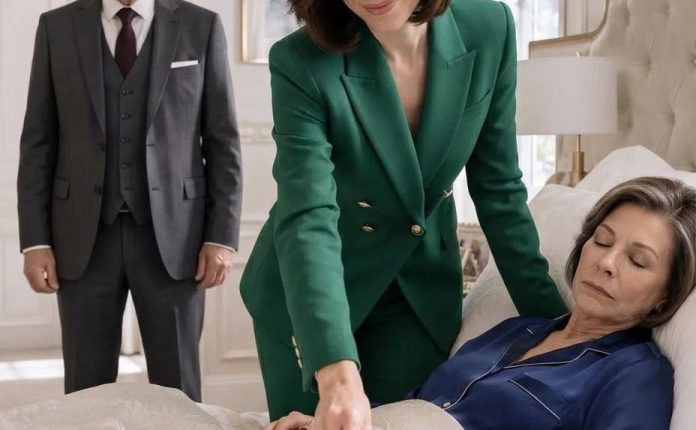
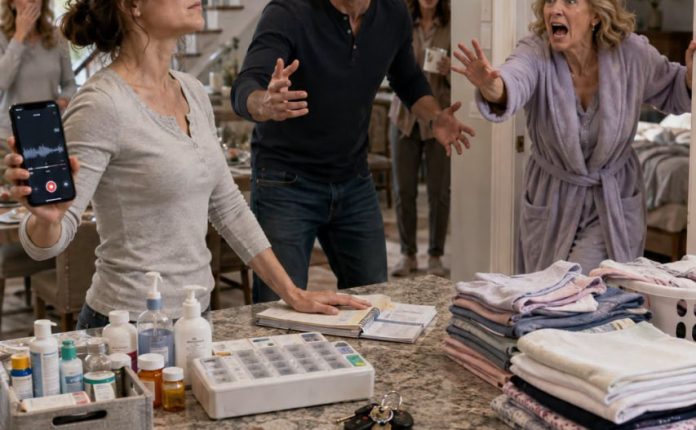
Formal charges did not arrive immediately. Investigations moved through records, interviews, and document reviews rather than dramatic confrontations. I changed every lock at each trust property, moved management correspondence to a separate address, and had my attorney send cease-and-desist letters to Mom, Lauren, and Ryan. Fraud alerts were placed on property records. Most importantly, I stopped attending family events and stopped explaining why my absence was necessary.
At first, relatives assumed I would cool down. Aunt Susan called to say Mom was devastated and family should work through mistakes. I told her forgery was not a casserole disagreement. She accused me of being legalistic. I reminded her somebody tried to legally sell my house. Other relatives called, some criticizing me, others admitting Mom had pressured them financially too. We had normalized more than I realized.
By December, prosecutors separated everyone’s roles. Ryan faced a lesser charge because evidence showed he knew Mom planned a sale without permission but did not help forge my signature. His attorney negotiated probation, a fine, restitution for transaction costs, and cooperation. Lauren’s involvement was harder to excuse. Her emails repeatedly supported the false story that I had approved everything but was temporarily unavailable to sign.
Lauren eventually accepted a plea agreement involving probation and a substantial fine. Mom refused every offer. She replaced two attorneys after each apparently told her the evidence was serious. Then she told relatives I created the irrevocable trust specifically to trap her. The theory almost impressed me. Apparently I had predicted eighteen months earlier that she would forge my signature and list property I had refused to sell.
I spent Christmas at Willow Lake instead of joining the family. I expected loneliness, but snow covered the dock and morning sunlight turned the shoreline pale pink. I made Beatrice’s cinnamon rolls, burned the first batch, and started again. By dinner, my cousin Rachel, Megan, and two close friends had joined me. None wanted access to my property or money. Realizing how unusual that felt nearly broke my heart.
In January, Mom mailed a handwritten letter. I left it unopened for six days. Most of it focused on consequences: legal fees, lost friends, humiliation at the club, and damage to her reputation. Near the end she wrote that she only wanted the family to benefit from what Beatrice left. I read that sentence repeatedly. There was no admission she violated my trust, only disappointment her plan failed.
The next morning, Investigator Reed called with forensic results. The fake power-of-attorney document had been created on a laptop registered to Mom. My signature had been copied from a scanned birthday card I sent two years earlier. Messages between Mom and Lauren discussed how closely the copied signature resembled mine. Hearing that felt grotesquely intimate. Something affectionate became raw material for permission I never gave.
Reed said the prosecutor intended to proceed unless Mom accepted a plea. I looked across the frozen lake and realized my family still described consequences as something I was doing to them. But I was not the prosecutor, judge, investigator, title officer, or brokerage. I was only the daughter who stopped protecting people from their choices. For once, guilt no longer felt strong enough to make me rescue anyone.
Mom refused the plea, and her trial began in April. I attended because I was subpoenaed, not because I wanted revenge. That distinction mattered after years of being told every boundary was punishment. The prosecutor displayed the Zillow listing, forged authority, birthday card, distribution spreadsheet, and messages between Mom and Lauren. One exchange removed any possibility of misunderstanding: Lauren wrote, “Claire will never agree if we ask directly.”
Mom had replied, “Then don’t ask directly.” Seeing those words projected in court left no room for interpretation. They knew my answer was no and designed a method to bypass it. Natalie testified that Mom spoke with confidence and supplied documents appearing legitimate. Megan explained the trust records. When the defense suggested families informally share property, Megan answered, “They may share use. They do not transfer title through forged documents.”
Ryan testified under his cooperation agreement. He admitted knowing Mom intended to sell without my express permission, though evidence supported his claim that he learned about the forged signature only at the country club. Lauren’s role was more direct. She sat in the back row one afternoon, thinner and quieter than I remembered. We made eye contact once. She looked away. Whatever excuses remained had collapsed under her emails.
Mom took the stand against her attorney’s advice. She talked about Beatrice favoring me, my financial comfort, Ryan’s children, Lauren’s divorce, and her mortgage. Eventually the prosecutor asked a simple question: had I given permission to sell the lake house? “No.” Permission to sign my name? “No.” Power of attorney? “No.” Then why create the document? Mom tightened her jaw. “Because she was being unreasonable.”
The prosecutor asked whether Mom believed she could override an adult daughter’s refusal because she disliked the decision. Mom answered that family obligations mattered more than selfishness. That was her worldview in one sentence. She still believed my ownership became negotiable when relatives wanted something badly enough. The jury returned guilty verdicts. The judge considered her age, lack of prior history, and the fact no transfer occurred.
Mom received probation, financial penalties, restitution, and strict conditions rather than prison. Her reputation suffered more than her freedom. The country club did not renew her membership, old friends stopped calling, and local real-estate professionals knew her name for the wrong reason. Two days after sentencing, she called and asked whether I was happy. I answered no. When she asked what I felt instead, I said, “Finished.”
Mom insisted she had paid for her mistake and expected us to move forward. I told her consequences did not automatically restore access. She accused me of punishing her forever. “I’m not punishing you,” I said. “I’m setting a boundary.” She laughed bitterly and said Beatrice taught me that word. “No,” I answered. “You did.” Then I ended the call without shouting, defending myself, or promising another conversation.
Lauren came to my office months later carrying a small box. Inside were Beatrice’s recipe cards, which she admitted taking while the house was staged. I asked why. She said she did not fully know; maybe anger, maybe wanting something that belonged to Beatrice. Then she apologized without excuses. “I knew Mom didn’t have permission. I told myself it wasn’t stealing because you had so much.” Finally, she named the truth.
I thanked Lauren for returning the cards and admitting what she had done. She asked whether we could ever repair our relationship. I thought carefully before saying no. She cried quietly. I told her I did not hate her, which she said almost felt worse. “What am I supposed to do with that?” she asked. “Become someone who doesn’t do it again,” I replied. I did not hug her or invite her upstairs.
Ryan and I eventually reached something closer to peace, not closeness. On my birthday he sent a short message admitting he had chosen convenience over doing the right thing and understood why I no longer trusted him. I replied, “Thank you.” That was all. Healing did not require reopening every door. Sometimes it meant accepting a closed door could stay closed without needing to stand beside it angry forever.
The trust remained unchanged. Willow Lake, the cabin, condo, and commercial building stayed protected. I hired professional managers where needed, required documented verification for every authorization, and gave no family member keys. That Thanksgiving, I invited people who had shown up without asking for anything: Megan and her husband, Natalie, Rachel, and several friends from work. We used Beatrice’s china because she loved it, not because it was valuable.
After dinner, we carried coffee onto the deck while November air sharpened around us. Megan asked whether I was still glad I created the trust. I laughed and said every day. Beatrice once told me different people could look at the same house and see different things. A contractor saw lumber. A banker saw collateral. A buyer saw investment. My family saw money waiting to be divided. Beatrice saw something entrusted.
I remembered sitting on the dock with her when I was twenty-three. She told me inheritance was not always about what you received; sometimes it was about what you were trusted to protect. I had rolled my eyes and called it greeting-card wisdom. Years later, I understood. The real inheritance was not four properties or rental income. It was discernment: learning who respected boundaries and who mistook access for entitlement.
Mom believed being my mother allowed her to override me. Lauren believed my abundance made taking less serious. Ryan believed not asking questions protected him from responsibility. I could not change any of them, and eventually stopped needing to. The title company discovered the trust just in time to stop the sale, but the trust had done something more important long before those records opened. It turned one principle into legal language.
No means no. Not unless Mom disagrees. Not unless Lauren needs money. Not unless Ryan’s children have tuition bills. Not unless everyone votes against me at dinner. Just no. Beatrice understood that a boundary does not become selfish because someone benefits from breaking it. Some things deserve protection because others feel entitled to them. Some relationships deserve distance because shared history made betrayal easier, not less serious, to commit.
The next morning, I carried coffee onto the dock before sunrise. Mist floated above Willow Lake until pale gold light spread across the water. Mom had listed the house for eight hundred seventy-five thousand dollars and believed that number represented its value. She was wrong. Its value lived in blueberry pancakes, storms on the roof, recipe cards, hard lessons, and the certainty nobody would convince me protecting what was mine made me selfish.
THE END!
Disclaimer: Our stories are inspired by real-life events but are carefully rewritten for entertainment. Any resemblance to actual people or situations is purely coincidental.