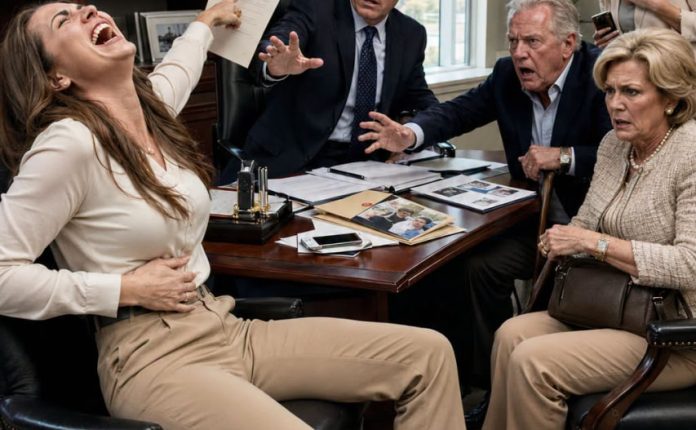
At six that evening, Ashley called. I almost ignored the number, but I wanted facts before my exhaustion turned everything into confusing fragments. She said she had left Ryan, returned to her hotel, and told him she would communicate only through an attorney until the baby’s paternity was established. Then she explained his fear at the graveside. Mom had mailed me a certified letter eight days before she died.
I had never received it. Daniel opened his laptop while I searched Mom’s desk for mailing receipts. We found the tracking record. The letter reached my apartment five days before Mom died and had been signed for under Ryan’s name. That evening, he had gone downstairs to collect a package and returned with only air-purifier filters. Mom had tried warning me before the funeral, and Ryan had hidden it.
Ashley said there was more. After visiting Mom, she confronted Ryan and told him I deserved the truth before my mother died. Ryan became furious, insisting disclosure would be cruel and claiming Mom was manipulating everyone because she distrusted him. Ashley believed that explanation until she overheard him speaking with his business partner, Marcus, about waiting until “Claire’s inheritance was settled.” Suddenly, his timing looked less compassionate and far more calculated.
The inheritance made everything clearer. Mom’s will left me her house and most of her remaining estate. Ryan expected a divorce after probate would give him leverage over what I sold, where I lived, and how badly I wanted calm. Ashley said he told Marcus grief would make me desperate for stability. Daniel and I stared across Mom’s kitchen table, realizing Ryan had not merely postponed honesty. He had scheduled my collapse for convenience.
The next morning, I hired my own attorney, Celeste Navarro, rather than the lawyer Ryan and I had used for routine documents. She specialized in divorce and complex financial disputes. I told her everything without trying to make it neat. She listened, asked precise questions, then gave three instructions: change passwords, secure important records, and do not meet Ryan alone until we knew what else he had been quietly controlling.
By noon, I had redirected mail, opened a new account, frozen my credit, and changed my password. Daniel helped only when I asked. Ryan called thirty-one times. His messages moved from concern to frustration and blame. The last warned that if I filed for divorce before speaking with him, I would regret making decisions while emotional. I forwarded everything to Celeste and shut off my phone.
Martin Brennan called. While checking the funeral-home safe, he found a flash drive taped beneath the envelope Mom had left. Her instructions said it should be given to me only if I asked whether Ryan intercepted anything. Martin apologized for not mentioning it sooner. I almost smiled. “Mom created layers,” I said. He answered, “She did.” Even dying, she had planned for the possibility that one warning would fail.
Celeste joined Daniel and me before we opened the drive. One folder held a scanned copy of the certified letter Ryan had intercepted. Another contained photographs of handwritten notes listing dates, names, and conversations. The third held an audio file. When Mom’s voice filled the kitchen, thin from illness but steady, I started crying. “Claire,” she said, “if you are hearing this, something prevented my first warning from reaching you.”
Daniel reached for my hand, stopping until I nodded. Mom explained that Ashley had shown messages proving Ryan knew paternity was uncertain. She also had screenshots showing Ryan discussing waiting until after Mom’s death to “reset the financial situation.” One message mentioned persuading me to sell Mom’s house quickly because keeping it would feel painful. Another said, “Once Claire is alone, she’ll want stability more than questions.” I felt physically sick.
“You may want to believe he meant something kinder than the words suggest. That is your habit. Before you explain anything for him, make him explain it himself.” Screenshots showed Ryan calling Mom’s death “a clean transition point” and predicting I would accept a settlement because I hated conflict. There was no need to invent darker motives. The documented betrayal already showed how he planned to use my grief.
Celeste asked whether I knew about unusual movement in our joint savings. I did not. Statements showed transfers from our shared account into an investment entity tied to Ryan’s company. Each amount stayed below the threshold requiring both signatures. The pattern began months before Ashley visited Mom. I stared at the transactions and understood the marriage had not only been emotionally dishonest. Ryan had been preparing a financial exit.
Ryan communicated through an attorney. His proposal asked that we separate quietly, waive claims against each other’s individual property, and release disputes involving previous joint-account activity. Celeste read it and pushed it toward me. “He wants you to sign away the questions before we know the answers.” Mom’s instruction returned: do not surrender because you are embarrassed. I placed the proposal aside. “No,” I said. “We find out everything first.”
Ashley’s paternity results arrived before our first court conference. Ryan was not the father. The biological father was Lucas Herrera, a man Ashley had dated intermittently before becoming involved with Ryan. She called and apologized for the affair, the funeral scene, the slap, and believing Ryan’s version of our marriage. I told her I accepted that she regretted choices, but regret did not make us friends or erase what happened.
Ryan’s attorney requested a private meeting before discovery. Celeste agreed, provided she attended. We met in a glass-walled conference room overlooking the city. Ryan looked thinner, and his certainty had disappeared. He said he never intended this destruction. I asked the question Mom had taught me to ask. “Then what outcome did you intend for me?” His expression showed he had expected anger, not a demand for a precise answer.
Ryan admitted he expected me to be devastated, then accept that our marriage had “run its course.” He believed Ashley’s pregnancy would make leaving seem unavoidable and reduce the chance I would fight over our future. “So uncertainty helped you,” I said. He looked away. If the baby was his, he had a reason to leave. If it was not, he could decide which version of events benefited him most.
I asked about the money. Ryan said he considered part of our savings his because we had built the account together. Celeste reminded him joint ownership was not permission for secret transfers to avoid signature requirements. He admitted he feared I might freeze the accounts after learning of Ashley. “So you moved money because you feared I would protect it,” I said. He had no answer that made the logic less selfish.
I asked about Mom’s letter. Ryan denied knowing its contents when he signed for it. I asked why he never gave it to me. He admitted recognizing Mom’s handwriting, opening the envelope, seeing Ashley’s name, and panicking. He told himself waiting would protect me because I was overwhelmed. “You keep calling control protection,” I said. “You decided what I could survive without ever asking me what I wanted.”
Ryan began crying. Once, that would have ended the conversation because I hated watching him suffer. This time, I let him cry without rescuing him from the reason. He was terrified of becoming the villain in everyone’s story. “So you changed everyone else’s story instead,” I answered. Ryan whispered that he was sorry. I believed his remorse was real. I simply no longer confused remorse with repair or accountability.
I told Celeste to file. Walking down the courthouse steps, I expected panic. Instead, I felt exhausted and sad, but clear. Filing for divorce did not destroy my marriage. It documented destruction already accomplished through months of lies, financial planning, intercepted warnings, and public humiliation. I called Daniel from the sidewalk and told him what I had done. He asked whether I wanted company. “Tonight, yes,” I answered.
The financial investigation widened for four months. Ryan had moved $143,600 from joint savings through seven transfers. Some remained inside his company, but forty thousand dollars funded deposits on an apartment he intended to share with Ashley. Other amounts covered jewelry, travel, and divorce consultations. While I paid hospice bills and selected flowers for Mom’s casket, our marital savings had financed Ryan’s plan to leave me after she died.
Celeste returned me to evidence instead of emotion. We documented transfers, balances, emails, and dates. Ryan agreed to restore every dollar, requiring him to sell investments and surrender his interest in a vacation property we shared with friends. That consequence mattered more than dramatic punishment. He had treated shared resources like leverage. Repayment forced him to acknowledge that secrecy did not transform marital money into property he could claim for himself.
Ryan’s business partner Marcus cooperated under subpoena. His messages confirmed Ryan discussed waiting until after Mom’s funeral because I would be “too depleted for a war.” Marcus claimed he thought Ryan meant an ordinary divorce negotiation and knew nothing about the intercepted warning. That was possible. I no longer needed everyone surrounding Ryan to be evil. The records already showed exactly what Ryan himself had knowingly chosen to do.
Ashley testified and produced the laboratory document, her messages with Ryan, and communications she had sent Mom. She admitted lying by omission and allowing Ryan to describe our marriage as already finished. She also admitted enjoying the belief that he had chosen her. “I wanted the story where I won,” she said. “Then your mother asked why winning required another woman not knowing there was even a competition.”
The deposition ended with Ashley crying while lawyers packed their files. I felt no satisfaction watching her break. She had harmed me, but she eventually stopped protecting the lie when continuing was easier. Outside, she asked whether I hated her. “Sometimes,” I answered. “But hate isn’t a plan for my life.” She nodded. We walked opposite directions, neither friends nor enemies, simply two women refusing to carry Ryan’s preferred story anymore.