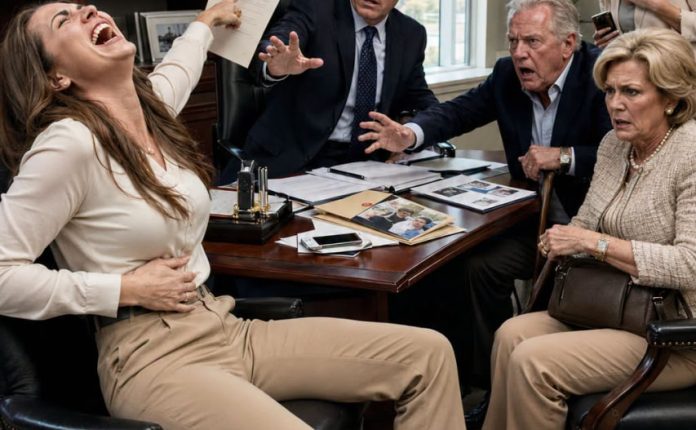
The first time I realized something was wrong, my sister Brooke was smiling beneath the fluorescent lights at the airport check-in counter. It was not nervous. It was the polished expression she wore whenever she had already decided what everyone else would do. I held my passport while Mom searched for her glasses, Dad checked luggage tags, and Brooke leaned close enough to speak over the terminal noise.
“Oh, by the way,” Brooke said brightly, “the trip came out to about five thousand dollars.” I nodded because I assumed she meant the total family package. Then she laughed and corrected me. “No, Natalie. I mean you’re paying the five thousand.” I stared at her, waiting for the punch line. Brooke only widened her smile while her boyfriend, Ryan, suddenly became fascinated with adjusting his suitcase handle.
“You mean my share?” I asked. Brooke shook her head. “Flights, hotel, excursions, basically everytpage hing.” Behind her, Mom stopped searching through her purse. Dad turned toward the departure screen and pretended to study it. That was when I understood this was not some spontaneous joke. They knew something. Maybe not every detail, but enough to stay quiet while Brooke announced a debt I had never agreed to accept.
I told Brooke plainly that I had never agreed to pay five thousand dollars. She rolled her eyes and whispered, “Can we not do this here?” I almost laughed. “You tell me at the airport that I owe for a vacation I didn’t book, and I’m making it weird?” A couple nearby glanced over. Brooke lowered her voice. “You always help with family stuff.” Again.
Family stuff meant Mom’s broken water heater, Dad’s dental bill, Brooke’s failed transmission, Christmas dinners, wedding hotels, and countless small emergencies everyone knew I would probably solve. I was thirty-four, single, and an operations manager for a medical equipment distributor outside Columbus. I earned well because I worked steadily, saved carefully, drove an older SUV, and rarely spent money merely because it happened to be available.
Brooke had interpreted financial discipline as unlimited wealth. “You should have asked,” I said. She shrugged. “I knew you’d say no.” The casual answer made something inside me become very still. She had not misunderstood my wishes. She had deliberately avoided asking because my answer mattered only if it was useful. I looked at Mom and asked whether she knew. Her mouth tightened. “Natalie, honey, we’re about to board.”
“That isn’t an answer.” Mom glanced toward Brooke and said arranging the trip had been stressful, so maybe we could enjoy ourselves. Dad added that we could sort everything out at the resort, his usual method of moving conflict until everyone became too tired to continue. I asked Brooke how the vacation had been booked. “The family card,” she said, and Dad turned sharply, immediately.
“What family card?” I asked, although the answer was forming. Brooke admitted she had used my parents’ emergency credit card, kept for hospital bills, broken furnaces, or genuine disasters. Dad had once given her the number to pay a plumber. Brooke saved it. “I was going to pay it back,” she insisted. I asked with what money. She accused me of interrogating her instead of answering.
Boarding was announced before the argument went further. Brooke grabbed her suitcase and tried to leave. I asked to see the booking confirmation. She said there was no time. I reminded her that her phone was already in her hand. Her fingers tightened around it, and I noticed they were trembling. She promised to show me at the hotel, then hurried alone toward the gate.
Mom touched my arm and whispered, “Please, Natalie. Don’t ruin the trip before it starts.” That hurt more than Brooke’s demand. Somehow the person objecting to thousands of unauthorized dollars had become the danger to everyone’s happiness. I boarded because my luggage was checked, my week was cleared, and something in Brooke’s reaction bothered me. Underneath the confidence, my sister looked frightened and deeply uneasy.
On the plane, Brooke avoided me. I asked twice about the booking, and twice she changed the subject. Ryan leaned across the aisle and asked whether we could avoid fighting all week. I asked whether Brooke had told him I volunteered to pay. His smile disappeared. “No.” Then I asked whether he knew about the emergency card. He looked toward Brooke, who stared straight ahead. His silence answered me.
When we landed, Brooke became cheerful again. She talked about the beach, restaurants, snorkeling, massages, and a sunset cruise as though money had stopped existing. In the taxi, I sat beside Mom and asked what Brooke had told her. Mom admitted Brooke said the emergency card would cover everything temporarily because I had offered to help. My chest went cold. “I never offered.” Mom finally looked worried.
I reminded Mom that I had not even known which resort we were using until Brooke sent the itinerary. She looked out the window at palm trees and bright houses sliding past. “I’m sure it’s a misunderstanding,” she said. It wasn’t. I knew before we reached the hotel. What I did not understand was how many lies Brooke had layered together or how deeply she had involved us.
The resort lobby smelled of citrus cleaner and sunscreen. Brooke stepped confidently to the desk until the clerk typed for several seconds and his expression changed. He explained that the card showed limited available credit. The deposit was confirmed, but remaining room charges and incidentals needed another payment method. Dad frowned. “I thought the trip was paid.” Brooke answered too quickly, “It is.” The clerk corrected her.
That evening, Brooke admitted she had used the emergency card for flights, deposits, and activities. Dad asked how much credit remained. She claimed she had not checked. “You told us Natalie was paying you back,” he said. Brooke threw up her hands. “I assumed she would.” I stared at her. “You assumed?” She answered with four words that apparently counted as permission: “You can afford it.”
I walked away before anger made me careless. For an hour I sat near the beach listening to waves while families passed carrying towels. I kept thinking about Brooke’s trembling hands, her refusal to show the booking, her lie to Mom, and her panic at the desk. Something still did not fit. When I returned toward my room, I passed Brooke’s door and heard her speaking sharply inside.
The door was not fully closed. I would have kept walking if one sentence had not stopped me. “Ryan, I told you not to worry. I’ll figure out the other account before anybody notices.” I froze. A moment later, Brooke lowered her voice. “No. Natalie doesn’t know about that one.” I stepped away before she could see me. Suddenly five thousand dollars felt like a doorway into something much larger.
The next morning, Brooke acted as if nothing had happened. She sat beneath a white umbrella at breakfast, wearing sunglasses and eating mango while Ryan scrolled through his phone. Mom buttered toast. Dad drank coffee with the expression of a man choosing denial over another argument. Brooke looked up and said I should relax because vacations were supposed to be fun. I smiled because I had decided something overnight.
I stopped arguing. If I asked about the “other account,” Brooke would deny it or delete whatever she was hiding. So I told everyone we should enjoy breakfast. Her shoulders relaxed, confirming my instinct. For the rest of the morning, I watched. Brooke had scheduled snorkeling, expensive dinners, massages, a fishing trip Dad did not want, and a sunset cruise. Every time money appeared, she redirected it toward me.
At lunch, when the waiter asked whether we wanted separate checks, Brooke pointed across the table. “Natalie’s got it.” Mom studied her plate. Dad frowned. Ryan pretended not to hear. That silence felt familiar. Brooke created urgency, Mom avoided discomfort, Dad complained before surrendering, and I solved the problem. I paid nearly three hundred dollars because I wanted to understand what Brooke believed she could still make me do.
When I handed the server my card, Brooke grinned. “See? We’re fine.” I looked at her. “No. You’re comfortable.” She asked what that meant. I told her she would find out. Her smile faded. That afternoon, while everyone went to the beach, I stayed in my room and documented every charge, message, promise, and conversation I remembered. If something larger was happening, I wanted facts first.
I searched our family group chat. Three weeks earlier, Brooke had asked whether the dates worked. Mom agreed. Dad said fine. Ryan had requested time off. I replied that I could probably make the dates and asked about the budget. Brooke answered, “Still comparing packages. Nothing crazy.” There was no mention of five thousand dollars, no request that I pay, and no permission to use anyone’s card. I saved screenshots.
That evening, Brooke ordered a bottle of wine that cost more than my electric bill. When the check arrived, she slid it toward me. I slid it back. Her face tightened. “What are you doing?” I said I was not paying. Brooke reminded me I had paid yesterday. “Yesterday was my choice.” Mom suggested splitting the bill. Brooke blurted, “I don’t have enough,” before she could stop herself.
Dad asked why she kept ordering expensive things if she could not pay. Brooke said she would handle it later, then accused me of obsessing over her finances. I told her she had made her finances my problem. She stormed outside, and Ryan followed. Mom said I should have waited until we got home. “For what?” I asked. “She is spending money she does not have.” Mom answered, “She’s your sister.”