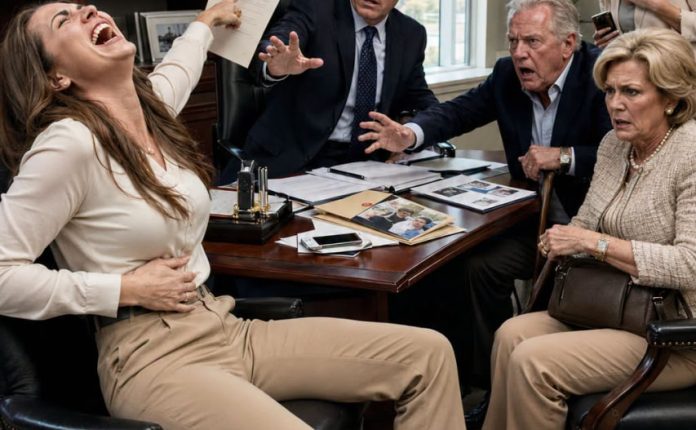
Brooke’s face snapped toward Ryan when Dad mentioned her debt. “You told them.” Ryan stared at his hands. She called him a coward. Dad cut her off and demanded the amount she owed. Brooke stood so quickly her chair scraped across the floor. Nearby diners looked over. Mom reached for her arm, but Brooke pulled away and accused everyone of choosing me again, as though that were the real crime between us.
“Again?” I asked. Brooke turned on me. “You love being the responsible one. You love making me look like a disaster.” I stood too. “No. I spent years trying to keep you from becoming one.” Her eyes filled. Then she whispered the request hidden beneath every argument. “You could fix this.” Even after the lies, stolen information, and secret accounts, she still believed my refusal was the betrayal. I heard it.
“You have the money,” Brooke said. I looked at my sister across the candlelit table. “I do.” Hope flickered across her face, almost painful to watch. Then I finished. “And you are not getting a dollar.” The hope vanished. Dad called the card issuer and froze further use. Mom cried. Ryan said nothing. For the first time, nobody looked toward me to solve what Brooke had created. That silence felt new.
The resort manager returned, and Dad provided another card to settle the legitimate family balance. He made clear that Brooke would reimburse every personal charge tied to her choices. She grabbed her purse and accused him of choosing me. Mom whispered, “This isn’t about choosing Natalie.” Brooke shouted that it was, then looked at me and said this was what I wanted. “No,” I said. “I wanted one normal family vacation.”
Brooke walked out of the restaurant. Nobody followed. Watching her disappear into the lobby, I understood that exposing the truth would not repair our family. It would reveal how long we had organized ourselves around Brooke’s discomfort. The fraud was new in scale, but the pattern was old: she created consequences, Mom softened them, Dad delayed conflict, and I provided whatever money or patience made everything quiet again. I finally saw it.
I changed my flight the next morning. I did not announce it or threaten anyone. I packed while sunlight pushed through the curtains, then found my parents at breakfast. Mom looked exhausted. Dad had handwritten notes beside his coffee. “I’m leaving this afternoon,” I said. Mom stared at me. “But we still have three days.” Dad nodded and said he understood. Mom said we needed to stay together now.
“Mom, staying together is how we got here.” Her eyes filled. I sat across from her and said what I had avoided for years. “You taught Brooke that discomfort was an emergency. Every time she overspent, you helped. Every time she made a reckless decision, you asked me to understand. Every time I said no, you treated me like I was selfish.” Mom looked down at her breakfast.
She said she had only tried to keep the peace. “You kept the peace for Brooke,” I answered. “Everybody else paid for it.” Dad did not defend her. Instead, he admitted he should have stopped the pattern years earlier. I said yes. He accepted that without excuses. That mattered more than a dramatic apology. Brooke never came to breakfast, and Ryan had already moved into another hotel room.
I saw Brooke near the elevators before leaving. She wore sunglasses indoors and stared at my suitcase. “You’re seriously leaving?” I said yes. She accused me of destroying everything and walking away. There had been a time when that would have made me doubt myself. Not anymore. “I didn’t open accounts in other people’s names,” I said. Brooke folded her arms. “You don’t know what it’s like being me.”
She said I was always the one people trusted, always the one with money, always the one who seemed to know what I was doing. I told her I had been frightened and uncertain plenty of times. The difference was that I did not make my mistakes somebody else’s financial responsibility. For a moment, I saw the little sister who once crawled into my bed during thunderstorms, but memory did not erase consequence.
“I need help,” Brooke whispered. I told her to get help. “I mean from you.” I said no. She reminded me that I could pay the balances without ruining my life. I answered that affordability was not the point. She said I was her sister. “And you used my identity.” Her jaw tightened. “It didn’t even get approved.” She genuinely seemed to believe that failure made the attempt smaller.
I told her she still did not understand what she had done. Brooke said nothing. I picked up my suitcase and said goodbye. At the airport, I bought a terrible turkey sandwich and sat by the window watching ground crews work beneath the sun. My phone buzzed with calls from Mom and Dad. I turned it face down. I was no longer furious, only exhausted from carrying responsibilities that had never belonged to me.
The months after the trip were messy. Dad disputed the account opened in his name, worked with lenders and credit bureaus, canceled the emergency card, and removed Brooke from financial systems she could access. I completed documentation for the attempted credit line involving my information and locked down my credit. None of it felt dramatic. It was forms, calls, verification codes, affidavits, and administrative work after someone violated our trust.
Mom cried often. At first, she translated Brooke’s behavior into gentler language. Brooke had panicked. Brooke was overwhelmed. Brooke made terrible choices. Brooke had not understood how serious everything was. Eventually, I stopped participating. “She knew she did not have permission,” I told Mom one night. “That is enough for me.” Mom became quiet, and for once she did not ask me to soften the truth. That boundary mattered.
A few weeks later, Brooke sent me a six-paragraph message. The first paragraph apologized. The others explained why her actions were understandable: work stress, debt, pressure, Ryan, expectations, feeling inferior to me, and fear of being judged. At the end she wrote that life was too short for sisters to remain divided. I replied, “I hope you rebuild your life. I’m not going to be part of fixing the damage you caused.”
Brooke called immediately. I did not answer. She called again, and I blocked the number. Mom was shocked. “What if there’s an emergency?” she asked. I told her Brooke could call her. Mom stared across my kitchen table. “You’re really done.” I answered, “With being used, yes.” She asked whether that meant forever. I said I did not know what forever looked like, but I knew what right now required.
Mom said Brooke and I had once been close. I looked at her and replied, “Then maybe she should have thought about that before using my Social Security number.” Mom never raised it again. Brooke eventually entered a structured repayment plan for debts that were actually hers. Dad refused to pay them. For the first time, Mom also refused when Brooke asked to move home temporarily without contributing anything.
Ryan moved out and ended the relationship soon afterward. Through Mom, I heard Brooke blamed him first, then me, then Dad, then bad luck. Eventually she started saying, “I messed up.” I considered that progress. But progress did not obligate me to reopen the door. People often confuse forgiveness with access, as if remorse automatically restores the relationship that existed before the person decided to harm it.
Maybe Brooke became a better person. I genuinely hoped so. But she became better somewhere outside my life, and I learned to accept that without bitterness. My relationship with my parents changed too. Dad started asking instead of assuming: Would you like to join us? Is this budget comfortable? Do you want to split the rental? Tiny questions felt enormous after years of expectations disguised as family obligation.
Once, while planning a holiday dinner, Mom started to say, “Natalie can cover—” and stopped herself. She looked at me and apologized. I thanked her. We divided the bill four ways. Nobody died, nobody’s holiday collapsed, and the world kept turning. That simple dinner showed me how distorted our arrangement had been. Fairness never endangered the family. Teaching one person that everyone else must absorb her consequences did.
About eight months after the Caribbean trip, I traveled alone to Maine. I booked a small hotel overlooking gray-blue water, rented a car, chose restaurants I wanted to try, and planned a hike through trees turning orange. The first morning, I bought coffee and a blueberry scone from a bakery and sat outside in the cold wind. My phone stayed quiet. No surprise charges. No emergency requests. No family crisis.
I expected the silence to feel lonely. Instead, it felt peaceful. For years I had confused being useful with being loved because usefulness produced immediate gratitude. People called, needed something, thanked me, and I mistook that cycle for closeness. Brooke taught me the difference permanently. Love can ask for help. Love can survive no. Love does not require access to someone’s money, identity, credit, or willingness to rescue them.
The five-thousand-dollar vacation cost my family far more than five thousand dollars. It cost Brooke her relationship with me. It cost my parents the illusion that protecting her was harmless. It cost us the version of our family where nobody asked hard questions because questions made dinner uncomfortable. But I gained the ability to say no without explaining until everyone approved, and the confidence to let adults carry what belonged to them.
I never got the cheerful family getaway Brooke promised. Instead, I got a week that showed me where I stood and why I had stayed there so long. I learned that blood does not turn betrayal into misunderstanding, financial stability is not a community resource, and boundaries are not punishment. Most of all, I learned that refusing to rescue someone can be the first honest thing you do for yourself. I never stood there again.
THE END!
Disclaimer: Our stories are inspired by real-life events but are carefully rewritten for entertainment. Any resemblance to actual people or situations is purely coincidental.