By nine, Maya had convened three independent directors by secure video. I disclosed the promissory note, the lender communication, and the comfort letter bearing my forged signature. I also recused myself from any final decision concerning Andrew’s employment.
The board suspended him immediately pending investigation. His company email, expense cards, and access credentials were disabled before ten. Maya sent a preservation notice ordering him not to alter any device or record related to the loan.
Andrew saw the suspension notice at breakfast. “You did this before talking to me?” I reminded him we had talked until midnight. “You asked me to hide your debt. You never mentioned forging my signature.”
He denied creating the comfort letter. I placed a printed copy between us. Andrew stared at it, then claimed Patricia had prepared paperwork for the lender and might have inserted my signature without telling him.
“Then the investigation can obtain it formally,” I said. Andrew pushed back from the table and accused me of treating him like a criminal. I answered, “I’m treating a forged signature like a forged signature.”
Two hours after Andrew drove to Patricia’s, she called me. I put the call on speaker while Maya listened. Patricia said the loan was private and accused me of destroying her son’s career over what she called a cash problem.
There was a brief pause. Then Patricia said, “Your signature was a formality. Everyone understands that your money and Andrew’s money are the same.” Maya’s eyes met mine across the desk. Patricia had just supplied something close to an admission.
I asked whether she understood that the letter implied corporate backing. Patricia replied that nobody would have cared if I had simply paid the note as expected. “We all knew you could,” she said. “This entire mess exists because you decided to become difficult.”
“Why did you remove my daughters’ plates?” I asked. The question surprised her. She said the girls needed discipline and that Sophia had become “too bold.” Then she returned immediately to Andrew’s financial crisis, as though the children mattered less than the debt.
The forensic review of Andrew’s laptop began that afternoon after he finally surrendered it on counsel’s advice. What investigators found turned one reckless loan into a broader examination of how Patricia and Andrew had used my company’s reputation.
Another message involved the dinner. Patricia told Andrew that hosting relatives at the estate would “remind everyone who actually leads the family” before Monday’s payment deadline. Andrew responded with a thumbs-up and asked whether I seemed suspicious.
I called the lender personally with Maya present. We explained that Vance & Horizon did not guarantee Andrew’s private loan and that the comfort letter was unauthorized. The lender’s representative sounded less surprised than I expected.
The repayment obligation remained Andrew’s. He had four days before default provisions activated. He called me that evening from Patricia’s house, sounding exhausted rather than angry. “Please,” he said. “I know I made mistakes. Don’t let this destroy everything.”
“You can come home and speak to Sophia,” I said. “You can apologize to Chloe. You can cooperate with the investigation. Those things are still available to you.” Andrew asked again whether I would pay the lender.
“No.” He went silent. Then he said, “So money matters more than our family.” I nearly ended the call. “No, Andrew. Accountability matters more than pretending your choices belong to me.”
He did not come home that night. The next morning, Patricia sent a family group message accusing me of freezing Andrew out of a company “built on the Vance name.” That was the first time I decided silence no longer served anyone.
I replied with one sentence: “For clarity, I founded Vance & Horizon Capital four years before marrying Andrew and currently own sixty-two percent of its voting shares.” Then I attached the public corporate registration page.
The family chat stayed silent for eleven minutes, then exploded. Cousins asked what Patricia had misrepresented. By afternoon, relatives also learned the impressive Charlottesville estate was rented for the celebration. The successful-family story unraveled faster than Patricia could contain it.
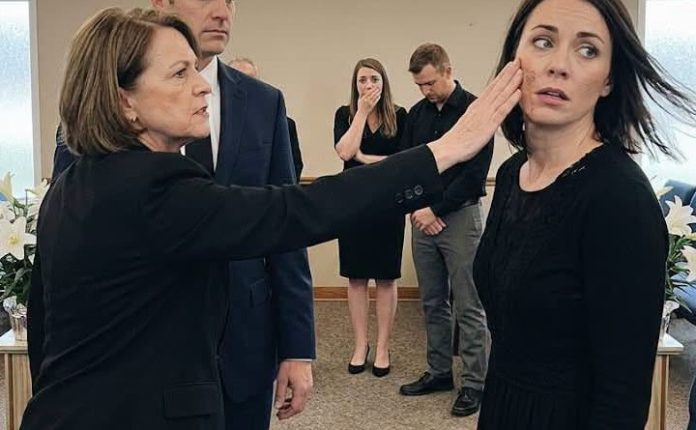
Patricia responded by arriving at our house. I saw her car through the security camera and told the girls to remain upstairs with our sitter. When I opened the door, Patricia stepped forward as though she still possessed authority inside my home.
I blocked the doorway. “You’re not coming in.” Her eyes widened. She said she had every right to speak with her son. I told her Andrew was not there and she no longer had permission to enter my property.
“You think money makes you powerful?” she snapped. I answered, “No. Ownership makes this my house. Boundaries make this my decision.” Patricia’s face reddened. Then she said Sophia and Chloe would eventually understand that I had destroyed their father.
Sophia had heard part of the exchange from upstairs. That evening she asked whether Grandma would remove her plate again if they ever saw each other. I told her nobody would ever remove her from my table again.
Two days later, Andrew defaulted on the promissory note. The lender demanded payment according to the contract. Because the corporate comfort letter was invalid, they pursued Andrew personally. He was forced to disclose assets he had hidden even from me.
Andrew claimed he owned almost nothing for repayment. Disclosure showed a brokerage account, collectible watches, a restaurant investment, and a vehicle hidden through another entity. He had protected his assets while expecting mine to be sacrificed.
I did not interfere when the lender negotiated liquidation terms. Andrew sold the vehicle, watches, investment interests, and several personal holdings. Patricia contributed money only after realizing the lender intended to pursue the family acquaintance who introduced them.
The debt was reduced substantially, but Andrew still faced years of repayment. For the first time since I had known him, his lifestyle adjusted to his actual finances rather than mine. He moved temporarily into a modest apartment after I asked for separation.
The board’s investigation concluded Andrew had violated policy, misrepresented company backing, and participated in creating misleading lender materials. He resigned before directors formally voted on termination. The company issued a brief statement without humiliating him publicly.
When Patricia learned the board let Andrew resign quietly, she called it proof I still protected him. I corrected her. She laughed bitterly and said I had shown my true character. “Yes,” I replied. “I think I have.”
Three weeks after the dinner, Patricia hosted Sunday lunch for relatives at her home. Andrew did not attend. Martin later told me almost nobody discussed the meal. Everyone discussed the company, the loan, and why Patricia had lied for years about my role.
That was the secret Patricia finally found: I had never needed the family status she believed she controlled. I had been financially independent before meeting Andrew, professionally successful without his surname, and capable of walking away without losing the life I built.