PART FOUR The letters changed the argument without simplifying it.
For two days, Caroline and I stayed in separate rooms at the inn. We were legally married, emotionally exhausted, and old enough to know that sleeping beside someone before deciding whether you trusted them could turn tenderness into avoidance.
I read every letter Leonard had hidden.
Some were ordinary. I complained about Navy food, described storms, and asked whether Caroline still wore the yellow scarf I liked. Others became increasingly worried as her silence continued. By spring 1979, I had convinced myself she had chosen Martin.
Caroline read them too.
On the third morning, she knocked on my door.
“I need to say something without explaining it away.”
I let her in.
She sat beside the window.
“I should have told you about Leah the day I learned who she was.”
“Yes.”
“I waited because I was afraid you would leave before the wedding.”
“Yes.”
“That means I used the wedding as security.”
I looked at her.
“Yes.”
Tears filled her eyes.
“I am sorry.”
I believed her.
Believing an apology did not answer what came next.
“I need time,” I said.
“I know.”
“I do not want an annulment today.”
Hope moved across her face.
“That is not the same as promising I never will.”
“I understand.”
For the first time since our wedding, neither of us tried to make uncertainty sound kinder than it was.
We went home separately.
Leah complicated everything beautifully.
Miriam advised her to move slowly.
Leah ignored that advice only when it came to grandchildren.
Two weeks after the DNA result, she invited me to Pittsburgh to meet Emma and Joshua.
Emma was seventeen and suspicious of every adult. Joshua was fourteen and wanted to know whether the Navy had ever let me drive a submarine.
“No.”
“That seems like poor planning.”
I liked him immediately.
Caroline joined us for dinner but stayed at a hotel nearby. We did not perform marriage for Leah’s comfort. That mattered. Leah had lost enough years to adults managing appearances.
The trust dispute took eleven months.
Robert resigned as trustee under court supervision. An independent fiduciary reconstructed decades of distributions. Because some older decisions were beyond recovery periods and others had been made before Robert knew enough to challenge them, the final accounting was smaller than the most dramatic early estimates.
Still, Robert’s branch owed substantial restitution.
He sold an investment property and repaid four hundred eighty thousand dollars to the trust. His son Andrew refinanced his restaurant business without counting future family distributions. Robert also reimbursed legal and audit costs tied to the false beneficiary certifications.
No one went to prison.
That disappointed people who learned the story secondhand and wanted an ending shaped like punishment.
Leah did not.
“I want the record corrected,” she said. “I want him unable to do it again. I do not need his life destroyed.”
The independent trustee recognized Leah as a beneficiary and created an education fund for Emma and Joshua under the original terms.
Robert asked Caroline to meet after the settlement.
She invited me but told me I could refuse.
I went.
We met at a quiet restaurant near Harrisburg.
Robert looked older than he had at the wedding.
He apologized first to Leah, who had chosen to attend.
“I knew enough to ask questions, and I avoided them because answers threatened my family financially.”
Leah nodded.
“That is the first honest thing you have said to me.”
He accepted it.
Then he apologized to Caroline for keeping the letters.
She asked, “Why did you keep them instead of destroying them?”
Robert looked embarrassed.
“Because I knew Dad was wrong.”
“Then why not give them to me?”
“Because giving them to you would mean admitting I had helped him stay wrong.”
That answer sounded painfully human.
Caroline cried.
She did not hug him.
Their relationship became limited afterward. Birthday cards. Occasional calls. No financial authority. No assumption that blood required closeness.
Martin was harder because he was dead.
Caroline could not confront the man she had spent thirty-eight years married to. His estate records, however, confirmed he had prepared the false adoption consent at Leonard’s direction. Notes suggested he believed marrying Caroline later gave him permission to treat the old deception as permanently settled.
There were also financial records.
Martin had received trustee administration fees over many years while signing certifications that excluded Leah. His estate returned one hundred twenty thousand dollars after mediation with his adult sons.
Caroline’s stepsons were devastated.
They had loved their father.
So had she.
Again, two truths refused to cancel each other.
“He was good to me in many ways,” Caroline told Leah. “And he helped take your father from your story.”
Leah answered, “You do not have to make him entirely bad for me.”
That sentence helped all of us.
My marriage took longer.
Caroline and I entered counseling three months after the wedding. We did not begin by asking whether we should stay married. We began by asking whether we could tell the truth quickly enough to make staying possible.
Caroline admitted fear had made secrecy feel reasonable.
Our counselor said, “You were both trained by older people to believe information should be managed for someone else’s good.”
Six months later, I moved back into Caroline’s house.
We rebuilt ordinary life before romance.
Coffee.
Grocery lists.
Walks.
Sunday calls with Leah.
Arguments that ended without anyone disappearing.
On our first anniversary, we returned to the lakeside inn.
The staff remembered us.
I hoped they did not remember enough.
We stood beneath the same maple tree where we had taken wedding photographs.
Caroline said, “If you had known everything before the ceremony, would you still have married me?”
I thought carefully.
“I do not know.”
She nodded.
“Thank you.”
Then I added, “But knowing everything now, I am choosing to stay.”
She began crying.
“So am I.”
We did not renew vows.
Our old vows were not defective.
Our honesty had been.
Leah arrived later with Emma and Joshua. My sons came from Colorado with their families. For the first time, all of my children sat at one table.
Nobody called it making up for lost time.
Lost time cannot be repaid.
We called it dinner.
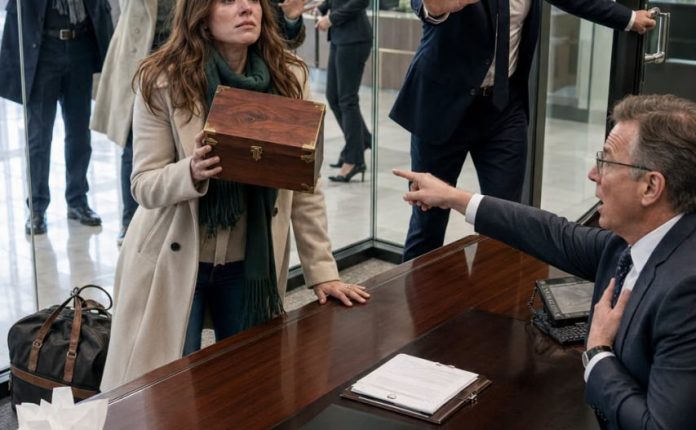
Years later, the letters Leonard hid remained in a wooden box in our study. Leah eventually asked to read them all. I said yes.
She returned the box and hugged me.
“You kept looking for us before you knew there was an us.”
I could not answer for a while.
Caroline stood beside me.
At seventeen, I thought love meant wanting someone badly enough.
At sixty-two, I learned something harder.
Love also means giving someone truth before they can make promises around it.
Caroline failed at that.
So did nearly everyone who shaped our younger lives.
But failure did not have to become inheritance.
We could stop passing secrecy forward.
The wedding night I believed would begin forever nearly ended us before morning.
Instead, it exposed the daughter we lost, the letters stolen from us, the money redirected around her, and the family habits that had confused control with protection for decades.
Love was waiting at the altar.
So were grief, anger, consequence, and choice.
In the end, choice mattered most.
Forty-four years after losing Caroline, I did not get my youth back.
I got the truth.
I got Leah.
And, slowly, Caroline and I learned how to choose each other without hiding what the choice cost.
THE END!
Disclaimer: This fictional story is for entertainment only. It does not represent any person or organization and does not encourage inappropriate behavior.