PART ONE My name is Daniel Mercer, and I was sixty-two years old when I finally married Caroline Hayes, the girl I had loved since I was seventeen. Forty-four years had passed since Jefferson High, but when she smiled at me across our lakeside wedding reception, part of me still saw the girl carrying three library books against her chest.
Back then, I had been poor, proud, and certain that saying what I felt would somehow ruin the friendship I already had. Caroline came from a family with money, expectations, and a father who considered my future too uncertain for his daughter. I joined the Navy after graduation. She stayed in Pennsylvania. Life separated us with efficient cruelty.
I wrote to her from training. At first she answered. Then her letters stopped. Mine began coming back marked undeliverable. I assumed she had moved on. When a mutual friend eventually told me she had married Martin Hayes, a young accountant from her father’s circle, I forced myself to accept that some stories end because nobody is brave enough in time.
I married too. My marriage lasted twenty-six years before ending quietly. Caroline became a school counselor, raised two stepsons with Martin, and disappeared from my life except for occasional reunion newsletters. I built a construction company in Ohio, sold most of it at fifty-eight, and convinced myself peace was enough.
Then our forty-fourth high school reunion happened.
Neither of us planned to attend. I went because an old Navy friend threatened to drive to my house and drag me there. Caroline went because her closest friend had recently recovered from surgery and wanted company. We saw each other beside the dessert table.
She said, “Daniel?”
I forgot forty-four years.
One slow dance became coffee the next morning. Coffee became phone calls. Phone calls became weekend visits between Ohio and Pennsylvania. Martin had died three years earlier. Caroline listened when I told her about my divorce without turning it into gossip. We moved carefully because at our age excitement feels wonderful, but peace matters more.
Still, there were moments when Caroline disappeared somewhere inside herself. She would twist the edge of her sweater and stare out a window. Once, while we were discussing old classmates, I mentioned her father. Her face changed so quickly I stopped speaking.
“Bad memory?” I asked.
“Old memory,” she said. “Nothing you need to carry.”
I believed her because I wanted to.
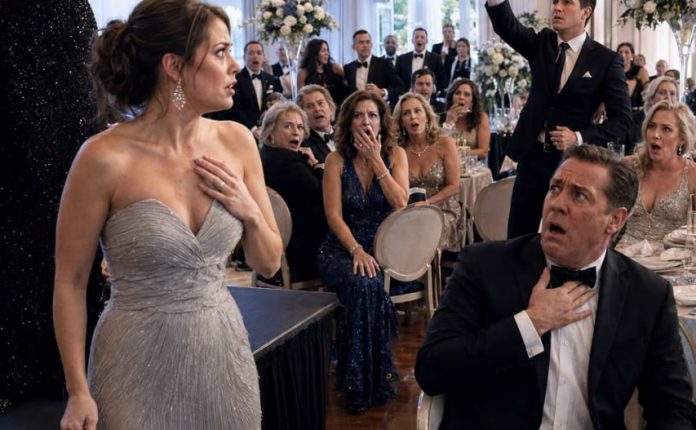
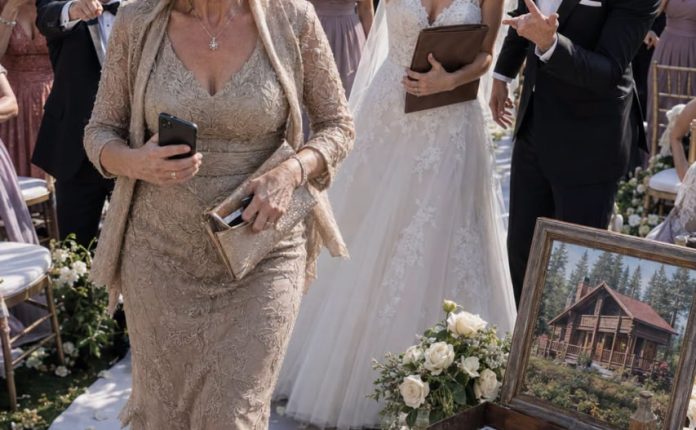
Our wedding was small. Red leaves covered the lawn. My sister cried before the ceremony began. Caroline’s older brother Robert arrived late, hugged her stiffly, and spent most of dinner speaking to his wife.
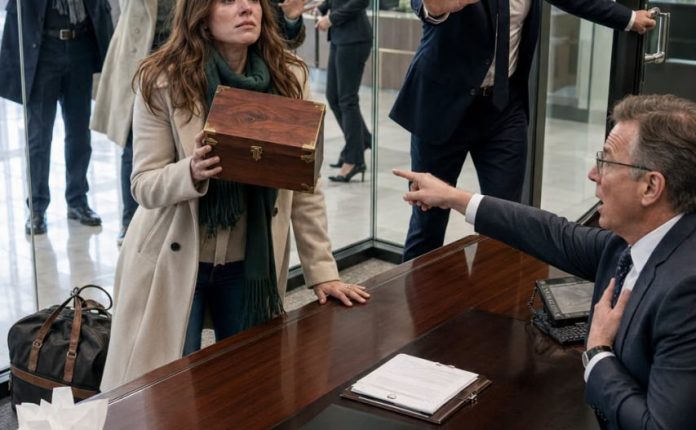
By eleven, the guests had gone. Caroline and I returned to the bridal suite surrounded by flowers, unopened cards, and the strange quiet that follows a day everyone insists is perfect.
She removed her earrings with shaking hands.
“Hey,” I said. “It’s over. You can breathe now. We did it.”
She sat on the edge of the bed.
“Daniel, before this marriage goes one step further, there is something I never told you.”
My chest tightened.
I sat beside her, leaving enough space that she would not feel cornered.
“What is it?”
For almost a minute, she said nothing.
Then she whispered, “I had a baby.”
I stared at her.
“At twenty?”
“Eighteen.”
The room became still.
She looked directly at me.
“She was yours.”
I stood without meaning to.
“What?”
Caroline began crying.
“The summer after graduation. Before you left for the Navy.”
I remembered one night at her friend’s parents’ cabin near Lake Erie. We had been frightened, young, convinced distance would solve whatever honesty could not. I had carried that memory privately for four decades.
“You were pregnant?”
“Yes.”
“Why didn’t you tell me?”
“I tried.”
She said she wrote three letters. Her father, Leonard Price, intercepted two. The third came back unopened because my training address changed. When her parents learned about the pregnancy, they sent her to an aunt in Maryland and told everyone she was helping after surgery.
“I begged them to contact you.”
My voice sounded unfamiliar.
“Did they?”
“They said they did.”
“What did they say I told them?”
Caroline pressed both hands together.
“That you wanted nothing to do with me or the baby.”
I felt something tear through every old assumption I had made.
“I never said that.”
“I know now.”
“Now?”
That word mattered.
Caroline looked down.
“Our daughter was born in March. A girl. I held her once. My father told me you had signed consent for a private adoption and that fighting would only make everything harder for her.”
“I signed nothing.”
“I know.”
“How long have you known?”
She closed her eyes.
“Not long enough to make this easier.”
I stepped away.
“Caroline.”
“Six weeks.”
The wedding had been planned for four months.
Six weeks meant she had known before we married.
I stared at her.
“You found out six weeks ago that we had a daughter, and you waited until our wedding night to tell me?”
“I was terrified.”
“So you married me first.”
“I thought if I told you before, you would look at me and see forty-four stolen years instead of the woman you found again.”
“I am looking at both right now.”
She covered her face.
I hated that I wanted to comfort her.
I hated more that I still loved her.
“Is she alive?”
Caroline nodded.
My knees almost gave way.
“Her name is Leah Morgan. She is forty-three. She lives outside Pittsburgh. She has two children.”
I sat again because standing had become impossible.
“How did you find her?”
“I didn’t. She found me.”
Caroline explained that Pennsylvania had expanded access to old adoption records. Leah requested hers after her adoptive mother died. The file contained Caroline’s name, my name, and documents that made no sense.
“What documents?”
“A consent form.”
My stomach tightened.
“With my signature?”
“Yes.”
“Forged?”
“I believe so.”
I stood again.
“Believe?”
“Daniel, I wanted proper verification before I destroyed your life with this.”
“You already knew she was yours.”
“Yes.”
“And you knew I might be her father.”
“Yes.”
“Did you meet her?”
Caroline nodded once.
Another secret.
“When?”
“Three weeks ago.”
I turned toward the window.
Lights from the lake reflected against black glass. Behind me, the woman I had waited almost my entire adult life to marry was telling me that while I chose flowers and wrote vows, she had been meeting the daughter I never knew existed.
“Why tonight?”
“Because I cannot begin this marriage with one more morning built on a lie.”
I laughed without humor.
“You already began it.”
She flinched.
A knock sounded at the suite door.
Neither of us moved.
Then a woman’s voice came through the hallway.
“Mom?”
Caroline went pale.
I turned toward her.
“Who is that?”
She whispered, “Leah.”
I opened the door.
A woman with Caroline’s mouth and my mother’s gray eyes stood in the hallway holding an old envelope.
She looked at me for several seconds.
Then she said, “Daniel Mercer?”
“Yes.”
Her voice broke.
“I think you’re my father.”
I could not answer.
Leah held out the envelope.
“My adoption file had this hidden behind the consent papers.”
I took it.
Across the front was my handwriting from 1978.
Caroline’s name.
My old Navy return address.
And one sentence written across the back in red ink.
RETURNED BY FAMILY REQUEST.
PART TWO Leah stepped into the suite only after Caroline nodded. She looked composed in the way people do when they have spent too much time preparing for one impossible conversation. She was forty-three, a history teacher, divorced, mother of two teenagers, and my daughter.
She had Caroline’s mouth, my sister’s habit of lifting one eyebrow when nervous, and a scar beside her chin that meant nothing and still felt important because I had missed the story behind it.
“I’m sorry,” Leah said. “I didn’t know tonight was the wedding.”
Caroline wiped her face.
“I told you not to come.”
“You stopped answering.”
I looked between them.
“So you have been talking regularly.”
Caroline nodded.
Leah looked ashamed on her behalf.
“She was trying to figure out how to tell you.”
“That does not make the timing better.”
“No,” Leah said. “It doesn’t.”
Her willingness to agree with me lowered my anger by half an inch.
We sat around the small table beside the window. Leah opened the envelope she had brought. Inside was an adoption consent dated January 12, 1979. My name appeared at the bottom beneath a signature that looked almost right.
Almost.
The D was too narrow. The M in Mercer leaned backward. More importantly, on January 12, 1979, I had been aboard a training vessel off Virginia with no leave and no access to any Pennsylvania notary.
The witness signature belonged to Martin Hayes.
Caroline’s late husband.
I stared at it.
“You knew Martin then?”
“He worked for Dad,” Caroline said. “He was twenty-four. I barely knew him before the pregnancy.”
“Yet he witnessed my signature.”
“Yes.”
Leah unfolded another document.
It was a letter from Caroline to me, dated two months before Leah’s birth.
Daniel, I do not believe you would abandon us. If they are telling me the truth, I need to hear it from you.
The letter had never been mailed.
Across the bottom, in Leonard Price’s handwriting, were the words: No purpose in prolonging this.
Caroline covered her mouth.
“I never saw that again after I gave it to my mother.”
Leah said her adoption file contained six letters, all written by Caroline. None had postmarks. There was also a typed memorandum claiming my parents had confirmed I wanted no contact.
“My parents never knew,” I said.
My mother had died twenty years earlier. My father survived her by five. Neither ever mentioned a child, an adoption, or anyone from Caroline’s family contacting them.
Leah asked whether I wanted a DNA test.
“Yes.”
The answer came instantly.
Caroline flinched, and I realized she heard doubt.
“Not because I think you are lying,” I said to Leah. “Because we have already lost forty-four years to people deciding facts for us.”
Leah nodded.
“That’s exactly why I want one.”
She had already arranged an appointment at a certified laboratory the next morning if I agreed.
I almost laughed.
“You really are related to Caroline.”
Leah smiled.
“Planning is one of my less charming qualities.”
For a few seconds, something warm existed in the room.
Then I remembered why we were there.
I looked at Caroline.
“When did you learn the signature was forged?”
“Six weeks ago, when Leah showed me.”
“And Martin’s name?”
“The same day.”
“You lived with him for thirty-eight years.”
Her face crumpled.
“I know.”
“Did you ever ask him about the adoption?”
“Not directly.”
I stared.
Caroline explained that Martin entered her life during the pregnancy because her father used him to handle paperwork. After Leah was adopted, Martin remained around the family. He was kind during a period when Caroline felt ashamed, abandoned, and convinced I had rejected her.
They married three years later.
“He told me you had moved on,” she whispered. “He said asking questions would only reopen everything.”
“And you believed him.”
“Yes.”
“Did he know the truth the whole time?”
“I think so.”
Leah spoke carefully.
“There is more than the adoption.”
I almost told her to wait until morning.
Then she opened a second folder.
“My adoptive mother kept everything. When she died, I found a letter from an attorney dated 1998 asking whether I had ever been informed about the Price Descendant Trust.”
Caroline looked up sharply.
“What trust?”
Leah slid the letter toward us.
Caroline’s maternal grandmother had created a trust in 1968. It provided education and support distributions for Caroline, her brother Robert, and their biological descendants. Adoption outside the family did not terminate a descendant’s status.
Leah should have become a beneficiary at birth.
She never received anything.
“Who was trustee?” I asked.
“Originally Leonard Price,” Leah said. “Then Martin Hayes handled administration. After Martin died, Robert became trustee.”
Caroline went completely still.
“My brother?”
“Yes.”
Leah had contacted Robert two months earlier after finding the attorney’s letter.
“What did he say?” Caroline asked.
“That the trust dissolved years ago.”
“Did it?”
“No.”
Leah opened a registry printout.
The Price Descendant Trust still existed.
Its assets were worth approximately three point eight million dollars.
Caroline stared at the page.
“How much of that belongs to Leah?”
“We don’t know yet.”
Leah’s attorney believed distributions had been calculated for decades as though Caroline had no biological children. Robert’s branch received benefits that might otherwise have been allocated differently.
I looked at Caroline.
“Did you know any of this before tonight?”
“No.”
Leah confirmed it.
“She only knew I found the trust letter. I got the current records yesterday.”
That mattered.
For the first time since Caroline began confessing, I had a fact she had not hidden.
I took a breath.
“Why did you come tonight?”
Leah looked at Caroline.
“Because Uncle Robert called me this afternoon.”
Caroline’s face changed.
“He told me to stop contacting his sister.”
“What else?”
“He said the adoption was closed for a reason and reopening it would damage people who had moved on.”
I felt anger rise.
“What did you say?”
“That I was not asking permission.”
Leah’s voice remained calm.
“Then he said if I approached either of you before the wedding was completed, he would challenge my claim and make sure the trust spent every dollar defending itself.”
Caroline stood.
“He threatened you?”
“He tried to scare me.”
I asked for Robert’s number.
Leah shook her head.
“Not tonight.”
She was right.
I had spent forty-four years without this family. I could survive one more night before making calls I might regret.
The next morning, we went to the laboratory.
Caroline came but waited outside during collection because she said this moment belonged to Leah and me.
The technician explained results would take several days.
When we returned to the inn, Caroline’s phone was ringing.
Robert.
She answered on speaker.
Her brother did not say hello.
“What did you tell Daniel?”
Caroline looked at me.
“The truth.”
Robert exhaled sharply.
“You have no idea what you’ve done.”
I almost laughed at the familiar sentence.
Caroline’s voice became steady.
“No, Robert. I think that is exactly what I am finally trying to understand.”
He went quiet.
Then he said, “Ask Daniel where his construction company got its first real contract.”
I frowned.
Caroline looked at me.
Robert continued.
“Your father did not just keep Daniel away because he was poor.”
“What are you talking about?”
“He paid him to disappear.”
I stood.
“That is a lie.”
Robert laughed once.
“Then ask him about Mercer Construction’s 1981 municipal warehouse job.”
My stomach dropped.
That contract had saved my company.
Robert said, “Dad arranged it.”
Then the call ended.