PART FOUR Miles did not leave.
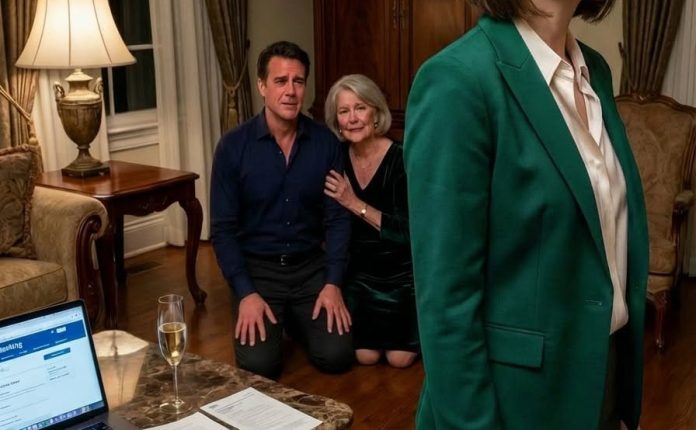
Maya asked everyone to sit down, including Jonathan.
Then Elaine looked at her husband.
“What payments?”
Jonathan removed his glasses.
“Two years ago, the foundation’s Harbor House project ran out of money during construction. If work stopped, thirty-six families would lose temporary housing placement.”
“That is not an answer,” Elaine said.
“I moved six hundred thousand dollars from a discretionary reserve before the board approved it.”
Claire stared.
“You moved foundation money without authorization?”
“Yes.”
“What happened to it?”
“It went to the project. Every dollar.”
Maya nodded.
“The audit confirmed that.”
Miles laughed.
“Convenient.”
Jonathan continued.
“When the board questioned the transfer, I repaid the reserve personally while they reviewed whether I had exceeded my authority.”
I looked at Miles.
“That is what you threatened to expose?”
“It proves he breaks rules when he decides his reasons are good.”
Jonathan did not argue.
“He is right about that.”
Miles had expected denial.
Instead, Jonathan said he had violated governance procedures, disclosed the transfer, repaid it, and accepted removal from the foundation’s finance committee for a year.
“What happened after that?” I asked.
Maya answered.
“The board ordered stronger controls. Those controls eventually identified Beacon’s invoices.”
Miles’s jaw tightened.
So Jonathan’s mistake had not caused Miles’s fraud.
The response to it had uncovered the fraud.
Claire looked at her brother.
“You used Dad’s old mistake to make everyone afraid of Daniel.”
Miles shook his head.
“You think this family is fair? Claire gets protected. Dad gets forgiven. I make one mistake and suddenly there are investigators.”
“One mistake?” Elaine asked quietly.
Maya opened the audit summary.
Beacon Shelter Partners was connected through two shell companies to a college friend of Miles. The friend submitted inflated invoices. Miles approved reimbursement. Part of the money then moved through consulting payments to MRC Management.
The total traced so far was five hundred eighty-seven thousand dollars.
Miles stared at the table.
He admitted enough that night to make the rest understandable.
His investment business had been failing for almost two years. He hid losses because Jonathan had always praised him as the financially gifted child. When creditors tightened, Miles began using foundation vendors to create temporary cash flow.
He told himself he would replace everything.
Then the amounts grew.
When internal controls flagged Beacon, he needed another explanation.
My engagement to Claire gave him one.
Harper Construction’s public documents provided a logo and signature samples. The wedding portal provided my identity documents. Miles formed Harper Advisory and planned to route the next payment there, then produce evidence suggesting I had inserted myself into foundation business through Claire.
The anonymous report to Jonathan was preparation.
The false email to Claire was insurance.
“You were willing to destroy my relationship,” Claire whispered.
Miles looked at her.
“I thought Dad would stop the wedding before it got that far.”
“You thought my life was a tool.”
“No.”
“Yes.”
He began crying.
The foundation’s attorneys took over from there. The account remained frozen. Records were preserved. Miles eventually entered a settlement involving restitution, removal from all family financial roles, and legal penalties related to false documents and misuse of charitable funds.
Jonathan also accepted formal governance restrictions stemming from his earlier unauthorized transfer, even though he had repaid it and the money reached the intended project.
“No family exceptions,” he told the board.
That sentence repaired something with Claire.
Not everything.
She was furious that her father had tested me without consent.
For weeks, she refused to laugh when he called it “the coffee incident.”
“You could have simply met Daniel,” she told him.
“I know.”
“You could have trusted me.”
“I know.”
“You treated him like an applicant.”
“I know.”
Jonathan apologized to me without explaining himself again.
“I was wrong to manipulate the introduction.”
“Thank you.”
“Are you still angry?”
“Yes.”
“Fair.”
That answer helped.
Claire and I postponed the wedding for three months, not because we doubted each other, but because we refused to let a family scandal become the backdrop for vows.
During that time, Jonathan and I built an actual relationship.
We argued about baseball.
He disliked my taste in bourbon.
I learned he made terrible scrambled eggs and excellent financial spreadsheets.
He learned I hated being offered opportunities simply because I was marrying his daughter.
When he suggested I join one of his companies, I said no.
He smiled.
“I expected that.”
“Then why ask?”
“Because normal people ask instead of arranging secret tests.”
Progress.
The hundred dollars returned to me six months later.
Jonathan had kept the bill.
He placed it inside a birthday card at our rehearsal dinner.
On the card he wrote, You gave this away when you believed I had nothing. I am returning it because I had more than enough. Keep the kindness. Spend the money.
I laughed.
Then I gave the bill to Claire.
“What am I supposed to do with it?”
“Anything.”
She slipped it into her purse.
The next morning, we married in a garden behind a small inn.
No family trust documents.
No business announcements.
No speeches about wealth.
Miles did not attend. Claire had invited him after months of counseling, but he said he was not ready to stand in a room where everyone knew what he had done.
She respected that.
A year later, he met us for lunch.
He apologized to me first.
“I made you into a character I needed.”
I understood exactly what he meant.
“You did.”
“I am sorry.”
“Thank you.”
Then he apologized to Claire.
Their relationship did not magically return.
They began again with short phone calls.
Jonathan’s birthday came two months later.
I met him at the same café near the airport.
This time he wore jeans, a clean coat, and no disguise.
He sat down across from me.
“You buying?”
I looked at the menu.
“Only if you order something reasonable.”
“Jamaican Blue Mountain.”
“Of course.”
I bought two cups and two slices of cake.
When the cashier returned my change, I noticed a donation jar supporting temporary housing.
I placed the hundred-dollar bill inside.
Jonathan raised an eyebrow.
“You know I returned that for a reason.”
“I know.”
“Then why give it away again?”
I sat down.
“Because I finally know what it was worth.”
He smiled.
Years later, people still tell the story as though the astonishing part was a man changing from worn clothes into a first-class passenger.
It was not.
The astonishing part was how quickly appearances had misled all of us.
Jonathan thought my finances might define my intentions.
Miles thought wealth excused control until fear exposed him.
Claire thought protecting me meant warning me about her family instead of letting me meet them honestly.
And I thought buying coffee was a small gesture I would forget before boarding.
Instead, one cup opened a door into a family secret, a financial fraud, and a set of relationships forced to become more honest than any of us had planned.
I never became rich because I married Claire.
That was never the point.
I became part of a family that learned, painfully, that generosity without respect becomes control, and suspicion without evidence becomes cruelty.
Every year on Jonathan’s birthday, we still meet for Blue Mountain coffee.
He always reaches for the check.
I always get there first.
Not because I owe him.
Not because he tested me.
Because now, when we sit across from each other, neither of us has to pretend to be someone else.
THE END!
Disclaimer: This fictional story is for entertainment only. It does not represent any person or organization and does not encourage inappropriate behavior.