Once doctors understood what had been interfering with my health, they changed my treatment. Nobody promised a miracle because my heart had endured genuine damage, but the terrifying deterioration that had nearly killed me finally stopped.
I survived another week, then another. Eighteen days after doctors had predicted I might have seven days left, I stood beside my hospital bed while a physical therapist supported my arm.
My legs shook violently, but I took four steps. Noah happened to pass the doorway and stopped to watch. “Well, look at you,” he said. I told him not to sound so surprised.
“You almost fell into a chair yesterday,” he replied. “I was testing gravity,” I told him. Noah laughed, and that ordinary sound felt more precious than anything I had heard during the previous several weeks.
I spent twenty-nine days in the hospital. When doctors finally released me, reporters crowded outside because news of Claire’s arrest had become public. Cameras flashed while people shouted questions about the alleged murder attempt and my fortune.
They wanted to know whether I had disinherited Claire, whether I was divorcing her, whether I planned to sell my company, and whether she had tried to kill me specifically for $90 million. I answered nothing.
Rachel helped me into the waiting car and asked where I wanted to go. I knew immediately that I couldn’t return to the house where Claire had prepared my medication and tea.
I moved into a smaller apartment I owned downtown. For the first time since my twenties, I lived alone. Physical recovery was slow, but emotional recovery proved far more complicated than I expected.
Some mornings I woke up furious. Other mornings I missed Claire so badly that I hated myself for still caring. Friends couldn’t understand why knowing the truth hadn’t erased every good memory I had.
But memories don’t vanish merely because new facts change their meaning. I still remembered dancing with Claire in our kitchen, the ridiculous Christmas sweaters she bought, and how she always fell asleep during movies.
Eventually, my therapist helped me understand something important. You can despise what someone became while grieving the person you believed they once were. Accepting that distinction allowed me to begin healing without excusing anything Claire had done.
Three months after leaving the hospital, I returned to Mercer Home & Design. Eight hundred employees gathered inside our main distribution center, and when I walked onto the platform, they applauded until I could barely speak.
I finally told them that I had spent most of my life believing legacy meant buildings, businesses, investment accounts, and things carrying your name. Nearly dying had taught me that I had misunderstood what mattered.
I announced that a significant percentage of my ownership would gradually transfer into an employee trust. The decision I made while expecting to die would remain in place even though I had survived.
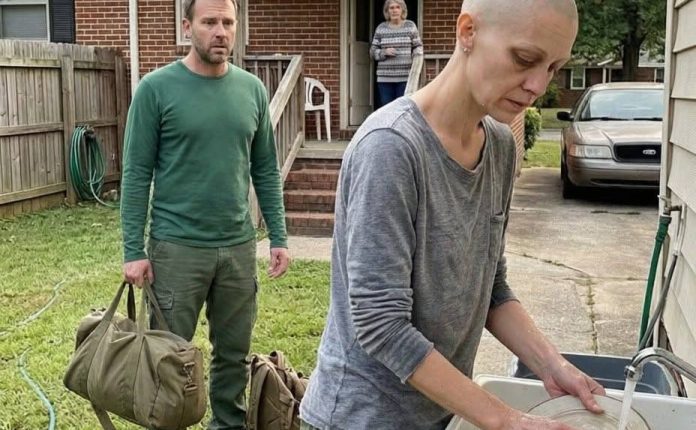
Some employees cried. So did I. Afterward, Noah found me near the loading docks with his younger sister, Sophie. She was twenty-two, shy, and recovering well after finally receiving the medical procedure she needed.
Sophie hugged me unexpectedly and thanked me for helping her. When I asked about her future, she said she planned to return to college that fall. “What are you studying?” I asked.
“Nursing.” Something about the answer felt perfectly appropriate. While my life slowly rebuilt itself, Claire’s continued collapsing. Six months after her arrest, a letter from her arrived through my attorney.
I nearly threw it away until I noticed the first sentence. “Thomas, there is one thing about Evan you still don’t know.” Rachel advised me not to answer, and I followed that advice.
I did, however, read the letter. Claire claimed Evan had approached her deliberately after studying my company, public financial information, charitable appearances, and travel schedule long before their relationship officially began.
He knew she attended fundraising events alone and understood our marriage had become strained. He made himself attentive and interested in all the ways I had gradually stopped being as my company consumed more of my time.
None of that excused Claire, and eventually she acknowledged it herself. She described how Evan gradually convinced her that I would never change while I remained healthy, successful, and completely in control.
At first, Claire told herself she only wanted me dependent on her. Then she wanted me away from the company. Eventually, Evan began talking about what their lives could become if I simply weren’t around.
Their plan grew one compromise at a time and one lie at a time until Claire found herself standing beside my hospital bed, telling her supposedly unconscious husband how eagerly she awaited his death.
The letter ended with an admission I never expected. Claire wrote that I had neglected our marriage and that she had betrayed it. “Those are not equal things,” she wrote plainly.
“I don’t know when I became the woman who stood beside your bed that night,” Claire continued. “But I know she was me.” For the first time, I felt something close to closure.
It wasn’t forgiveness. Maybe forgiveness would never come. What I felt was clarity. I had worked too much, canceled vacations, missed dinners, and treated every business problem as though only I could solve it.
Those were failures I could acknowledge. I could apologize for the husband I had sometimes failed to be. What I would never do again was carry responsibility for another person’s deliberate decisions.
Nearly a year after my hospitalization, Claire entered a plea agreement. Evan eventually did the same after investigators accumulated overwhelming financial and digital evidence connecting him to the conspiracy.
I didn’t attend every hearing. I went to one major proceeding. Claire looked older when I saw her, and I knew I probably did too. At sentencing, I gave a short statement.
“What was taken from me was not money,” I told the court. “It was trust. For months, I believed my body was betraying me and that I was dying because I was unlucky.”
“In reality, the person I trusted most was helping create the illness I was fighting. I survived, but survival isn’t the same thing as becoming the person you were before.”
I explained that I would probably spend years relearning how to trust people. Then I said I hoped those responsible would spend their lives understanding what trust was actually worth.
Claire cried while I spoke. When I finished, I walked away without speaking to her. Outside the courthouse, Rachel asked how I felt after finally saying everything publicly.
“Free,” I answered. For the first time, I meant it. After the case became public, strangers became strangely fascinated with what happened to my $90 million and whether I had dramatically given it away.
Reality was less sensational and far better. I remained in control of Mercer Home & Design while gradually transferring ownership shares to employees who had helped build the company alongside me.
I expanded our charitable foundation and created emergency medical grants for working families who earned too much to qualify for certain assistance programs but nowhere near enough to survive catastrophic medical expenses.
Noah helped design the program because he understood that problem better than any consultant I could hire. Initially, he refused when I offered him a position with the foundation.
“I don’t know anything about philanthropy,” he insisted. I told him he knew exactly what it felt like to work sixteen hours a day because someone he loved needed medical care.
“That doesn’t make me qualified,” he argued. I told him it made him more qualified than half the professional consultants I had met. Eventually, he accepted a community outreach position while studying healthcare administration.
Two years later, Noah was running the program. Sophie became a nurse. Rachel claimed I became “slightly less impossible,” although I considered that description highly exaggerated.
I sold the house Claire and I had shared. Despite owning a furniture company, I kept none of the furniture because I discovered that memories attach themselves to surprisingly ordinary objects.
A dining table can become a battlefield. A coffee cup can resemble a funeral. A staircase can remind you of footsteps you never want to hear again. I wanted a place untouched by those associations.
I bought a quieter house overlooking a small lake outside the city. It was modest by my old standards, although my brother laughed when he discovered it contained four bedrooms and a wine cellar.
I learned to cook badly, leave my phone in another room during dinner, and take vacations without checking messages every fifteen minutes. Most importantly, I finally learned to notice the people around me.
I noticed the security guard working nights, the receptionist whose mother was ill, the warehouse employee saving for his daughter’s tuition, and the driver who had served our company for twenty-seven years.
For decades, I had been so focused on building something important that I often overlooked the people helping me build it. Nearly dying forced me to see how badly I had misunderstood success.
Almost three years after Claire whispered beside my hospital bed, another letter arrived from prison. I recognized her handwriting immediately and considered leaving it unopened.
Eventually, I read it. Claire wrote that she had completed counseling, was working in the prison library, and had stopped asking mutual friends for updates about my life.
The final paragraph stayed with me. “I used to think losing your fortune would be the worst thing that could happen to me,” Claire wrote. “I was wrong.”
“The worst thing was becoming someone who valued it more than the man who trusted me. I’m not asking you to write back. I only wanted you to know that I finally understand.”
I sat beside the lake holding that letter for a long time. I never answered Claire, but I didn’t burn the letter either. Some chapters don’t need to be destroyed.
They simply need to end. People occasionally ask whether I regret trusting Claire. I don’t, because saying yes would mean believing that trusting another human being was somehow my failure.
Claire’s betrayal belonged to her. My willingness to love someone wasn’t a mistake. What I regret is allowing distance to grow between us while believing money could compensate for my absence.
I regret treating every year as preparation for some future day when I would finally slow down and enjoy life. That future isn’t guaranteed, no matter how successful, wealthy, healthy, or important someone feels.
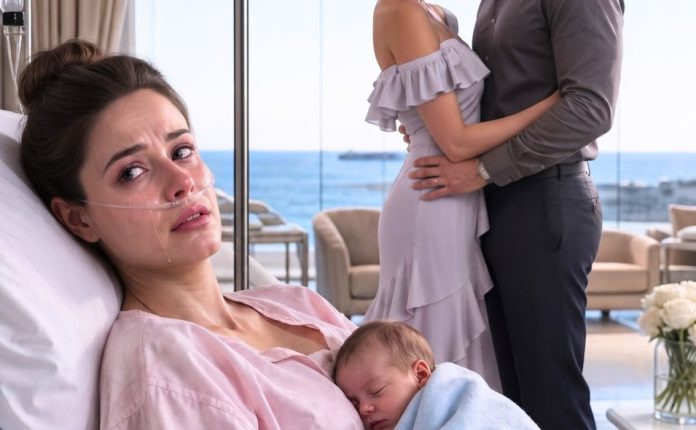
I learned that while listening through a hospital door as a doctor said I might have seven days left. I learned it again while pretending to sleep as my wife described the life she planned after my funeral.
That night, I believed I was losing everything—my marriage, my health, and my future. Instead, I eventually discovered how little of what I had once called “everything” actually mattered.
The $90 million was useful, but money couldn’t sit beside my hospital bed when I was terrified. My company mattered, but it couldn’t tell me whether the woman I loved had ever truly loved me.
My houses were beautiful, but none of them felt like home once trust disappeared. What mattered was Noah making a phone call because a frightened stranger asked him for help.
What mattered was Rachel getting out of bed before sunrise because something in my voice told her I was in danger. What mattered was a nurse refusing to let Claire give me medication from home.
Doctors continued searching when the obvious explanations stopped making sense. My employees applauded when I returned. My brother sat beside me during physical therapy, and Sophie hugged me after finally receiving her surgery.
Those were the moments I remembered. Those were the things worth saving. Years later, Noah and I spoke together at an event for the medical assistance foundation we had created.
By then, more than four hundred families had received help. At the end of the event, Noah told the audience how we had met inside my hospital room.
“He asked me to contact his lawyer,” Noah said. “At the time, he looked terrible.” The audience laughed, and I shouted from my chair that he had looked worse.
Then Noah became serious. He explained that he had believed he was simply helping one wealthy patient make one phone call. He didn’t know that such a small decision would affect hundreds of people.
That phone call helped save my life. My survival helped pay for Sophie’s medical treatment. Her recovery allowed her to become a nurse. Our experiences eventually created a program helping hundreds of other families.
One decent decision became another and then another—a chain of ordinary people choosing to help when they could. After the event, Noah asked whether I would erase everything if I could return to that hospital room.
I thought about Claire’s betrayal, my illness, the criminal investigation, and months of fear. “I’d change some things,” I admitted. Noah asked what I would change first.
“I’d prefer not almost dying,” I said. He agreed that sounded reasonable. I added that discovering my wife had a boyfriend named Evan hadn’t exactly been a highlight either.
Noah laughed before asking the real question. “But would you erase all of it?” I looked around the room before answering. Sophie was speaking with a family whose teenage son had received a medical grant.
Rachel was arguing cheerfully with one of our board members. Employees from Mercer Home & Design were stacking chairs nearby. People who might never have met were standing together because of one terrible night years earlier.
“No,” I said. There is something strange about surviving the moment you were certain would destroy you. Eventually, you stop asking why your old life disappeared and begin asking what the new one is for.
I once believed my legacy would be Mercer Home & Design. Later, I thought perhaps it would be the $90 million I had accumulated. Now I understand legacy differently.
A legacy is whatever continues because you were here. Sometimes it is a company, sometimes a family, sometimes a second chance, and sometimes it begins with something as small as one frightened person asking another for help.
For me, it began in a hospital room while I pretended to sleep as the person I trusted most whispered that she was waiting for me to die.
Claire believed that night would mark the beginning of her new life. In a strange way, she was right. It was the beginning of a completely new life.
Just not hers.
Mine.
Three years after doctors told me I had one week left, I still wake every morning amazed by something beautifully simple: my heart is beating, I am still here, and that is worth more than every dollar I ever made.
THE END!
Disclaimer: This fictional story is for entertainment only. It does not represent any person or organization and does not encourage inappropriate behavior.