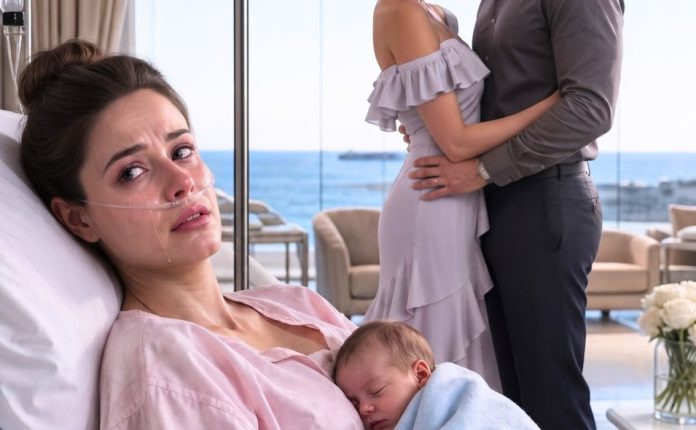
After doctors told me I might have only one week left, my wife leaned over my hospital bed and finally admitted the truth. “For months, I’ve been waiting for you to disappear,” Claire whispered. “Once you’re gone, everything will finally be mine.”
“The company, the houses, the investments—all of it,” she continued calmly. Then she smiled and added, “After that, I can finally start the life I planned with the man I actually love.” I remained completely still beneath the hospital blankets.
I didn’t argue, open my eyes, or let her know I was awake. Despite the medication, exhaustion, and frightening weakness of my heart, I had heard every word. The next morning, I signed a sworn declaration that would change everything.
Claire believed she was only days away from inheriting nearly $90 million. She had no idea her whispered confession had become the first thread in a criminal investigation, or that investigators would eventually uncover something far worse than I imagined.
My name is Thomas Mercer. At fifty-seven, I owned Mercer Home & Design, a furniture and interior furnishings company I had built from a rented warehouse outside Chicago. More than eight hundred people now depended on the company I had created.
I also owned properties in Illinois, Colorado, and Florida, along with investments and commercial real estate. According to my attorney, my total assets were worth approximately $90 million. Yet on that stormy Tuesday night, none of those things mattered.
I was lying in a private room at St. Matthew Medical Center struggling to stay alive. For months, my health had deteriorated steadily, beginning with fatigue and dizziness before developing into terrifying episodes involving sudden changes in my heart rhythm.
I had undergone countless tests, consulted specialists, changed my diet, stopped traveling for work, and followed every medical recommendation. Through all of it, Claire appeared completely devoted, managing my medications, preparing supplements, attending appointments, and bringing me tea each evening.
She kissed my forehead before bed and told friends that nothing mattered more than keeping me healthy. I believed her without hesitation. We had been married for eleven years, and I had never imagined that the person caring for me might be dangerous.
Earlier that afternoon, my cardiologist had spoken quietly to my brother in the hallway without realizing my hospital-room door was slightly open. “We’re running out of options,” he said. My brother hesitated before asking the question I feared most.
“How long?” he asked. The doctor paused before answering, “A week, perhaps less, if his heart continues deteriorating.” Those words remained inside my head for hours afterward. Seven days. Maybe fewer. Suddenly, the future I assumed existed disappeared.
I thought about unfinished conversations, old friends I had neglected, employees I wanted to thank, and my late parents. I remembered the first warehouse I rented when I was twenty-six and had only $4,300 in my bank account.
Mostly, though, I thought about Claire. I wondered whether she would be frightened without me, whether she would keep our house, and whether my brother would make sure she wasn’t alone. At 11:17 that evening, she answered those questions herself.
Claire entered quietly and believed I was sleeping. Her heels clicked softly across the floor before she stopped beside my bed. “Thomas?” she whispered. I didn’t respond. She touched my hand and waited several seconds before releasing a small, relieved laugh.
“Finally,” she murmured. Then she leaned closer and said, “You have no idea how exhausting this has been. At first I thought it would happen quickly, but you’ve always been stubborn.” I wanted desperately to open my eyes.
Something inside me warned me to remain still. Then Claire mentioned another man. “Evan says I’ve been too patient.” Evan Cross was a luxury property consultant she had met at a charity function sometime during the previous year.
Claire had occasionally mentioned Evan as someone who helped wealthy clients buy vacation properties. Until that moment, I had never suspected anything between them. Now she said his name with an intimacy that made my fingers turn cold beneath the blanket.
“We found a place overlooking the ocean near Malibu,” she continued. “It’s perfect. I told him we shouldn’t make an offer until everything is settled.” Then she said the words that transformed my confusion into genuine terror.
“The things I’ve been giving you were never meant to make you stronger.” For one awful second, I forgot how to breathe. Claire placed her hand against my chest and spoke as though she were sharing a secret with a dead man.
“You trusted me with everything. Your medicine, your food, your appointments. You made it surprisingly easy.” My monitor began beeping faster. Claire froze, and I forced myself to breathe slowly until the rhythm steadied and she relaxed again.
“Easy,” she whispered. “Don’t ruin everything now.” She kissed my forehead and told me the funeral would be tasteful and small because there was no reason to waste money. “Then Evan and I can finally stop hiding,” she added.
After she left, I stared at the ceiling and remembered eleven years of marriage. Anniversary dinners, vacations, handwritten notes, and evenings when Claire rested her head against my shoulder all crowded into my mind at once.
I wondered whether our marriage had always been a performance. Then a more urgent thought overwhelmed everything else. If Claire believed she was responsible for my worsening condition, she might try again before morning. I needed help immediately.
A young hospital orderly named Noah Bennett entered carrying fresh water. He was twenty-six, and I knew little about him, but I had noticed how patiently he treated older patients and how often he helped people without being asked.
I had also overheard another employee asking why Noah accepted so much overtime. His younger sister needed surgery, he explained, and their insurance would not cover enough. He was working hospital shifts and making deliveries at night to help her.
“Noah,” I whispered. “Close the door.” His expression changed immediately. Once the door was shut, I asked him to contact my attorney, Rachel Monroe. He glanced toward my phone, so I explained why I couldn’t use it.
“My wife checks it.” That statement immediately got his attention. I told Noah that Claire had said something making me believe my medical condition might not be natural. He stared at me and asked whether he should call police.
“Not yet,” I said. “Right now, all I have is something I heard while pretending to sleep. I need it documented correctly.” Noah rubbed his forehead and admitted the situation was far beyond anything he was supposed to handle.
“I could lose my job,” he said. I told him I understood and gave him Rachel’s number from memory. Twenty minutes later, hearing her voice through Noah’s phone nearly broke whatever composure I had managed to maintain.
“Thomas?” Rachel asked. I told her I needed her at the hospital first thing in the morning. She immediately asked whether I was in immediate danger. I looked toward the door before giving her the only truthful answer.
“I don’t know.” Rachel instructed Noah to notify the charge nurse that nothing brought from home was to be given to me. No medication, supplements, drinks, or food from Claire would be allowed without hospital supervision.
Rachel also warned me not to confront Claire, accuse her, or reveal what I had heard. My safety mattered first, followed closely by preserving whatever evidence might still exist. For the first time that night, I understood this was bigger than betrayal.
Before Noah left, I asked him to remember something in case I didn’t survive until morning. I wanted my estate changed immediately. Claire would receive nothing beyond whatever she was clearly entitled to under our existing legal agreements.
Most of my company ownership would eventually pass into an employee trust. My charitable foundation would receive substantial investment assets, while existing trusts would protect my nieces, nephews, and longtime employees. Then I mentioned Noah’s sister.
“I want money set aside for her surgery.” Noah’s expression immediately hardened. “No,” he said. He reminded me that helping a frightened patient make a phone call did not entitle him to my money.
His refusal made me trust him even more. I told him so, and he shook his head as though I were completely unreasonable. When he finally left the room, I no longer felt entirely alone.
The next morning, Rachel arrived with an independent physician, a legal assistant, and two witnesses. She placed her briefcase beside my bed and asked me to repeat everything Claire had said, including every mention of Evan and my medication.
I described the conversation carefully. Rachel took notes without interrupting. When I finished, the independent physician began questioning me to establish whether I was mentally competent enough to make legally binding decisions despite my condition and medication.
He asked my full name, the date, my location, the companies I owned, the approximate value of my estate, and why I wanted my estate changed. He also asked whether I understood the consequences of removing Claire from my plans.
Eventually, he turned to Rachel. “In my opinion, Mr. Mercer is mentally competent to make legal decisions.” Only then did Rachel open her folder and place the first formal document directly in front of me.
It wasn’t a new will. It was a sworn declaration recording Claire’s confession, the time and circumstances, Evan’s name, and her comments about the medicine and supplements. It also requested preservation of relevant medical evidence.
My hand shook badly as I signed, but the signature was unquestionably mine. The witnesses signed after me. Rachel studied the completed declaration for a moment before saying, “This is the beginning, Thomas. Not the end.”
We then handled emergency estate amendments. Because most of Mercer Home & Design and much of my wealth existed before the marriage, our prenuptial agreement allowed Rachel to restructure substantial portions without automatically granting Claire control.
If I died, most of my company interest would move into an employee ownership trust. My charitable foundation would receive significant investment assets, and several trusts would continue protecting relatives and longtime employees.
Claire would receive only whatever property was unquestionably hers under our existing agreements. Nothing more. I also established a $500,000 medical and educational trust for Noah’s family, knowing perfectly well that he would probably object again.
By noon, Detective Lena Ortiz arrived. She asked detailed questions about my home routine, especially who prepared my medications, purchased my supplements, and handled the things I consumed regularly. Every answer led back to Claire.
Ortiz asked whether my symptoms seemed worse after any particular food or drink. I remembered Claire’s nightly tea, organized pill containers, and small packets she described as natural supplements recommended by a wellness expert.
“I don’t know,” I admitted. Ortiz nodded approvingly. “Don’t guess.” The hospital began preserving samples of everything Claire had brought. Staff had already prevented her from giving me capsules from a bottle in her purse that morning.
“My husband always takes these,” Claire had argued with the nurse. The nurse refused. That bottle was now sealed away. Looking at it made me sick because Claire had handed me capsules from similar containers hundreds of times.
Then my hospital door opened, and Claire walked inside carrying flowers. She stopped when she saw Rachel and the papers beside my bed. Her smile remained in place, but only barely. “What’s going on?” she asked cautiously.
“Estate planning,” I answered weakly. Her eyes sharpened for half a second before the loving-wife expression returned. She kissed my cheek and told me not to worry about business because she would take care of everything.
I looked directly into her eyes and said, “I know you will.” Claire smiled because she thought I was reassuring her. She had no idea how differently I meant those words or what I had signed that morning.