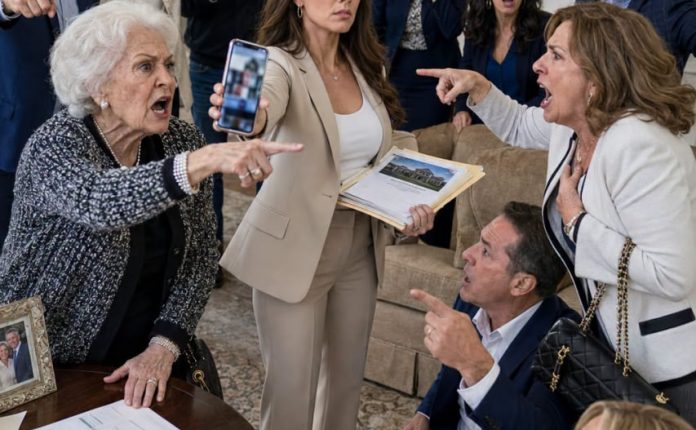
The first time my mother-in-law asked me to pay for dinner at her house, I honestly thought she was joking. Diane Mercer stood beside her kitchen table surrounded by empty bowls, a casserole dish, roasted vegetables, chicken, potatoes, and soup. Nothing was bad, but nothing belonged in a fine-dining restaurant either. Then she named a price that made me stare. When I asked if she was serious, her smile vanished. “Ingredients cost money. My expertise costs money. People would pay far more to eat food prepared by someone with my reputation.” That should have warned me what marrying into the Mercer family would become. Unfortunately, I was already married to her son.
My name is Claire Bennett. I was twenty-nine and worked as an editor for a lifestyle publishing company. I met my husband, Evan Mercer, while interviewing him for a feature about independent hair salons. Evan was funny, attentive, and calm. We discovered we both loved obscure independent films. During that first interview, he joked, “I think I’m obligated to marry you.” A year later, the joke became real when he proposed outside the little theater where we had our first date.
Meeting his parents had been more complicated. Diane had built a large online following teaching traditional home cooking. Her videos presented her as warm, polished, patient, and reassuring. When I admitted I had never watched her channel, her expression tightened. “You work in publishing and you don’t know who I am?” Then she smiled and spent the rest of the evening being charming.
Evan’s father, Thomas, was completely different. He barely spoke. When Evan announced that we planned to marry, Diane clapped. Thomas frowned and said, “You might want to think about that.” Evan demanded to know whether Thomas disliked me. His father only said, “Marriage involves more than two people.” Diane rolled her eyes and portrayed him as a permanently bitter man. I drove home convinced my future father-in-law hated me.
Over the following weeks, Diane positioned herself as my greatest defender. Eventually Thomas stopped objecting. Evan and I married, and Thomas even rented us an apartment in a building he owned at a reduced rate. I decided I had judged him too harshly.
I wanted our families to get along. For a few months, I thought they did.
Then Diane announced that she was developing an upscale seafood restaurant. Evan was thrilled. Thomas looked immediately troubled. Diane noticed me noticing and sighed that her husband had always resented her success. That was the first version of the story I accepted without questioning.
Diane explained that Thomas had suffered poor health for years and had not held a conventional full-time job. She claimed she had supported the family while he stayed home. Evan believed the same thing. “My mom sacrificed everything,” he told me. Every time Thomas appeared withdrawn or irritable, it seemed to confirm what they said about him.
Around then, Diane became unusually interested in my parents’ restaurant.
My parents, Michael and Ruth Bennett, owned a respected sushi restaurant that had been in our family for years. My older brother Luke and his wife Jenna worked there too. The restaurant occupied the first floor of an old three-story building. My parents lived above it, while Luke, Jenna, and their children lived on the third floor. It was not flashy outside, but inside it had cedar counters, soft lighting, fresh citrus, and the reputation my parents had built through years of hard work.
Diane suddenly wanted details. Where did Dad buy fish? Which suppliers did he use? What nights were busiest? How often did he change vendors? I laughed and told her she sounded like an interviewer. She smiled brightly and said she was simply curious. Then she suggested that both families eat there together and added, “I wouldn’t expect special treatment, of course.”
Soon afterward, Diane blocked me without explanation. The day before, she had asked me to pick up a dessert from a pastry shop near my office. The next morning, my messages went unread. Calls went straight to voicemail. When I told Evan, his first response was, “What did you do?”
That hurt more than I expected.
I told him I had done nothing. He insisted his mother would not block me for no reason. Then I realized Diane had already spoken to him. She had told Evan that I called her an amateur who had gotten lucky online, claimed she did not understand good sushi, and supposedly said she was not good enough to eat at my parents’ restaurant.
It was completely fabricated.
“Why would she make that up?” Evan asked.
I looked at my husband. “Why would I say it?”
He had no answer. Even after I showed him my harmless messages about the pastry shop, he suggested I apologize because Diane was sensitive about being looked down on.
“For something I didn’t say?”
“Why does everything have to become a fight with you?”
I slept facing the wall that night.
A few days later Diane unblocked me and ordered us to dinner Sunday. Evan called it an olive branch. I went.
After the meal, I washed the dishes. As I reached for my coat, Diane held out her hand.
“You forgot something.”
She wanted money for dinner.
When I stared at her, she named the amount and explained that her food was worth professional prices. Then she leaned closer and whispered, “Don’t tell Evan.”
I asked why.
“Because he understands the value of what I do. I don’t want you creating unnecessary tension.”
The nerve almost impressed me. She had invited us into her home, served food partly prepared for filming, had me wash the dishes, then demanded money while pretending I was the one threatening family harmony.
I paid because I wanted to see where this would go.
It went further.
Diane invited us repeatedly. Every dinner ended the same way. She waited until Evan was distracted, then demanded payment. Sometimes the food consisted of leftovers from shoots. Sometimes I watched her bring home ingredients purchased by her production company. Once, while washing dishes, I overheard crew members whisper that Diane took everything and that no one dared confront her.
That was when her public image began cracking for me. Off camera, she belittled assistants, mocked employees, and told one young woman she would have no career without Diane.
At home, Evan still defended her. Whenever I said his mother treated me badly, he accused me of always having a problem with her. I would raise a concern. Evan would defend Diane. I would become frustrated. Then Evan used my frustration as evidence that I was unreasonable.
Eventually, I started waking with headaches.
Then my mother called one Tuesday and asked, “Claire, did Diane tell you about the restaurant?”
“What restaurant?”
“Come over tonight.”
When I arrived at my parents’ restaurant after closing, Dad, Luke, Jenna, and Mom were sitting at one of the tables. Dad pushed a document toward me. At the top was a rendering of a seafood restaurant.
Its proposed location was directly across the street.
Diane had filed the plans weeks earlier—around the exact time she began asking me questions about suppliers, customers, and busy nights.
Then Dad placed another document down.
One of their suppliers had contacted him because Diane had told them her new restaurant was affiliated with my parents’ business. She tried to arrange deliveries through their account and have the invoices sent to them.
My stomach turned.
All the interest had been research.
She had not been trying to become closer to my family. She had been studying their business.
The doorbell rang.
We were closed, but when Jenna looked outside, her expression changed.
Thomas Mercer stood alone.
When I opened the door, he looked at me and said, “I owe you the truth.”