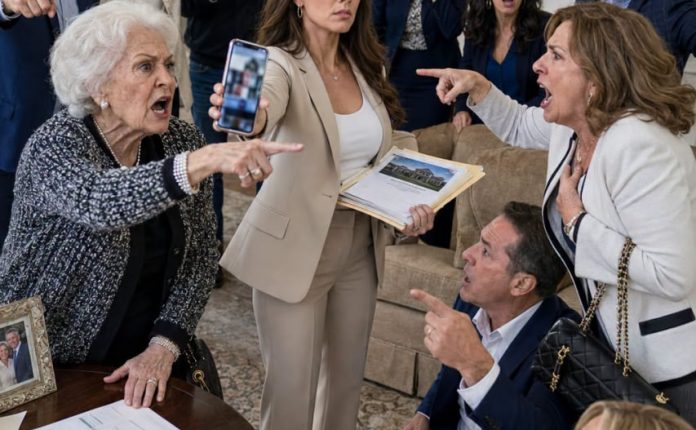
Dad followed me into the resort lobby.
“Audrey, don’t be childish.”
I stopped.
“Childish?”
“I’m asking you to evaluate a legitimate business opportunity.”
“Then submit it to my investment office.”
“You know that isn’t what I mean. This is family.”
“Interesting timing.”
He insisted family should help family.
“Did family help me?”
“You never asked for money.”
“I’m not talking about money.”
That finally silenced him.
“When I invited you to my company launch, I didn’t need a check. I wanted my father there. When I called from Stanford, I wasn’t asking you to pay tuition. I wanted you to sound excited. When my first office opened, I wanted Mom to ask for the address.”
He looked away.
“I stopped asking because the answer was always the same. Vanessa had something more important.”
“I didn’t realize.”
“That’s the problem.”
He tried one final time to get me to review the Northcrest deal.
“No.”
“Why?”
“Because if the opportunity is strong, you don’t need your daughter’s reputation attached to it. And if it isn’t, I won’t lend you my reputation to rescue it.”
Then I walked away.
For forty minutes afterward, I met with the resort manager and discussed renovation plans for an underused ballroom. We talked about wiring, soundproofing, power redundancy, guest traffic, and technology integration. Nobody cared what I had accomplished at seventeen. Nobody mentioned Vanessa or Dad.
There was simply a problem and decisions to make.
That was the world I trusted.
Afterward, my phone filled with calls and messages from nearly every relative. One message caught my attention.
Ethan.
Thank you for talking to me like my questions mattered.
The sentence hurt more than Vanessa’s insult because I knew exactly how he felt.
I replied:
They do matter. Call Rachel Monday.
Vanessa also wrote, asking me to meet privately for coffee because she wanted to hear “the real story.”
I started typing, I’ll think about it.
Then deleted it.
Not yet.
There had been a time when Vanessa showing interest in my life would have meant everything.
But interest arriving after she learned my net worth felt different.
Late interest was not the same as love.
Three days later came the real test.
Not tears.
Not brunch.
An email.
Rachel entered my office Wednesday morning carrying a printed message from Daniel.
Subject: Strategic Partnership Opportunity.
His firm wanted introductions regarding financing, data partnerships, and access to our post-merger network.
The final sentence read:
Given our family relationship, I’m confident we can find a mutually beneficial path forward.
“Decline,” I said.
“Standard language?”
“Standard language.”
“No mention of Easter?”
“No.”
An hour later Daniel called my personal number. I ignored it. Vanessa called next, so I answered.
“Did you reject Daniel’s meeting?”
“His office received the same answer any other firm would.”
“He’s embarrassed. People are asking why his own sister-in-law won’t take a meeting.”
“Then perhaps he can explain that business decisions aren’t made through family pressure.”
“You’re still angry.”
“Yes.”
“How long are you going to punish everyone?”
Whatever softness I had begun to feel disappeared.
“I’m not punishing you.”
“It feels like punishment.”
“Because you’re used to access without responsibility. Unfair was calling me stupid when you thought I had no power. This is me refusing to reward you now that you know I do.”
“But I apologized.”
“And?”
“What else do you want?”
There it was.
Apology given.
Forgiveness expected.
Account settled.
“I don’t want anything.”
“Then what are we supposed to do?”
“Change.”
“How?”
“Start by not expecting me to erase ten years because you cried at brunch.”
Her voice hardened. “You’ve become incredibly arrogant.”
“Goodbye, Vanessa.”
I ended the call.
Her apology may have been sincere at brunch, but sincerity was not the same as change. She felt terrible once discovering that humiliating me had made her look foolish. She had not yet understood why she needed the imbalance in the first place.
Mom called later.
“Your sister is upset.”
“I know.”
“I think you should give her some grace.”
I laughed once.
“Did you ever tell her to give me grace when she mocked my clothes? My job? When she called me the family disappointment?”
Mom said she had not known.
“You were standing beside her at Christmas.”
“I thought she was teasing.”
“It was always teasing when it happened to me.”
Mom started crying. “I don’t know how to fix this.”
“You might not.”
“You’re my daughter. I love you.”
I looked at the photograph on my desk—not of my biological family, but of the original Whitmore Technologies team crowded into an apartment. Maya held pizza. Owen slept in a chair. I was laughing with my eyes closed.
Those people had seen me when there was nothing impressive to see.
“I love you too, Mom. But love doesn’t automatically create closeness.”
“I’m not ready to have the relationship you want.”
“For how long?”
“I don’t know. And I’m not setting a deadline just to make you comfortable.”
When the call ended, I expected guilt.
Instead, I felt peaceful.
I had always imagined boundaries as walls built from anger.
Now I understood they could also be doors.
And I was finally deciding who received a key.
Six months later, Seaside Springs reopened its renovated conference wing. The ballroom had become a modern space with ocean-facing glass, hidden technology, private meeting suites, and adaptive lighting. Our annual leadership retreat became its first major event.
As I stood on the terrace before the opening session, Rachel handed me sparkling water.
“Six months,” she said.
“Feels longer.”
“Your family behaving?”
“Define behaving.”
Dad had submitted his Northcrest acquisition through our formal investment process.
My team rejected it.
He did not call me afterward.
That counted as progress.
Daniel’s firm eventually received a meeting through normal channels. They submitted a competitive proposal.
They did not win the contract.
He never contacted me personally again.
Mom continued sending messages every Sunday. At first they were filled with guilt and apologies. Eventually they became ordinary—pictures of the garden, recipes, questions about books.
I answered occasionally.
Not because everything had been repaired, but because she was finally speaking to me without asking for anything.
Vanessa and I barely spoke. She sent two long apologies. I read them but did not answer. At Thanksgiving she invited me home. I declined. She said she understood.
Maybe someday we would sit across from one another without the old competition between us.
Maybe not.
I stopped believing every broken relationship deserved restoration.
Ethan, however, became a regular presence in my office.
His first business idea was terrible.
I told him.
He laughed and returned with another.
By summer, he had created a prototype to help small restaurants predict food demand and reduce waste. I gave him no money and introduced him to no investors. Instead, I made him interview restaurant owners, kitchen managers, suppliers, and servers.
“When do I get to build the cool part?” he complained.
“This is the cool part.”
What mattered was not whether Ethan became wealthy. He was curious. He wanted to learn.
That mattered more.
As Rachel reminded me that my opening remarks were ten minutes away, I looked through the glass doors at hundreds of employees—engineers, store managers, analysts, designers, hospitality teams, and people from every level of the businesses we had built.
None cared whether I impressed my parents.
They cared whether I made good decisions tomorrow.
That responsibility felt heavier than revenge.
And infinitely more satisfying.
My phone vibrated.
Vanessa.
Hope the opening goes well. I saw the photos. The place looks beautiful. No need to reply.
I read the message twice and locked the phone.
Rachel asked, “You want to answer?”
“No.”
And I did not feel guilty.
For years, I had imagined the perfect ending would be my family finally recognizing me. I thought I wanted Mom to brag about me, Dad to admit he had underestimated me, and Vanessa to envy me.
Once all of that happened, it felt strangely empty.
Their approval arrived only after the evidence became impossible to ignore.
The people who mattered had believed when Whitmore Technologies was an apartment office, our servers failed twice a week, and one lost client could have ended everything.
Maya believed.
Owen believed.
Rachel believed.
Eventually, I learned to believe too.
That was enough.
As I approached the conference room, Ethan ran toward me holding his laptop.
“Aunt Audrey!”
“What happened?”
“Restaurant number twelve agreed to test the prototype.”
His face glowed.
“I know it’s small,” he said.
“No.”
I looked directly at him.
“It’s the first customer who trusts you enough to test something you built. That is never small.”
He smiled and rushed away.
Rachel laughed. “You realize you’re creating another entrepreneur.”
“Hopefully one with fewer family issues.”
My phone vibrated again.
This time it was Mom.
Proud of you today. Not because of the money. Because I finally understand how hard you worked. I wish I’d understood sooner.
Six months earlier, those words might have destroyed me.
Now they simply felt kind.
Late, but kind.
I typed:
Thank you.
Nothing more.
No invitation.
No promise that everything would return to normal.
Because it would not.
And that was okay.
I had forgiven enough internally that anger no longer followed me everywhere. But forgiveness did not require restoring access. It did not mean forgetting years of humiliation simply because the people responsible finally regretted them.
My parents remained in my life from a distance.
Vanessa became someone I wished well from farther away.
Perhaps she eventually changed. I genuinely hoped she did.
But she would have to become a better person for herself, not as a ticket back into my life.
The conference doors opened.
Applause rolled toward me.
Six months earlier, I had occupied the worst seat at my family’s Easter table while Vanessa laughed because she thought I folded sweaters for a living.
The strange thing was, she had not been entirely wrong.
I still folded sweaters sometimes.
I still visited stores without warning, straightened racks, carried boxes, spoke to cashiers, and helped customers find sizes.
The difference was that I no longer felt any need to explain why that work mattered.
A job did not become respectable because a billionaire performed it.
It had always been respectable.
That was the lesson my family learned too late.
And the lesson I would never forget.
I stepped onto the stage and looked through the glass wall toward the dark Pacific.
For most of my life, I had wanted a seat at my family’s table.
Now I finally understood something far more important.
I could build my own.
THE END!
Disclaimer: Our stories are inspired by real-life events but are carefully rewritten for entertainment. Any resemblance to actual people or situations is purely coincidental.