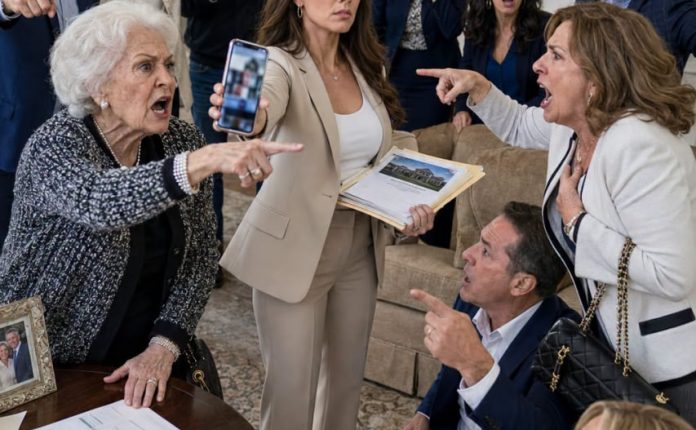
Mom recovered first.
“Why didn’t you tell us?”
Not congratulations. Not how did you build it? Not what was it like?
Why didn’t you tell us?
As though the last decade had been my communication failure.
“I tried.”
Dad shook his head. “Something this important, we would remember.”
“Would you?”
I opened an old folder on my phone.
“I called when Stanford accepted me. Dad answered. I told him I’d received the letter.”
He frowned. “What did I say?”
“You said, ‘That’s good, sweetheart.’ Then you spent twenty minutes talking about Vanessa’s engagement party.”
Vanessa shifted in her chair.
“When I launched Whitmore Technologies, I invited all of you.”
Mom asked when.
“September ninth, ten years ago.”
I still had her response.
“Sounds nice, honey. We already promised Vanessa we’d help her choose nursery furniture that weekend. Maybe next time.”
Vanessa muttered, “There could have been another opening.”
“A company only launches once.”
I continued. At Thanksgiving, I had told Dad we had raised a major funding round.
“You said you were working with investors,” he replied.
“Yes.”
“I assumed you worked for them.”
“Because you didn’t ask.”
Rachel stayed silent beside me. She understood this was no longer business. I was excavating ten years of ignored conversations.
Daniel finally said, “Our firm has been trying to meet with Whitmore Technologies for almost two years.”
“I know.”
“You know?”
“Seventeen meeting requests.”
His eyebrows rose. “We’ve never gotten past your executive office.”
“That was intentional.”
Vanessa asked why.
I turned toward Daniel. “Do you remember your firm’s first presentation?”
He didn’t.
“I do. Your pitch deck called me ‘Mr. Whitmore’ thirteen times. Your analysts never bothered to check who founded the company.”
Dad said, “You rejected a major investment firm because of a pronoun?”
“No. I rejected them because they didn’t understand the company they wanted access to.”
For the first time all morning, Ethan smiled.
Vanessa noticed. “You think this is funny?”
“No.”
“Then stop smiling.”
“You don’t have to,” I told him.
Vanessa turned back to me. “Fine. You’re successful. Extremely successful. Congratulations. But working inside your own stores pretending to be an employee is bizarre.”
“I’m not pretending.”
“You fold clothes.”
“Sometimes.”
“Why?”
“Because executives who stop understanding customers eventually make expensive mistakes.”
Dad suddenly leaned forward with genuine interest.
I hated how quickly that happened. Ten minutes earlier, retail work had proven I was stupid. Now, because billions of dollars stood behind it, my methods were suddenly intelligent.
I explained how I still visited stores, watched customer traffic, tested systems, and learned firsthand where operations failed.
Dad nodded. “Smart.”
The compliment felt hollow.
Rachel’s phone vibrated. “The business press wants confirmation of your ownership percentage.”
“Thirty-four percent remains unchanged.”
Mom stared. “Thirty-four percent of $4.2 billion?”
“My personal net worth moves with the stock price, but this morning it’s approximately $1.4 billion.”
Vanessa looked sick.
Nearby diners had begun noticing us. I hated turning family pain into entertainment for strangers, but Vanessa had made the conversation public when she called me stupid loud enough for half the terrace to hear.
She looked at me with wet eyes. “I called you stupid.”
“Yes.”
“I said you didn’t understand business.”
“Yes.”
“And you just sat there.”
“What would arguing have changed?”
Mom reached across the table.
“Audrey, we’re proud of you.”
I stared at her hand.
“No.”
Her fingers stopped.
“What?”
“You are impressed by me. That isn’t the same thing as being proud of me.”
Dad sighed. “Don’t make this harder than it needs to be.”
That sentence told me they still did not understand.
“You want this to become a funny family story,” I said. “Audrey secretly became successful, everyone was surprised, everyone apologizes, we hug, and next Easter we laugh about it.”
Mom asked, “What’s wrong with that?”
“Everything.”
Vanessa said she was trying to apologize.
“No. You’re reacting.”
I looked around the table. “If I had told you this morning that I made forty thousand dollars a year folding sweaters, would you be crying because you regretted humiliating me?”
No one answered.
“Would Dad suddenly call my work smart? Would Mom say she was proud?”
Dad looked away.
“The problem isn’t that you underestimated my net worth. The problem is that you decided my value depended on it.”
Vanessa accused me of being distant, of not sharing relationships, apartments, or weekend plans.
“Because anything I shared became another thing you compared to yourself.”
“That’s not my fault.”
“Not all of it.”
I turned toward my parents.
“You built the scoreboard. Vanessa just learned how to win on it.”
I remembered being seventeen and bringing home an academic award the same evening Vanessa announced she had joined a student leadership committee. My certificate ended under a pile of mail. Her photograph was framed.
Hundreds of little moments had taught me where I stood.
Rachel reluctantly interrupted. “There’s an issue with today’s reservation.”
The family had booked four suites, the private terrace, champagne service, and afternoon spa packages.
“The outstanding total is sixty-seven thousand dollars.”
Mom nearly dropped her glass. Vanessa turned toward Daniel.
“You said you checked the rate.”
“I thought the estimate included—”
Dad interrupted and immediately looked at me.
I saw the thought before he spoke.
“So because Audrey owns the resort…”
Entitlement adapted quickly. Minutes earlier, I was too stupid to understand markets. Now I was apparently the family discount program.
Rachel asked whether she should process the card on file.
I knew Daniel could pay. He simply had not expected to.
“Charge it to my ownership account.”
Mom exhaled. “Oh, Audrey. Thank you.”
“I’m not doing it for you. I’m doing it so my staff doesn’t spend Easter afternoon arguing over charges with my relatives.”
Dad called that unnecessarily cold.
“No. Cold would be letting Vanessa discover what the word ‘exclusive’ actually costs.”
Then I made the boundary clear.
“This is the last free stay. If you come back, you pay the published rate. If you shop at StyleHub, you pay retail. If one of my companies works with one of yours, everything goes through normal procurement and compliance. No special introductions. No preferential contracts. No quiet favors.”
Daniel said nobody had requested those things.
“Not yet.”
His eyes dropped.
Mom accused me of punishing them.
“I’m setting boundaries.”
“You’re cutting us off?”
“I’m telling you that being my family doesn’t entitle you to my companies, properties, staff, money, or reputation. And after today, I’m not convinced it automatically entitles you to much of my personal life either.”
Dad’s expression finally changed. He had spent decades assuming I would always be the daughter at the edge of the table.
Now he realized I could leave entirely.
Dessert arrived during the silence. Vanessa eventually whispered, “I’m sorry.”
I asked, “For which part?”
“For calling you stupid. Mocking your job. All of it.”
“You’ve been doing it for years.”
“I know.”
She admitted she had been jealous.
I nearly laughed. “You’ve spent twenty years making sure everyone thinks you’re better than me.”
“Exactly. You never competed.”
She confessed that she desperately needed our parents to see her as the impressive daughter. Making me smaller had helped her remain secure in that role.
“It explains why,” she said. “It doesn’t excuse it.”
For once, I could not reject what she said.
But understanding was not forgiveness.
“I hope you figure out why you needed me beneath you.”
“So do I.”
Ethan broke the tension by asking how I had actually started the company.
For the first time that day, someone wanted to hear about the work instead of the money.
I told him I had worked retail in college and noticed stores packed with inventory customers did not want while popular products stayed unavailable. Managers relied on outdated spreadsheets and discounted the wrong merchandise because nobody could forecast demand properly.
“I kept thinking somebody should fix it.”
“So you wrote software?”
“Eventually. First I learned enough coding to realize I wasn’t good enough to build the whole thing alone.”
At Stanford, I met engineers Maya Franklin and Owen Grant. We worked from my apartment, built an unreliable first version, nearly lost clients, stayed awake through crises, and slowly improved.
Ethan listened to every word.
“Would you ever mentor someone?”
“Sometimes.”
He was studying computer science and had ideas he feared were terrible.
“Most first ideas are.”
“Could I show you?”
“Call my office next week.”
His face lit up.
Mom watched us and said quietly, “I didn’t know you liked mentoring.”
“You never asked.”
Rachel reminded me I had fifteen minutes before the renovation meeting.
I stood.
Dad stood too.
“Can we talk privately?”
“About what?”
“Business.”
Of course.
We moved toward the railing.
“I’m acquiring Northcrest Manufacturing,” he said. “We’re meeting financing resistance.”
I waited.
“Your name on the deal could change the conversation.”
There it was.
Not I failed you.
Not tell me about the last decade.
A request.
“No.”
His expression hardened. “You haven’t heard the proposal.”
“I’ve heard enough.”
And his face told me exactly what our relationship had always been worth to him.
He simply had not known until that morning that I possessed something he wanted.