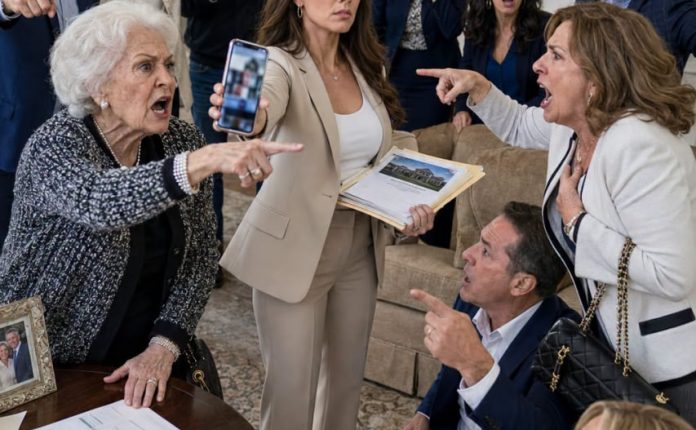
The next afternoon, I called Mom from my parked car outside work. Rain tapped the windshield. She answered, “Are you ready to be reasonable?” She believed I had surrendered. Instead I said, “I’ve made a decision. You, Dad, Vanessa, and Grant are no longer invited to the wedding.” The silence was extraordinary. She told me I could not uninvite my own mother. “I just did.” She accused me of doing this over a vacation. I told her it was about thirty years of being expected to vanish whenever someone else wanted something and about Dad trying to use money to pressure me.
“That money came with family expectations,” she snapped.
I almost thanked her for saying it plainly.
Then she said, “You’ll regret humiliating us.”
Not hurting us. Not losing us. Humiliating us. Her image mattered more than the relationship. I told her not to come and blocked all four numbers. For ten minutes I sat listening to rain, wondering whether I had destroyed my family. Then another thought came: what if the family had already been broken, and I had simply stopped pretending otherwise?
When I got home, Daniel’s parents were waiting with takeout and a check for $5,000 to replace the catering money my parents had withdrawn. I pushed it back. Susan pushed it toward me again. “We know you can cover it. That’s not the point.” Michael smiled and said, “We are not buying control. We’re feeding guests.” That sentence almost made me cry. In my family, gifts came with ledgers. Daniel’s parents helped because they wanted to help. I accepted.
Two days later, my grandfather Arthur arrived with his cane. He was eighty-one, stubborn, sharp, and incapable of wasting words. I told him the entire story over coffee. He interrupted only once to ask, “Thirty thousand dollars for a boat?” When I explained it was only part of the trip, he stared at the wall and said, “For thirty thousand dollars, that boat better come home with me.” Then he grew serious. Mom had called him and claimed I was having some kind of emotional breakdown. Grandpa said he told her the only breakdown he saw was hers.
Then he slid a $10,000 check across my table. I refused. He told me not to start. “You spent half your childhood trying not to inconvenience anybody,” he said. “I watched it happen longer than I should have. I should’ve said more years ago.” His voice cracked. I told him I would not take money because he felt guilty. “Good,” he said. “Take it because I love you.” He said I could use it for flowers or the photographer—anything that would make me smile later. Then he added one condition: “I’m walking you down the aisle.” I cried immediately.
That evening Grandpa went to my parents’ house without telling me. Aunt Patricia happened to be there and called afterward. Grandpa told Dad he had spent thirty years confusing cowardice with peacekeeping. When Mom tried crying, Grandpa told her to save the tears for someone who still believed them. Then Patricia warned me that Mom was no longer merely calling me selfish. She was telling relatives Daniel was controlling me. That changed everything. Mom was trying to damage my marriage before it had even begun.
Once I understood that, I stopped reacting emotionally and started documenting. I saved messages, dates, and screenshots Patricia forwarded. In one, Mom wrote, “Claire has changed since meeting Daniel. I’m worried she’s being isolated.” The claim was absurd. Daniel had encouraged me to see friends, call Grandpa, and keep trying with my parents long after I had wanted to stop. Mom was not confused. She was manufacturing a story. Daniel asked whether I wanted him to respond. I said no. I had finally learned that fighting on the battlefield Mom created was the fastest way to lose.
So we kept planning the wedding. Dress fittings, menus, transportation, seating charts—ordinary tasks became healing because no one demanded that I redesign my day around them. Susan came to my final fitting and cried when I stepped out in my simple ivory gown. For a moment, I imagined Mom beside her, criticizing the waist, complaining about the cost, or asking whether Vanessa could wear white. Then something surprising happened: I stopped wishing she were there.
Some relatives declined invitations because of the conflict. Others quietly said they were coming anyway. Patricia told me Mom was furious because I was not chasing her. Her boycott depended on me begging. Without that, she was simply missing her daughter’s wedding. Vanessa contacted me from a new number to ask whether I was really letting Grandpa walk me down the aisle “just to embarrass Dad.” I answered once: “Grandpa is walking me down the aisle because he loves me.” Grant emailed with the subject line “Final chance to act like an adult.” I filed it without reading.
The wedding morning arrived bright and cool. The venue overlooked a blue lake surrounded by trees turning gold. Grandpa arrived in a navy suit with his cane polished until it shone. The first row on my side held several empty seats—the places my parents and siblings would have occupied. I deliberately left them empty. Not as punishment. As truth. Those seats belonged to people who chose not to come.
When the music started, Grandpa offered me his arm. Halfway down the aisle he whispered, “Slow down. The old man would like to survive this.” I laughed through tears. Daniel’s face changed when he saw me, and suddenly the empty chairs no longer mattered. We said our vows under a white wooden arch while sunlight crossed the lake. At the reception, Grandpa gave a ninety-second toast: “Marriage is not about finding people who look perfect beside you. It’s about finding someone who stands beside you when life stops looking perfect.” Then he raised his glass to us.
Later, a cousin named Melissa approached with an envelope from Mom. Inside was a crumpled twenty-dollar bill and a note: “Maybe one day you’ll understand what being a real member of a family requires.” I read it twice, walked to a trash can beside the bar, and dropped in the note and the money. Daniel asked what it was. “Garbage,” I said. Then I took his hand and returned to the dance floor. That should have been the end.
Instead, one wedding photograph changed everything.
The photographer posted a preview the next morning: Grandpa and me walking down the aisle, laughing, with the empty family seats visible behind us. Daniel’s mother shared it. Patricia shared it. Cousins shared it. Soon people from our hometown began asking where my parents were. I said nothing. I was already on a short honeymoon with Daniel, and my phone stayed in my purse. Mom responded online with a vague post about “protecting your peace when adult children choose disrespect.”
This time Patricia had enough. She publicly replied that Mom had demanded I move a wedding scheduled almost a year earlier because Vanessa booked a $30,000 Bora Bora trip afterward and that Dad withdrew promised catering money when I refused. Screenshots spread before Mom deleted the post. Other relatives added their own memories of times I had been pushed aside for Vanessa or Grant. A woman from one of Mom’s charity committees asked whether the story was true.
I expected vindication. Instead I felt tired. Mom had spent years building a reputation around immaculate parties, charity work, and coordinated family photographs. The scandal was not simply that she missed my wedding; it was that reality collided with the person she publicly claimed to be. The consequences came quietly. Invitations slowed. Two charity committees asked her to step back from leadership. Friends became distant. According to Patricia, she started grocery shopping early to avoid people. Her carefully managed facade did not explode. It cracked, then crumbled.
Vanessa blamed me and accused me of weaponizing social media, even though I had posted nothing. Her Bora Bora trip went ahead two months later, but a tropical storm suspended marine activities and canceled the yacht portion. Some costs were recoverable; others were not because Vanessa had pushed the group toward cheaper insurance that did not cover several disruptions. Her friends blamed her. She blamed the charter company. By the time she returned, the friendships were fractured and thousands of dollars in disputed expenses remained on her credit cards.
Grant’s Aspen retreat also backfired. His company later investigated senior employees over undisclosed vendor hospitality. Grant was not accused of theft, but his name appeared in meeting and expense records because he had tried so hard to insert himself into that circle. He was placed on temporary leave while compliance reviewed his involvement. The status he had chased became a liability. When Grandpa told me Mom blamed me for all of it, I laughed. “The family started falling apart after your wedding,” she apparently said. I looked around the home Daniel and I had just moved into and answered, “No. The family started falling apart when I stopped holding it together.”
Then Grandpa told me Dad had moved out.