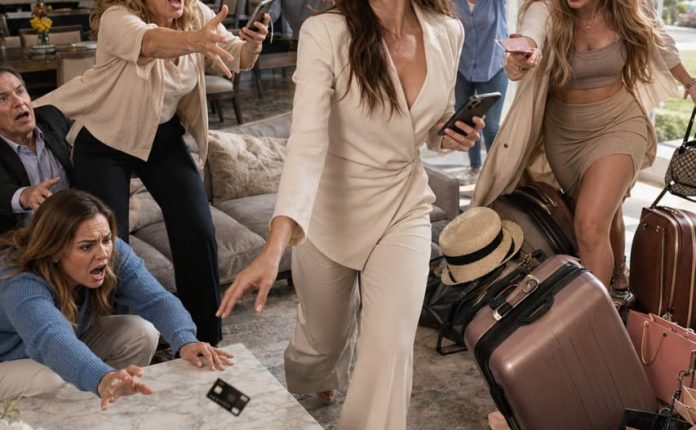
My sister announced I’d babysit her five kids every weekend for free in front of nearly everyone we knew. She didn’t ask. She assigned me. It happened at my father’s birthday cookout in his backyard in Columbus, Ohio. The grill was smoking, somebody’s country playlist was coming through an old Bluetooth speaker, and almost every folding chair Dad owned had been dragged onto the lawn.
I was thirty-four years old and the director of a private kindergarten. Five days a week, my world was already filled with spilled juice, missing mittens, scraped knees, parent conferences, staffing problems, and children who considered the word “no” the opening round of a negotiation.
My weekends were the only quiet part of my life. My sister, Brooke, apparently considered that an administrative error. “There he is!” she called when I walked through the side gate. “My free babysitter!” A few people laughed. I stopped with Dad’s wrapped birthday gift under one arm.
“I’m not your babysitter.” Brooke grinned as if I had made a joke. “My brother who babysits. Same thing.” Her five children were scattered around the yard. Mason and Eli were fighting over a football. Sophie was chasing bubbles. The twins were sitting under the picnic table feeding hamburger bun pieces to Dad’s dog.
I loved those kids. That was exactly why Brooke had gotten away with so much. Dad came over and hugged me hard enough to make the gift press against my ribs. “Daniel,” he said, “you look exhausted.” “Busy week.” “Playing with kids wearing you out?”
He laughed. I didn’t. That joke had followed me since high school. My father, Richard, had never considered early childhood education a serious profession. He treated my career like I had somehow failed to grow out of babysitting. Years earlier, when I told him I wanted to study education, he had laughed and said, “So you’re going to spend your life singing the alphabet?”
Brooke had laughed too. I got a scholarship anyway. Then a master’s degree. Then I became the youngest director my kindergarten had ever hired. Dad still told people I “worked with toddlers.” That afternoon, I planned to stay two hours. Give Dad his gift.
Eat something. Leave before somebody handed me a diaper bag. I had even rehearsed the boundary in my head. Not this weekend. I’m tired. I have plans. No. Simple words. But simple words had never been simple in my family. About an hour after I arrived, Dad climbed onto the little brick step beside the patio and tapped a fork against his glass.
“Everybody, listen up.” The conversations faded. Dad loved an audience. “First, thank you for coming. You all know family means everything to me.” I nearly laughed. In our family, “family means everything” usually meant someone was about to ask me for money. Dad pointed toward Brooke.
“My girl has been through a lot. Five children, and somehow she keeps going.” Brooke put one hand over her heart. A few relatives clapped. Her boyfriend, Chase, leaned against the fence drinking a beer. He had been “between opportunities” so long that employment had become something other people did.
Dad continued. “And Danny has been helping out like a good brother should.” I felt the warning before I heard the words. Brooke stepped forward. “Actually,” she said brightly, “we need to make it official.” My stomach tightened. She raised her lemonade. “Daniel is babysitting all five kids every weekend from now on.”
A few people laughed. Someone whistled. Brooke smiled wider. “For free, obviously.” I stared at her. She continued before I could answer. “He doesn’t have a wife, he doesn’t have kids, and he doesn’t have a life anyway.” That got a bigger laugh. Not everyone laughed.
I noticed Aunt Rebecca lower her cup. But enough people did. Enough that Brooke looked satisfied. Something cold moved through my chest. Not rage. Recognition. It was the same feeling I’d had at nine years old when Brooke took sixty dollars Grandma had given me for my birthday and Dad said, “She needs it more.”
The same feeling at thirteen when I delivered newspapers before school so Brooke could afford her cheer uniform. The same feeling at twenty-six when Dad called because Brooke needed help with rent. The same feeling three years earlier when I had walked into a car dealership and signed my name on a loan Brooke couldn’t qualify for.
I looked at my sister. Then my father. “No.” Brooke’s smile froze. “What?” “I said no.” The yard went quieter. Dad stepped down. “Daniel,” he said tightly. “Not here.” I almost smiled. “Here seems perfect. This is where you announced it.” Brooke rolled her eyes.
“Oh my God. Don’t be dramatic.” “Five kids every weekend isn’t dramatic?” “You’re good with children.” “That doesn’t make my free time yours.” Dad moved closer. I could smell charcoal smoke and the sharp cologne he had worn for as long as I could remember.
“Your sister needs help.” “She needs a babysitter.” “She needs family.” “Then Chase can watch his own children.” Chase pushed off the fence. “Watch it, man.” I looked at him. “That’s exactly what I’m suggesting you do.” Someone nearby coughed to hide a laugh.
Brooke flushed. Dad’s jaw tightened. “If you refuse your family when they need you,” he said quietly, “then don’t expect us to help you when you need something.” There it was. The threat I had heard in different forms my whole life. Do what we want or lose us.
I expected guilt. Instead, I felt strangely light. I smiled. “Deal.” Dad blinked. Brooke stared at me. They thought I was bluffing. What neither of them knew was that inside my work bag was a sealed envelope my attorney had prepared weeks earlier. And the first document inside it had Brooke’s minivan VIN printed across the top.
Brooke recovered first. She laughed loudly, but there was a nervous edge beneath it. “Deal? What does that even mean?” “It means exactly what Dad said.” I bent down and picked up my work bag from beside my chair. Dad watched me unzip it.
“What are you doing?” I pulled out the manila envelope. The yard had become so quiet I could hear grease popping on the grill. Aunt Rebecca was watching from near the fence. She was Dad’s older sister and one of the few people in our family who had mastered the art of noticing everything without becoming part of the circus.
I placed the envelope on the patio table. Brooke frowned. “What is that?” “The part of our family arrangement you never bothered to understand.” She groaned. “Are you seriously doing paperwork at Dad’s birthday?” “Yes.” I pushed the envelope toward Dad. “Open it.” His eyes narrowed.
He hated being told what to do, especially by me. But there were relatives watching, and walking away would have looked like fear. So he ripped the envelope open. Inside were several documents. He pulled out the first one. I watched the confidence disappear from his face line by line.
Brooke leaned over his shoulder. “What is it?” Dad didn’t answer immediately. “Dad?” He finally looked up at me. “This is the title for Brooke’s van.” “Yes.” Brooke snorted. “So?” “Read the owner’s name.” She reached for the page. Her expression changed. “Daniel Parker.”
She looked at me. “No.” “Yes.” “No, the van is mine.” “You drive it. You don’t own it.” Chase walked over. “What are you talking about?” I kept my voice calm. “When Brooke’s old car died three years ago, she couldn’t qualify for financing. Neither could you.”
His cheeks reddened. Brooke cut in. “You offered to help.” “I agreed to help.” “That’s the same thing.” “It isn’t.” I tapped the document. “The lender approved me. The financing is in my name. The vehicle title is in my name.” Brooke stared at Dad as though he could somehow change the paperwork through parental authority.
Dad shuffled the pages. “There’s more.” “There is.” He found the payment history. Three years. Thirty-six payments. Six hundred and twelve dollars every month. Every one from my account. Dad looked at me. “You’ve been paying this?” “Yes.” Brooke spoke quickly. “You said you’d take care of it.”
“I said I would help until you got stable.” “We have five kids!” “You had three when I signed for the van.” That silenced her. I continued. “You told me you’d refinance once your credit improved.” Chase folded his arms. “Things came up.” “Things have been coming up for three years.”
Brooke slapped a hand onto the table. “So this is what this is about? Money?” “No. It’s about expectations.” I looked around the yard. Some relatives suddenly found the grass fascinating. Others were staring openly. “You treat my weekends as yours. You treat my money as yours. You treat my car, apparently, as yours.”
Brooke scoffed. “Your car?” “It legally is.” Her face went pale. I could see the exact second the joke stopped being funny. Dad found the next page. “What’s this?” “A formal notice.” His eyes moved over it. My attorney, Rachel Morrison, had written it carefully.
No threats. No drama. Just terms. Brooke had ninety days to either refinance the van into her own name or begin making the payments herself under a documented repayment arrangement. If neither happened, I would reclaim the vehicle. Dad slammed the page down. “You’re taking a car from five children?”
“No.” “You know what happens if they don’t have transportation.” “I know exactly what happens. That’s why I paid for it for three years.” Brooke’s voice sharpened. “So you’re punishing my kids because you don’t want to babysit.” I stared at her. “No. I’m refusing to continue protecting two adults from every consequence of their choices.”
Chase stepped forward. “Careful.” I turned toward him. “Why?” His jaw worked. I had never seen him speechless before. Dad pointed at the notice. “This is cruel.” “It’s ninety days.” “She can’t refinance.” “Then she can make the payment.” “She can’t afford six hundred dollars a month.”
I glanced toward Brooke. She was wearing new designer sunglasses pushed onto her head. Three weeks earlier she had posted pictures from a weekend trip to Nashville. “Then maybe,” I said, “she should adjust her spending.” Brooke’s mouth fell open. “How dare you?” “How dare I what? Notice?”
Her voice rose. “You think you’re better than us because you have some fancy director job.” There it was again. My job. The thing they mocked when it suited them and exploited when they needed free child care. I almost laughed. “My job is apparently only real when the paycheck solves your problems.”
Dad leaned close. “You’re embarrassing your sister.” “No.” I looked straight at him. “She embarrassed me in front of everyone. You supported her.” “I was making a point.” “So am I.” Brooke’s eyes had started shining with angry tears. Not hurt. Panic. “What am I supposed to do with five kids?”
“Parent them.” “You don’t understand how hard it is.” “I work with families every day. I understand exactly how hard children can be.” “You don’t have any.” “No.” I paused. “And that does not make my life empty.” For once, nobody laughed. Aunt Rebecca set her cup down.
“Well,” she said quietly, “he’s right.” Dad turned. “Stay out of this.” Rebecca gave him a flat look. “You made it public.” That shut him up for a second. I picked up my bag. Brooke grabbed the paperwork. “This isn’t over.” “It is for today.”
She followed me toward the gate. “Daniel!” I turned. “You’ll regret doing this.” Dad stood behind her. “When you need this family, remember today.” I looked at both of them. Then at the relatives who had laughed when Brooke said I didn’t have a life.
“I will.” I opened the gate. Dad called after me. “Don’t expect help from me.” I gave him the same answer. “Deal.” My hands didn’t start shaking until I was inside my car. I sat behind the wheel, listening to my own breathing and the distant sound of Brooke yelling in the backyard.
Then my phone buzzed. A message from Aunt Rebecca. “You did the right thing. But Daniel, there’s something else about that van you need to know.” I stared at Rebecca’s message for several seconds. Then I called her. She answered in a whisper. “Are you still outside?”
“Yes.” “Drive home first.” “Why?” “Because your father is watching from the gate.” I checked the mirror. She was right. Dad stood near the side fence, arms crossed, staring directly at my car. I started the engine. “I’ll call you when I’m home.”
My apartment was twenty minutes away, in a quiet complex near Worthington. By the time I got there, the sky had darkened and rain was tapping softly against the windshield. Rebecca called before I even reached my front door. “What’s going on?” She exhaled.
“A few weeks ago, Brooke told me she was planning to sell the van.” I stopped in the hallway. “What?” “She said Chase knew somebody who could get them a newer SUV.” “She can’t sell it. Her name isn’t on the title.” “I know.”
“Does she?” “She apparently thought the title was in a folder at your father’s house.” I closed my eyes. Of course she did. Brooke had driven the van for so long that she had rewritten the story in her head. Help became ownership. My payments became invisible.
My signature became irrelevant. Rebecca continued. “She also said something about using whatever money was left over for a vacation.” I leaned against the wall. “What vacation?” “I don’t know. She stopped talking when I asked questions.” A slow, ugly feeling settled in my stomach.
The babysitting announcement suddenly made more sense. This had never been only about weekends. They had become so accustomed to treating my resources as family property that Brooke may have believed she could trade away a vehicle I legally owned. “Why didn’t you tell me earlier?”
“I didn’t realize the van was yours.” Fair. Until that afternoon, almost nobody did. “Thanks for telling me.” “Daniel?” “Yeah?” “Your father has done this your whole life.” I didn’t answer. She spoke gently. “You keep waiting for him to finally notice what it costs you.”
My throat tightened. “I know.” “No,” she said. “I don’t think you did until today.” After we hung up, I stood in my kitchen without turning on the lights. Rain streaked the windows. The refrigerator hummed. My apartment was silent. For years, that silence had felt like evidence against me.
Brooke had a family. Dad had a house where people constantly came and went. I had a quiet apartment. No wife. No children. No chaos waiting for me after work. My family treated those facts like blank spaces. But standing there in the dark, I realized silence could also be something I owned.
The next morning, I called my attorney. Rachel answered on the second ring. “How did the birthday party go?” “You knew it was going to be bad.” “I assumed the documents wouldn’t improve the cake.” Despite myself, I laughed. Then I told her what Rebecca had said about the attempted sale.
Rachel stopped joking. “Okay. That matters.” “What do we do?” “You already gave notice. Now we document everything.” “I don’t want to take the van tomorrow.” “Good. That would complicate things. But do not sign anything. Do not give them the title. And do not agree verbally to any transfer.”
“I won’t.” “And Daniel?” “Yes?” “Stop thinking of documentation as aggression.” That hit harder than I expected. My family had trained me to believe that asking for clarity was hostile. Receipts were hostile. Written agreements were hostile. The only acceptable arrangement was trust. Their version of trust meant I gave and they remembered whatever version benefited them.
Rachel sent me a formal email summarizing the ninety-day deadline. I forwarded it to Brooke. Then I sent one separate message. “I am not available for weekend childcare starting immediately. Please make other arrangements.” Her reply came almost instantly. “You’re serious?” “Yes.” “What am I supposed to do Saturday?”
“Hire someone.” “You know what sitters cost for five kids?” “Yes.” “You literally work with children.” “Yes.” “So why are you acting like this?” I stared at that message. Why are you acting like this? As if thirty-four years of saying yes had been my natural condition.
As if the first no was evidence of illness. I typed: “This isn’t a debate.” Then I muted the conversation. That Friday, my phone rang while I was eating dinner. Brooke. I let it ring. Again. Again. Then a text. “Drop-off at six.” I replied:
“No.” Five minutes later: “They already packed.” “No.” “Daniel, seriously.” “No.” Then Dad called. I let it go to voicemail. His message began with my full name, the way it always did when he wanted me to feel twelve. “Daniel Parker, you need to stop this nonsense. Your sister is overwhelmed. You are tearing this family apart because your feelings got hurt at a barbecue.”
I saved the voicemail. Not because I planned to use it against him. Because I knew myself. I knew that in a week, maybe two, guilt would start sanding the edges off what happened. I would remember Brooke crying instead of Brooke laughing. Dad saying “family” instead of Dad threatening to abandon me.
So I saved the evidence. Saturday morning, I woke at eight. No children pounding on my door. No backpacks. No sticky hands. No cartoons blaring from the television. I made coffee and sat on my balcony. For the first time in years, I had nowhere I was required to be.
At nine, my phone lit up with a photograph from an unknown number. It showed Brooke’s five children standing on Dad’s porch with overnight bags. Under it was one sentence. “Since you won’t help, your father had to cancel his plans.” I stared at the picture.
Then another message arrived. This one from Dad. “I hope you’re enjoying yourself.” I looked down at my coffee. For the first time in my life, I was. And apparently, that made me the villain.