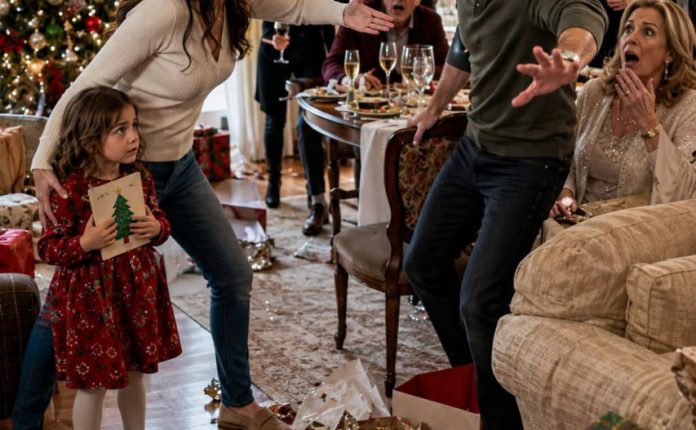
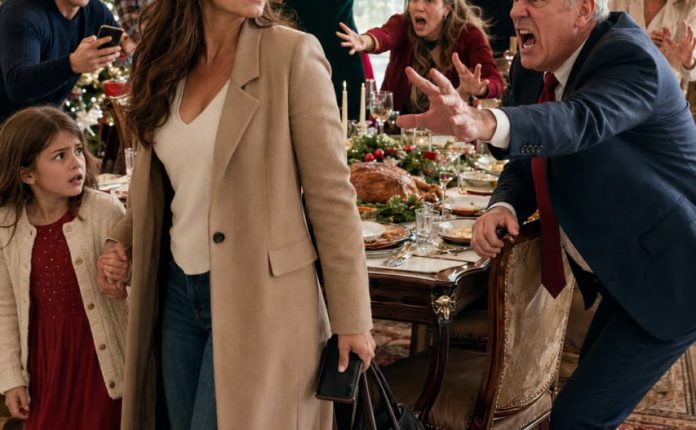
The bank manager arrived at sunset with a foreclosure notice in her hand and my name printed across the top. My nephew was laughing. He stood at the edge of my driveway, leaning against a rented black Cadillac, holding his phone sideways so he could record every second of what he apparently believed would be my humiliation.
“Say goodbye to the lake house, Uncle Frank,” he called. “It’s mine now.” A few neighbors had already stepped onto their porches. Up here on Lake Mercer in northern Michigan, people notice when a bank vehicle stops in front of a house that has belonged to the same man for three decades.
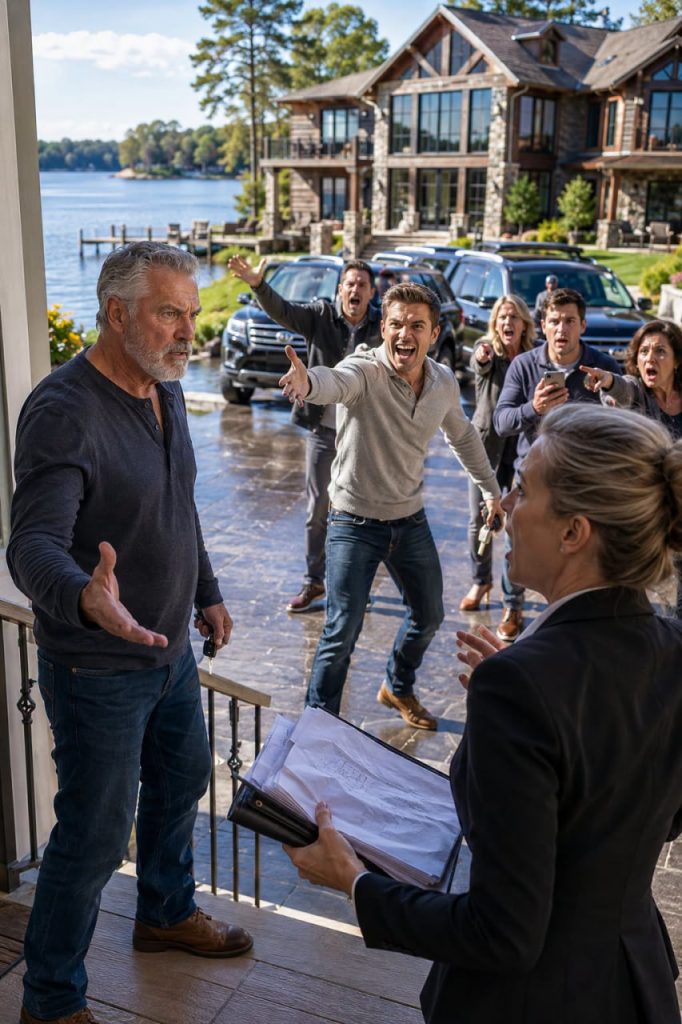
I did not answer my nephew. Instead, I looked at the woman on my porch. Her name was Susan Palmer. She wore a navy blazer despite the September warmth, and the papers in her hand fluttered slightly in the wind coming off the lake. She looked uncomfortable. That was important.
People carrying routine paperwork usually look bored. Susan looked nervous. I glanced once toward the water, where the sinking sun had turned the surface copper, then back at her. “Before you hand me that,” I said, “could you tell me who the county lists as the sole occupant of record for this property?”
Her eyes shifted. My nephew’s laughter stopped. “And,” I continued, “could you tell me whether that occupancy disclosure was filed before or after the loan secured against this house?” Susan’s fingers tightened around the papers. She flipped through several pages. Then she went pale.
That was when my nephew finally pushed himself away from the Cadillac. “What is he talking about?” Susan did not answer him. She stared at one page, then another. “Mr. Carter,” she said quietly to me, “I think we may have a serious problem.”
My name is Franklin Carter. I was sixty-eight years old that evening, a retired structural inspector, and I had lived in that cedar-sided lake house for eleven years full-time, though my wife, Evelyn, and I had started building it nearly thirty years earlier.
Evelyn had picked the lot. I had argued for one farther up the hill because drainage would be better. She had stood between two white pines, looked at the water, and said, “Frank, if we’re going to spend our lives somewhere, I want to see the lake from the kitchen.”
She won. She usually did when she was right. Cancer took her six winters before the foreclosure papers arrived. Afterward, the house changed. Same cedar walls. Same stone fireplace. Same squeaky third stair. But every room seemed larger because only one person was moving through it.
For months I still reached across the bed in my sleep. For years I sometimes caught myself starting a sentence before remembering there was nobody in the kitchen to hear the end of it. I never had children. Evelyn and I had tried—doctors, specialists, procedures, disappointments.
Eventually, we built a life around being the two of us. So when my younger sister, Margaret, died unexpectedly eight years before that September evening, her only son became the closest thing I had to one. His name was Logan.
He was twenty-two when his mother died. He showed up at my house with two garbage bags full of clothes, a cracked laptop, four hundred dollars to his name, and enough anger to fill every room Evelyn’s absence had left empty. I opened the door. No conditions. No lectures.
“You stay as long as you need,” I told him. He stayed nearly three years. I gave him my old pickup so he could get to community college. I paid two semesters of tuition. When he quit halfway through the second year, I told myself he was still grieving.
When he bounced between jobs, I helped with rent. When he needed money for a certification program he never completed, I wrote the check. Every time someone suggested I was doing too much, I gave the same answer. “He’s Margaret’s boy.” That sentence excused more than it should have.
Four years before the foreclosure attempt, Logan married Vanessa Cole, a real estate agent from Grand Rapids. At first, I liked her. Vanessa had a way of entering a quiet room and making it feel occupied. She would bring wine, rearrange food on my refrigerator shelves, and complain that I was not eating enough vegetables.
She told me I should replace my old recliner because it made the living room look like “a hunting lodge from 1987.” I mistook familiarity for affection. That was my first mistake. My second happened on a rainy Thursday in April, when Logan and Vanessa came to dinner.
They barely touched the pot roast. Halfway through the meal, Logan folded his hands on my kitchen table and said, “Uncle Frank, we’re in trouble.” The way he said it made me put down my fork because, for the first time in years, my nephew looked exactly like the frightened twenty-two-year-old boy who had once stood on my porch holding two garbage bags.
I did not know it yet, but the performance had already begun, and I was about to sign away the house Evelyn and I had built together. Rain tapped steadily against the kitchen windows while Logan explained how close he and Vanessa supposedly were to losing everything.
Vanessa sat beside him with both hands wrapped around a coffee mug she never drank from. Her eyes were red. At the time, I thought she had been crying. Looking back, I am not sure. “Her brokerage got hit with a lawsuit,” Logan said. “Clients left. Commissions dried up.”
Vanessa lowered her eyes. “We’re three months behind on the mortgage.” I felt something tighten in my chest. “How bad?” Logan exhaled. “Bad enough that the bank is talking foreclosure.” He said they could lose their house, their vehicles, almost everything they owned.
Then he mentioned Vanessa’s daughter, Lily. Lily was ten then, a skinny kid with freckles across her nose who spent Thanksgiving afternoons sitting beside me at the dining table drawing horses while the adults talked. Her biological father lived out of state and saw her irregularly. I had grown fond of her.
Logan knew that. “If we lose the house,” he said, “everything with Lily gets complicated.” That sentence did exactly what he intended it to do. I stopped thinking like an inspector. I started thinking like family. “What do you need?”
Logan did not ask for money. That should have bothered me immediately. I had savings. Not millions, but enough to help them through several mortgage payments if the emergency was genuine. Instead, he leaned forward. “There’s another way.” Vanessa finally spoke. “It wouldn’t cost you anything.”
Logan called it a “family equity bridge.” He said it slowly, as if it were a familiar financial term I simply had not encountered. According to him, the lake house could temporarily be transferred into a holding arrangement under his control. He could then use some of the equity as collateral to refinance their existing debt.
“You’d still live here,” he said. “Nothing changes. You still pay your property taxes like normal. We’re not selling anything.” Vanessa added, “It’s really just paperwork.” Logan nodded. “Families do this all the time.” I remember watching rainwater crawl down the window behind him.
Something felt wrong. I had spent more than thirty years inspecting bridges, commercial towers, parking structures, and public buildings. Steel gives warnings. Concrete gives warnings. People do too. Sometimes it is barely visible—a hesitation, a phrase used too carefully, an explanation polished beyond necessity. Logan’s explanation was very polished.
“Why not just let me loan you the money?” I asked. For half a second, nobody answered. Then Vanessa smiled. “That could create tax complications.” Logan jumped in immediately. “And we need to move fast.” There it was. Urgency. I should have stopped.
Instead, I pictured Lily being told she might have to leave her school. I pictured Margaret, my sister, sitting beside me at our parents’ kitchen table forty years earlier. Before she died, she had never actually asked me to care for Logan. But grief has a way of inventing promises. I had convinced myself she had.
Four days later, Logan returned with a notary. The young man introduced himself as Mason Reed. He could not have been more than thirty. He smelled faintly of cigarette smoke despite chewing peppermint gum hard enough that I could hear it click against his teeth.
He kept looking at Logan before explaining anything to me. That bothered me too. The documents were thick. Logan had placed small yellow tabs beside signature lines. “Initial there.” “Sign here.” “This one just confirms residency.” “That one is estate language.” I skimmed pages. I did not read them.
There is a difference. A dangerous one. At one point, I stopped on a page filled with dense legal language. “Should Gerald look at this?” Gerald Bishop was an old college friend who had practiced property law before retiring. Logan’s expression did not change, but his hand stopped moving.
Only for a second. Then he laughed. “You can absolutely have him review it. But the refinancing deadline is Monday, and his cabin is what, an hour away?” Vanessa touched my arm. “Frank, we would never do anything to hurt you.” That sentence decided it.
I signed. Mason stamped the final document. Logan hugged me so hard his chin bumped my shoulder. “You saved us.” For the next two months, nothing happened. My life went on. I planted tomatoes. I repaired a loose board on the dock. I took my fishing boat out twice without catching anything worth keeping.
Then one Saturday, my friend Harold Quinn stopped me in the hardware store. “Frank,” he said, “Logan finally buy himself that Bayliner?” I frowned. “What Bayliner?” Harold smiled. “That new twenty-two-footer at the marina. Saw him putting it in yesterday. Beautiful boat.”
My stomach went cold. “How new?” “Brand-new.” I drove home without buying the screws I had gone there for. Three days later, Lily’s school accidentally called me because my number was still listed as an emergency contact. The secretary apologized and mentioned that Lily had transferred.
“To where?” “The Langford Academy in Grand Rapids.” I knew the school. Private. Expensive. Very expensive. I thanked her, hung up, and sat staring at the kitchen wall. People losing everything do not buy new boats. They do not suddenly pay private-school tuition.
And when the numbers stop matching the story, there are only two possibilities. Either the numbers are wrong, or the story is. I did not call Logan. That surprised even me. Twenty years earlier, I would have driven straight to Grand Rapids and demanded an explanation.
But thirty years inspecting structural failures had taught me something anger never does: never strike a damaged structure before you understand which part is carrying the load. So I waited. The following Tuesday, I drove to Logan and Vanessa’s house.
I knew Logan would be away at what he called his “consulting job,” though he had never managed to explain what he consulted on. I brought a birthday card for Lily as an excuse. Vanessa’s SUV was not there. I knocked twice. Nothing. I walked around the side of the house.
The gate was unlocked. I should tell you I knew I was crossing a line. I crossed it anyway. Through the kitchen window I saw white marble countertops that had not been there six months earlier. A built-in wine refrigerator occupied one side of the island. New pendant lights hung from the ceiling.
I moved toward the garage. Through a narrow window I saw the trailer. On it sat Harold’s Bayliner. Beside the boat was a Cadillac Escalade with temporary plates. For a moment, I heard nothing but my own breathing. Not because I cared whether Logan owned a boat.
Because suddenly I remembered something. That rainy Thursday, he had never asked me for money. Not once. He had wanted the deed. I drove home with both hands locked around the steering wheel. Every sentence from that dinner replayed differently. Temporary. Formalities. Family equity. Nothing changes. Trust us.
That evening I sat at my kitchen table with a cup of black coffee cooling between my hands. Evelyn’s empty chair was across from me. For six years, loneliness had made me softer. Not kinder. I had always been kind. Softer meant easier to pressure.
Easier to convince. Easier to make afraid that questioning somebody was the same thing as insulting them. Sometime after midnight, something in me became very quiet. The next morning, I called Gerald Bishop. He answered on the fourth ring. “Frank?” “I need you to look at something.”
There must have been something in my voice because he stopped joking. “What happened?” “I’m not sure yet.” Gerald lived in a small cabin two lakes west of mine. By noon, we had every document spread across his dining table. He put on his reading glasses and began.
I sat across from him. Ten minutes passed. Then twenty. At first, I watched him. Eventually, watching him became worse than waiting, so I stared through the window instead. Pine branches swayed over the water. Somewhere outside, a woodpecker hammered at a tree.
Finally, Gerald removed his glasses. “Frank.” I turned around. His voice had changed. “This is not an equity bridge.” My mouth went dry. “What is it?” He slid one page toward me. “A quitclaim deed.”
I looked at it. The legal language might as well have been another language entirely. Gerald tapped one paragraph. “You transferred ownership of the property to a limited holding company.” “Whose?” “You already know.” I did not answer. He pulled another page.
“The company was registered by Logan five weeks before you signed.” Something inside me seemed to drop several inches. “So he owns the lake house?” “On paper?” Gerald hesitated. “Yes.” I looked around his cabin.
For a strange second, I noticed ridiculous things: the steam rising from his coffee, a crack in the leather chair beside the fireplace, a fly tapping repeatedly against the window. Anything except the sentence I had just heard. My house. Evelyn’s kitchen. Our dock. The white pines she had chosen. I had signed them away.
Then Gerald said, “There’s something else.” I turned slowly. He was reading page four again. “What?” “This reference.” He pointed to a section labeled Supplemental Estate Documentation. “It mentions an insurance policy.” I frowned. “What insurance policy?”
“That’s what I’m wondering.” I had ordinary life insurance when I was working. That policy had expired years earlier. Gerald made several calls. Most went nowhere. Then his old professional credentials got him transferred to someone willing to confirm enough details to make his face harden.
He put the phone down. “What?” Gerald stared at me. “A new life insurance policy was opened six weeks ago.” I felt my fingertips go cold. “How much?” “Four hundred thousand dollars.” I knew what I was going to ask before the words came out.
“Who gets it?” Gerald’s silence answered first. “Logan.” I stood. My chair scraped loudly across the wood floor. “I never opened that policy.” “I know.” “I never signed an insurance application.” “I know.” The application had supposedly been notarized by Mason Reed, the same man who had sat in my kitchen.
I walked to the window. For several seconds I could not speak. Then a much worse question came to me. “What happens,” I said, “if I die soon?” Gerald did not answer immediately. That frightened me more than if he had.
I turned around. His eyes were fixed on mine. “Frank, from this moment forward, you don’t confront anybody.” And that was when I realized we were no longer talking about stolen property. We were talking about why my nephew might have been financially interested in me not being around to reclaim it.