Walter had been dead for eleven days when I learned that, according to his will, my husband of sixty-nine years had left me absolutely nothing.
Not our house.
Not his investments.
Not his collection of antique watches.
Not even the battered fishing boat he had spent forty summers promising to repair properly.
Nothing.
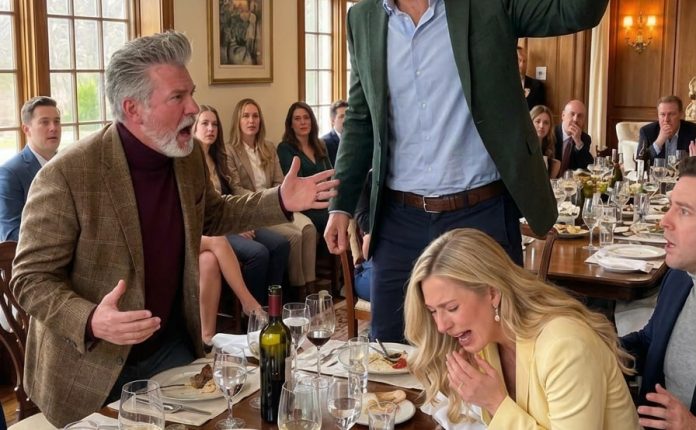
I sat at the end of a polished mahogany conference table in the offices of Franklin, Mercer & Lowe, listening as Walter’s longtime attorney, Miriam Lowe, read through the document with the grave patience of someone who understood that every sentence might rearrange a family.
Our three children sat around me.
Margaret, sixty-seven, held my hand beneath the table.
Thomas, sixty-four, sat directly across from us in an expensive navy suit, his wife, Celeste, beside him.
Peter, our youngest at sixty, stared at the carpet as if grief had made eye contact unbearable.
Walter’s younger sister Ruth sat near the window.
Two of our five grandchildren attended in person. The others had joined through attorneys or secure video because Walter’s estate was substantial enough that even mourning had acquired paperwork.
Miriam continued.
Walter left generous gifts to the university where we met, the cardiac hospital that treated him, and three local charities he had supported quietly for decades.
The cabin at Lake Horner went to Ruth.
That made sense.
They had learned to swim there together as children.
His personal investment accounts were divided among our children and grandchildren.
A scholarship fund would receive several million dollars.
Then Miriam stopped.
She adjusted her glasses.
I remember noticing that detail because my mind had not yet understood why the room suddenly felt colder.
“To my wife, Eleanor Grace Halstead,” she read, “I leave no property, financial assets, securities, business interests, vehicles, collections, or personal funds through this last will and testament.”
No one moved.
I waited.
Surely there was another sentence.
Miriam turned the page.
There wasn’t.
I looked at her.
“I’m sorry?”
Her expression was unreadable.
“That is what the will states.”
Margaret squeezed my hand.
Thomas leaned back slowly.
Celeste’s eyebrows rose.
Peter finally looked up.
I felt strangely embarrassed, as if Walter had humiliated me publicly and everyone was pretending not to notice.
“Nothing?” I asked.
Miriam folded her hands.
“Through this will, nothing.”
Those last four words barely registered.
My mind was filled with Walter’s face.
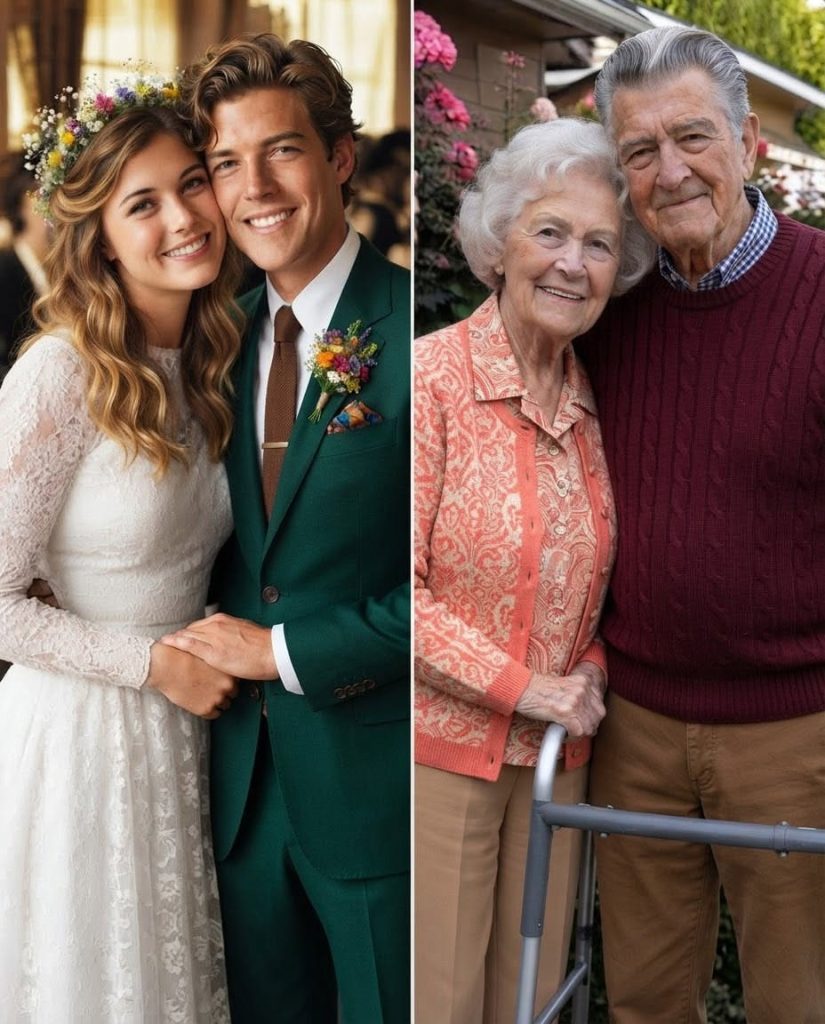
Walter at twenty-one, waiting outside the university library with two cups of terrible coffee.
Walter at twenty-three, fumbling our wedding vows because he was crying harder than I was.
Walter at thirty-eight, building bunk beds after we discovered Peter had tried climbing into Thomas’s crib despite being far too old for such nonsense.
Walter at eighty-nine, sleeping beside me with one hand resting on the blanket between us.
Sixty-nine years.
And nothing.
Thomas cleared his throat.
“Dad must have had his reasons.”
Margaret’s head snapped toward him.
“Thomas.”
“What? He was meticulous.”
“He was also married to Mother for almost seventy years.”
“I know that.”
“Then don’t talk about her like she’s an administrative detail.”
Celeste touched Thomas’s sleeve.
“Margaret, nobody is attacking Eleanor.”
The way she used my first name irritated me immediately.
Celeste had been married to my son for thirty-eight years and had spent at least thirty-seven of them speaking to me as though I were a charming but outdated piece of furniture.
I looked at Miriam.
“Did Walter explain why?”
“Yes.”
Everyone went silent.
Miriam reached beneath the stack of documents and removed a cream-colored envelope.
My name was written across the front.
Eleanor.
Walter’s handwriting.
I knew every curve.
Every uneven capital letter.
His arthritis had worsened during his final year, making his penmanship shakier, but I would have recognized it among a thousand samples.
Miriam slid the envelope toward me.
“He instructed me to give you this only after the will had been read in full.”
Thomas leaned forward.
“What does it say?”
Miriam looked at him.
“It is addressed to your mother.”
His face tightened.
“Obviously, but if it concerns the estate—”
“It concerns Eleanor.”
Margaret almost smiled.
I touched the envelope.
For several seconds, I could not bring myself to open it.
Walter had written thousands of notes during our marriage.
Shopping lists.
Birthday cards.
Bad poetry.
Apologies left beside the coffee pot after arguments.
But this was the first letter he had written knowing he would be dead when I read it.
I broke the seal.
Four handwritten pages rested inside.
The first words made my heart stop.
My darling,
This was always part of the plan.
Now I need to tell you the truth.
I stopped reading.
Margaret whispered, “Mom?”
“I’m fine.”
I was not.
I continued.
If Miriam has followed my instructions, everyone has now heard that my will leaves you nothing. I imagine Thomas looked startled, Margaret became furious, Peter stared at the floor, and Ruth probably said something inappropriate under her breath.
Despite myself, I looked toward Ruth.
She covered her mouth.
“I did,” she admitted.
A small ripple of laughter moved through the room.
Even I smiled.
Walter was still Walter.
Then the letter changed.
Do not be frightened by what you heard. I have not left you unprotected. Quite the opposite. The will leaves you nothing because there is nothing of mine that you need from it.
Eleanor, I cannot leave you what already belongs to you.
My fingers went cold.
I read the sentence again.
Then again.
Thomas leaned forward.
“Mother?”
I ignored him.
Walter continued.
There are things about our finances I should have explained years ago. I told myself I was protecting you from complexity, then from stress, then from one final ugly fight. Those excuses became cowardice. For that, I am sorry.
Miriam knows what must happen next.
Please trust her.
And please, for the next twenty-four hours, do not tell Thomas what this letter says.
I stopped breathing.
The conference room disappeared around me.
I looked across the table at my middle son.
Thomas was watching me closely.
“What?”
I folded the letter.
Nothing about his face changed.
That frightened me.
“Mother, what did Dad write?”
I placed the pages back inside the envelope.
“He said he loved me.”
Thomas frowned.
“That’s all?”
“No.”
“What else?”
“Thomas.”
Margaret’s voice sharpened.
“She doesn’t owe you a report.”
Celeste sat straighter.
“If Walter’s letter materially changes the distribution, all beneficiaries should know.”
Miriam answered before I could.
“No.”
Celeste blinked.
“No?”
“Mrs. Halstead’s private correspondence is not part of the probate record.”
Thomas looked at Miriam.
“You’re being unnecessarily secretive.”
Miriam’s expression remained pleasant.
“I have spent forty-three years being paid for exactly that.”
Ruth laughed.
Thomas did not.
The meeting ended twenty minutes later.
I remember almost none of it.
People signed acknowledgments.
Miriam explained timelines.
Margaret argued with Thomas in the hallway.
Peter hugged me for a long time without speaking.
Celeste asked whether I needed someone to stay at the house.
I said no.
Then Thomas insisted.
“You shouldn’t be alone tonight.”
“I have been alone for eleven nights.”
“That’s different.”
“How?”
“You’ve had time to process.”
I stared at him.
“Your father died eleven days ago.”
His face softened.
“I didn’t mean—”
“I know.”
That was the strange cruelty of grief.
Everyone expected you to remain yourself while half your habits had become useless.
I still woke at six and reached toward Walter.
Still bought two pears.
Still turned toward his chair when the evening news began.
Eleven days was not time to process sixty-nine years.
It was barely time to understand why the house sounded wrong.
Miriam touched my elbow.
“Eleanor, I need you to remain a few minutes.”
Thomas noticed immediately.
“Why?”
“Administrative matters.”
“I can wait.”
“No,” Miriam said.
His eyes narrowed.
“Why not?”
“Because they concern your mother.”
Something passed across his face.
Not anger.
Calculation.
I had seen that expression before.
Thomas had possessed it as a child whenever he was deciding whether the punishment for taking a second cookie was worth the cookie itself.
Suddenly Walter’s warning returned.
Do not tell Thomas.
My stomach tightened.
“I’ll call you tomorrow,” I told him.
He kissed my cheek.
“First thing.”
Celeste hugged me.
Her perfume lingered after they left.
Peter followed.
Margaret remained.
“Mom, I’m staying.”
Miriam looked at me.
I remembered the letter.
Trust her.
“It’s all right.”
Margaret frowned.
“Are you sure?”
“No.”
That made her smile sadly.
“But I need to hear this alone.”
She kissed my forehead.
“If you need me at two in the morning, I’m answering.”
“You never answer before eight.”
“I will now.”
Ruth squeezed my shoulder and left with her.
When the door finally closed, Miriam locked it.
That unsettled me more than anything else had.
She returned to the table carrying a black leather case.
“What did Walter do?”
Her expression softened.
“He prepared.”
“For what?”
“For today.”
She opened the case.
Inside were legal documents.
Thick ones.
Color-coded tabs.
Corporate seals.
A flash drive.
A small brass key.
And another envelope.
I stared.
“Miriam, I’m ninety-one years old. I’m grieving. Please don’t make this theatrical.”
She nodded.
“Fair.”
Then she slid the first document toward me.
“Walter’s will leaves you nothing because almost none of the assets people associate with Walter were actually part of his probate estate.”
“What does that mean?”
“It means he transferred ownership years ago.”
“To whom?”
“You.”
I stared at her.
“No.”
“Yes.”
“Miriam, I know what I own.”
She gave me a look that made me feel eighty years younger and completely foolish.
“Do you?”
Apparently not.
She opened a trust agreement.
THE ELEANOR G. HALSTEAD FAMILY TRUST.
Created twenty-seven years earlier.
I recognized my signature.
“You signed this in 1999.”
“I signed dozens of papers when Walter reorganized the company.”
“Yes.”
“You’re telling me this was mine?”
“From the beginning.”
I turned pages.
Properties.
Shares.
Investment partnerships.
Commercial buildings.
Patents.
Land.
“Why didn’t I know?”
“You knew pieces.”
“That is not the same thing.”
“No.”
Anger began moving beneath my grief.
Walter had promised we would never hide money from each other.
We made that promise in 1961 after a disastrous year when our checking account dropped below twelve dollars and neither of us admitted how frightened we were.
“How much?”
Miriam hesitated.
I hated that.
“How much belongs to this trust?”
“At current valuation?”
“Yes.”
“Approximately ninety-two million dollars.”
I laughed.
Not because anything was funny.
Because my brain rejected the number.
“Ninety-two?”
“Approximately.”
“That’s absurd.”
“Walter used the same word.”
“I thought our total net worth was around twenty million.”
“Your jointly visible assets were.”
I looked at the papers.
“Where did ninety-two million dollars come from?”
“Halstead Precision Systems.”
My heart skipped.
The company.
Walter and I had built it together.
At least that was how I remembered it.
The public version had changed over decades.
Walter founded Halstead Precision in a rented garage.
Walter built the company.
Walter took risks.
Walter became an industrial pioneer.
Articles rarely mentioned that I handled payroll, suppliers, inventory, and early product designs while raising three children.
I stopped correcting people eventually.
Miriam turned another page.
“Your original ownership stake was fifty-one percent.”
I stared.
“What?”
“Walter retained forty-nine.”
“That cannot be right.”
“It is.”
“He always said the shares were equal.”
“They were supposed to be.”
“Then why fifty-one?”
Miriam smiled faintly.
“Walter said your first valve-regulation design saved the company in 1967. He considered the extra two percent interest.”
I covered my mouth.
That ridiculous man.
“He never told me.”
“He assumed you knew.”
“I absolutely did not.”
Miriam nodded.
“That seems to be a recurring theme.”
Anger returned.
“You’re allowed to say he behaved like an idiot.”
“I was his attorney.”
“He’s dead.”
“He was occasionally an idiot.”
“Thank you.”
For half a second, the room felt lighter.
Then Miriam removed the flash drive.
“There is another reason Walter structured everything this way.”
Thomas.
I knew before she said his name.
“Your son approached Walter four years ago about transferring management control of the trust.”
My throat tightened.
“Why?”
“He claimed you were beginning to show cognitive decline.”
I stared at her.
“What?”
“He said you were forgetting appointments.”
“I forget appointments.”
“So do I.”
“He said you had become confused about finances.”
“I hate online banking.”
“So does half the country.”
“He said you had become vulnerable to manipulation.”
I almost laughed.
“By whom?”
Miriam looked at me.
“Margaret.”
I felt physically sick.
Thomas had accused his own sister?
“Why?”
“He said she was positioning herself to influence your inheritance.”
“That is insane.”
“Yes.”
“Did Walter believe him?”
“No.”
Relief came so quickly it hurt.
“Then why didn’t he tell me?”
“Because he began investigating.”
The word landed heavily.
“Investigating what?”
“Thomas.”
I whispered my son’s name.
Miriam plugged the drive into her laptop but did not open anything.
“Walter discovered irregular transfers from a company subsidiary Thomas manages.”
“How much?”
“We don’t know precisely.”
“How much do you know?”
“Potentially several million dollars.”
My hands began shaking.
“No.”
“Eleanor—”
“No.”
Thomas had worked at Halstead Precision for thirty-nine years.
He started in shipping.
Then sales.
Then operations.
Walter never handed him anything automatically.
Thomas complained about that for decades.
Eventually, he became executive vice president.
He had a good salary.
Stock options.
A beautiful house.
Everything.
“He wouldn’t steal from us.”
Miriam’s silence was answer enough.
I stood.
Too quickly.
The room tilted.
She came around the table.
“I need air.”
“I’ll open the window.”
“No.”
I pressed both hands against the table.
“I need my husband.”
That ended whatever professionalism she had been using to protect me.
Miriam’s eyes filled.
“I know.”
“I need him to explain this.”
“I know.”
“He was supposed to be here.”
My voice broke.
“Sixty-nine years and then he leaves me with this?”
Miriam squeezed my hand.
“He wanted to tell you.”
“When?”
“He tried.”
“When?”
“Three weeks before he died.”
I remembered.
Walter had been in the hospital.
He asked me whether I was afraid of being alone.
I thought he meant death.
I became angry.
Told him not to talk as though he were leaving.
He smiled.
Changed the subject.
“I wouldn’t listen.”
“You were scared.”
“So was he.”
“Yes.”
I sat again.
For a long time, neither of us spoke.
Then I unfolded Walter’s letter.
At the bottom, beneath his signature, was a final handwritten line I had not noticed.
One more thing, my darling.
Whatever you discover about Thomas, remember that being his mother does not require becoming the place where he hides from consequences.
My eyes filled.
Walter knew me too well.
I would forgive almost anything from my children.
Perhaps Thomas had counted on that.
“What happens now?”
Miriam picked up the brass key.
“Walter rented a private records vault six months ago.”
“Why?”
“To preserve originals.”
“Of what?”
“Evidence.”
My stomach clenched.
Miriam placed the key in my palm.
“And a recording he wanted only you to hear.”
“Of Walter?”
“Yes.”
“When?”
“The week before he died.”
I closed my fingers around the key.
“Take me there.”
The vault was not in a bank.
That would have been too ordinary for Walter.
It occupied a climate-controlled storage facility beneath the headquarters of a private archive company downtown.
Miriam drove.
I watched the city pass while thinking about the day Thomas was born.
He had arrived two weeks late and furious.
Walter held him in the hospital and whispered, “This one is going to negotiate everything.”
He had been right.
At six, Thomas negotiated bedtime.
At sixteen, curfew.
At twenty-five, salary.
He was ambitious.
Demanding.
Sometimes arrogant.
But a thief?
I could not connect that word to the boy whose fever I monitored through three nights when he was nine.
The archive attendant led us downstairs.
Locker 317.
The brass key opened it.
Inside were six document boxes and an old leather portfolio I recognized immediately.
My accounting portfolio.
From 1972.
I touched it.
“What is this doing here?”
“Open it.”
Inside were my early Halstead Precision records.
Handwritten ledgers.
Original drawings.
Purchase orders.
Patent drafts.
Documents I thought had disappeared decades earlier during an office relocation.
On top lay another note from Walter.
You always said you were “just helping.”
You were wrong.
I smiled through tears.
Beneath the note was a portable recorder.
Miriam stepped back.
“This part is for you.”
I pressed play.
Walter’s voice filled the small room.
Weak.
Rough.
Alive enough to destroy me.
“Hello, Ellie.”
No one had called me Ellie except Walter.
I sat on the floor.
“If you’re hearing this, I have once again managed to avoid the difficult conversation by dying first.”
I laughed and cried simultaneously.
“Coward,” I whispered.
His recorded voice continued.
“I deserve that.”
I stared at the machine.
Walter explained the trust.
The company shares.
My ownership.
Then his tone changed.
“Thomas has been taking money.”
I closed my eyes.
“I hoped I was wrong.”
He described a maintenance vendor called North Valley Engineering.
For eight years, Halstead subsidiaries had paid North Valley for equipment servicing, engineering consultations, and modernization work.
More than seven million dollars.
The company existed.
But most of its work did not.
Walter discovered its controlling owner was a trust connected to Celeste’s brother.
My stomach turned.
Thomas had approved the contracts.
Celeste handled invoices.
Their oldest son, Nathan, had unknowingly performed some legitimate administrative work, giving the company enough substance to appear real.
Walter had confronted Thomas privately six months earlier.
I gripped the recorder.
“He admitted some of it,” Walter said.
“He called it borrowing.”
Of course he did.
Thomas always had better words for ugly things.
“He said he intended to repay everything after a property deal closed.”
Walter coughed.
The sound shattered me.
“I gave him one chance.”
I whispered, “Walter.”
“He promised he would fix it.”
The recording went silent for several seconds.
“Then I discovered he had begun preparing a guardianship petition against you.”
My heart stopped.
“He planned to argue that after my death, you were incapable of managing the trust.”
I could barely breathe.
“He had statements drafted from two physicians.”
“What?”
“One never treated you. The other saw you once after your fall last winter.”
I remembered that appointment.
Thomas had insisted on driving me.
He waited outside while a neurologist asked strange questions about memory.
I had assumed it was routine.
Walter continued.
“Thomas wanted control of your voting shares.”
I pressed one hand against my chest.
“He told his attorney you would be safer if the family protected you from financial stress.”
The same language.
Protection.
Stress.
Age.
Words used politely enough to disguise theft.
Then Walter said something that broke what remained of my heart.
“I was going to tell you everything.”
His voice cracked.
“But I knew exactly what you would do.”
I whispered the answer.
“Forgive him.”
“Yes,” the recording said.
I stared.
Walter had anticipated me.
“You would make him promise. You would watch him cry. You would remember holding him when he was a baby, and you would decide seven million dollars mattered less than losing a son.”
Tears blurred the recorder.
“And you would be right about the money.”
Walter paused.
“But wrong about the son.”
I stopped breathing.
“Because if Thomas was merely stealing, perhaps forgiveness would be enough.”
His voice became firmer.
“But he was preparing to take your independence after I was gone.”
Something cold entered me.
“That I cannot forgive for you.”
The recorder clicked softly.
Then came Walter’s final warning.
“Ellie, Thomas does not know I changed the company’s control structure.”
I listened.
“He believes my death makes him acting chairman.”
My hand tightened around the machine.
“He believes tomorrow morning’s emergency board meeting will give him authority to move assets before anyone can challenge him.”
Tomorrow morning.
Walter had planned the timing exactly.
My will reading.
The letter.
The trust.
The vault.
Then the board meeting.
“There is one thing he does not know.”
Walter’s voice weakened.
I leaned closer.
“You are not merely the beneficiary of the trust.”
A pause.
“You are the controlling shareholder of Halstead Precision Systems.”
My breath disappeared.
“And by the time Thomas realizes it, he will already have shown you exactly what he intended to do with your company.”