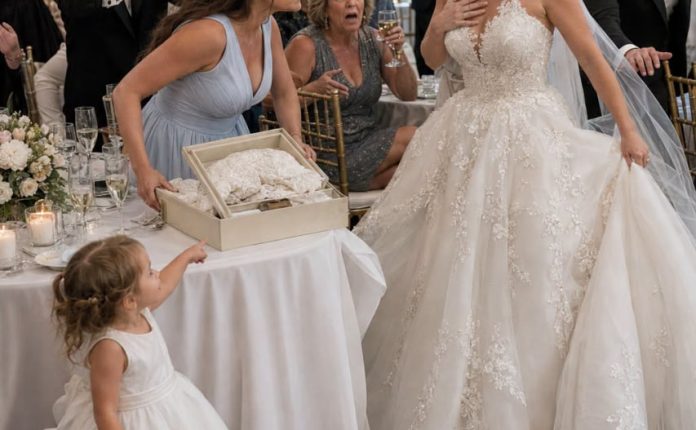
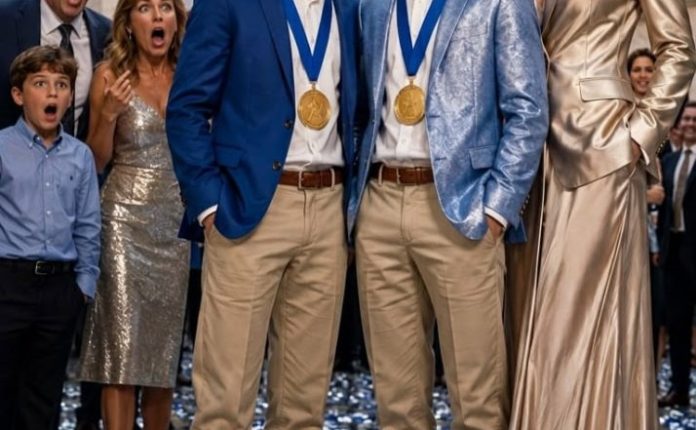
That evening, Roman opened a bottle of wine. Not champagne. Nobody considered anything worth celebrating yet. We sat around the family kitchen while Lily slept upstairs. “I owe you an apology,” Roman said. I looked at him. “For Julian?” “For myself.” He folded his hands. “When you left, I convinced myself you were reckless.”
“I was.” “You were also responding to us.” Silence settled. “We loved you like something fragile.” I smiled without humor. “You treated me like a classified asset.” Gabriel muttered, “That is not entirely inaccurate.” Roman glared. Gabriel lifted both hands. “Poor timing.” Roman continued. “Dad taught us protection meant control.”
I looked toward our father’s old chair. “Yes.” “And after he died, I kept doing it.” He paused. “When you called us tonight—” “That was weeks ago.” “To me it still feels like tonight.” His eyes reddened. “I realized you had believed needing us would cost you your freedom.”
My anger softened. “Sometimes it did.” “I know.” He nodded. “It won’t anymore.” Adrian raised his glass. “To boundaries.” Dominic looked offended. “Terrible toast.” “To not terrifying Evelyn.” “Worse.” Micah wandered in. “To Marshmallow the swan.” We all laughed. For the first time since Lily’s poisoning, the house sounded alive rather than guarded.
Healing did not happen quickly. Lily became afraid of juice. For months, she refused anything she had not watched me open. She stopped drinking smoothies completely. If someone entered her bedroom while she slept, she woke screaming. We found a child therapist named Dr. Patel.
Lily liked her because she had a bulldog named Winston who sometimes attended sessions wearing bow ties. I found my own therapist too. Roman recommended his. I refused on principle. Then hired someone else. I had more than Julian to unpack. I needed to understand why I stayed after Serena moved into my house.
Why I accepted humiliation because leaving felt like admitting my brothers had been right. Why I mistook endurance for independence. The answers were uncomfortable. Pride. Fear. Isolation. Shame. And hope. Especially hope. Hope can keep people alive. It can also keep them standing inside burning rooms because they believe smoke will eventually become air again.
I learned to distinguish hope from evidence. Lily learned something too. She learned that adults could apologize. I apologized for the times I dismissed her discomfort around Serena. Roman apologized for placing guards outside her bedroom. Dominic apologized after frightening one of her classmates’ fathers during pickup.
Gabriel apologized when Lily discovered he had activated location tracking on her tablet. “You tracked me?” “For safety.” “That’s creepy.” Gabriel looked at me. I folded my arms. He sighed. “You are correct, Lily.” “Delete it.” He deleted it. She inspected the screen. “Completely.” His mouth twitched. “You are definitely a Vance.”
“No,” Lily said. “I’m Lily.” Every adult in the room became quiet. Roman smiled first. “Yes, you are.” The criminal case took nine months. During that time, Julian changed attorneys twice. Serena pleaded guilty before trial. Her agreement required truthful testimony regarding the sedation, the financial conspiracy, the forged medical records, and the attempt to manipulate custody.
I attended her sentencing. Not because I wanted to watch her suffer. Because I wanted to hear the truth spoken aloud in a room where nobody could call Lily a liar. Serena stood before the judge. She admitted mixing a sedating medication into Lily’s drinks on multiple occasions.
She admitted cutting the emerald gown herself. She admitted placing the shears in Lily’s hand. She admitted helping fabricate my records. Then the prosecutor asked whether Julian knew. Serena looked toward him. “Yes.” Julian’s attorney objected. Overruled. “Did Mr. Hart instruct you to drug Lily?” “Not the first time.” My stomach tightened.
“What do you mean?” “The first time was my idea.” She swallowed. “When he saw how sleepy Lily became, he said we could use it.” The courtroom blurred around me. “Use it how?” “To make Evelyn look negligent.” Serena’s voice trembled. “To create incidents.” “And the night involving the dress?” “We planned that together.”
“What did Mr. Hart tell you?” Serena closed her eyes. “He said Lily wouldn’t remember.” I looked toward Julian. He stared straight ahead. The man who once accused an unconscious child of being a parasite now appeared reduced to the size of his own choices. Serena received a prison sentence.
It did not restore Lily’s lost trust. It did not give me nine years back. Punishment rarely returns what harm removes. But accountability gave the truth a permanent address. Julian went to trial. The prosecution did not need theatrical speeches. The video was enough. The Northstar files were enough. The laboratory results were enough.
The fabricated records were enough. His own recorded phone call to me helped. So did his emails. When the prosecutor displayed the photograph taken of me before Julian and I supposedly met, the jury stared at him differently. For nine years, I had believed I was the fool in our story.
At trial, I understood something important. Being deceived is not the same as being foolish. Trust is not stupidity simply because someone abuses it. Julian testified against his attorney’s advice. That was when the last part of his life collapsed. He blamed Serena. He blamed me. He blamed the Vance family.
He blamed his CEO. He blamed corporate pressure. He blamed childhood insecurity. He blamed the investigator. He blamed alcohol. He blamed ambition. Everyone except himself. The prosecutor waited until Julian exhausted his explanations. Then she displayed the video still showing his hand wrapping Lily’s fingers around the scissors.
“Who moved the child’s hand?” Julian stared. “You did, didn’t you?” He swallowed. “Yes.” “Who said, ‘Good’?” His voice became nearly inaudible. “I did.” “No further questions.” The jury deliberated less than a day. Guilty. Not on every charge. Enough. When the verdict was read, Julian turned toward me.
I expected satisfaction. Instead, I remembered him holding newborn Lily against his chest, terrified he might drop her. I remembered our first apartment. Burned dinners. Rainy Sundays. Christmas mornings. Then I remembered Lily unconscious on the carpet. Human beings can contain tenderness and cruelty in the same history.
The existence of one does not cancel the consequences of the other. I did not smile. I did not cry. I simply took Lily’s hand. She had not attended the trial. She was waiting outside with Micah. When she saw me, she stood. “Is it done?” “Yes.” “Do I have to see Daddy?” “No.”
“Ever?” “Only if you choose someday, when it’s safe and you’re ready.” She considered this. “What if I never choose?” “Then you never choose.” Her shoulders relaxed. “Okay.” Outside, reporters waited behind barriers. Roman had arranged another exit. I stopped him. “No.” He looked surprised. “We can avoid them.”
“I’m tired of leaving through back doors.” So we walked through the front. Cameras flashed. Questions flew. I did not answer. Lily held my hand. My brothers surrounded us without closing in. That distinction mattered. They were there. Not controlling. Not leading. Walking beside us.
A year after the night of the emerald dress, I sold the estate. I never returned to live there. I entered it only once. The police had released the property months earlier, but I waited until I felt ready. Lily came with me. So did all five brothers. The foyer smelled unchanged.
For a moment, my body expected Julian’s footsteps. Then I remembered he could not enter. The silence became mine. Lily walked upstairs. We followed. Her yellow bedroom remained almost exactly as she had left it. She touched the glow-in-the-dark stars. “Can we take these?” “Every one.” Dominic fetched a ladder.
Gabriel found a scraper. Adrian complained that nobody had brought appropriate tools. Roman ignored him. Micah climbed onto the bed and immediately hit his head on the ceiling fan. Lily laughed so hard she fell onto the carpet. That sound changed the room. We removed every star. Then Lily asked to see the guest room.
I hesitated. “Are you sure?” “Yes.” The ruined gown was gone. The carpet had been professionally cleaned. Nothing remained except furniture. Lily stood where she had been found. Her face became serious. “I don’t remember being here.” “That’s okay.” “I remember the juice.” I waited. “She told me it would taste like strawberries.”
My chest tightened. Lily looked at me. “But now I know she lied.” “Yes.” “And you believed me.” “Always.” She nodded. Then she walked out. We left the door open behind us. The new house was nothing like the estate. It had three bedrooms, a crooked backyard fence, and a kitchen desperately needing renovation.
I loved it immediately. It belonged to me. Not to Julian. Not to the Vance dynasty. Not to a trust designed by my father. Me. I purchased it using money earned from reopening my architectural practice. I finally accepted access to my inheritance too, but on my terms.
Some went into Lily’s protected education fund. Some funded a nonprofit supporting families navigating financial and coercive abuse. Some remained invested. Money stopped representing the family cage I once feared. It became a tool. A tool is different from a master. Roman complained the new house lacked adequate perimeter security.
I let him install three exterior cameras. He requested twelve. We compromised. Gabriel redesigned the digital system. I made him give me the administrator password. Dominic reinforced the back gate. I made him remove the ridiculous steel spikes. Adrian reviewed every contract. I reminded him I could read. Micah planted strawberries with Lily.
Nobody supervised him, which was a mistake. Half the plants died. Lily loved them anyway. On the second anniversary of the poisoning, a package arrived. There was no return address. Adrian examined it before letting me open it. Inside was a letter from Julian. He had written before sentencing. Evelyn, I know you hate me.
I stopped reading. I did not hate him. Hatred would have required carrying him every day. I had spent enough years doing that. I handed the letter to Lily’s therapist without finishing it. She asked whether I wanted it preserved in case Lily requested it someday. “Yes.” “Do you want to know what it says?” “No.”
That answer surprised me with its ease. There had been a time when Julian’s words controlled the emotional temperature of my entire day. Now an unopened letter from him could sit in someone else’s locked cabinet without changing my breathing. That was freedom. Lily eventually began drinking juice again.
The first time happened almost accidentally. We were at Micah’s house for his birthday. Someone handed her an unopened apple juice. She stared at it. I saw fear flicker. Then she checked the seal herself. Opened it. Took one sip. Nothing happened. She took another.
Then finished half the bottle while arguing with Dominic about whether sharks could beat crocodiles. I looked away before she noticed me crying. Roman noticed. He said nothing. Later, he squeezed my shoulder. Sometimes love is knowing when not to speak. Serena wrote to me once from prison. Unlike Julian’s letter, I read hers.
She did not ask forgiveness. Perhaps she understood that forgiveness was not something she could request like a reduced sentence. She described envy. She had spent years watching Julian return home to me. At first, she believed I was merely an obstacle between them and wealth. Eventually, resentment became personal.
She hated the way Lily loved me. She hated the house. She hated seeing photographs of family vacations. She hated that Julian complained about me constantly yet refused to leave because my surname represented the future he wanted. None of that excused anything. But one sentence stayed with me.
I kept telling myself I was only hurting you until I stopped noticing I was hurting a child. That was how boundaries disappeared. One rationalization at a time. I filed the letter away. Lily never needed to read it unless she chose. Three years passed. She grew taller. The nightmares became rare.
She joined a robotics club. Then ballet. Then quit ballet because, according to her, “everyone talks too much about feet.” She became obsessed with astronomy. Gabriel bought her a telescope large enough to alarm the neighbors. I made him exchange it for a smaller one. He sulked for two days.
Our family developed new traditions. Sunday dinner at Roman’s. Movie night at my house. Christmas breakfast wherever Lily voted. My brothers continued being impossible. I continued telling them so. The difference was that disagreement no longer threatened belonging. That may have been the most important lesson any of us learned.
Love without freedom is possession. Freedom without connection can become loneliness. Family had to contain enough room for both. One spring afternoon, Lily came home carrying a garment bag. She was eleven. “What is that?” “School project.” She hung it over a kitchen chair. Her class had been assigned to create something from recycled materials.
Lily chose clothing. She unzipped the bag. Inside was a green dress. Not emerald sequins. Green fabric patched with tiny reflective pieces cut from old costume jewelry. I stared. “Is that okay?” “Of course.” She studied me. “It kind of looks like the bad dress.” “A little.” “I didn’t mean to.”
“You don’t have to avoid green forever.” She smiled. “I call it the Galaxy Dress.” “Why?” “When light hits it, the pieces look like stars.” She turned slowly. Tiny reflections scattered across the kitchen walls. For an instant, I remembered sequins scattered across cream carpet beside my unconscious child.
Then Lily spun again. The memory changed shape. The same kind of sparkle now belonged to laughter. I understood then that healing was not erasing what happened. It was allowing new things to exist beside it. At the school exhibition, Lily’s dress won second place. Dominic demanded a recount.
Adrian asked whether there was an appeals process. Gabriel began analyzing judging criteria. Roman offered to sponsor next year’s program. Micah bought twelve cupcakes. I threatened all five of them until they behaved. Lily laughed. Afterward, we stood outside beneath a clear night sky. “Mom?” “Yes?” “Do you ever miss Dad?”
The question no longer frightened me. “Sometimes I miss who I thought he was.” She considered that carefully. “Is that different?” “Very.” “Do you think he misses us?” “Probably.” “Does that mean we should feel bad?” “No.” She looked upward. “I don’t hate him.” “You don’t have to.” “I don’t love him either.”
“You don’t have to decide what word belongs there.” She nodded. “Okay.” We walked toward the parking lot. My brothers waited beside their cars, arguing loudly about dinner. Lily ran ahead. “Uncle Roman!” Five heads turned immediately. I stopped beneath a streetlamp and watched them surround her. Not tightly. Not like a wall.
Like a circle with openings. She could step inside. She could step out. No one would punish her for either choice. Roman caught my eye. For a moment, I saw us nine years earlier—the brother who believed protecting me required controlling my choices and the sister who believed freedom required losing everyone who loved her.
We had both been wrong. He lifted one eyebrow. “You coming?” “Yes.” I joined them. Years earlier, I had believed the worst night of my life began with a destroyed ten-thousand-dollar dress. It did not. It began long before that. With small humiliations I explained away. With apologies I accepted without change.
With boundaries surrendered one inch at a time. With a husband who learned that my silence could be used against me. With a mistress who mistook cruelty for victory. With my own stubborn belief that asking my brothers for help would prove I had failed. The night Lily whispered, “The juice tasted funny,” ended all of it.
Four words sent through a dying phone brought five brothers back into my life. But they did not save me. That mattered. They answered. They stood beside me. They helped expose the truth. They protected Lily while I rebuilt. Yet the decision that changed everything happened before their headlights appeared through the rain.
It happened when I looked at my unconscious daughter and stopped asking how much more I could tolerate. I chose her. Then I chose myself. Years later, I finally understood why Julian seemed so shocked when his world collapsed. He had mistaken patience for weakness. He had mistaken isolation for helplessness.
He had mistaken my quietness for surrender. Most dangerously, he had mistaken Lily’s smallness for powerlessness. He thought a child could be drugged, framed, frightened, and dismissed because she had no money, authority, or vocabulary for what adults were doing around her. He forgot she had a voice.
“I didn’t touch the dress.” That was all she needed to say. I believed her. Everything followed from that. Julian lost his career because of crimes he committed. He lost his freedom because of choices he made. Serena lost the life she had schemed to possess because the evidence preserved what she believed nobody would ever see.
My brothers regained a sister only after learning they could not own her decisions. And I regained my family only after understanding that accepting love did not require surrendering independence. Lily gained something more important. She learned that when something feels wrong, she is allowed to say so. She learned that adults can be wrong.
Parents can be wrong. Rich people can be wrong. Powerful people can be wrong. And someone shouting does not become truthful merely because they are louder. One summer evening, years after the trial, Lily and I sat outside beneath the stars from her old bedroom. We had stuck them onto wooden boards and mounted them beneath the porch roof.
Most no longer glowed. She refused to replace them. “They’re originals,” she explained. Roman called them “historically significant plastic.” Lily called him dramatic. She was thirteen then, tall enough that I sometimes glimpsed the woman she would become. “Mom?” “Yes?” “What did you send the uncles that night?” I looked at her.
“You never told me.” I smiled. “Four words.” “What words?” I hesitated. Then told her. “They drugged my child.” Her eyes widened. “That’s all?” “That was enough.” She looked toward the dark yard. “Uncle Dominic probably broke a speed limit.” “Several.” “Uncle Gabriel probably hacked something.” “I have been advised never to ask.”
She laughed. Then grew thoughtful. “Were you scared?” “Yes.” “But you looked calm?” “I was terrified.” She leaned against my shoulder. “I thought brave people weren’t scared.” “No.” I kissed the top of her head. “Brave people are often terrified.” “What makes them brave, then?”
I considered every answer I might have given at twenty-four. Every answer my father might have given. Every answer Julian would have given. Then I chose the one Lily had taught me. “They believe something matters more than their fear.” She nodded. We stayed beneath the faded stars until the porch door opened.
Micah leaned out. “Cake.” Lily stood instantly. “What kind?” “Chocolate.” “Did you make it?” “No.” “Good.” He looked wounded. I followed them inside. Roman was arguing with Adrian about candles. Gabriel was fixing something nobody asked him to fix. Dominic was stealing frosting. The kitchen was noisy. Imperfect. Overcrowded. Safe.
Lily slipped between her uncles and reached for a plate. No one shouted at her. No one watched for a mistake. No one made her earn her place. And as I stood in the doorway, I finally understood what a sanctuary actually was. It was never iron gates. Never expensive stone. Never security panels.
Never a famous surname. Never money hidden inside trusts. A sanctuary was the place where truth did not make you homeless. Where fear was answered instead of mocked. Where apologies required changed behavior. Where a child could say, “Something is wrong,” and the adults around her listened. Where love did not demand silence as payment.
My old estate had contained five bedrooms, chandeliers, marble floors, imported furniture, and a husband who wanted everyone beneath its roof to fear his anger. This little house contained scuffed cabinets, mismatched chairs, five intrusive brothers, one recovering mother, and a girl laughing with chocolate icing on her nose.
I knew which one was richer. Lily caught me watching. “What?” “Nothing.” “You’re doing the weird mom face.” “What weird mom face?” “The emotional one.” “I don’t have an emotional face.” All five brothers laughed. Traitors. Lily grinned. I walked across the kitchen and wiped icing from her nose.
She protested. Micah handed her more cake. Roman complained that midnight sugar was irresponsible. Dominic gave her another forkful while maintaining eye contact with him. Adrian threatened to draft household dessert regulations. Gabriel began explaining why such regulations would be unenforceable. The argument grew louder. I laughed until my stomach hurt.
Once, loud voices had made my body tighten automatically. Now I knew the difference between noise and danger. That knowledge had been expensive. I wished Lily had never needed to learn it. I wished I had learned it sooner. But wishing cannot revise history. What we could do was refuse to hand history the ending it expected.
Julian expected fear to keep us. Serena expected deception to replace truth. My brothers once expected protection to excuse control. I expected isolation to prove strength. All of us discovered otherwise. Lily reached across the table and slipped her hand into mine. I squeezed it. Years ago, that hand had lain limp inside Serena’s staged scene.
Tiny fingers arranged around golden scissors while two adults constructed a lie around an unconscious child. Now those same fingers were warm. Strong. Sticky with frosting. Alive. Free. That was the only ending I needed. Not revenge. Not wealth. Not seeing Julian destroyed. Not watching Serena punished. Those consequences belonged to them.
This belonged to us. The laughter. The crowded kitchen. The unlocked doors. The faded stars. My daughter’s hand holding mine because she wanted to, not because she was afraid. Outside, beyond the windows, darkness covered the street. Inside, every light was on. And nobody in my family was afraid of going home.