The hotel carpet was faded. The balcony door stuck whenever we tried opening it, and the microwave sounded like a lawn mower. Sophie declared the place perfect. We drove three hours to the coast carrying two sketchbooks, three bags of snacks, and a playlist she controlled with absolute tyranny.
I was forced to hear the same song six times. Claire joined us on the second evening. We ate fish tacos from paper trays and watched the sunset from the beach while Sophie spent nearly an hour drawing a single seagull because, according to her, its “personality was suspicious.”
That night, after Sophie fell asleep, Claire and I sat on the tiny balcony. “You look different,” she said. “Older?” “Less haunted.” I laughed quietly. “That sounds dramatic.”
“You’ve spent years waiting for your family to approve of your life.” I looked through the glass door at Sophie sleeping. “Yeah.” Claire asked, “Do you still want them to?” I thought about Mom’s message: You’re dead to us.
Then I remembered Dad standing on my porch, asking how they were supposed to manage without my money. Not how they could repair things with Sophie. Not what they had done wrong. Money. Convenience. Access.
“No,” I said.
And I meant it. The next morning, Sophie showed us a new flipbook. On the first page, a little girl stood outside a huge house filled with dozens of people. She knocked. Nobody opened the door.
On the next page, she walked away until she found a smaller house. Only three people stood inside. But when the little girl knocked, the door flew open. Across the final page, Sophie had written, “Family = people who make space for you.”
Claire covered her mouth. I stared at the drawing until my eyes burned. “Can I put this on the refrigerator?” Sophie shrugged like it was nothing. “Sure.” It stayed there for years.
The fallout with my parents did not disappear. It simply changed forms. Jenna sent messages through relatives and then demanded that I repay the deposit she lost on her retreat. I ignored her.
Dad mailed me a letter accusing me of having “abandoned the values we raised you with.” I filed it alongside the financial receipts I had saved. Mom tried birthday guilt, then Christmas guilt, then the classic, “You’ll regret this when we’re gone.”
I never responded. Not because I hated them. Hatred would have required too much energy. I simply stopped volunteering myself and my daughter for their version of family.
Thanksgiving arrived. For the first time in my life, we didn’t drive to my parents’ house. We hosted our own dinner instead. Claire’s parents came. My cousin Noah and his wife joined us. Two friends from work came because their families lived overseas.
Sophie made place cards covered with tiny cartoons. Nobody asked her to watch anyone’s children. Nobody forgot her name. After dinner, we hung a white sheet against the garage and projected Sophie’s first animated short onto it.
The film lasted less than three minutes. A little fox escaped a crowded forest where nobody noticed her drawings and built a tiny studio beside the ocean. When the film ended, everyone applauded. Sophie tried hiding her smile.
I looked around our backyard. String lights. Empty plates. People who genuinely wanted to be there. Two extra folding chairs stood near the wall. I had set them up without thinking. Maybe for my parents. Maybe simply from habit.
I stared at them for a moment, then folded both chairs and carried them into the garage. I never again left empty seats for people who had chosen not to show up.
Months passed. Sophie’s Future continued growing. So did Sophie’s confidence. She attended art camp, then another. We bought her first drawing tablet. She never again asked whether somebody else’s emergency might cancel something important to her.
That alone made every uncomfortable conversation worth it. Jenna and I remained estranged. Her final direct message arrived nearly a year after Bali.
“The boys miss you. Mom and Dad are getting older. Can we stop this stupid fight?” I read it once before answering, “This was never a fight. It was a boundary. I’m keeping it.”
Jenna never replied. My parents eventually stopped appearing at our door. Through cousins, I heard that they complained about me regularly. Sometimes they claimed Claire had changed me. Sometimes they blamed money. Sometimes they said I had become arrogant because my career was improving.
Nobody mentioned Sophie.
That was how I knew I had made the right decision. Two years after Bali, Claire and I returned with Sophie to that same little beach hotel. The carpet was still faded. The balcony door still stuck.
Sophie was thirteen now—taller, louder, and carrying a sketchbook so full that it barely closed. At sunset, she sat between Claire and me on the sand and said, “You know, that whole Bali thing was kind of insane.”
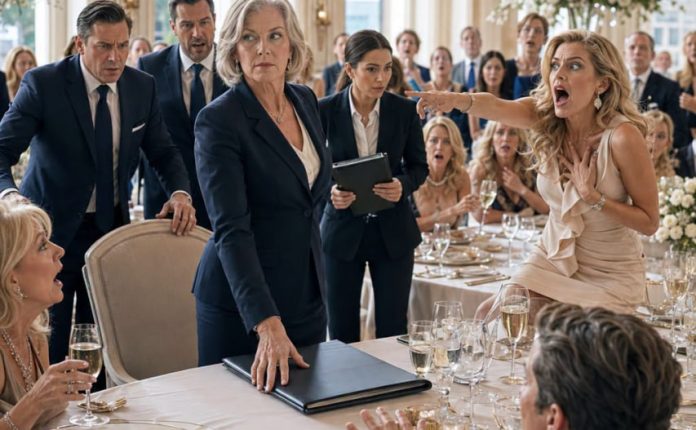
Claire laughed. “Kind of?” Sophie looked at me. “Were you really going to cancel?” I thought about that dinner—Dad’s voice, Jenna’s smirk, Mom laughing while somebody described my daughter as a built-in nanny.
The old version of me probably would have canceled. Maybe that was the hardest thing to admit. “I might have,” I said. Sophie frowned. “Seriously?” “Seriously.” “What changed?”
I looked at my daughter. “You did.” Sophie smiled, then shook her head. “No.” “What?” “You changed.” I considered correcting her. I didn’t.
Maybe we both had. That evening, back in our room, Sophie opened a new flipbook. The first page showed an airplane. The next showed it lifting into the sky. Then came palm trees.
After that, she drew a family standing together beneath string lights. On the final page were three words.
“We chose us.”
I ran my thumb across the paper. Years earlier, I believed being a good son meant giving until everybody else felt comfortable. I had been wrong. Being a good father meant knowing when to stop.
My sister wanted me to cancel my honeymoon because she believed her exhaustion mattered more than my marriage. My parents demanded that I obey because, to them, “family comes first” meant I always came last.
They expected me to sacrifice the trip. Then the money. Then eventually Sophie’s childhood. They assumed I would always say yes because I always had before.
Instead, I boarded the plane.
I kept my promise to my daughter.
I stopped financing people who treated her like an extra.
And when my mother told me I was dead to them, I finally understood something that should have been obvious all along.
Losing people who only valued what I provided wasn’t the same as losing a family.
Sometimes it was how you finally found one.
THE END!
Disclaimer: Our stories are inspired by real-life events but are carefully rewritten for entertainment. Any resemblance to actual people or situations is purely coincidental.