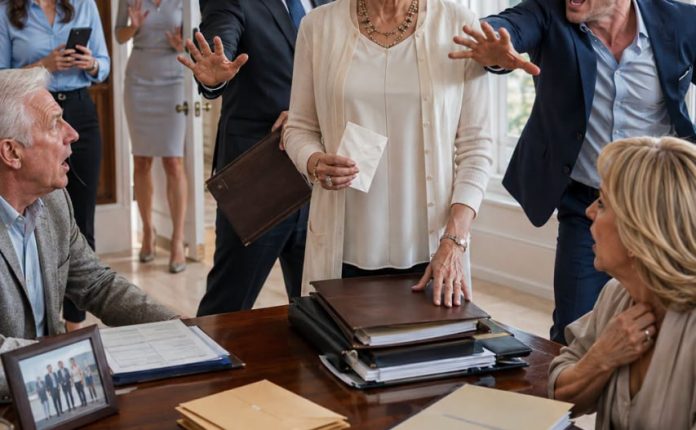
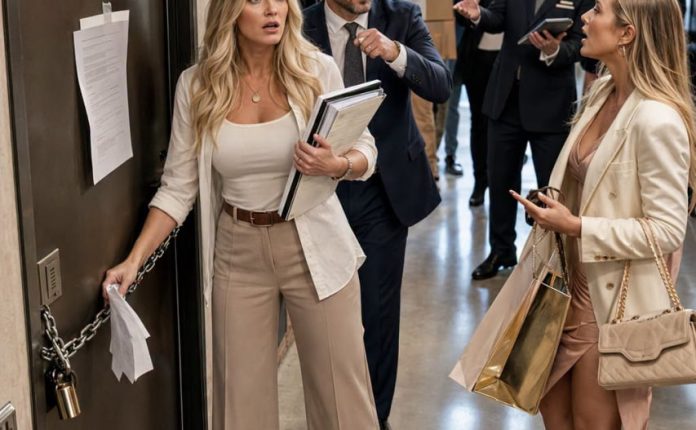
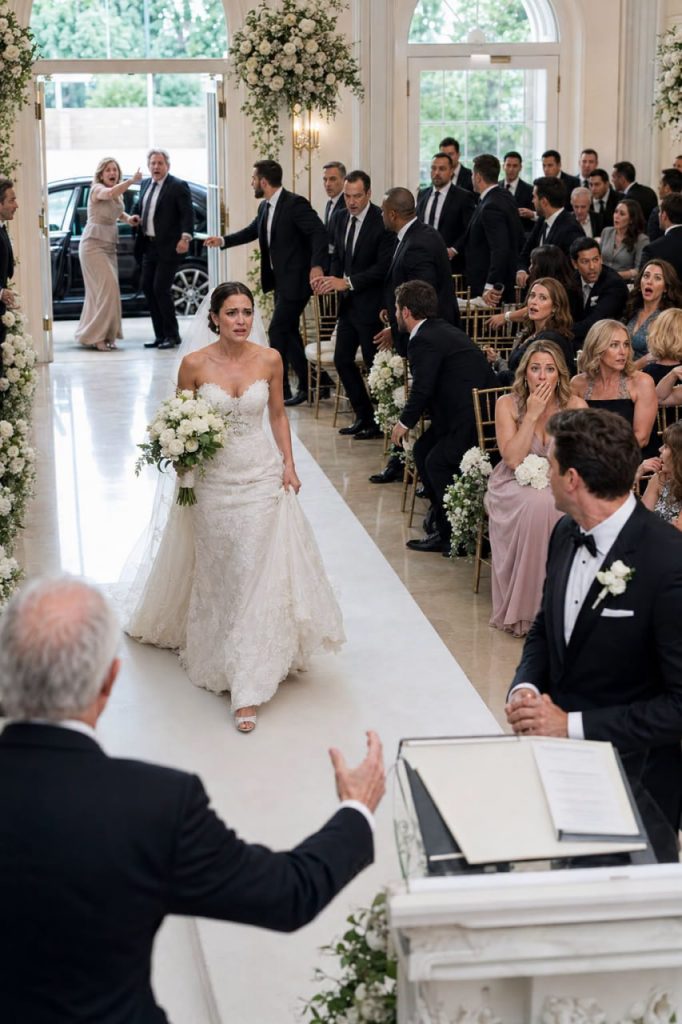
Three days before my wedding, my mother erased eighty-eight people from my guest list. Not metaphorically. She logged into my wedding website, changed every RSVP from yes to declined, then called relatives one by one and told each of them some personalized version of why I supposedly didn’t want them there. By Wednesday, my phone wouldn’t stop lighting up.
Cousins I hadn’t spoken to in years. A great-aunt from Florida. My father’s old fishing buddy. “So sorry, Claire.” “Wish things were different.” “Maybe another time.” Another time? I was getting married once. I’d mailed those invitations myself at my kitchen table, cream envelopes stacked beside my grandfather’s brass pocket watch. Eighty-eight invitations.
I knew the number because Grandpa taught me to count twice when something mattered. And then, in less than a week, eighty-eight yeses became noes. I called my mother. “Oh, that,” Patricia said when I asked what was happening. She sounded distracted, almost bored. “I handled it for you.” “You handled what?”
“The RSVPs. You had enough going on.” My fingers closed around Grandpa’s watch. “Mom, people are saying they’re not coming.” “Because I let them off the hook.” “The hook?” She sighed. “Claire, nobody wants to drive hours to watch a thirty-four-year-old woman play princess in a rented chapel.” She said it gently.
That was what hurt most. Not anger. Not shouting. The soft voice of a mother calmly explaining that no one loved her daughter enough to attend her wedding. “You told them not to come?” “I told them the truth.” “What truth?” “That they didn’t need to humiliate themselves clapping for you.”
Then she hung up. My name is Claire Bennett. I’m thirty-four years old, and until that week, some stupid, starving part of me still believed my mother might someday become the woman I’d spent my childhood waiting for. My grandfather never asked me to wait.
Samuel Whitaker had built Whitaker Building Supply from one truck and a rented yard outside Millbrook, Ohio. By the time I was grown, contractors stood straighter when he walked into a room. At home, though, he was simply Grandpa, the man who always saved me the chair beside him.
My mother and her siblings, my aunt Denise and my uncle Raymond, treated every family dinner like an inheritance audition. Who had called Grandpa most recently? Who had visited? Who deserved the farmhouse? Who understood the company? They thought he never noticed. He noticed everything. I never wanted the company.
I became a hospice nurse instead. My mother called nursing “your little job.” She kept calling it that even after Grandpa developed cancer and I rearranged my shifts so I could care for him at home. For twenty-six months, I drove to his farmhouse. I changed sheets. Helped him eat.
I read him the sports section and sat beside him during the hours when sleep wouldn’t come. My mother visited when photographs were useful. Denise sent cards. Raymond mostly asked questions about company paperwork. One afternoon, four months before Grandpa died, he asked me to help him into his study.
He hadn’t used the desk in months. He sat there for nearly an hour writing something in his slow, shaky hand. When he finished, he sealed a cream envelope and handed it to me. “Don’t open this until the morning after your wedding.” I laughed. “Grandpa, I’m not even engaged.” “Caleb will fix that.”
My boyfriend Caleb hadn’t proposed yet. Grandpa smiled. “He looks at you like a man who’s already picked the ring.” Then his expression changed. “Promise me, Claire. Whatever happens between now and then—and something will—you keep this closed.” Something in the way he said it chilled me. “What’s going to happen?”
That old spark appeared in his eyes, the look he got when he knew something no one else did. “I’m making sure you land on your feet.” I hid the envelope behind a row of shoe boxes and forgot about it. Grandpa died four months later with my hand around his.
His last clear sentence was, “You were the one who stayed.” Three days after the funeral, while neighbors were still carrying casserole dishes out of the house, I heard my mother corner Raymond near the coat closet. “When is the will reading?” “The attorney delayed it.” “Why?” “Some instruction Dad left.”
My mother went completely still. Then she asked, “What kind of instruction?” Raymond didn’t know. But I saw something change in her face. She stopped grieving. She started calculating. And months later, sitting at my kitchen table while eighty-eight people disappeared from my wedding, I finally began to wonder whether those two things were connected.
Caleb proposed in Grandpa’s old workshop. There was sawdust on his knee when he knelt, cedar in the air, and Grandpa’s watch ticking in my jacket pocket. I said yes before Caleb finished asking. For several weeks, I was stupidly happy. Then my mother volunteered to help with the wedding.
That should have warned me. Patricia Bennett had never helped me with anything unless helping gave her control. But when you’re raised hungry, even poisoned food can look like a meal. “Let me handle the RSVPs,” she offered. “You’ve got that little job taking all your time.”
I gave her the login. The first person who made me realize what was happening was my cousin Megan. She called crying. “Claire, I don’t understand. I already bought my dress.” “What happened?” “Your mom called. She said you didn’t want me there.” My stomach dropped. “What?”
“She said you were embarrassed about some of our relatives being poor in front of Caleb’s family.” “Megan, I never said that.” Silence. Then, “I didn’t think you would.” “You are invited. Please come.” “I will.” After we hung up, I drove straight to my mother’s house.
Her car was outside. Through the kitchen window, I could see her sitting beside Aunt Denise with a laptop between them and two glasses of wine. I entered through the side door. They didn’t hear me. “Who’s next?” Denise asked. “The Parkers.” Mom clicked something. “Declined.” Denise laughed.
“You are awful.” “I’m efficient.” Another click. “By Saturday that chapel will be the quietest room in Ohio.” “What are you doing?” Both women looked toward me. Neither seemed surprised. My mother calmly closed the laptop. “Managing your wedding.” “You’re uninviting my guests.” “I’m sparing people from an obligation.”
“Why?” She shrugged. “You’re marrying a high school shop teacher in a rented chapel. It’s not exactly the royal wedding.” Caleb loved teaching. He could build a cabinet so precisely the drawers whispered shut. My mother said “shop teacher” the way other people said unemployed. “That’s not an answer.”
Denise stared into her wine. I stepped closer. “What do you get from making sure no one comes?” My mother stood. She walked toward me and did something so strange I can still feel it. She placed her palm against my cheek. Tenderly. The woman had barely hugged me since childhood.
Then she said, “A daughter no one claims is a daughter no one protects.” Her hand was cool. Her eyes weren’t angry. They were focused. “Remember that, sweetheart.” Then she turned me toward the door and told me to let myself out. I sat in my car afterward with the engine off.
Protects me from what? I had a wedding dress hanging in my apartment, a man who loved me, and a license I’d worked eleven years to earn. What exactly did I need protection from? That night, I checked the wedding website’s administrative history. There it was. One device. One session.
Eighty-eight RSVPs manually changed. My mother hadn’t merely called people. She had impersonated me. I saved screenshots. Then I checked our family group chat, a noisy thread I’d muted years earlier. I found months of messages from Mom. “Please keep Claire in your prayers.” “She hasn’t been herself since Dad died.”
“I’m concerned about the influence she had over him at the end.” “The attorney won’t tell us anything. Claire won’t either.” Denise added sympathetic comments. Relatives responded with sad emojis. Someone wrote, “I always wondered whether something strange was happening at that house.” I sat there until nearly dawn reading my own character assassination.
My mother hadn’t spent a week emptying my wedding. She had spent months preparing people to believe I deserved to be abandoned. I called an older relative named Kathleen because I desperately needed one person to say, “I don’t believe her.” Instead, Kathleen said, “Claire, I don’t want to get involved.”
“She’s lying.” “Then you two need to work that out.” Click. The silence afterward felt physical. Cold. My phone rang again the next morning. An unfamiliar woman said, “Claire Bennett? My name is Evelyn Mercer. I represented Samuel Whitaker’s estate.” My back straightened. “Yes?” “I understand you’re getting married Saturday.”
“I am.” “Your grandfather left instructions.” My heart began beating faster. “What kind?” “I’m not permitted to discuss the will before Monday’s formal reading.” She paused. “But Samuel was explicit about one matter.” I waited. “He told me to make certain you did not stand alone on your wedding day.”
I forgot how to breathe. Evelyn continued. “His exact words were, ‘Whatever it takes.’” “How could Grandpa possibly know—” “You’ll understand Monday,” Evelyn interrupted. Her voice was controlled, almost severe. “And Claire?” “Yes?” “Bring the sealed envelope Samuel gave you. Do not open it early.” I stared toward my bedroom closet.
“He told you about that?” “He told me many things.” Then her voice softened. “He knew them very well, dear. Now go get married.” The call ended. I told no one except Caleb. Not my mother. Not Megan. No one. Two days later, Caleb came home from work looking furious.
“Your aunt cornered my mother at the grocery store.” I set down the mug I was holding. “What did Denise say?” “That you’re being investigated for stealing from your grandfather. That the family thinks you manipulated him while he was dying.” For a moment, everything inside me went quiet.
“That’s not true.” “I know.” “There is no investigation.” “I know.” Caleb took my hands. “But why do they need people to think you’re a thief?” That question stayed with me. Why? My mother had already damaged the wedding. Why attack my career? Why make relatives suspicious about Grandpa?
Why make me look dishonest before Monday? The answer arrived in pieces. First, the reception venue called. A coordinator named Tessa sounded embarrassed. “Claire, did you call this morning asking to cancel your reception?” “No.” “The woman had your booking number. She asked us to reduce catering to twelve guests.”
Twelve. My mother had calculated exactly how small she wanted my life to look. “Do not change anything,” I said. “No changes unless I appear with identification.” Tessa was quiet. Then she asked, “Are you safe?” The question embarrassed me because I didn’t know the answer anymore.
That evening Uncle Raymond came to my apartment. He didn’t bother pretending he cared about the wedding. “Your grandfather wasn’t himself near the end.” “He was clear.” Raymond ignored me. “Monday there’ll be paperwork. Probably a waiver.” “What waiver?” “Standard estate stuff.” He slid a folded document partly from his jacket.
“You sign, take a reasonable amount, and avoid court.” “I don’t know what Grandpa left.” “But you’ll sign.” “No.” His smile disappeared. “Don’t become greedy now, Claire.” I almost laughed. “I haven’t asked anyone for anything.” “You’re a nurse. You’re not equipped for a legal war.”
Then he said the same thing my mother had, just in different words. “You’ve got nobody in your corner anyway.” After he left, I stood in my doorway thinking about that sentence. They kept needing me to believe it. The following morning, my hospice supervisor called me into her office.
Monica was a tired, gentle woman who had watched me hold more dying hands than I could count. She closed the door. “I need to show you something.” She slid a printed complaint across the desk. Someone had accused me of exploiting a terminal patient. Samuel Whitaker. My grandfather.
The letter suggested I had manipulated him financially while acting as his caregiver. For eleven years, nursing had been the one part of my life nobody in my family had given me. I’d earned every shift, every certification, every scar on my hands from sanitizer and winter dryness.
Now they were coming for that too. “It’s false.” “I know your work,” Monica said. “But whoever filed it knows complaints can create months of trouble before they’re disproved.” I looked at her. “They don’t need to win.” “No.” “They just need me occupied.” Her expression told me she’d reached the same conclusion.
I drove to Grandpa’s farmhouse that afternoon. A rented truck was parked outside. Raymond and Denise were carrying furniture through the front door. Grandpa’s desk. His photographs. Tools from the workshop. “What are you doing?” Raymond didn’t slow down. “Protecting family assets.” “The estate isn’t settled.” “Exactly.”
Denise walked past carrying framed photographs. “You’d understand if you’d ever cared about anything besides playing nurse.” Something inside me changed then. I didn’t scream. I didn’t block the truck. I simply watched them. “You know Grandpa kept records of everything,” I said. Raymond laughed. “He’s dead, Claire.”
That evening, I drove to the cemetery. I sat beside Grandpa’s stone and told him everything. “I don’t know if I can walk into that chapel,” I whispered. “I don’t know if I can face eighty-eight empty chairs.” When I stood to leave, I noticed fresh flowers. I hadn’t brought them.
A small card was tucked between the stems. It read, “Samuel, the yard remembers. We’ve got her. —Hank, Walter, and the boys.” I read it three times. We’ve got her. The next afternoon at the grocery store, an older man in a canvas jacket stopped beside my cart. “You’re Sam Whitaker’s Claire.”
I nodded. He looked at me for a long moment. “He carried my account through two bad winters when my mill shut down. Never embarrassed me over it.” Then he put one rough hand on my shopping cart. “You won’t be standing alone Saturday.” Before I could ask his name, he walked away.