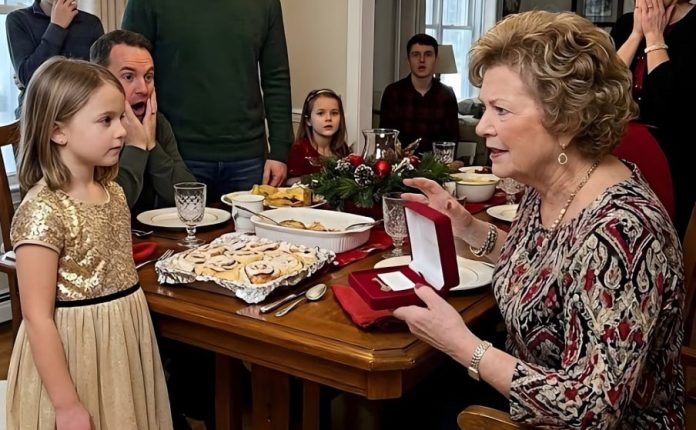
I spent twenty days in the hospital, and not one person in my husband’s family asked if I was okay. But the moment I stopped sending money, they suddenly remembered my name. What I said next changed my marriage forever, because for the first time in five years, I stopped explaining, stopped apologizing, and finally looked at what my marriage had become.
“Valeria, you still haven’t made the deposit? Don’t act like you’re dying. People in this house need to eat too.” My mother-in-law’s voice message arrived at 2:17 in the morning while I was trembling beneath thin white hospital sheets, struggling through another fever and trying to breathe without feeling as if glass were cutting through my chest.
An oxygen tube rested beneath my nose. An IV needle was taped to my left hand, and the machine beside the bed clicked every few seconds. My throat was dry, my lungs ached, and I was so weak that lifting my phone exhausted me. I listened to Carmen’s message twice because the first time I thought the fever had made me misunderstand her.
It had not. Twenty days. I had been hospitalized with severe pneumonia for twenty days. My husband Ricardo had barely checked on me. His mother, Doña Carmen, had never once asked how I felt. His sister Mariana had not called. His younger brother Esteban had not sent a single message asking whether I was recovering.
Yet at 2:17 a.m., Carmen suddenly remembered that I existed because the monthly transfer had not arrived. I stared at the ceiling, replaying the words in my head. Not “Are you breathing better?” Not “Can we bring you something?” Not even “Ricardo says you’re improving.” Her only concern was the missing deposit.
“People in this house need to eat too.” That sentence told me more about my place in their family than five years of birthday dinners, holiday photographs, hugs, and promises ever had. I was not the daughter-in-law they loved. I was the person whose salary solved problems, and apparently even nearly dying did not excuse me from making payments on time.
Something inside me became very quiet. For years, I had believed exhaustion was part of being a good wife. I thought marriage meant sacrifice, and helping Ricardo’s family proved I loved him. I believed that if I worked harder, gave more, complained less, and solved enough problems, his relatives would eventually see me as one of their own.
Twenty days in a hospital taught me what five years of marriage had failed to teach me. They did not see me as family in the way I had imagined. They saw me as stability, money, and a reliable solution whenever something broke. The moment I became too sick to perform that role, concern did not appear. Irritation did.
I turned off my phone and began crying. Not loudly; I did not have enough breath for that. Tears slid into my hair while the oxygen machine hummed beside me. A nurse named Evelyn entered around three, checked my oxygen level, looked at my face, and immediately realized something was wrong beyond the pneumonia.
“You’re hurting?” she asked. I shook my head. “Not exactly.” She adjusted my blanket. “You’re crying.” I tried to smile and told her my mother-in-law was worried. Evelyn softened until I added, “About money.” Then I told her what Carmen had said. Her expression changed in a small but unmistakable way.
Evelyn had probably seen every kind of family in those hospital rooms. She checked the IV line, then told me, “You need rest, and whatever problem they have at home can survive until morning.” I looked at her and said I was not sure they believed that. She gave me a calm look and answered, “Then they’ll learn.”
I remembered that sentence later. At the time, I had no idea how right she would be. My relationship with Ricardo had not always felt this ugly. At least, I did not think it had. We met when I was twenty-nine, when I worked in payroll administration for a logistics company and he sold building materials.
Ricardo was charming without being flashy. He remembered small things: my coffee order, the name of my childhood dog, and the fact that I hated restaurants where the music was so loud people had to shout. On our third date, he brought me a tiny potted basil plant because I had once mentioned wanting fresh herbs in my kitchen.
That was the Ricardo I fell in love with: thoughtful, funny, attentive, and close to his family. “We’re very close,” he told me before introducing us. I had grown up differently. My father died when I was twelve, and my mother worked two jobs for years. We loved each other deeply, but we were independent and rarely interfered in one another’s lives.
So when I met Ricardo’s relatives, their constant involvement seemed warm rather than intrusive. Carmen hugged me immediately and told me I was too thin before feeding me enough food for three people. Mariana asked endless questions about my job, apartment, clothes, savings, and plans. Esteban joked that I would soon discover Ricardo was the spoiled child.
Everyone laughed, including me. For the first year, I thought their closeness was beautiful. Then money entered the relationship. At first, the requests were small enough to feel harmless. Carmen’s refrigerator broke four months after our wedding, and Ricardo approached me one evening with an embarrassed expression.
“My mom can’t afford a new one right now,” he said. We were saving for a down payment on our own apartment, so I hesitated before asking the cost. “Maybe six hundred,” he answered. Then he quietly added, “She’s my mother.” That sentence somehow carried more emotional weight than the number itself.
I transferred the money the following morning. Carmen called almost immediately. “My daughter,” she said warmly. Those two words mattered to me more than the six hundred dollars. I had spent years with a small family, and hearing my mother-in-law call me her daughter made me feel as if I had earned a place somewhere larger.
Two months later, Esteban needed money for a training course. Then Mariana had a medical bill. Then Carmen’s electricity account was overdue. Her roof leaked. Esteban’s motorcycle needed repairs. Mariana needed help with her son’s school registration. None of the requests seemed large enough alone to justify a serious argument.
That was how it worked. Nothing was catastrophic individually, but the emergencies never stopped. When Ricardo and I married, we earned roughly the same salary. After two promotions, I began making substantially more. By our third anniversary, I earned nearly twice what he did, and the family’s occasional requests gradually became regular expenses.
Every month, I transferred nine hundred dollars to Carmen. At first, Ricardo contributed half. Then his commissions dropped. His car payment increased. He admitted his debts were worse than he had told me. Eventually, the entire transfer came from my salary. “Just until things stabilize,” he always promised. Things never stabilized.
Instead, the amount became expected. I bought school clothes for Mariana’s son, paid part of Esteban’s insurance, helped cover Carmen’s prescription costs, contributed to an air conditioner, and paid for household repairs. Whenever someone had an emergency, Ricardo came to me because I was the one who could “handle it.”
Five years passed, and I became the family’s emergency fund. Nobody called me that. Carmen said I had a good heart. Mariana called me responsible. Ricardo kissed my forehead after transfers and said, “I don’t know what we would do without you.” At the time, I heard affection. Looking back, I should have heard dependence.
The problem with being dependable is that some people eventually stop appreciating what you give and begin believing they are entitled to it. I do not know exactly when gratitude disappeared. Maybe it was when Carmen stopped saying thank you. Maybe it was when Mariana complained that two hundred dollars was not enough for her son’s school clothes.
Maybe it was when Esteban borrowed twenty-five hundred dollars and later bought a new television before repaying me. When I questioned him, Ricardo became defensive. “He’s family, Valeria.” I looked directly at my husband and answered, “So am I.” He frowned and said, “That’s different.” He could not explain how.
That should have frightened me. Instead, I apologized for starting an argument. It became a pattern in our marriage. Ricardo defended his relatives, I became frustrated, he accused me of counting money, and eventually I apologized because I wanted the house peaceful again. Without noticing, I began purchasing peace with silence.
The year before my hospitalization was especially difficult. My company acquired two regional offices, and the payroll integration was chaotic. I routinely worked ten-hour days and sometimes twelve. Ricardo changed jobs and earned slightly less. Every evening he complained about work while I made dinner, listened, helped revise his résumé, and encouraged him.
Meanwhile, Carmen wanted the monthly transfer increased from nine hundred dollars to twelve hundred. I finally objected. “We cannot keep doing this.” Ricardo was sitting on the couch looking at his phone. “She needs it,” he said casually. “She always needs it,” I answered. “So do we.”
He reminded me that his mother was sixty-eight and that living still cost money even though she owned her house. I told him our life cost money too. He looked at me and said, “You make enough.” I remember exactly how those words felt because he said them so casually, as though my salary automatically belonged to everyone who needed it.
“Making more does not mean everything left over belongs to your family,” I told him. His expression hardened. “Why are you suddenly selfish?” By then I had already given his relatives tens of thousands of dollars, yet questioning another increase was enough for him to describe me as selfish.
We argued for nearly an hour. Eventually, I agreed to one thousand dollars rather than twelve hundred. Ricardo called that a compromise. It was not. I had simply negotiated my own exploitation down by two hundred dollars and then congratulated myself for having a boundary.
Six months later, I became sick. At first, I thought it was influenza. I had fever, body aches, a terrible cough, and exhaustion, but I continued working from home. Ricardo told me to rest. Then, almost in the same conversation, he asked whether I could still send his mother’s monthly deposit because it was due.
I sent it. Three days later, I woke up unable to breathe properly. Ricardo had already left for work. I called him once and received no answer, then called again and reached voicemail. I tried to stand, nearly collapsed, and finally called an ambulance because something inside me knew this was no ordinary flu.
At the hospital, doctors diagnosed severe pneumonia. My oxygen level was dangerously low, and they admitted me immediately. I texted Ricardo: I’m in the hospital. They’re admitting me. Please call. He called twenty-seven minutes later and asked what happened.
“I couldn’t breathe,” I said. He asked whether I was okay. I told him I did not know yet. There were voices in the background, and he sounded distracted. Then he asked, “I’m at work. Do you need me there?” I stared at the wall beside my hospital bed.
My husband had to ask whether I needed him there. “I’d like you to come,” I said. He replied, “Okay. Let me see what I can do.” He arrived almost four hours later without a charger, toothbrush, clean clothes, water, slippers, or anything I might need during an unexpected hospital stay.
He stayed approximately forty minutes and then said he had an early meeting. I told myself he was frightened. That explanation hurt less than admitting he might simply not want to be there. The next day he visited for twenty minutes. Then two days passed without seeing him at all.
On the fourth day, he arrived after work and spent much of the visit answering messages from Carmen. I heard him say, “I’ll figure it out.” When I asked what happened, he told me his mother’s water heater had broken and the repair would probably cost eight hundred dollars.
I laughed, and the laugh triggered such a violent coughing fit that a nurse came running. Once I could breathe again, Ricardo looked irritated and asked why I was laughing. “I’m in a hospital bed and we’re discussing your mother’s water heater,” I said. “She needs hot water,” he replied.
“I need oxygen.” He frowned. “That’s not fair.” I asked what was unfair. He said I was making it sound as though he did not care. I stared at him and quietly asked, “Do you?” He stood up and said he refused to argue while I was sick. Ten minutes later, he left.
Carmen never called. Mariana never called. Esteban never called. Yet the family group chat remained active. They discussed Carmen’s water heater, a cousin’s birthday, football, and a cake Mariana had baked. Nobody mentioned the fact that I had been hospitalized.
On day seven, I finally wrote, Doctors say I may be here another week. Pneumonia is improving slowly. Carmen reacted with a thumbs-up emoji. That was all. Mariana said nothing. Esteban said nothing. Ricardo messaged me privately fifteen minutes later and told me not to take his mother personally.
“She’s stressed,” he wrote. I asked what she was stressed about. His answer came immediately: Bills. Of course. By day nine, my fever returned, and doctors changed my antibiotics because they were worried about complications. For the first time, I became genuinely frightened.
It was not dramatic fear. My life did not flash before my eyes. It was quieter. I would look at the empty chair beside my hospital bed and realize that if something went terribly wrong, there might not be anyone there holding my hand. That empty chair frightened me more than the machines.
I finally called my mother. I had tried to hide how serious the illness was because she lived three hours away and had recently undergone knee surgery. The moment she heard my voice, she asked what was wrong. I broke and admitted I had been hospitalized for nine days.
She arrived the following morning with a suitcase, two cardigans, fruit, slippers, a phone charger, soup, and enough concern to fill the entire room. She sat beside me for six hours, brushed my hair, spoke to nurses, wrote down medication names, contacted my supervisor, and argued with me whenever I apologized for worrying her.
Ricardo arrived that evening. My mother stood immediately. They had always been polite but distant. He kissed my forehead and casually said hello. Mom looked directly at him and asked, “Where have you been?” Ricardo blinked and answered, “At work.”
“For nine days?” she asked. He became defensive and said he had visited. “Not enough,” Mom answered. Ricardo told her respectfully that the matter was between him and his wife. My mother stared at him for several seconds, then nodded with an unsettling calmness.
“You’re right,” she said. “It is between you and your wife.” She picked up her purse, looked at him once more, and added, “So be a husband.” Then she walked out. Ricardo turned toward me and demanded to know whether I had complained to her about his absence.
“I told her nothing,” I said. “She’s judging me,” he replied. “She saw an empty chair,” I answered. Ricardo crossed his arms and reminded me that he had responsibilities. “So do I.” He replied, “You’re not working right now.” The instant the words left his mouth, he knew they were wrong.
He tried to correct himself, saying he was exhausted. I answered that I was exhausted too. He left fifteen minutes later. My mother returned with coffee, sat beside me, and never asked what happened. She simply stayed in the chair.
By day twelve, breathing became easier. By day fifteen, doctors were cautiously optimistic. By day eighteen, they began discussing discharge if my oxygen remained stable. Throughout those days, Ricardo’s family remained nearly silent. Then day twenty arrived, and Carmen’s monthly payment was due.
I forgot. Of course I forgot. I was fighting pneumonia, counting breaths, and trying to walk from my bed to the bathroom without becoming dizzy. At 2:17 a.m., Carmen sent the message that finally made everything clear.
“Valeria, you still haven’t made the deposit? Don’t act like you’re dying. People in this house need to eat too.” I saved the message and opened my banking application. The automatic transfer scheduled for the next month appeared on the screen: one thousand dollars.
I canceled it. Then I canceled Carmen’s prescription payment, Esteban’s insurance transfer, and the regular school money I had been sending Mariana. Altogether, almost seventeen hundred dollars left my income every month for Ricardo’s family. I canceled every recurring payment.
My hands shook. Partly from illness, but also from something I had not felt in years. Freedom. At 8:14 the next morning, Carmen called. Then again at 8:17 and 8:26. Mariana called. Esteban called. At 8:40, Ricardo finally called.
“What did you do?” he demanded. There was no hello and no question about my health. He immediately said his mother’s transfer had not arrived. I told him I had not sent it. “Why?” he asked. I looked at the morning sunlight reaching across the hospital floor.
“Because I’m in the hospital.” Ricardo replied, “So?” He corrected himself immediately, saying he knew I was hospitalized but that a bank transfer only took two minutes. I remained silent long enough for him to become uncomfortable.
I told him Carmen had sent me a message at two in the morning. He asked what message. I played the recording. When it ended, he sighed and said, “She shouldn’t have said it like that.” I almost admired how quickly he found a way to minimize what I had heard.
“She shouldn’t have said it at all,” I replied. I reminded him I had been hospitalized for twenty days, and not one member of his family had asked whether I was okay. He defended each person immediately. His mother was stressed, Mariana was busy with children, and Esteban was “bad at that stuff.”
Then I told him that he had barely visited either. He said that was unfair. I told him not to lecture me about fairness from outside the hospital. There was a long silence before he finally said we could discuss our relationship later, but for now he needed me to send his mother the money.
Something inside me closed permanently. “No,” I said. He warned me using my name. I repeated no. He said Carmen needed groceries. I told him to send the money himself. He said he did not have enough. I suggested Mariana or Esteban.
He immediately explained why each of them could not afford to help. Mariana had children. Esteban was struggling. “So was I,” I answered. Ricardo replied, “That’s different.” There it was again. Different. My needs were always different when someone else wanted something from me.
Their difficulties were urgent. Mine were inconvenient. I slowly inhaled and told him, “Your family has spent five years teaching me that I am valuable only when my bank account is open, and you have spent five years helping them.”
He went silent. I reminded him that I had paid his mother’s bills, his brother’s insurance, his sister’s expenses, school costs, prescriptions, groceries, repairs, emergencies, and countless other things. I estimated that I had already given his family more than sixty thousand dollars.
Ricardo said I was exaggerating. I told him I had records. He reminded me that I had offered to help voluntarily. “At first,” I answered. He said I could not willingly help people and then punish them later. I told him I was not punishing anyone.
“What do you call this?” he demanded. “Stopping.” He asked what exactly I was stopping. My answer came easily. “Funding people who do not care whether I survive.” He said I was being emotional because I was sick.
I laughed quietly and thanked him. Confused, he asked why. “For making this easier,” I said. When he asked what I meant, I looked at my mother sleeping in the chair across the room and finally said the sentence that changed our marriage.
“When I’m discharged, I’m not coming home.” Ricardo became silent. Then he said I was being ridiculous. I told him I was completely serious. “You’re my wife,” he said. “I know.” “Then act like it.” That almost made me laugh.
“I have been acting like your wife for five years,” I answered. “You have been acting like your family’s financial representative.” Ricardo accused me of making an enormous decision from a hospital bed. I corrected him.
“I’m not making it from a hospital bed. I’m making it from five years of receipts.” He hung up. For the next two hours, my phone exploded with calls and messages from people who had been almost entirely silent for twenty days.
Carmen sent four voice messages. I listened to none of them. Mariana wrote, I don’t know why you’re taking your illness out on everyone. Esteban said his mother depended on my money and that I should at least have given notice.
Give notice. The phrase was almost funny. They spoke as though I were terminating a business contract. Perhaps that was exactly what I was doing. Carmen eventually texted, After everything this family has done for you, this is how you repay us?
I stared at the message and genuinely tried to remember what they had done. Carmen cooked birthday dinners. Mariana helped decorate our wedding. Esteban once drove me to an airport. Had those moments been gifts, or were they investments that now required financial repayment?
I did not answer. On day twenty-one, doctors discharged me. My mother helped me into the car and loaded my bag. Ricardo arrived twenty minutes too late. By then, we were already driving toward my mother’s house.
He called and asked where I was. I told him I was with Mom. “You left?” he asked in disbelief. I reminded him I had clearly said I was leaving. He claimed he assumed I was angry and did not mean it. I told him I had been angry. “And now?” he asked.
“Now I’m tired.” He asked me to come home. I refused. My mother’s house was small, and the guest room had yellow curtains and an old wooden dresser. I slept almost fourteen hours that first night.
When I woke, there was soup beside the bed. Nobody wanted money. Nobody asked me to solve anything. For the first time in years, someone was caring for me without expecting payment, favors, emotional labor, or sacrifice in return. I cried into the soup.
Recovery was slow. Pneumonia had left me weak enough that walking from the bedroom to the kitchen could exhaust me. My employer approved medical leave, and my mother treated recovery almost like a full-time job.
She organized my medication beside breakfast every morning. In the afternoon, we walked slowly down the block. At night, we watched old movies. Ricardo called every day. At first, I ignored him. Eventually, I agreed to speak.
He apologized for not visiting enough, but every apology arrived with an explanation. Work was difficult. He was frightened. Hospitals made him uncomfortable. Carmen pressured him. His family had always depended on him. He felt trapped in the middle.
“In the middle of what?” I asked. He said, “Between my wife and my mother.” I told him he had already chosen. He immediately answered, “That’s not fair.” I reminded him that he chose every time he asked me to sacrifice so Carmen would not have to.
“I didn’t see it that way,” he said. “I know,” I answered. That was precisely the problem. He had not seen me clearly in years.