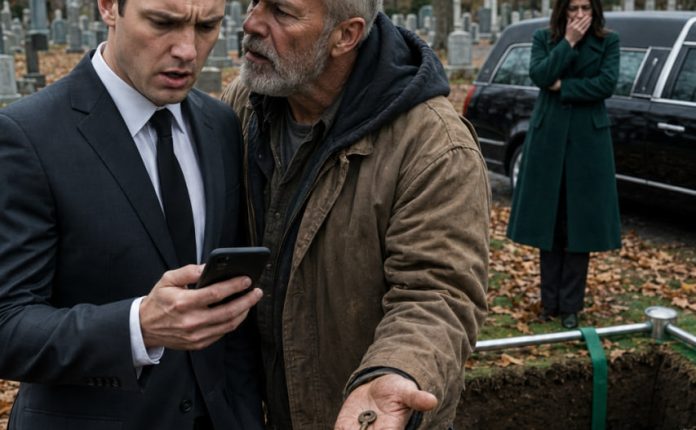
I caught my husband video-calling another woman at 2 a.m. He was whispering, “I love you, baby. She doesn’t suspect a thing.” I stood in the hallway for eleven minutes, listening. He told her he’d leave me after Christmas. That was three days ago. I didn’t confront him. I didn’t cry. I called a lawyer the next morning. I moved $340,000 from our joint account into a trust. He still had no idea.
Last night, he came home with roses and said, “You’re the only woman I’ll ever love.” I smiled, kissed his cheek, and handed him an envelope. When he opened it, his face went white. He looked up at me and whispered, “How long have you known?” I said, “Long enough to stop being your wife before you realized you’d already lost me.” Three nights earlier, I had gone downstairs because I could not sleep.
Our bedroom had felt too warm, and Daniel’s side of the bed was empty. At first, I assumed he had gone to the kitchen for water or was answering an email. He had been working late more often that month, and because his company was preparing for a major merger, I had never questioned it. I trusted him. That was the worst part. I trusted him so completely that suspicion had never even entered my mind.
As I reached the top of the stairs, I heard his voice from the living room. Soft. Affectionate. Nothing like the voice he used with clients. “I miss you too.” I stopped. At first, I thought he might be talking to his sister or perhaps one of our nieces. Then I heard a woman laugh through his phone speaker. Daniel lowered his voice and said, “I know, baby. Just a little longer.” Every muscle in my body went rigid.
I moved silently down the hallway until I could see part of the living room through the opening near the staircase. Daniel sat on the sofa with his back toward me. The room was dark except for the bluish light from his phone. On the screen was a woman—young, dark-haired, wearing a red sweater. I had never seen her before. Daniel smiled at her in a way I had not seen him smile at me in months.
“I love you, baby,” he whispered. “She doesn’t suspect a thing.” Something inside me went cold. Not shattered. Cold. There are moments when pain is too large to arrive all at once. Your mind protects you by turning everything into details. The clock above the fireplace read 2:07. Daniel’s slippers were crooked beneath the coffee table. One Christmas light outside had stopped blinking. There was an empty whiskey glass beside him.
The woman on his screen wore silver earrings. I remember all of it. I stood there for eleven minutes. I know because when I finally stepped backward, the clock read 2:18. For those eleven minutes, my husband of sixteen years calmly explained how he intended to leave me. After Christmas. Not before, because he did not want to “ruin the holidays.” He told her he had already spoken with a real estate agent about selling our lake house.
He told her our marriage had “been dead for years.” He called me “comfortable,” “predictable,” and “too dependent on the life we built to fight very hard.” That sentence almost made me laugh. Too dependent. Daniel had forgotten who built half of that life. He told her he expected the divorce to be easy because I hated confrontation. He said I would probably cry and ask him what I had done wrong. Then he said something that changed everything.
“The money is the only complicated part.” The woman asked, “What about the account?” Daniel leaned closer to the screen and said, “She doesn’t really know what’s in there.” My heart started beating differently—not faster, but harder. The account he was talking about was our joint investment account containing approximately $340,000. Except Daniel was wrong about one thing. I knew exactly what was in it.
Two hundred and ten thousand dollars of that money had come from the sale of a small software company I had co-founded with a college friend before Daniel and I had children. The rest had grown through investments over the years. Daniel contributed too, of course, but he had somehow rewritten our financial history until he believed the account was mostly his. The woman asked what he planned to do, and Daniel said, “I’ll move what I can before I file.”
That was when my grief became strategy. I walked quietly back upstairs, got into bed, and stared at the ceiling. Daniel returned at 2:31. He slid beneath the blankets beside me and kissed my shoulder. “Couldn’t sleep?” I asked. He froze for half a second, then said, “Work call.” I asked, “At two in the morning?” He answered, “Tokyo office.” I almost admired how easily he lied.
I rolled toward him and asked, “Everything okay?” Daniel said yes, kissed my forehead, and told me to go back to sleep. I closed my eyes, but I never slept. At 7:15 the next morning, Daniel left for work. He kissed me goodbye, called me sweetheart, and asked whether I could pick up the dry cleaning. I waited until his car disappeared around the corner, then picked up my phone and called an attorney.
Her name was Marissa Cole. I knew her socially through a friend, but I had never imagined needing her professionally. When I told her what I had heard, she interrupted me only once. “Do not move money simply to hide it.” I told her I was not trying to hide anything. “Good,” she replied. “Then we document everything before you touch anything.” That was the first lesson I learned. Revenge feels satisfying in movies. Documentation is better in real life.
Marissa told me to save copies of account statements, tax returns, retirement balances, mortgage records, property documents, insurance policies, credit cards, and business records. I spent four hours downloading everything. Then I found something else—a transfer of twenty-two thousand dollars, made three months earlier from our joint brokerage account into an account I did not recognize. I immediately called Marissa.
She told me not to confront Daniel. We traced the transfer legally through records I already had access to. The receiving account belonged to an LLC called Bright Harbor Consulting. I searched the company name and found the registered owner: Vanessa Crane. Dark hair. Silver earrings. The woman from the video call. I stared at her name for a long time. Then I found another transfer. Eight thousand dollars.
Then twelve thousand. Then fifteen thousand. Altogether, Daniel had moved $57,000 over ten months. The affair was not only emotional. It was financial. That made everything more serious. By noon, Marissa had brought in a forensic accountant. By two, we had enough evidence to request emergency protective measures if Daniel attempted to drain additional marital assets. The $340,000 account became central.
Marissa helped me move the money into a temporary legal trust structure under attorney supervision, fully documented and disclosed, so neither Daniel nor I could secretly drain it before the court sorted ownership. Technically, I had not stolen one dollar. I had protected all of it. But Daniel would not understand that when he discovered the account was no longer available for the exit plan he had so confidently discussed at two in the morning.
That afternoon, he texted me: Dinner tonight? My treat. I stared at the message for almost a minute, then replied, Sure. He took me to an Italian restaurant where we had celebrated our tenth anniversary. He ordered wine, held my hand, and asked if I remembered our honeymoon. I studied his face while he talked. The strange thing about betrayal is that once you know, every ordinary gesture becomes evidence.
His thumb rubbing mine, the little smile, the concern in his voice—all of it felt rehearsed. Halfway through dinner, he said, “You know I love you, right?” I almost choked. Instead, I smiled and said, “I know.” That night, while Daniel showered, I searched nothing, touched nothing, and checked no phone. Marissa had warned me not to cross legal lines. Besides, I already knew enough.
The next morning, Daniel became even more affectionate. He brought me coffee in bed, suggested we spend New Year’s at the lake house, and asked what I wanted for Christmas. Maybe guilt had made him generous. Or maybe he was simply decorating the stage before he burned it down. I played along. For three days, I behaved exactly as he expected—calm, helpful, trusting, and completely unaware.
I wrapped presents, bought groceries, called his mother, helped plan Christmas dinner, and quietly prepared to dismantle the version of our marriage he thought he controlled. Marissa filed the initial paperwork Friday morning. The filing included documentation of suspicious transfers and a request that marital assets remain protected. I also changed my personal banking passwords and opened an individual account for future salary deposits.
I placed copies of important records in a safe-deposit box. Then I did something emotionally harder. I called our adult daughter, Emma. She was twenty-one and in college two states away. I did not tell her about the affair. Not yet. I simply said, “Your father and I are having some problems, and I want you to know none of it has anything to do with you.” She became quiet.
“Are you getting divorced?” she asked. I told her, “I don’t know what happens next.” That was true in the broadest sense. I knew what I planned, but I did not know how Daniel would react once his lies stopped working. Emma started crying. I wanted to take everything back, but instead I told her, “I love you. Your father loves you. Whatever happens between us, you do not have to choose sides.”
That mattered to me. Daniel had betrayed me, but I would not recruit our daughter into punishing him. By Saturday evening, everything was ready. Daniel had no idea. Then he came home with roses. Red ones. Twenty-four. The same number he used to buy every anniversary. He walked into the kitchen smiling, kissed my cheek, and held them out. “For my favorite woman.”
I looked at him. There are moments when someone says something so dishonest it becomes almost beautiful. I took the roses and said, “They’re lovely.” He wrapped his arms around my waist. “You’re the only woman I’ll ever love.” I smiled, kissed his cheek, and told him, “Wait here.” Then I walked into the study and returned carrying a large cream envelope.
Daniel looked amused. “What’s this?” I said, “Early Christmas present.” He grinned and opened it. I watched his face change. First confusion. Then recognition. Then terror. Inside was a copy of the divorce filing, a notice regarding the protected joint assets, and copies of the transfers to Bright Harbor Consulting. Daniel stopped breathing for a second. His face went white.
He looked up at me and whispered, “How long have you known?” I answered, “Long enough.” He looked down at the papers again. “What is this?” I said, “You can read.” He whispered my name. “Claire.” It sounded strange in his mouth. Then he asked the question I knew was coming. “Where’s the money?” I said, “Protected.” He frowned. “What does that mean?”
“It means neither of us gets to make another secret transfer.” His eyes narrowed. “You moved three hundred and forty thousand dollars?” I corrected him. “I protected three hundred and forty thousand dollars.” Daniel snapped, “You can’t just do that.” I said, “My attorney disagrees.” His head jerked up. “Attorney?” I nodded. “Yes.” He stared at me. “You hired a lawyer?” I said, “You hired a girlfriend.”
He flinched. For the first time, his mask cracked. “Claire, listen.” I shook my head. “No.” He tried again. “Please.” I said no again. Then he started, “Vanessa isn’t—” I laughed and warned him, “Be careful what you say next.” He stopped. I placed a photograph on the counter. It was a public photo from Vanessa’s business page. Daniel looked at it, then immediately looked away.
“We need to talk,” he said. I replied, “We’re talking.” He said, “It’s complicated.” I answered, “It was very simple at two in the morning.” His face changed. Then I repeated the words I had heard him whisper: “I love you, baby. She doesn’t suspect a thing.” Daniel looked as if I had slapped him. I continued. “You said you’d leave me after Christmas. You said our marriage had been dead for years.”
“You said I hated confrontation. You said I would cry. You said I didn’t know what was in our account.” His shoulders slowly sagged. “How much did you hear?” he asked. “Eleven minutes.” That destroyed him. I could see it. Daniel sat down and stared at the papers. For several moments, neither of us spoke. Then he said, “I never meant for this to happen.”
That sentence made me angrier than anything else. “Which part?” I asked. He looked up. “The affair?” Silence. “The lying?” Silence. “The fifty-seven thousand dollars?” His expression changed sharply. “How do you know about that?” I laughed. “You really believed I knew nothing.” Daniel immediately said, “That money wasn’t for her.” I asked, “Then what was it for?”
He told me it was supposed to be an investment. “In her company?” I asked. “Yes.” “Without telling me.” He said, “I was going to explain.” I looked directly at him. “When? After Christmas?” He lowered his eyes. The cruelty of that phrase finally seemed to reach him. He had turned our family holiday into a deadline for betrayal.
I leaned against the counter and asked, “Does she know you’re still sleeping with me?” Daniel stared at me. “That’s none of—” I interrupted. “Does she?” His silence answered. I nodded. “So you lied to both of us.” He insisted it was not like that. I said, “It is exactly like that.” He stood and said, “I made mistakes.” I shook my head.
“No. A mistake is forgetting an anniversary. You built a second relationship and funded it with marital money.” Daniel stepped closer. “I love you.” I said no. He repeated it. I shook my head. “No, Daniel. You love what I made easy for you.” He stopped. I could see anger slowly replacing fear. That was the version of him I had expected to appear eventually.
“So this is revenge?” he asked. I said no. “You’ve been pretending for three days.” “Yes.” “You kissed me.” “Yes.” “You let me sleep beside you.” “Yes.” His voice rose. “That’s sick.” I stared at him. “Interesting.” He knew immediately what I meant and lowered his voice. “Claire, we can fix this.” I answered, “No.”
He reminded me of our sixteen years together, our home, and then Emma. I stopped him immediately. “Do not use our daughter.” Daniel fell silent. I continued, “You were willing to leave after Christmas. You had already decided the marriage was over. The only difference is that now you don’t get to control the timing.” That hit him hard. He looked down at the papers again.
“What happens now?” he asked. I told him he could sleep in the guest room that night and find somewhere else the next day. Daniel immediately said, “This is my house too.” I agreed. “So you can’t throw me out.” I told him, “I’m not. I’m asking you to leave voluntarily while the lawyers handle temporary arrangements.” He asked what would happen if he refused.
I said, “Then we both stay here and make each other miserable while paying attorneys to argue about bedrooms.” For the first time that evening, something like shame appeared on his face. He sat again and whispered, “I didn’t stop loving you.” I looked at him for a long time. “That might be the saddest part.” Then Daniel began crying.
I had seen him cry only twice before—when his father died and when Emma was born. Part of me wanted to comfort him. Sixteen years of muscle memory does not disappear because someone betrays you. I almost reached for him. Then I remembered standing in the hallway while he whispered, “She doesn’t suspect a thing.” I kept my hands at my sides.
Daniel stayed in the guest room that night. I do not know whether he slept. I barely did. At 5:30 the next morning, I heard the front door open. By the time I came downstairs, his car was gone. He had left a note on the kitchen table. I’m sorry. I know that isn’t enough. For once, he was right.
The following week was ugly. Vanessa hired her own lawyer after learning that the money Daniel had transferred might be scrutinized as marital assets. Daniel claimed some transfers were legitimate business investments. Our attorneys disagreed over valuation, timing, and intent. There were meetings, statements, and financial disclosures. Then another surprise emerged.
Vanessa had never planned to build a life with Daniel, at least not the life he imagined. The forensic accountant found that she had received similar “investments” from another married man two years earlier. Daniel learned this through his attorney. He called me that evening and said, “She was using me.” I almost hung up. Instead, I said, “I’m sorry.”
He sounded stunned. “You are?” I replied, “Yes. Being deceived hurts.” There was silence. Then Daniel said, “I deserve that.” I told him, “I wasn’t trying to hurt you.” He said, “I know.” That was the first conversation we had after the separation that felt completely honest. Daniel moved into a furnished apartment downtown and slowly stopped trying to save the marriage.
Not because he stopped regretting what he had done, but because I made it clear that regret and repair were not the same thing. He asked for counseling, and I agreed to one session—not to reconcile, but to end well. The counselor asked Daniel why he had cheated. He talked about aging, feeling invisible, career pressure, excitement, and Vanessa making him feel admired.
Then the counselor asked me what I felt hearing his explanations. I said, “I understand every reason he gave. None of them required lying to me.” Daniel cried again. I did too. That session helped more than I expected. It did not save our marriage. It helped me stop needing to understand something that was already understandable. He wanted something and chose dishonesty to get it. That was enough.
Our divorce was finalized nine months later. The financial settlement was complicated but fair. The $340,000 was fully accounted for. A significant portion was recognized as marital property, with documentation of my original contribution considered during negotiations. Daniel’s unauthorized transfers became part of the settlement discussions. He did not lose everything, and neither did I. That had never been the point.
I kept the house. Daniel kept the lake property after buying out my interest. We divided retirement accounts, and he repaid part of the money tied to Vanessa’s company through his portion of the settlement. Emma eventually learned the truth, though I refused to tell her more than she needed. She was furious with her father and barely spoke to him for months.
I encouraged her to build whatever relationship with him felt safe. “You don’t have to forgive him for me,” I told her. Emma asked, “Did you?” I thought about it for a long moment. “I’m trying to forgive him for myself.” The answer surprised me, but it was true. A year after the divorce, Daniel called me on Christmas Eve. I almost ignored the call, then answered.
“Merry Christmas,” he said. I replied, “Merry Christmas.” There was a pause. “Emma says you’re hosting tomorrow.” I told him yes. He said he was glad. Another silence followed before he said, “I’m sorry about what I did to that holiday.” I knew exactly what he meant. He had once planned to wait until after Christmas to leave me because he thought delaying betrayal made him kinder.
Instead, he had poisoned every holiday memory surrounding that year. “Thank you,” I said. Daniel told me he had been in therapy. I said I was glad. He told me he had ended all contact with Vanessa months earlier. I said that was probably wise. Then he asked, “Are you happy?” I looked around my kitchen. Emma was upstairs. Music played softly. A pie cooled on the counter.
There were no roses, no performance, and no secret phone calls. “Yes,” I said. Daniel became quiet. “I’m glad.” And I believed him. After we hung up, I opened a drawer beside the refrigerator. Inside was the original cream envelope I had handed him that night. I had kept it, not because I wanted a trophy, but because it reminded me of the moment I learned something important about myself.
For years, I had believed strength meant enduring, working through problems, keeping the family together, giving second chances, staying calm, and being reasonable. Those things can be strengths. But sometimes strength is knowing when not to save what someone else has deliberately broken. Sometimes it is standing in a hallway for eleven minutes while the person you love explains how little he thinks you understand.
Sometimes strength is calling an attorney before calling your best friend. Sometimes it is protecting assets instead of smashing dishes. Sometimes it is smiling when someone brings you roses because you finally understand that flowers cannot repair contempt. And sometimes the most powerful sentence you will ever say is not a scream. It is a quiet answer spoken when the other person finally realizes the truth.
“How long have you known?” Daniel had whispered. I had looked at the man I once believed I would grow old beside and said, “Long enough to understand that you weren’t planning to leave me after Christmas. You already left the moment you started building a life I wasn’t allowed to know existed.” His face had collapsed, but I had not finished.
“And long enough to make sure that when you finally walked away, you didn’t take my future with you.” That was the moment my marriage ended. Not at two in the morning, not during the video call, and not when I found the transfers. It ended in my kitchen, with roses on the counter and divorce papers in his hands, when I finally stopped waiting for him to choose me.
I chose myself.