I told my wife on our 25th anniversary. Olive Garden. Her favorite booth. Seventy-eight dollars for dinner. I ordered first. She got the chicken. Then I said, “I need to tell you something.” She slowly put her breadstick down and looked at me. “In 2011, I had an affair. Four months. I ended it.” She stared at me without blinking.
“Why now?” she asked. I swallowed and told her the woman had called me the previous week. She had a twelve-year-old daughter who looked like me and supposedly had the same birthmark behind her left ear. The girl needed surgery, and the cost was $47,000. “She asked me for money,” I said quietly.
My wife picked up her purse and stood. She looked down at me, but her voice remained strangely steady. “I knew about her. Since 2012.” My mouth went dry. “You knew?” She nodded once. “I never said anything because, in 2011, I was hiding something from you too.”
I stared at her as if the entire restaurant had suddenly gone silent, although forks were still scraping against plates and a child nearby was complaining about vegetables. Laura had always been the calm one. After twenty-five years together, I could count on one hand how many times I had heard her truly raise her voice. That calmness now terrified me.
She slipped the strap of her purse over her shoulder. “If you want the rest of this conversation, pay the bill and meet me outside.” Then she walked away. I sat alone in her favorite booth with two unfinished meals and the growing realization that my confession might not be the biggest secret between us.
I paid the bill and found her standing beside our car beneath the yellow parking-lot lights. Her arms were crossed against the cold. I approached slowly. “What did you mean?” I asked. She studied me for several seconds before answering. “I knew about Vanessa.”
Hearing the other woman’s name come from my wife’s mouth felt like being struck. I had never told Laura her name. “How?” I asked. “Because she contacted me,” Laura said. “In February 2012.” My stomach twisted. The affair had ended months earlier. I thought I had buried the entire thing forever.
Laura unlocked the car but did not get inside. “She emailed me,” she continued. “She said you had promised to leave me. She sent screenshots, hotel receipts, and photographs. Enough that I couldn’t pretend she was lying.” I leaned against the car because my legs suddenly felt weak.
“I never promised to leave you,” I said automatically. Laura gave me a look so tired that I immediately regretted defending myself. “That’s the part you want to correct?” she asked. I lowered my head. She was right. There was no useful distinction between the lies I had told Vanessa and the lies I had told my wife.
“Why didn’t you confront me?” I asked. Laura looked toward the glowing restaurant windows behind us. “Because three days before that email arrived, I found out I was pregnant.” I looked up sharply. We had two children, Michael and Grace. There had never been a third child.
“Pregnant?” I repeated. Laura nodded. “Almost eight weeks. I hadn’t told you because I wanted to surprise you.” I tried to remember that winter. Laura had been tired and sick. She had said she had the flu. I remembered bringing her soup. I remembered her spending several nights alone because she said she needed rest.
“What happened?” I whispered. Her face tightened. “I lost the baby.” For a moment, traffic beyond the parking lot was the only sound I could hear. “Why didn’t you tell me?” I asked, and as soon as the words left my mouth, I realized how unfair the question sounded.
Laura laughed once, but there was no humor in it. “Why didn’t I tell you? Because the morning I started bleeding, I was sitting on the bathroom floor reading messages between you and another woman. Because I was carrying your child while discovering you had spent four months pretending you didn’t have a wife.”
She continued before I could answer. “Because when I needed you most, I no longer knew who you were.” I wanted to reach for her, but I stopped myself. There was nothing my hands could repair. I stood there in silence while the full weight of what she had carried alone began to settle over me.
She told me she had gone to the hospital by herself. She told me she had said she was visiting her sister. I remembered that day too. Worse, I remembered complaining because our dinner plans had changed. That memory made me feel physically sick.
“The doctor said there was nothing they could do,” Laura continued. “Afterward, I sat in my car for almost two hours. I thought about calling you. Then I thought about Vanessa and the messages. I decided I could not survive losing the baby and my marriage in the same week.”
So she went home. She deleted Vanessa’s email from the family computer and said nothing. She carried the miscarriage alone. She carried the affair alone. And somehow, she continued living beside me as though neither secret had changed the ground beneath our marriage.
“Why stay with me?” I asked. Laura finally opened the passenger door. “Because I loved you. Because Michael was nine and Grace was six. Because I was afraid. Because part of me wanted to punish you by making you live the life you were willing to risk.”
She paused before adding, “And because another part of me kept waiting to see if you would ever tell me yourself.” Then she got into the car. I stood outside for a moment, stunned by that final sentence. For thirteen years, every anniversary and every ordinary Sunday had contained a test I did not even know I was taking.
I got into the driver’s seat, but neither of us asked to go home. We sat in the dark parking lot with the engine off. “Did you know the whole time?” I asked. “Yes.” “Every year?” “Yes.” I could hardly understand how she had carried it.
“Why didn’t you leave later?” I asked. Laura stared through the windshield. “Because life kept happening. You became a better husband after 2011. You stopped traveling as much. You became more present with the kids. You came home earlier. You treated me better.”
“At first, I assumed it was guilt,” she continued. “Later, I wondered whether the affair had scared you enough to understand what you could lose. And the longer I stayed, the harder it became to admit I had known all along.” Her words forced me to look back at those years differently.
She was right. Ending the affair had terrified me. Vanessa had been a coworker from another office, someone who laughed at my jokes during a period when Laura and I were exhausted and barely speaking beyond bills, children, and schedules. It was not an excuse. It was simply the pathetic truth.
I had enjoyed being admired. I had enjoyed feeling younger. Then one afternoon Vanessa asked when I was going to leave my family. Suddenly, I saw what I was doing. I ended it immediately and convinced myself I had saved my marriage. In reality, Laura had been the one carrying the truth.
“What happened with Vanessa after she contacted you?” I asked. Laura’s expression changed. “I replied once.” That surprised me. “What did you say?” “I told her never to contact me again.” “And she listened?” Laura looked down at her phone. “For a while.”
Then she said something that made my chest tighten again. “She contacted me six years ago.” I turned toward her. “Why?” Laura unlocked her phone and opened an old email account. “Because of the girl.” I stared at her. “You already knew there was a daughter?”
Laura nodded. “Vanessa sent me a photograph when the child was six.” Anger and panic rose together. “Why didn’t you tell me?” I asked. “Because she told me the girl wasn’t yours.” Laura handed me the phone. The email was dated several years earlier.
Vanessa wrote that she felt guilty about what had happened. She said she had married someone else, that her daughter’s father was a former boyfriend, and that she wanted to apologize for trying to interfere with our marriage. She even said the girl resembled several people in her own family.
I read the message twice. “Then why is she telling me now that the girl might be mine?” Laura took the phone back. “That is exactly what I wondered.” I thought about Vanessa’s call from the previous week and how frightened she had sounded.
She told me her daughter, Emily, had a serious congenital heart condition and needed an operation that insurance would not fully cover. Then she said Emily was mine. She sent photographs. The resemblance shocked me. Dark eyes, the same crooked smile, and supposedly the same small birthmark behind the left ear.
“She showed me the birthmark,” I said. Laura looked at me evenly. “A birthmark is not a paternity test.” “I know.” She raised an eyebrow. “Do you?” The question stung because it was fair. In the week since Vanessa called, guilt had made me ready to believe almost anything.
“She wants the money before the surgery next month,” I said. “Forty-seven thousand dollars.” Laura stared at me carefully. “Did you ask for medical records?” “No.” “Did you ask which hospital?” “No.” “Did you ask for a DNA test?” I shook my head.
She closed her eyes for a moment. “You were going to give her forty-seven thousand dollars?” I looked away. “I didn’t know what to do.” Laura leaned back in the seat. “That’s why you told me tonight?” “Yes.”
“Not because you finally decided I deserved the truth,” she said. I had no answer. The shame of that realization was worse than anything else she had said. I had spent a week telling myself that my confession was honorable, but if Vanessa had never called, I might have carried the secret forever.
“You’re right,” I said. Laura remained silent for a long time. Then she said, “Call her.” I turned toward her. “What?” “Call Vanessa.” “Now?” “Yes.” My stomach tightened. “What do I say?”
“Tell her we will help if Emily is your daughter and the medical need is real. Tell her we want a DNA test and hospital documentation.” I stared at Laura. “We?” She immediately shook her head. “Do not misunderstand me. I am not saying our marriage is fine.”
She continued, “I’m saying there is potentially a sick twelve-year-old child in the middle of this, and she is not responsible for what any of us did.” Even then, after everything I had done to her, Laura was thinking about the child first. That was the woman I had married.
I called Vanessa. She answered on the second ring. “David?” “Yes.” “Did you decide?” Laura gestured for speakerphone, so I turned it on. “I talked to Laura,” I said. Silence followed. Then Vanessa asked, “You told her?”
“Yes.” Her voice changed. “How did she take it?” Laura spoke before I could answer. “Hello, Vanessa.” The silence on the other end lasted several seconds. “Laura,” Vanessa finally said. “I didn’t know he would put me on speaker.”
“I asked him to,” Laura replied. Vanessa sounded nervous. “I’m sorry.” Laura’s expression hardened. “You said that six years ago.” Another silence followed. “And now you’re telling him Emily is his daughter.”
“Yes,” Vanessa said. Laura stayed calm. “Why did you previously tell me she wasn’t?” Vanessa exhaled loudly. “I didn’t want him involved.” “That doesn’t make sense.” “It did then.”
Laura did not argue. She simply said, “We need a DNA test.” Vanessa immediately answered, “There isn’t time.” My heart sank. Laura looked at me. “What do you mean there isn’t time?” she asked.
“Emily’s surgery is soon,” Vanessa said. “I need the deposit.” Laura asked which hospital. Vanessa hesitated before naming St. Matthew’s. Then Laura asked for the surgeon’s name. Another pause followed. “Dr. Paul Hendricks.”
Laura searched on her phone while Vanessa remained on speaker. After a moment, she shook her head. “There is no Dr. Paul Hendricks listed in pediatric cardiology at St. Matthew’s.” Vanessa’s voice rose. “Maybe the website isn’t updated.”
“Send us the medical bill,” Laura said. “I don’t have it with me.” “You asked for exactly $47,000.” “That’s what they told me.” “Then send the estimate.” Vanessa suddenly became defensive. “Why are you interrogating me? This is about a child.”
“Yes,” Laura said. “Which is why we are taking it seriously.” Vanessa hung up. I stared at my phone. Laura said nothing. Ten minutes later, Vanessa sent me a message saying she could not believe I had allowed my wife to humiliate her.
Then another message appeared. Forget it. I’ll find another way. Laura read the screen. “That doesn’t prove she’s lying,” she said. “No.” “But it proves we need more information.”
The next morning, I contacted an attorney. Not because I wanted to attack Vanessa, but because Laura insisted we handle everything correctly. The attorney advised us not to send money without verifying paternity and the medical circumstances.
He arranged for all future communication to go through his office and offered to coordinate a legally recognized DNA test. Vanessa resisted for nine days. Then she finally agreed. Those nine days almost destroyed what remained of my marriage.
Laura moved into the guest room. We did not tell our adult children everything immediately, but they sensed something was wrong. Grace called one evening and asked whether we were getting divorced. “I don’t know,” I told her. It was the first truly honest answer I had given about my marriage in a long time.
The DNA results came less than two weeks later. Emily was not my daughter. Probability of paternity: zero percent. I read the report three times. I thought I would feel overwhelming relief. Instead, I felt empty.
Laura did not celebrate either. She looked at the report and asked, “What about the surgery?” Our attorney had already investigated. St. Matthew’s had no record of a patient under Emily’s name scheduled for the procedure Vanessa described.
The doctor did not work at the hospital. The estimate Vanessa eventually provided had been altered. The entire medical story was false. Emily was real, and she was twelve years old, but she was not sick.
Our attorney eventually learned that Vanessa had serious financial problems. She had lost her job, fallen behind on rent, and accumulated significant debt. She remembered my birthmark from years earlier and used it as part of the story.
In the photographs she sent, the supposed mark behind Emily’s ear was difficult to see. I had filled in the rest because guilt made me want to believe punishment had finally arrived. I thought that was the end of the situation. It was not.
Three weeks later, Laura received an email directly from Emily. We never learned exactly how she found Laura’s address. The message was short. “Mrs. Carter, I’m sorry my mom lied to you. I found messages on her laptop. I don’t need surgery. Please don’t be angry with me. I didn’t know.”
Laura read the message twice and started crying. Not because of Vanessa, but because of the child. She replied that none of it was Emily’s fault and that she had absolutely nothing to apologize for.
Then Laura looked at me and said, “This is what lies do. They make children apologize for adults.” I knew she was not only talking about Vanessa. That night, I finally told Laura everything about the affair.
I told her about every hotel, every excuse, every time I said I was working late, every moment Vanessa called, and every time I considered confessing but decided cowardice was easier. Laura listened. Sometimes she cried. Sometimes she asked questions. Sometimes she stared at the floor.
When I finished, it was nearly three in the morning. Then she told me everything I had missed in 2012. The miscarriage. The hospital. The depression afterward. The weeks she spent deciding whether she should leave me.
She told me she had met with a divorce lawyer once but never filed. She had watched me with Michael and Grace and wondered whether ending the marriage would hurt them more than staying. “I don’t know whether I made the right decision,” she said.
“You did what you thought you had to do,” I replied. Laura looked at me. “That’s what people say when they don’t want to judge someone.” I shook my head. “I’m not judging you.” She looked down. “No. But I judged myself for years.”
I reached for her hand. She allowed me to touch it for only a few seconds before pulling away. “Do you understand what hurts the most?” she asked. “The affair?” “No.” I waited.
“You took away my ability to make an informed choice about my own life,” she said. “For thirteen years, you woke up every morning knowing the whole truth. I didn’t. Even though I knew about Vanessa, I didn’t know whether you would ever tell me.”
“I didn’t know whether there were other women,” she continued. “I didn’t know whether the man beside me was honest because he had changed or because he had become better at hiding things.” I told her there had been no one else.
“I believe you,” she said. That surprised me. “Then—” She stopped me. “Believing you now does not repair what happened then.” I nodded because there was nothing else to say.
Laura did not leave immediately. She also did not forgive me immediately. We started marriage counseling. Our first session was humiliating. The therapist asked why I had chosen our 25th anniversary to confess.
I said it was because Vanessa had called. Then he asked what I would have done if she had never contacted me. I had no good answer. Laura sat beside me silently. Finally, I admitted, “I probably would have kept the secret.”
The therapist nodded. “Then your first task is to stop calling the confession voluntary.” That sentence stayed with me. For years, I had described ending the affair as proof that I had chosen my family.
But integrity would have meant telling Laura the truth in 2011 and accepting whatever decision she made. I had not protected my marriage from the consequences. I had protected myself from the consequences.
Months passed. Laura and I remained in the same house. Some days almost felt normal. Other days she could barely look at me. I learned not to rush her and not to ask, “Are we okay?” every time she laughed at one of my jokes.
I learned that forgiveness is not something the injured person performs simply because the guilty person has become uncomfortable waiting. Sometimes the only useful thing I could do was stay honest, stay patient, and accept that Laura controlled what happened next.
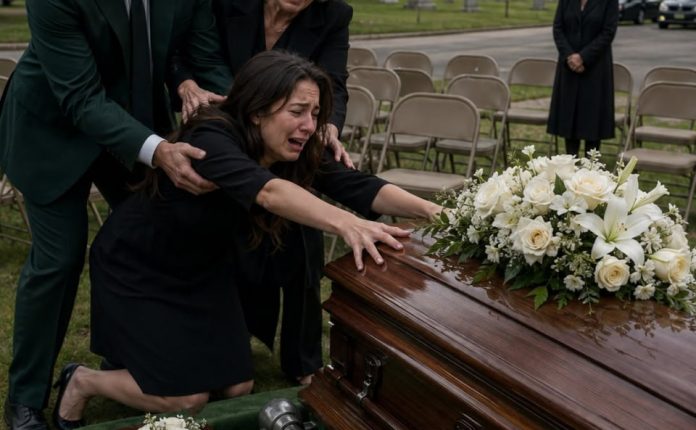
About six months after our anniversary dinner, Laura asked me to drive somewhere with her. She did not tell me where we were going. Eventually, we arrived at a cemetery. She walked between several rows before stopping beneath a large maple tree.
There was no grave marker. She stood there quietly. “What is this?” I asked. “This is where I used to come after the miscarriage,” she said. My throat tightened. “There’s no grave.” “No.”
“It was too early,” she explained. “There wasn’t a burial. But I needed somewhere to put the grief.” She sat on a nearby bench. I sat beside her. For the first time, she told me what she had planned to name the baby if it had been a girl.
Anna.
I cried. I knew I did not have the right to grieve in the same way Laura had, but she let me sit beside her and grieve with her. That was the first day I truly believed our marriage might survive.
Not because she had forgiven me completely, but because she had finally allowed me into a pain she had carried alone for thirteen years. A year after the Olive Garden anniversary, we went back to the restaurant.
It was Laura’s idea. Same restaurant, different booth. She ordered the chicken again. I ordered pasta. When the breadsticks arrived, we both stared at them for a second. Then she laughed. I laughed too.
It was the strangest anniversary meal of our marriage. There were no dramatic declarations and no promises that everything was fixed. We were simply two people who had finally stopped pretending that the past was simpler than it really was.
Halfway through dinner, Laura said, “I have one question.” “Anything.” She studied me. “Do you still think telling me that night was the hardest thing you ever did?” I thought carefully before answering.
“No.” “What was?” I looked at her. “Living every day afterward without trying to control what you did with the truth.” Laura nodded slowly. “That’s a better answer.” I smiled. “Am I improving?” “Slowly.”
We stayed married. That surprises people when they hear the story. Some think Laura should have left. Others think she should have forgiven me faster. Neither opinion matters. It was her life and her decision.
Trust did not return in one dramatic moment. It came back in small pieces. I stopped hiding my phone, not because she demanded access, but because secrecy had become disgusting to me.
I told her where I was going without becoming defensive. I answered difficult questions even when the answers embarrassed me. She stopped pretending she was fine when she was angry. She learned to say, “I’m angry today,” without apologizing.
We became less polite and more honest. Strangely, that brought us closer than we had been in years. Vanessa never contacted us again. Emily sent Laura one Christmas message thanking her for being kind.
Laura replied. I did not. The girl did not need another confused adult stepping into her life. As for the $47,000, I sometimes think about how close I came to sending it.
Not because losing that money would have ruined us. Because paying it might have allowed me to believe guilt could be settled like a bill. It cannot. The true cost of what I did was never financial.
It was the thirteen years my wife spent carrying knowledge I had been too cowardly to acknowledge. It was the hospital visit she made alone. It was the child we lost without grieving together.
It was also the version of our marriage that might have existed if I had simply told the truth when it happened. Neither Laura nor I could recover those years. What we could do was refuse to waste the years still available to us.
On our 27th anniversary, we did not go to Olive Garden. We stayed home. Laura cooked dinner, and I washed the dishes afterward. At some point, she came into the kitchen holding an old envelope.
My heart stopped when I recognized it. Inside were the screenshots Vanessa had sent her in 2012. Hotel confirmations, messages, photographs, and evidence of the man I had been.
Laura had kept them for fourteen years. “What are you doing with those?” I asked. She opened the trash can but stopped before dropping them inside.
“I used to read these whenever I thought I was imagining what happened,” she said. “I needed proof.” I did not speak. “I don’t need them anymore.” Then she dropped the papers into the trash.
I started crying. Laura looked at me. “Don’t misunderstand.” “I won’t.” “I’m not erasing it.” “I know.” She looked at the trash for another moment. “I’m just tired of storing it.”
I nodded. That was enough. Later that night, we sat together on the porch. She rested her head against my shoulder. It was a small gesture, but it was one I no longer took for granted.
I thought about that first anniversary dinner. Her favorite booth. Seventy-eight dollars. Chicken. Breadsticks. My carefully rehearsed confession. I had believed I was finally bringing the truth into our marriage.
I did not know my wife had already been living with that truth for thirteen years. I did not know she had lost a baby alone. I did not know that a supposedly sick twelve-year-old child would become part of another lie.
And I certainly did not know that the hardest part would begin only after every secret had finally been exposed. The truth did not automatically save our marriage.
The truth simply gave both of us the first real chance to decide, with open eyes, whether the marriage was still worth saving. For years, I had made decisions for both of us by hiding information.
This time, the decision belonged to Laura as much as it belonged to me. And for the first time in many years, whatever came next would be something we chose together.