The legal process moved more slowly than my anger.
Movies teach us that truth arrives like lightning. A secret is exposed, a villain confesses, and justice appears before the next scene.
Real truth arrives in envelopes, appointments and carefully numbered exhibits.
It arrives through waiting rooms.
It asks the same painful questions more than once.
It requires you to describe the worst moments of your life to strangers who must determine which details can be proven.
My attorney, Rachel Singh, explained every step.
“We have the medical records,” she said. “We have the device, the imaging and the messages. We also need to establish the larger pattern of control, particularly if you seek a protective order.”
“I don’t know whether the other things count.”
“What other things?”
I told her about the location tracker.
The financial accounts.
The canceled appointments.
The returned birthday cards.
The passwords.
The way Adrian described me as anxious or forgetful whenever I disagreed with him.
Rachel took notes without reacting.
When I finished, she said, “Coercive control often survives by making each individual incident look too small to name. The pattern is what matters.”
Pattern.
The word gave shape to my marriage.
It was not one lie.
It was not one medical violation.
It was a system.
Adrian contacted relatives before I could.
His sister called Mae and said I was destroying a good man because of a misunderstanding.
His father left me a voicemail.
“Marriage requires forgiveness,” he said. “Adrian has always known what is best for you.”
That sentence explained more than he intended.
Adrian had been raised to believe love made him an authority.
He had learned that protecting a woman meant replacing her judgment with his own.
Understanding the origin of his behavior did not excuse it.
A tree can grow from poisoned soil and still produce poisoned fruit.
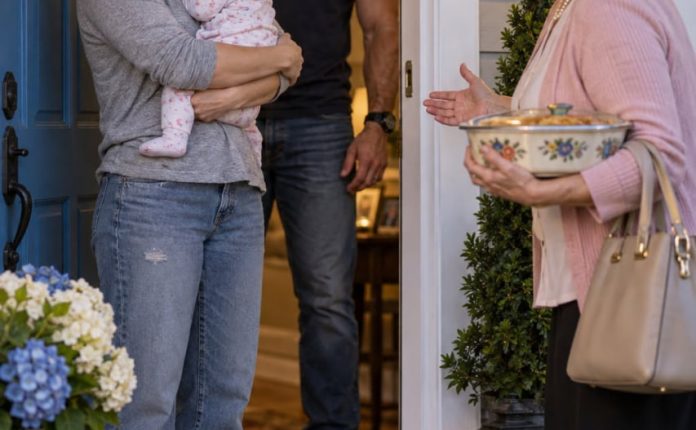
Carmen came to Mae’s house three days after my surgery.
She stood on the porch holding a casserole and crying before I opened the door.
“I should have tried harder,” she said.
“To do what?”
“To reach you.”
I let her inside.
We sat in the living room while Mae reheated coffee.
“Did you ever say I was unlikely to become a mother?” I asked.
Carmen looked horrified.
“Never.”
“Adrian said you mocked my fertility problems.”
“I told him he needed to stop speaking for you at appointments.”
“When?”
“After that dinner at our house. You went to the restroom, and he told everyone you were emotionally unstable because you weren’t pregnant yet. I said he should let you tell your own story.”
My face burned.
“He said you laughed at me.”
“No, Nora.”
She reached across the table.
“He told me you didn’t want to see me anymore. When I called, he answered your phone twice. He said contact from me made your anxiety worse.”
“I thought you abandoned me.”
“I thought you chose him.”
We sat there grieving a friendship that had not died naturally. It had been cut apart and buried under separate lies.
Carmen became another witness.
So did my former supervisor, who remembered Adrian requesting that all scheduling changes be confirmed through him because I was “struggling with memory issues.”
I had no memory disorder.
He had created a version of me that required management.
Then he presented himself as the only person qualified to manage me.
At the protective-order hearing, Adrian wore the navy suit I bought him for our tenth anniversary.
Seeing him across the courtroom caused my body to react before my mind did.
My hands became cold.
My chest tightened.
I had the sudden urge to cross the room and explain myself before he became disappointed.
Rachel noticed.
“Look at me,” she whispered.
I did.
“You are not in his house. You are not at his table. You do not have to make this comfortable for him.”
Adrian’s attorney described our marriage as loving but complicated.
He said Adrian had believed the contraceptive device was medically necessary.
He said Dr. Leland had made the final medical decision.
He said my husband had been concerned because pregnancy could carry risks at my age.
Rachel stood.
“My client was thirty-six when the device was placed.”
The attorney corrected himself.
He said Adrian had acted according to medical advice.
Then Rachel presented the form containing the forged signature.
She presented Adrian’s voicemail:
Dr. Leland and I made the safest choice available.
She presented his message:
I did what I did because I could not lose you.
The judge asked Adrian whether he knew I had not personally requested the device.
Adrian hesitated.
I had rarely seen him hesitate.
“She was frightened,” he said. “She relied on me to make difficult decisions.”
“Did she authorize you to consent for her?”
“We were married.”
“That was not my question.”
Adrian looked toward me.
His expression was not apologetic.
It was wounded.
He truly believed I had betrayed him by refusing to accept what he had done.
“She wanted a child,” he said. “She was obsessed with it. Dr. Leland warned me that pregnancy would make her anxiety worse.”
“Was she diagnosed with a condition that made her unable to provide medical consent?”
“No.”
“Was she unconscious when the decision was discussed?”
“She was upset.”
“Was she legally incapable of deciding?”
“No.”
“Then why was her signature imitated?”
“I didn’t imitate it.”
“Who did?”
Adrian’s mouth tightened.
“I don’t know.”
For years, I had watched him reshape reality in private.
That day, I watched reality refuse to bend.
The judge issued the protective order.
It did not answer every question.
It did not repair my body or restore the years I had lost.
But when the judge instructed Adrian not to contact me, approach my workplace or enter Mae’s property, I felt something inside me loosen.
Outside the courthouse, Adrian stood several yards away beside his attorney.
He called my name once.
Rachel stepped between us.
Adrian looked at me over her shoulder.
“You know I loved you,” he said.
I surprised myself by answering.
“No,” I said. “You loved being necessary.”
His face changed.
For one second, the controlled expression disappeared.
I saw anger.
Not heartbreak.
Not remorse.
Anger that I had named him accurately.
I turned away before he could respond.
The investigation into Dr. Leland’s conduct uncovered more than my case.
His office had stored outdated devices improperly. Several records contained incomplete consent documentation. One former employee told investigators that Adrian had visited the clinic alone before my procedure.
Dr. Leland initially denied remembering the conversation.
Later, through his attorney, he acknowledged that Adrian had expressed intense concern about my becoming pregnant.
He claimed he believed Adrian was accurately representing my wishes.
That explanation did not survive the forged consent form.
I was not the only patient whose spouse had been allowed unusual influence, though mine appeared to be the most serious documented case.
Dr. Leland eventually stopped practicing while the licensing process continued.
The criminal case moved forward, but slowly.
I learned not to measure my recovery by the speed of institutions.
Justice was important.
But I could not postpone living until every person responsible had been punished.
My separation from Adrian became a divorce.
He fought over money, furniture and the house.
He claimed I had contributed little financially because I worked part-time.
Rachel obtained records showing that Adrian had repeatedly encouraged me to reduce my hours while transferring portions of my salary into accounts I could not access.
We discovered another account containing money from the sale of my old car.
He had told me the trade-in value had covered the deposit on the replacement.
Instead, most of it had been moved into an investment account in his name.
There were also messages between Adrian and our accountant discussing how to keep financial statements “simple for Nora.”
Every discovery hurt.
But each one also released me from another false belief.
I had thought I was careless with money.
I was not.
I had been denied information.
I thought I was forgetful.
I was not.
Events had been hidden from me.
I thought I was weak.
I had been surviving inside a reality another person edited every day.
Six months after my surgery, Dr. Reed asked how I felt physically.
“Better,” I said. “The pain is almost gone.”
“And emotionally?”
“That answer changes by the hour.”
She smiled.
“That is allowed.”
Tests showed that the inflammation had improved. There was scarring, and pregnancy would be uncertain and potentially difficult.
Dr. Reed referred me to a fertility specialist, but she did not assume that I wanted treatment.
“The decision is yours,” she said. “Not your former husband’s. Not mine. Yours.”
I kept the referral in my purse for three weeks.
At first, I thought making an appointment would prove that Adrian had not defeated me.
Then I realized I was still allowing him to define the question.
The question was no longer whether I could become a mother before time ran out.
The question was what kind of life I wanted now that it finally belonged to me.
I met with the specialist once.
She explained the possibilities honestly. None were guaranteed. Some were expensive and physically demanding.
I listened.
I asked questions.
Then I said I needed time.
No one pressured me.
No one called Adrian.
No one treated hesitation as incapacity.
I walked out carrying my own medical file.
That simple act felt revolutionary.
I returned to full-time work the following school year.
My principal, Mrs. Alvarez, welcomed me back without asking for details.
“We need you,” she said. “The children never stopped asking when you would return to mornings.”
I was assigned a small reading room with windows facing the playground.
For years, Adrian had told me the school drained me.
He was wrong.
Some days were exhausting, but exhaustion caused by meaningful work felt different from the fatigue of constant self-doubt.
I began an after-school reading club for children who needed extra help.
One little girl named Ruby refused to read aloud because her older brother mocked her.
During our third session, she stumbled through an entire page and then covered her mouth in surprise.
“I did it,” she whispered.
“You did.”
“What if I forget how tomorrow?”
“Then we learn it again.”
She considered this.
“Can people learn things again even if someone told them wrong?”
The question struck so deeply that I had to look away.
“Yes,” I said. “People can learn again.”
I was one of those people.
I learned to check my own bank account.
I learned to schedule appointments without explaining them.
I learned that turning off location sharing was not deception.
I learned to leave mail sealed until I opened it.
I learned that anxiety was not proof of incompetence.
Sometimes anxiety was the alarm a person felt after ignoring danger for too long.
Mae and I rebuilt our relationship carefully.
We did not pretend the lost years had not happened.
There were arguments.
She was angry that I had believed Adrian.
I was angry that she had stopped trying.
Then we remembered who had benefited from our separation, and we refused to let him continue benefiting after he was gone.
Carmen and I resumed our Saturday breakfasts.
The first time I walked into our old café, the waitress recognized me.
“Where have you been?” she asked.
I looked at Carmen.
“Finding my way back,” I said.
Near the first anniversary of my surgery, a package arrived at Mae’s house.
There was no return address.
Inside was the yellow baby blanket.
I had believed it was still in my suitcase, but Adrian must have taken it before I left.
A note rested on top.
You always chose a dream over our marriage.
I read it twice.
Then I folded the note and gave it to Rachel because it violated the protective order.
I kept the blanket.
Adrian no longer had the power to define what it represented.
My mother had not made it for a specific child.
She had made it while imagining love continuing into the future.
I donated several boxes of baby items I had stored over the years, but I kept that blanket on the back of my reading-room chair.
During winter, children sometimes wrapped it around their shoulders while reading.
Ruby called it the courage blanket.
I liked that better than any meaning I had assigned to it before.
The final divorce hearing took place fourteen months after Dr. Reed dimmed the ultrasound screen.
Adrian looked older.
I probably did too.
His attorney negotiated most of the financial terms before the hearing. I received my share of the house, restored access to money that had been hidden and ownership of my retirement account.
I did not ask for the house itself.
People were surprised.
“You put years into that place,” Carmen said.
She was right.
I had painted the kitchen, planted the roses and selected every bookcase.
But the house had been designed around Adrian’s rules. The locks, the cameras, the desk where he opened my mail and the bedroom where I learned to apologize for asking questions all belonged to a life I did not want preserved.
My share of the sale allowed me to buy a small brick house two streets from Mae.
It had uneven floors, old windows and a porch light that flickered whenever the wind blew.
The first night I slept there, I woke at two in the morning.
For several seconds, I waited for Adrian to notice I was awake.
Then I remembered he was not there.
I walked barefoot through every room.
The silence was different from the silence after I turned off my phone in the hospital.
That silence had been an escape.
This silence was ownership.
I opened the front door and stood beneath the flickering porch light.
Rain had begun falling.
Years earlier, Adrian had stood beneath another broken light and convinced me that being watched was the same as being loved.
I knew better now.
Protection is not someone taking your keys because they distrust your driving.
It is not someone reading your mail because they believe you will misunderstand it.
It is not someone speaking to your doctor because your questions are inconvenient.
It is not someone making permanent choices inside your body and calling the theft devotion.
Real protection does not erase your voice.
It creates enough safety for your voice to be heard.
The criminal proceedings ended later than I expected.
Dr. Leland accepted responsibility for falsifying and mishandling medical documentation and for performing a procedure without valid informed consent. His license was revoked.
Adrian entered an agreement that included legal penalties, financial restitution and strict conditions preventing contact with me.
Some people said the outcome was not severe enough.
Others said it was more accountability than many women ever received.
I understood both reactions.
No judgment could return the years when I might have made different choices.
No payment could tell me what my life would have been if Adrian had spoken honestly before our marriage.
Perhaps I would have married someone else.
Perhaps I would have become a mother.
Perhaps I would have remained single and built a completely different life.
The uncertainty still hurt.
But I refused to spend the rest of my future mourning every future he had interrupted.
Two years after the surgery, I became a licensed foster parent.
The decision did not arise from desperation to replace the child I never had.
It came slowly.
I had spent years helping children find confidence in words. I had an extra bedroom, a stable job and more love than I had realized.
My first placement was a thirteen-year-old girl named Elise.
She arrived with two plastic bags of clothes, a sketchbook and strict instructions that she was not staying long.
“I don’t need another person pretending to save me,” she said on the first night.
I did not tell her I understood.
Trust does not grow because adults announce that they are trustworthy.
It grows through repeated evidence.
So I gave her a key.
I showed her how to lock her bedroom door from the inside.
I explained that I would always knock.
I asked before moving anything in her room.
When she needed a medical checkup, I sat in the waiting room unless she invited me inside.
At dinner, I gave her choices.
Not performative choices where only one answer was acceptable.
Real choices.
Pasta or soup.
Conversation or silence.
Help with homework now or after she rested.
Three months after she arrived, Elise found the yellow blanket in the reading room at school.
“Why do you keep this here?” she asked.
“It belonged to my mother.”
“Was it yours?”
“It was made for someone who never came.”
She studied my face.
“Does that make you sad?”
“Yes.”
“Then why don’t you throw it away?”
“Because something can remind us of pain without belonging to the pain forever.”
She considered that answer, then wrapped the blanket around her shoulders.
Ruby had moved on to middle school by then, but the name remained.
“The kids call this the courage blanket,” I said.
Elise rolled her eyes.
“That’s cheesy.”
She carried it home anyway.
One evening, almost a year after she came to live with me, Elise sat beside me on the porch.
The light above us had been repaired, though I kept forgetting to paint the surrounding wood.
She held a letter from her caseworker.
There was a possibility that she would remain with me permanently if we both agreed.
“What do you think?” I asked.
She looked suspicious.
“You’re supposed to tell me what you want.”
“I want to know what you want too.”
“Adults always say that, but they already decided.”
“I haven’t decided for you.”
“What happens if I say no?”
“You will still have dinner here tonight. You will still go to school tomorrow. We will keep talking with your caseworker. You will not be punished.”
“And if I say yes?”
“We take the next step together.”
She looked down at the letter.
“You really don’t want to choose for me?”
“No.”
“Even if you think you know what’s best?”
“Especially then.”
Her eyes filled with tears.
She wiped them away angrily.
“I think I want to stay.”
My own voice shook.
“I think I want that too.”
She leaned against me.
We did not call it protection.
We called it family.
On the third anniversary of my surgery, I visited Dr. Reed for a routine examination.
The ultrasound room looked almost exactly as I remembered it.
Same equipment.
Same dimmable screen.
Same paper sheet beneath me.
But my phone rested silently on the chair.
No one was tracking me.
No one was waiting outside to take control of the conversation.
Dr. Reed examined the images.
“Everything looks stable,” she said.
She turned the screen toward me rather than away.
“There is some scarring, as we expected, but no new concerns.”
I looked at the pale curves on the monitor.
For years, that part of my body had represented failure.
Then it represented violation.
Now it was simply part of me.
Changed.
Scarred.
Alive.
Dr. Reed completed the examination and asked whether I had any questions.
“Yes,” I said.
“Go ahead.”
“Do you remember the first day I came here?”
“I do.”
“Were you afraid for me?”
She thought carefully.
“I was concerned.”
“You knew before I did.”
“I knew something was wrong medically. I suspected you might not be safe. But you were the one who named it.”
I remembered the question she had asked.
Do you feel safe going home with him?
And my whispered answer.
No.
A single honest word had divided my life into before and after.
“I used to think you saved me,” I said.
Dr. Reed shook her head.
“I gave you information. You saved yourself with it.”
Outside the clinic, sunlight reflected from the windshields in the parking lot.
I found Elise leaning against my car, pretending not to be worried.
“How did it go?” she asked.
“Everything is fine.”
“You took forever.”
“It was twenty minutes.”
“That is forever in a parking lot.”
I handed her the keys.
“You want to drive?”
Her learner’s permit was only two weeks old.
She stared at me.
“Seriously?”
“Seriously.”
“What if I mess up?”
“I’ll be beside you.”
“What if I miss the turn?”
“We take the next one.”
“What if you get scared?”
“I probably will.”
She grinned.
“That doesn’t sound very protective.”
I looked at the open driver’s door, the keys in her hand and the road stretching beyond the clinic.
“It is,” I said. “The real kind.”
She climbed behind the wheel.
I sat in the passenger seat and fastened my seat belt.
Elise adjusted the mirrors, checked the parking lot and placed both hands on the steering wheel.
“Ready?” she asked.
I looked back at the clinic where a doctor had once dimmed a screen and shown me the truth.
Then I looked ahead.
“Yes,” I said.
This time, the decision was mine.
Elise pulled carefully into the sunlight.
And together, we drove home.