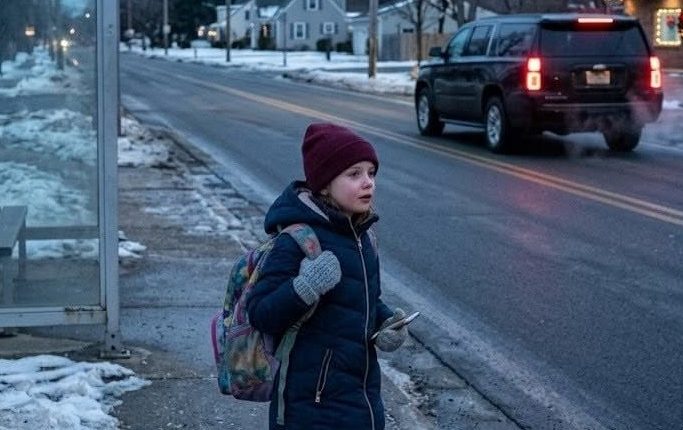
The Harrington Hotel stood six blocks from the hospital.
I walked there through the snow because I could not stand the thought of waiting for a car.
Evan followed several steps behind me, calling my name.
Fireworks flashed above the buildings. Music spilled from restaurants and bars. Couples held hands beneath strings of silver lights.
Everywhere I looked, people were celebrating.
I kept seeing Maya on the floor.
I kept hearing her whisper, “Don’t let him get cold.”
The hotel lobby was filled with crystal decorations and white roses. A sign near the entrance read:
**THE MERCER FAMILY FOUNDATION
NEW YEAR’S EVE BENEFIT FOR STRUGGLING MOTHERS AND INFANTS**
For a moment, I thought I might be sick.
My mother had built the foundation after my father’s death. She hosted fundraisers, gave speeches, and appeared in newspaper photographs beside women holding babies.
That evening, she was raising money for struggling mothers while her own daughter-in-law starved six blocks away.
A security guard approached me.
“Sir, may I see your invitation?”
“My name is Daniel Mercer.”
His eyes moved to the blood on my sweater.
“Sir, perhaps you should—”
I walked past him.
The ballroom doors were open.
Inside, hundreds of guests sat at tables decorated with white candles and gold ribbons. A jazz band played near the stage. Waiters moved through the room carrying trays of food.
At the front, my mother stood behind a podium.
Vivian Mercer wore a silver gown and the diamond necklace my father had bought for their twentieth anniversary.
Behind her, a large screen displayed photographs of smiling mothers and newborn babies.
“We must never forget,” she was saying, “that compassion begins with noticing those who suffer silently.”
I stopped in the center of the ballroom.
She saw me.
Her voice faltered.
Dozens of guests turned.
“Daniel?”
The room became quiet.
I walked toward the stage.
My mother stepped away from the microphone.
“What are you doing here?”
“Where is the money?”
She glanced at the audience.
“This is not an appropriate place.”
“Where is the twelve thousand dollars I sent for Maya?”
A murmur passed through the room.
Mother’s smile tightened.
“We can discuss this privately.”
“She never received it.”
“Daniel, you have clearly misunderstood.”
“Our apartment is empty.”
Her face remained calm, but her eyes sharpened.
“Maya made certain decisions while you were away.”
“She was found bleeding and unconscious on the floor.”
Someone gasped.
My mother looked at Evan, who had entered behind me.
“What happened?” she asked.
“You know what happened.”
“I certainly do not.”
“Our heat was disconnected. There was no food. Noah was hypothermic.”
The word seemed to travel across the ballroom.
Hypothermic.
A newborn.
On New Year’s Eve.
At a charity event for mothers and infants.
My mother reached for my arm.
“Please come with me.”
I stepped back.
“Did you take Maya’s phone?”
“She was distressed after the birth.”
“Did you take it?”
“She was sending irrational messages.”
“What messages?”
“She accused me of things. She was emotional and confused.”
“She had just undergone emergency surgery.”
“She was impossible to manage.”
“Manage?”
“She refused to listen. She insulted me. She said I had no right to be in your home.”
“You didn’t.”
Her expression hardened.
“I was trying to help.”
“By taking her phone?”
“She needed rest.”
“By selling our furniture?”
The room went completely silent.
My mother looked toward the hotel staff.
“This is a family matter.”
“No. It became something else when a doctor had to save my wife from an infection because she had been abandoned.”
“I did not abandon her.”
“Then explain the apartment.”
She took a breath.
“Maya told me she wanted to leave you.”
It was such a carefully prepared lie that I almost admired it.
Almost.
“She said she would sell the furniture and return to her sister.”
“Maya doesn’t have a sister.”
My mother froze.
Several people nearby exchanged glances.
I stepped closer to the stage.
“She is an only child. You know that.”
“I meant her cousin.”
“You don’t even know her cousin’s name.”
My mother’s face began to crack.
Evan climbed onto the stage.
“Mom, where did the watch come from?”
She turned toward him.
“This is not the moment.”
“Daniel says it was in his apartment.”
“It was your father’s.”
“That doesn’t answer the question.”
I looked at the tables surrounding us.
Every place setting had three forks. Champagne filled hundreds of glasses. Plates were piled with food.
On an easel beside the stage was a fundraising total:
**$48,600 RAISED TONIGHT**
My mother had spent years teaching me that appearances mattered. She believed public shame was worse than private cruelty.
So I asked the question she feared most.
“Did money from my account pay for this event?”
“No.”
“Then show me the transfer records.”
Her silence answered before she did.
I had given her access to an emergency account before leaving the country. She told me she would use it only if Maya needed help.
“How much did you take?”
“I borrowed some funds.”
“How much?”
“Daniel, lower your voice.”
“How much?”
She looked toward the floor.
“Thirty-eight thousand.”
Evan stared at her.
“You said the gala was paid for by sponsors.”
“It will be reimbursed when the pledges arrive.”
“You stole thirty-eight thousand dollars?”
“I did not steal it. The account was accessible to me.”
“For emergencies involving my wife and child.”
“This foundation is your father’s legacy.”
“My son nearly froze to death.”
Her voice rose.
“And none of this would have happened if you had married someone who understood our family.”
There it was.
The truth.
Not an accident.
Not a misunderstanding.
Not even greed alone.
Hatred.
My mother had never accepted Maya.
Maya’s father repaired elevators. Her mother cleaned offices at night. Maya attended college on scholarships and worked two jobs. My mother called her “resourceful” in public and “opportunistic” in private.
When I announced our engagement, Mother said Maya would embarrass me.
When we married anyway, she wore black.
After my father died, Mother softened—or pretended to. When Maya became pregnant, she offered to help. She organized the baby shower. She volunteered to stay with Maya while I completed the final six weeks of a construction project overseas.
I thought the baby had changed her.
Instead, she had simply found a better opportunity to punish us.
“What did you do after Maya left the hospital?” I asked.
Mother’s mouth tightened.
“She was discharged earlier than expected.”
“Did you bring her home?”
“Yes.”
“Did you buy her medication?”
“She had prescriptions.”
“That is not what I asked.”
“She became disrespectful.”
“What did she say?”
“She said she wanted you, not me.”
The sentence was so small.
So ordinary.
A frightened woman had wanted her husband after nearly dying in childbirth.
My mother had treated it as an insult.
“She asked to call you,” Mother continued. “I told her you were working.”
“So you took her phone.”
“She kept calling.”
“You told me she didn’t want to speak to me.”
“I was trying to protect you from unnecessary stress.”
“You sent messages from her phone.”
“I answered a few.”
“You told me she blamed me for missing the birth.”
“She did.”
“No,” I said. “You did.”
Mother’s eyes glistened, but I knew her tears. They were not tears of remorse.
They were tears of lost control.
“You were my son before she came along,” she said.
“And I am her husband.”
“She changed you.”
“She taught me that love doesn’t require obedience.”
Mother’s face twisted.
“You have no idea what I sacrificed for you.”
“I know exactly what Maya sacrificed for Noah tonight.”
The hotel clock above the ballroom doors showed eleven forty-three.
Seventeen minutes until midnight.
Seventeen minutes until the entire city welcomed a new beginning.
I removed the key to the emergency account from my wallet and placed it on the podium.
“This ends tonight.”
Mother looked down at it.
“What are you saying?”
“You will never have access to my money, my home, my wife, or my son again.”
“You cannot keep my grandson from me.”
“I can keep him from anyone who endangers him.”
Her hand struck the podium.
“I am his grandmother.”
“You left him in a freezing apartment.”
“I didn’t know the heat would be disconnected.”
“So you admit you knew they were alone.”
“I thought Maya had made other arrangements.”
“Without a phone? Without money? After surgery?”
“She could have asked a neighbor.”
“She asked you.”
Mother’s shoulders sank, but only slightly.
“I wanted her to understand that being part of this family came with responsibilities.”
“She was recovering from childbirth.”
“She needed to learn respect.”
I looked at the woman who had raised me.
For years, I had mistaken fear for respect. My mother controlled every holiday, every decision, every conversation. My father had kept peace by giving her what she wanted. Evan and I learned to apologize before we knew what we had done wrong.
Maya saw it immediately.
She never ordered me to choose between them. She simply asked me to recognize what was happening.
I called her sensitive.
I told her Mother meant well.
I asked Maya to be patient.
Standing beneath the glittering lights of that ballroom, I finally understood that patience can become permission when cruelty faces no consequences.
“I should have protected her from you,” I said.
Mother recoiled as though I had struck her.
“You would turn against your own mother?”
“I’m standing with my family.”
“I am your family.”
“You were.”
The words hurt me.
They needed to.
Love without truth had brought us here.
I turned to Evan.
“Give me the watch.”
He removed it immediately and placed it in my hand.
“I didn’t know,” he whispered.
“You should have asked.”
“I know.”
“Did you take anything else?”
He shook his head.
Mother looked at him.
“Do not encourage this performance.”
Evan stared at her.
“Was the furniture sold to pay for the gala?”
She said nothing.
“Mom?”
“I intended to replace everything.”
“With what?”
“The fundraiser proceeds.”
Evan’s face changed.
“You took their belongings, sold them, and planned to replace them using charity money?”
“It was temporary.”
“You left a newborn without heat.”
“I did not disconnect the heat!”
“Then who did?”
My mother looked toward her assistant, a nervous woman standing near the stage.
The assistant lowered her eyes.
Mother spoke quickly.
“I told Patricia to cancel unnecessary apartment services because Maya claimed she was leaving.”
“Did Maya claim that,” I asked, “or did you?”
No one answered.
I looked at Patricia.
“Did my wife tell you she was leaving?”
Patricia’s voice shook.
“No.”
Mother glared at her.
Patricia continued.
“Mrs. Mercer told me the apartment would be vacant. She asked me to contact the utility company and the furniture consignment service.”
A wave of whispers spread across the room.
Several guests stood.
One of the foundation’s board members, an older man named Robert Hale, approached the stage.
“Vivian, is this true?”
Mother lifted her chin.
“This is a private dispute being deliberately exaggerated.”
“Foundation funds were not used, were they?”
“Of course not.”
“Then you will have no objection to an immediate audit.”
Her face went white.
That was when I realized the thirty-eight thousand dollars might not be the only money missing.
But I no longer cared about the gala.
I cared about the hospital.
I cared about whether Maya would open her eyes.
I cared about the small warming bed where my son was fighting to stay alive.
I stepped down from the stage.
Behind me, board members surrounded my mother with questions. Guests began leaving. Someone was recording everything on a phone.
Evan followed me into the lobby.
“Daniel, let me drive you.”
“No.”
“Please.”
I stopped.
He looked older than he had an hour earlier.
“I swear I didn’t know what she did,” he said.
“You knew she hated Maya.”
“Yes.”
“You knew she had access to the apartment.”
“Yes.”
“You accepted Dad’s watch without asking why she had it.”
His eyes filled.
“Yes.”
“You didn’t want to know.”
He looked down.
“No.”
That answer, at least, was honest.
“I need you to go to the apartment,” I said. “Get the discharge papers and anything Maya or Noah might need. Then find out where the furniture went.”
“I will.”
“And call the utility company. Get the heat restored.”
“Okay.”
“Do not bring Mom anywhere near the hospital.”
“I understand.”
I walked through the revolving doors and returned to the snow.
At midnight, fireworks erupted across the city.
People cheered from rooftops and sidewalks.
Church bells rang.
Car horns sounded.
My phone filled with messages wishing me a happy new year.
I stood alone outside the hospital and watched colors explode above me.
Then I whispered the only wish I had.
“Please let them live.”
—
Maya woke shortly after two in the morning.
A nurse found me asleep in a chair beside Noah’s warming bed and touched my shoulder.
“Your wife is asking for you.”
I followed her to the recovery unit.
Maya looked impossibly small beneath the blankets. There were tubes in her arms and monitors beside her bed, but color had begun to return to her face.
I approached carefully.
“Hi.”
Her eyes filled with tears.
“You came home.”
“I came home.”
“I thought I imagined you.”
I sat beside her and took her hand.
“I should have come sooner.”
“You didn’t know.”
“I should have known.”
“Your mother said the project would collapse if you left.”
“The project didn’t matter.”
“It mattered to you.”
“Not more than you.”
She looked toward the door.
“Where’s Noah?”
“In the neonatal unit. He’s warm. His blood sugar is improving.”
“Is he going to be okay?”
“The doctor is hopeful.”
Her eyes closed as tears slipped down her cheeks.
“I tried to keep him warm.”
“You saved him.”
“I couldn’t feed him.”
“You saved him, Maya.”
“I should have found a way.”
“You had just had surgery.”
“I thought if I slept, I might not wake up.”
My throat tightened.
“What happened after you left the hospital?”
She remained silent for several seconds.
Then she told me.
My mother had brought her home and placed Noah in the bedroom. She took Maya’s phone, saying the doctor had ordered complete rest.
When Maya asked for her medication, Mother said she would collect it from the pharmacy.
She never did.
The next morning, movers arrived.
Mother told Maya that I had financial problems and had authorized her to sell unnecessary belongings.
Maya tried to stop them, but she could barely stand.
They took the television, the dining table, the bed frame, the dresser, the lamps, the rug, and several boxes from the closet.
Mother removed our wedding photographs herself.
“She said you were tired of looking at them,” Maya whispered.
I lowered my head.
“She told me you regretted marrying me.”
“Maya—”
“I didn’t believe her at first.”
“None of it was true.”
“She showed me messages.”
“What messages?”
“Messages she said you sent.”
Mother had created an account using a different international number and saved it under my name. The messages said I needed space. They said the baby had complicated my life. They said I was not certain I wanted to return.
“I should have known they weren’t yours,” Maya said.
“How could you?”
“You never called me ‘May.’ Only she does.”
I pressed her hand to my forehead.
“I called every day.”
“She said you didn’t.”
“I begged her to let me speak to you.”
“She said you were angry.”
“I wasn’t.”
“I know that now.”
On the third day, Mother told Maya the emergency account was empty because of the hospital bills. She left two hundred dollars on the kitchen counter.
Maya used most of it to buy medication, diapers, and formula.
She ordered groceries, but Mother had canceled the building’s delivery access and instructed the doorman not to accept anything for the apartment because it was supposedly being vacated.
When Maya tried to go downstairs herself, she collapsed in the hallway.
A neighbor helped her back inside and called my mother.
Mother came only long enough to accuse Maya of creating drama.
“She said I was trying to ruin the gala,” Maya whispered.
“Why didn’t the neighbor call an ambulance?”
“I told her not to.”
“Why?”
“Your mother said Noah would be taken away if the hospital knew I couldn’t care for him.”
I closed my eyes.
Of all my mother’s cruelties, that might have been the worst.
She had weaponized Maya’s deepest fear.
Maya believed that asking for help would cost her our son.
“The heat stopped yesterday morning,” she continued. “I tried the thermostat. Nothing happened. I called the utility company using the neighbor’s phone, but they said the service had been canceled by an authorized account holder.”
“Mom.”
“I didn’t know what to do. Mrs. Alvarez brought me bread and tea, but she had to leave to visit her daughter. She said she would check on us tomorrow.”
Maya looked at me.
“I kept thinking you would come through the door.”
The sentence shattered whatever remained of my defenses.
“I’m sorry.”
“You were supposed to come home next week.”
“I changed my flight. I wanted to surprise you.”
“You did.”
A broken laugh escaped her.
Then she began to cry.
I leaned over carefully and held her.
“I’m here now.”
She clung to the sleeve of my sweater.
“Don’t leave.”
“I won’t.”
“Even if your mother apologizes?”
“She won’t come near you again.”
“Daniel, she’ll say I turned you against her.”
“She did that herself.”
Maya pulled back slightly.
“What happened at the gala?”
I told her.
Not every detail.
Not yet.
I told her I had confronted my mother and removed her access to our accounts. I said the foundation board would conduct an audit.
Then I told Maya what mattered most.
“I believe you.”
Her face crumpled.
Those three words affected her more than any declaration of love.
I understood why.
For months, she had tried to tell me that my mother’s behavior was worsening. I listened, then explained it away.
I believed Maya when it was easy.
I doubted her when believing her required me to confront someone I feared.
“I should have believed you sooner,” I said.
She touched my cheek.
“You’re here.”
“I nearly came too late.”
“But you didn’t.”
At four in the morning, a nurse brought Noah into Maya’s room.
He was wrapped in a white blanket with a blue cap covering his head. A monitoring wire remained attached to his tiny foot, but his color had improved.
The nurse placed him in Maya’s arms.
I sat beside her and looked at my son.
His eyes opened briefly.
They were dark, like hers.
“Hello, Noah,” I whispered.
His fingers moved against the blanket.
I offered him one finger.
His whole hand wrapped around it.
The grip was weak.
It was still the strongest thing I had ever felt.
Maya watched me.
“That’s your dad,” she told him.
The words nearly stopped my heart.
I had not earned the tenderness in her voice.
Not yet.
Perhaps fatherhood was not something earned in a single moment. Perhaps it was a promise renewed every day.
I bent and kissed Noah’s forehead.
“I’m sorry I missed the beginning,” I whispered. “But I won’t miss the rest.”
Maya rested her head against my shoulder.
Outside the hospital window, the final fireworks faded into smoke.
The new year had begun.
The truth about my mother unfolded over the following weeks.