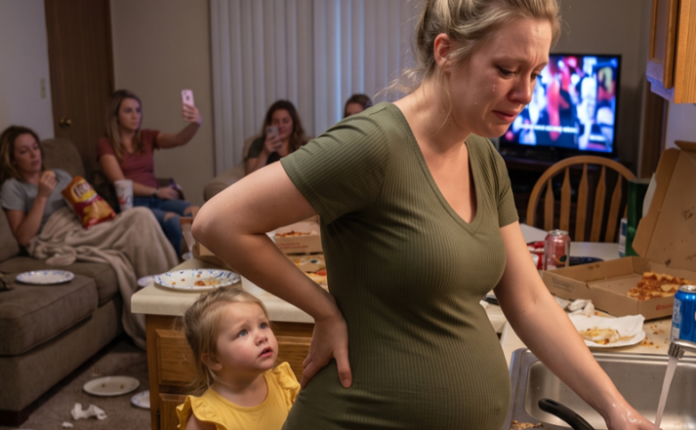
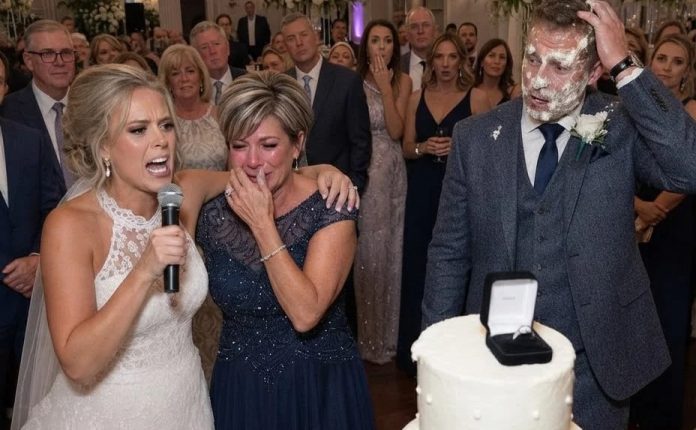
The room went silent when the lawyer finished reading Evelyn Hart’s will. For four years, I had bathed her, lifted her from the floor after falls, counted her pills, and slept in a chair beside her hospital bed. She had promised that if I stayed until the end, I would never have to fear rent, debt, or hunger again. Yet her house, savings, and belongings went to relatives who had barely visited. My name was not mentioned once. As they smiled across the polished table, I realized I might have traded years of my life for a dying woman’s lie. Then, the next morning, her lawyer placed a single sealed envelope in my hands and said, “Evelyn told me this would either break you—or finally put you back together.”
Part 1
Three years before that will reading, I was thirty-two, divorced, and two months behind on rent.
I worked breakfast shifts at a diner and cleaned offices at night, but every dollar seemed to arrive already owed to someone else.
Evelyn Hart lived next door in a narrow brick house with white curtains and a garden she could no longer manage.
Most neighbors called her difficult. She corrected grammar, disliked noise, and returned casseroles if the dishes were not washed properly.
To me, she was simply the woman who tapped on our shared wall whenever my smoke alarm chirped.
One January evening, I found her sitting on the icy front steps without a coat.
“I was reaching for the newspaper,” she insisted, though the paper lay ten feet away.
Her right hand shook, and one slipper had fallen off.
I helped her inside, made tea, and called the number taped beside her telephone.
No one answered.
The next morning, I took her to a clinic. The doctor spoke gently about heart failure, arthritis, and the growing risk of living alone.
Evelyn stared through him as if stubbornness could reverse every diagnosis.
On the drive home, she said, “I need help, and you need money. We should stop pretending otherwise.”
I nearly laughed. “I can barely keep myself alive. I’m not a nurse.”
“No,” she said. “You are dependable. That is rarer.”
At her kitchen table, she offered me a bargain: groceries, meals, medication reminders, transportation, and help with bathing when necessary.
In return, she would cover my expenses and “make certain I was provided for” after her death.
“Provided for how?” I asked.
Her pale eyes sharpened. “Well enough that you will never scrub another office floor at midnight.”
The promise frightened me more than it tempted me.
I asked whether she had family.
“A nephew named Grant who remembers me at Christmas and whenever he has a business idea,” she replied. “No one who will care for me.”
We met with her attorney, Martin Cole, who drafted a caregiving agreement and insisted that Evelyn receive an independent medical evaluation.
The contract paid me a modest weekly amount, reimbursed expenses, and stated that her estate plan was separate and confidential.
“Do not rely on an inheritance you have not seen,” Martin warned me privately.
I should have listened.
Instead, I reduced my diner hours and began organizing Evelyn’s life.
At first, she treated every kindness like a suspicious package.
She accused me of overcooking eggs, hiding her reading glasses, and buying the wrong brand of soap.
Then one morning, I found a note beside my coffee: THE EGGS WERE ACCEPTABLE.
It was the closest thing to affection she had offered.
Months passed, and the work became harder.
I learned how to steady her without making her feel helpless and how to tell pain from fear by the way she pressed her lips together.
During bad nights, she asked me to read old mystery novels aloud until her breathing settled.
During good mornings, she taught me to prune roses and balance a household ledger.
She also asked questions about my childhood—too many questions, I sometimes thought.
I told her my mother, Mara, had died when I was twelve and that foster homes had scattered the few belongings she left behind.
At the name Mara, Evelyn dropped her teacup.
It shattered between us, and all the color drained from her face.
Then she gripped my wrist and whispered, “Claire, before this is over, you must promise you will not believe everything you hear at my will reading.”
Part 2
I demanded an explanation, but Evelyn released my wrist and stared at the broken china.
“Not yet,” she said. “I have made too many mistakes by speaking before I was brave enough to tell the whole truth.”
For days, she avoided my questions.
When I mentioned my mother again, she changed the subject or asked for another blanket.
I considered quitting.
Then Evelyn developed pneumonia, and anger became a luxury neither of us could afford.
I spent eleven nights at the hospital, sleeping in short bursts beneath the fluorescent lights.
Grant visited once.
He arrived wearing a tailored coat, placed supermarket flowers on the windowsill, and asked Martin whether Evelyn was still “mentally competent.”
Evelyn heard him.
“Competent enough to know you parked in the ambulance lane,” she said.
Grant smiled without warmth. “I worry about you, Aunt Evelyn.”
“You worry about paperwork,” she answered.
After he left, she cried silently, facing the wall.
I pretended not to notice until she reached backward for my hand.
She survived the pneumonia, but her strength never fully returned.
Our arrangement slowly stopped feeling like a transaction.
She remembered my birthday when no one else did.
I learned that she hated thunder because her late husband had died during a storm.
We argued about salt, television volume, and whether asking for help counted as weakness.
“You are infuriating,” I told her one afternoon.
“Good,” she said. “Indifference would be worse.”
Near the end of our fourth year together, her cardiologist said there were no more useful treatments.
Evelyn chose hospice at home.
Grant began calling daily, suddenly full of concern about antiques, account statements, and the condition of the roof.
Evelyn ordered me never to discuss her finances with him.
“He will think you manipulated me,” she warned.
“Did I?” I asked bitterly. “Because I still don’t know what you promised me.”
She looked wounded. “I promised you safety.”
“That is not the same as truth.”
That night, she asked Martin to come over with two witnesses.
I was sent to the pharmacy while papers were signed at her bedside.
When I returned, Evelyn was exhausted but strangely peaceful.
“It is done,” she murmured.
Three days later, just before dawn, I felt her fingers loosen around mine.
Her last breath was so quiet that I kept talking for several minutes before I understood she was gone.
At the funeral, Grant accepted condolences as though he had been the one washing her hair and changing her sheets.
The will reading took place the following Friday in Martin’s office.
Evelyn’s house, bank accounts, jewelry, and remaining property were left to Grant, with several small charitable gifts; my name was absent.
“She knew family mattered in the end,” Grant said as he passed me, while Martin remained silent behind his desk.
The next morning, Martin appeared at my apartment, handed me a sealed envelope, and said, “The will was never meant to contain what Evelyn left you.”
Part 3
I did not invite Martin inside.
I stood in the hallway wearing yesterday’s clothes, holding the envelope as though it might burn through my hands.
“Why didn’t you say anything yesterday?” I asked.
“Because Evelyn gave precise instructions,” he replied. “The probate reading belonged to her relatives. This belongs only to you.”
Inside was a letter, a small photograph, and a hospital bracelet faded almost white. The bracelet’s plastic had cracked with age, but the handwriting remained careful.
The photograph showed a young Evelyn beside a teenage girl with my mother’s crooked smile.
On the back, in blue ink, someone had written: Evelyn and Mara, summer of 1986.
My knees gave out before I reached the first sentence. The hallway tilted, and the envelope slid from my fingers as if my body had rejected the truth before my mind could hold it.
Martin caught my shoulder and lowered me onto the hallway floor.
The bracelet carried my mother’s birth name: Mara Elise Hart.
I read Evelyn’s letter through tears that made every line swim. Her handwriting, usually sharp and disciplined, trembled across the pages.
She wrote that Mara had been her only daughter.
At seventeen, Mara accused Evelyn’s husband, Richard, of entering her bedroom and touching her.
Evelyn had been terrified, financially dependent, and too cowardly to believe her child.
Mara ran away, changed her surname, and refused every letter Evelyn sent. Evelyn wrote that she deserved the silence, even when it lasted decades.
Years later, Richard admitted the truth while dying, but by then Mara had vanished.
Evelyn spent decades searching and learned of Mara’s death only after I mentioned her name at the kitchen table. That was why the teacup had fallen.
She had asked Martin to verify records quietly: my birth certificate, foster-care files, and the chain of names connecting me to Mara.
“She was my grandmother,” I whispered.
Martin nodded. “And she was ashamed that she recognized you only after asking you to become her caregiver.”
Evelyn’s letter said she had hidden the truth because she wanted me free to leave, hate her, or love her without blood becoming another obligation. She feared that revealing herself would turn every kindness I gave into a debt.
Then Martin explained the financial part.
Months before her death, Evelyn had transferred the house and most investments into an irrevocable trust naming me as beneficiary; those assets never entered her probate estate. Martin had arranged separate counsel to advise her so no one could claim he had guided the outcome.
The weekly caregiving contract, independent competency examinations, and witnesses were designed to prove that I had not controlled her decisions.
The old will left the probate remainder to Grant because Evelyn expected him to challenge anything bearing my name.
“After debts and charitable gifts, there may be almost nothing for him,” Martin said.
For one impossible moment, grief and relief collided inside me: I had not been deceived, but I had lost the chance to call her Grandma while she could still answer. I pressed the photograph to my chest and made a sound I did not recognize as my own.
Before I could finish the letter, Martin’s phone rang; he listened, went pale, and said, “Grant has filed an emergency petition accusing you of elder exploitation—and the court has frozen the trust.”
Part 4
The petition turned my grief into public suspicion.
Grant’s attorney described me as an indebted stranger who had isolated a frail woman and waited beside her deathbed for payment.
Every true detail of my life was rearranged until it sounded criminal. Poverty became motive, exhaustion became resentment, and privacy became isolation.
Yes, I had been poor.
Yes, I had accepted money from Evelyn.
Yes, I had once told a diner coworker, “I cannot keep doing this for nothing,” after forty sleepless hours.
Grant had obtained that sentence from a small security camera Evelyn kept in her kitchen.
His attorney played only eleven seconds. The sound echoed through the courtroom, stripped of the hours before it and the sentence that followed.
In the courtroom, my own exhausted voice sounded cold and greedy.
The judge kept the trust frozen and scheduled a full hearing.
Outside, a reporter asked whether I had pressured Evelyn to change her estate plan. Someone photographed me while I was crying and published it beneath the words CAREGIVER OR CON ARTIST?
I went home, closed the curtains, and vomited in the sink.
“Take the house back,” I told Martin. “I cannot prove love to people who have already priced it.”
Martin set Evelyn’s letter on my table.
“This is not only about money,” he said. “Grant is asking the court to erase her last competent decision—and your mother’s place in this family.”
That sentence kept me from surrendering. I realized walking away would not restore Evelyn’s dignity; it would reward the person who had treated her final wishes as another asset to seize.
We built the case from ordinary evidence: pharmacy receipts, calendars, hospital logs, bank transfers, and thousands of messages about meals and appointments. Love, it turned out, left a paper trail.
Evelyn’s cardiologist testified that she understood her finances. He described her as stubborn, precise, and fully capable of explaining the difference between probate property and trust property.
Her hospice nurse testified that I encouraged visitors and that Grant rarely came.
Two neighbors remembered Evelyn complaining that Grant wanted her to sell the house and invest in his failing development company.
Grant still looked confident.
He claimed he had stayed away because I made him feel unwelcome.
Then he offered me $50,000 in the courthouse corridor to abandon the trust. He said it softly, almost kindly, as if bribery became mercy when spoken without witnesses.
“You walked into her life at the perfect time,” he said. “Do not pretend this was destiny.”
“She was my grandmother,” I answered.
His expression changed for half a second—recognition, not surprise.
I grabbed his sleeve. “You already knew.”
Grant pulled away and muttered, “Aunt Evelyn was not the only person who knew how to search public records.” His words were quiet, but the contempt behind them was unmistakable.
Before I could question him, his attorney called him back into the courtroom.
I told Martin, but a hallway accusation was not evidence.
That evening, we searched Evelyn’s study for the original kitchen-camera files and found that the memory card had been removed. Dust outlined the empty slot like evidence of a missing tooth.
I was ready to believe Grant had destroyed the only complete recording.
Then Martin opened Evelyn’s old music box, found a second card taped beneath the velvet lining, and the first recovered file began with her saying, “Grant, sit down—we are going to discuss why you hid my granddaughter from me.”
Part 5
The recording lasted thirty-seven minutes.
Evelyn’s voice was weak, but every word was clear. Between sentences, I could hear the soft machine that had helped her breathe during her final weeks.
She told Grant that Martin had discovered he received Mara’s obituary six years earlier while forwarding her mail.
The obituary named me as Mara’s daughter and listed the city where I lived.
Grant had thrown away the letter from the researcher and told Evelyn the search had found nothing.
On the recording, he did not deny it.
“I was your only family,” he said. “I knew what would happen if you found her.” His voice broke on the last word, but he never apologized.
“You were afraid I would stop paying your debts,” Evelyn replied.
Grant’s silence answered for him.
The second file contained the full kitchen conversation he had edited.
After my angry sentence, my voice continued: “I cannot keep doing this for nothing to change. She needs a night nurse, and I need sleep before I make a dangerous mistake.”
Evelyn then said, “You are right,” and called the hospice agency herself.
At the final hearing, Martin played both recordings. No one moved while Evelyn’s voice filled the room she had never lived to enter.
Grant stared at the table while the courtroom heard him admit that he had concealed my existence.
His attorney stopped objecting.
The judge found no credible evidence that I had manipulated Evelyn and ruled that the trust had been created knowingly, voluntarily, and with independent advice. She also noted that caregiving performed under a written agreement was not proof of exploitation.
The freeze was lifted.
Grant’s challenge was dismissed, and he was ordered to cover a portion of the legal costs because of the misleading edited recording.
There was no triumphant applause.
I only sat there shaking, with Evelyn’s photograph pressed between my palms. Winning did not bring her back or return the years she had lost with my mother.
Outside the courthouse, Grant caught up with me.
Without his confident smile, he looked older and strangely small.
“She loved the idea of you more than she ever loved the family who stayed,” he said.
“You did not stay,” I answered. “You kept score.”
He looked toward the street. “I thought the house proved I mattered.”
For a moment, I understood the fear beneath his greed, but understanding was not forgiveness. Fear explained what he had done; it did not excuse the years he had stolen.
“People are not made valuable by what dead relatives leave them,” I said. “I wish both of us had learned that sooner.”
Grant received what remained in probate after debts and charitable gifts: several boxes of household items and far less money than he expected.
I did not fight him for those things.
The trust gave me Evelyn’s home and enough investments to live securely, but I kept working part-time while I decided what kind of life I wanted. I needed to know I could still stand on my own feet.
I converted the downstairs guest room into a small office and established the Mara Hart Care Fund.
It paid for respite nurses, transportation, and emergency groceries for unpaid caregivers who were close to breaking. Martin helped structure it, and the hospice nurse joined its volunteer board.
The first woman we helped had been sleeping beside her father’s hospital bed while facing eviction.
When I handed her the assistance letter, she covered her face and cried exactly as I had in my hallway.
I finally understood that Evelyn’s promise of safety had never meant luxury. She had known money could not repair a family, but it could prevent desperation from deciding every future choice.
It meant having enough ground beneath your feet to choose love without being destroyed by it.
On the first anniversary of her death, I carried fresh roses to the cemetery.
I placed the faded hospital bracelet beneath her name for a moment, then returned it to the envelope with her letter.
“You should have told me sooner, Grandma,” I whispered. “But I know why you were afraid.”
The wind moved softly through the trees, and I walked home—not as the woman who had inherited everything, but as the granddaughter who had finally learned what was worth keeping. In the garden, Evelyn’s roses were opening to the morning light.