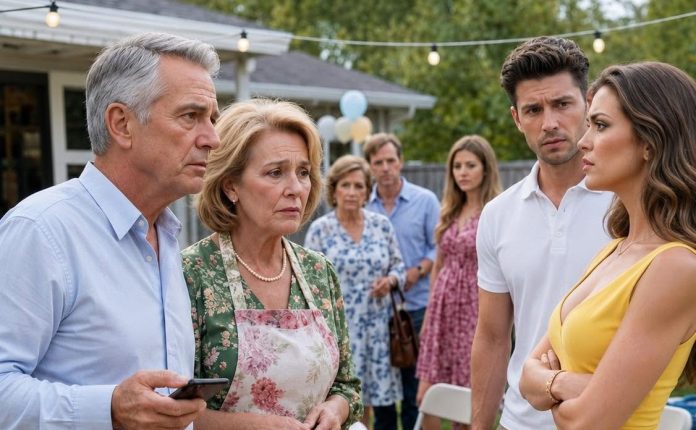
My sister Rose was unconscious beneath white hospital sheets, her heart struggling against an infection no one had discovered until it was almost too late. Her husband—my oldest friend, Owen—stood beside me in the bright intensive care corridor, still wearing the blue sweater she had bought him for their anniversary. Six months earlier, he had married her without telling me. I had accused him of pity, manipulation, and wanting access to her inheritance. Now he gripped my trembling hands and whispered, “It’s time you understood why I really married her.” Then he placed a brass key in my palm and handed me an envelope written in Rose’s careful handwriting. On the front were seven words that turned my grief into terror:
CLARA—OPEN THIS BEFORE UNCLE GRAHAM FINDS IT.
Part 1: The Marriage None of Us Understood
The machines surrounding Rose made small, regular sounds that seemed far too ordinary for a room in which someone might die.
A green line rose and fell across the monitor above her bed. Oxygen moved through a clear tube beneath her nose. An intravenous pump clicked every few seconds, feeding antibiotics into her arm. Her face, usually animated by quick smiles and dramatic expressions, had become pale and still.
Rose had never been still.
Even as a child, she filled every silence with questions.
Why did rain smell different on hot pavement?
Why did adults whisper when they were worried?
Why did people congratulate me for helping her when she had not asked for help?
That last question had embarrassed me when she first asked it. I had been sixteen. Rose had been eleven.
“I’m your big sister,” I had answered.
“That means you can help,” she had said. “It doesn’t mean you are the boss of my life.”
At the time, I had laughed.
Years later, sitting beside her hospital bed, I remembered every word.
“She should have come in sooner,” the cardiologist had told us. “The infection damaged one of her heart valves. We’re stabilizing her, but she may need emergency surgery.”
Rose had been born with an atrioventricular septal defect, a heart condition commonly associated with Down syndrome. Surgeons had repaired it when she was a baby, and for most of her adult life, she had been healthy. She attended annual appointments, took her medication, exercised with a local walking group, and reminded the rest of us to drink water.
At least, that was what I had believed.
Owen stood near the window, staring through the glass at the parking structure across the street.
He was thirty-six now, broad-shouldered and slightly grayer than he had been when we met in seventh grade. He had been my best friend through failed exams, my parents’ divorce scare, my first heartbreak, and my father’s death.
Then, six months ago, he had married my sister.
They had not invited me.
They had not even told me until afterward.
Our mother had called on a Tuesday evening.
“Your sister has done something reckless,” she said.
I found Rose and Owen at our family home, sitting together on the floral sofa. Rose wore a cream dress and a small pearl clip in her hair. Owen wore a navy suit. Their hands were linked.
Rose smiled nervously.
“Owen and I got married this morning.”
For several seconds, I believed I had misunderstood her.
“You got what?”
“Married.”
“At the courthouse?”
“Yes.”
“Today?”
“Yes, Clara.”
I turned toward Owen.
He looked exhausted rather than happy.
“What have you done?” I demanded.
Rose’s smile vanished.
Owen stood. “Clara, let us explain.”
“Explain what? That my best friend secretly married my vulnerable sister?”
Rose flinched as though I had slapped her.
“I am not vulnerable like a baby,” she said.
“I didn’t say you were a baby.”
“You said it with your face.”
Our mother, Helen, stood near the fireplace with one hand pressed against her throat.
“I warned them,” she said. “I told Owen people would think he was taking advantage.”
That was exactly what I thought.
Rose had inherited a share of our father’s orchard, a modest house, and a trust supposedly worth more than three million dollars. She could not withdraw large amounts directly. Our uncle Graham managed the trust and claimed every expense had to be approved for her protection.
Owen worked as a carpenter. He earned a comfortable living, but he was not wealthy.
I looked at him and saw every cruel possibility at once.
“Did Graham approve this?” I asked.
Rose’s expression hardened. “Graham does not approve who I love.”
“Does he know?”
“He knows now,” Owen said.
“And what did he say?”
“That he would challenge the marriage.”
My stomach tightened.
“Why would he do that?”
Owen and Rose exchanged a look.
It lasted only a second, but I noticed.
At the time, I mistook secrecy for guilt.
“You planned this,” I whispered. “Both of you planned something.”
Rose stood and faced me.
She was five feet tall, with shoulder-length brown hair, expressive hazel eyes, and the stubborn courage she had inherited from our father.
“I love Owen,” she said. “Owen loves me. We chose each other.”
“Then why didn’t you tell me?”
“Because you would do this.”
“Do what?”
“Talk about me while I’m standing here.”
The words stopped me.
But not for long enough.
I told Owen I would never forgive him if he hurt her. I accused him of confusing affection with responsibility. I said he had crossed a boundary no real friend would cross.
Rose began crying.
Owen did not raise his voice.
He simply said, “One day, you’re going to regret that you didn’t ask Rose what she wanted before deciding what was true.”
After that night, my relationship with both of them changed.
I attended their small reception at the Bluebird Café, where Rose worked three mornings a week. I smiled in photographs. I gave a speech about friendship and family, but I did not trust Owen.
When Rose invited me to their apartment, I found excuses.
When Owen called, I let the phone ring.
And when Uncle Graham told me privately that Owen was “positioning himself for financial control,” I believed him.
Now Rose lay unconscious, and Owen stood beside her bed with swollen eyes.
The doctors believed the infection had been developing for weeks.
“How did no one notice?” I demanded.
Owen turned from the window.
“I noticed.”
“What?”
“She was tired. She had fevers. She kept saying something felt wrong.”
“Then why didn’t you bring her here?”
“I tried.”
My grief sharpened into anger.
“You tried?”
“Her cardiology appointments had been canceled.”
“By whom?”
“Graham’s office said the trust would no longer cover visits outside the approved network. Then her medical insurance lapsed.”
“That’s impossible.”
“No, Clara. It happened.”
I shook my head. “Graham has managed her care for years.”
“Yes.”
“He would never risk her health.”
Owen stared at me.
“You don’t know him.”
“He’s our uncle.”
“That is not an answer.”
The intensive care door opened. A nurse stepped out and told us Rose’s blood pressure had dropped. The doctors were adjusting her medication.
Our mother had gone downstairs to call Graham.
Owen waited until the nurse disappeared.
Then he crossed the corridor and took my hands.
His palms were cold.
“Now it’s time for you to understand why I really married her.”
I pulled away.
“If this is about the trust—”
“It is about the trust. But not the way you think.”
He removed a brass key from his pocket and pressed it into my hand. Then he gave me a sealed envelope.
Rose had written my name across the front in purple ink.
Below it were the words:
OPEN THIS BEFORE UNCLE GRAHAM FINDS IT.
My chest tightened.
“What is this?”
“Rose made me promise not to tell you until she decided the time was right.”
“She’s unconscious.”
“I know.”
“What did she find?”
Owen looked through the glass at his wife.
His voice broke when he answered.
“Proof that someone in your family has been stealing from her for eleven years.”
Before I could speak, the elevator doors opened.
Uncle Graham stepped into the corridor carrying a leather briefcase.
And when he saw the key in my hand, all the color drained from his face.
Part 2: The Woman Everyone Underestimated
Uncle Graham recovered quickly.
He always did.
He was sixty-two, silver-haired, carefully dressed, and known throughout our town as a generous accountant who volunteered at charity dinners and remembered everyone’s birthday. After my father died, Graham handled the estate, comforted our mother, managed Rose’s trust, and explained documents none of us had the strength to read.
He had become the person we called when something went wrong.
Now he walked toward us with a concerned expression.
“How is she?”
Owen stepped between Graham and the intensive care doors.
“The doctors are treating her.”
“I asked how she is.”
“And I answered.”
Graham looked at me.
“Clara?”
“She may need heart surgery.”
His shoulders lowered.
“Oh, God.”
The grief on his face appeared genuine.
Perhaps that was what frightened me most.
He reached for my hand. His eyes dropped toward the brass key.
“What’s that?”
I closed my fingers around it.
“Nothing.”
His gaze moved to the envelope.
“Did Owen give you that?”
“Yes.”
“Clara, this is not the time for secrets.”
I almost laughed at the absurdity.
“What secrets?”
Graham glanced at Owen.
“You know exactly what I mean.”
“No,” I said. “I don’t.”
Before he could answer, my mother emerged from the stairwell.
She embraced Graham immediately.
“Thank goodness you’re here.”
He put an arm around her.
“I came as soon as you called.”
For a moment, we looked like an ordinary frightened family.
Then Graham turned toward Owen.
“As trustee, I need access to Rose’s medical records.”
“As her husband, I already have access,” Owen said.
“I have managed her medical expenses since she was eighteen.”
“Not anymore.”
Graham’s mouth tightened.
“This is not a competition.”
“No,” Owen replied. “It’s a marriage.”
Rose had always disliked people speaking about her as though she were absent.
When she was eight, a teacher told our mother, “Children like Rose may struggle to understand long-term consequences.”
Rose, sitting two chairs away, asked, “What consequences?”
The teacher had stared at her.
Rose waited.
Finally, the teacher explained.
That was Rose’s gift. She forced people to reveal whether they truly believed she could understand them.
As an adult, she used a calendar, budgeting software with visual categories, and color-coded medication boxes. She read slowly, but carefully. She sometimes needed complicated language simplified, but she remembered details other people missed.
She also knew when someone was lying.
Two weeks after her secret wedding, Rose had visited me at my apartment alone.
She brought cinnamon rolls from the Bluebird Café.
“I’m still mad at you,” she announced.
“I assumed so.”
“But I brought food because you get meaner when you are hungry.”
Despite myself, I smiled.
She sat across from me at the kitchen table.
“Do you think Owen married me for money?”
I hesitated.
Rose noticed.
“You do.”
“I’m worried about you.”
“That is not the same thing as respecting me.”
“I respect you.”
“Then answer honestly.”
“Yes,” I said. “Part of me worries about the money.”
Rose nodded, as though confirming something to herself.
“Do you know how much money is in my trust?”
“About three million dollars.”
“That is what Graham says.”
“What does that mean?”
“It means you don’t know.”
“Do you?”
“No.”
Her bluntness surprised me.
“Graham sends reports.”
“He sends reports with tiny numbers and long words. When I ask questions, he says not to worry.”
“Have you asked someone else to review them?”
“Yes.”
“Who?”
“Owen.”
That answer had angered me then.
Now, in the hospital corridor, it terrified me.
Graham persuaded our mother to go downstairs for coffee. Then he turned to me.
“Clara, may I speak with you privately?”
Owen shook his head.
“She stays here.”
“She is my niece.”
“And Rose is my wife.”
Graham ignored him.
“Clara, your friend has been filling Rose’s head with accusations. He convinced her that normal trust restrictions were evidence of abuse.”
“What accusations?”
Graham’s expression softened.
“Rose has difficulty understanding complex finances.”
Owen’s jaw tightened.
“She understands being denied her own bank statements.”
“She receives everything legally required.”
“She asked for an independent audit.”
“She does not have the authority to demand one.”
“She is the beneficiary.”
“And I am the trustee.”
The certainty in Graham’s voice unsettled me.
I opened Rose’s envelope.
Inside was a single sheet of paper.
Her handwriting sloped unevenly across the page.
Clara,
I know you think Owen is using me. You are wrong. I asked him to help because Graham tells people I do not understand. Sometimes I need help, but I understand when money disappears. I understand when my doctor says she did not cancel my appointment, but Graham says she did.
The key is for my locker at Bluebird. Look behind my green apron. Take everything before Graham does.
Do not let Mom stop you. She knows some things, but not all things.
I love you. Please listen to me this time.
Rose
I read it twice.
Then a third time.
Graham held out his hand.
“Give me the letter.”
“No.”
“Clara, Rose has been influenced.”
“She wrote this.”
“Owen could have dictated it.”
Owen took one step forward.
“Say that again.”
“Stop,” I said.
Both men looked at me.
For the first time since Rose’s wedding, I did not immediately choose a side.
“I’m going to the café.”
Graham blocked my path.
“That would be a mistake.”
“Move.”
“Anything in that locker may contain private trust information.”
“It belongs to Rose.”
“I am legally responsible for those materials.”
“You said you didn’t know what the letter was about.”
He froze.
Only for a fraction of a second.
But I saw it.
So did Owen.
Graham stepped aside.
“Your sister is critically ill. Running around town chasing her misunderstandings will not help her.”
“Then you have nothing to worry about.”
Owen stayed at the hospital while I drove to the Bluebird Café.
The café had closed early after learning about Rose’s condition. Its owner, Mrs. Alvarez, unlocked the side door for me.
She was a warm woman in her fifties who had hired Rose seven years earlier.
“She knew you would come eventually,” Mrs. Alvarez said.
“You knew about this?”
“I knew Rose was worried.”
“Why didn’t you call me?”
“Rose asked me not to.”
“She was sick.”
“She was also an adult.”
The answer stung because it sounded like Rose.
Her staff locker stood at the end of a narrow hallway. The brass key opened it.
Inside hung three aprons.
Behind the green one was a canvas shopping bag.
I carried it into the empty café and spread its contents across a table.
There were photocopied bank statements, appointment records, handwritten notes, a digital voice recorder, and photographs of documents taken with Rose’s phone.
Each page had colored stickers.
Red meant money removed.
Blue meant a medical expense denied.
Yellow meant Graham had given an explanation that changed later.
Rose had built a record for nearly two years.
Not Owen.
Rose.
I switched on the recorder.
Her voice filled the quiet café.
“My name is Rose Bennett Mercer. Today is March fourteenth. Graham said my heart doctor canceled my appointment. I called the doctor. The receptionist said Graham’s office canceled it.”
The recording clicked.
Another began.
“Today is April second. Graham said the trust paid $9,800 for home support. I do not have home support. Owen helps me, but he does not get paid.”
I opened a bank statement.
A monthly transfer of $9,800 had gone to a company called CBC Personal Services.
The address listed beneath the company name belonged to a post office box.
Another statement showed $7,500 paid for “specialized transportation.”
Rose took the city bus.
My hands began trembling.
Then I found the folder marked with my name.
Inside were eleven years of transfers.
Every month, money had moved from Rose’s trust into an account labeled:
CLARA BENNETT—FAMILY CARE REIMBURSEMENT.
The total exceeded $640,000.
I had never seen a dollar of it.
At the bottom of each authorization form was my signature.
Perfectly copied.
My phone rang.
It was Owen.
I answered immediately.
“What happened?”
His breathing was uneven.
“Rose’s blood pressure collapsed. They’re taking her into surgery.”
I closed my eyes.
“I found the records.”
“Then you know.”
“No. I found payments in my name.”
Silence.
“Owen?”
“When Rose confronted Graham about those payments,” he said, “he told her you had been charging the trust for taking care of her since your father died.”
“That’s a lie.”
“I know.”
“How?”
“Because Rose knew you hadn’t taken care of her.”
The words were painful, but true.
I had moved two hours away after college. I visited, called, remembered birthdays, and congratulated myself for being a devoted sister.
Meanwhile, someone had stolen hundreds of thousands of dollars using my name.
I looked at the forged signature again.
Then I noticed a handwritten note attached to the last authorization form.
It was in Rose’s writing.
Ask Mom why she witnessed this.
Beneath my forged signature was another one.
Our mother’s.
Part 3: The Signature Beneath Mine
By the time I returned to the hospital, Rose was in surgery.
The infection had damaged her mitral valve. The surgeon planned to remove infected tissue and replace the valve, but Rose’s previous childhood repair made the operation more difficult.
“She is strong,” Owen kept saying.
I could not tell whether he was reassuring me or himself.
My mother sat in the waiting room with her handbag in her lap. Graham had disappeared to “contact the family attorney.”
I placed one of the authorization forms on the table in front of her.
She looked down.
Her fingers tightened around the handbag.
“Where did you get this?”
“Rose’s locker.”
“Clara—”
“Is that your signature?”
People in nearby chairs glanced toward us.
Mother lowered her voice.
“This is not the place.”
“My sister is having emergency heart surgery. I think this is exactly the place.”
Owen remained near the window.
He said nothing.
I pointed to my forged name.
“Did you sign as a witness?”
Mother’s eyes filled with tears.
“It wasn’t supposed to hurt anyone.”
I felt something inside me fracture.
“How much did Graham give you?”
She recoiled.
“I did not steal from Rose.”
“Then explain it.”
“It was after your father died. The house needed repairs. There were funeral costs. You were still paying your student loans. Rose needed supervision.”
“Rose was twenty-one. She lived with you.”
“And do you know what that required?”
Her voice rose.
“Do you know how many appointments I attended? How many nights I stayed awake when she was sick? How many programs I researched? Your father left money for her, but nothing for the years of work I had already given.”
“So you took it.”
“I accepted reimbursement.”
“Six hundred and forty thousand dollars?”
Mother’s face went white.
“What?”
I pushed the records toward her.
She scanned the totals.
“No. That cannot be right.”
“You signed the forms.”
“I signed three.”
“There are more than a hundred.”
“I signed three,” she repeated. “Graham said the trust could reimburse family caregivers. He prepared the documents.”
“Did you receive the money?”
“Some of it.”
“How much?”
She looked toward Owen, ashamed.
“Twenty-five thousand dollars.”
“And the rest?”
“I don’t know.”
I wanted to believe her.
That made me hate myself.
Mother touched the forged signature bearing my name.
“I never signed this.”
“Your name is directly below it.”
“That is not my handwriting.”
At first glance, it looked like hers. But as I studied it, I noticed the H in Helen was too narrow. My mother always looped the final stroke of her surname. The signature on the later forms did not.
The first three might have been genuine.
The rest were copies.
“Why didn’t you tell me about the original payments?” I asked.
“Because you would have judged me.”
“You let Rose believe I was charging her trust.”
“No. I never knew Graham told her that.”
“You knew she was asking questions.”
Mother looked down.
“She became suspicious of everything after Owen entered her life.”
Owen finally turned.
“I entered her life when we were children.”
“You know what I mean.”
“No,” he said quietly. “I know what you want to mean.”
Mother had always liked Owen when he was my friend.
When he became Rose’s boyfriend, something changed.
She began questioning his motives, his income, his past relationships, and whether Rose could understand marriage. She spoke as if love were something Rose could receive but not choose.
I sat across from her.
“Why did they marry in secret?”
Mother looked toward Owen.
“Ask him.”
“I have.”
“Then perhaps he did not tell you everything.”
Owen crossed the room.
“Rose asked to wait.”
“She is in surgery,” Mother snapped. “Stop using her as your shield.”
“I have never used her.”
“You married her weeks after Graham mentioned reviewing the trust.”
Owen’s expression changed.
I saw guilt.
“What review?” I asked.
Neither answered.
“Owen.”
He sat beside me.
“Last year, Graham told Rose the orchard might need to be sold.”
Our father’s orchard covered forty acres north of town. It had never made us rich, but it had been in our family for three generations. Rose owned forty percent. I owned forty percent. Mother owned the remaining twenty.
“Why would it be sold?” I asked.
“Graham said the trust needed liquidity for Rose’s future care.”
“That sounds reasonable.”
“Rose didn’t think so. The trust was supposed to have more than enough cash. She asked for statements. Graham refused.”
“So she asked you.”
“Yes.”
Owen had once worked summers for my father. After Dad died, Owen became a licensed contractor and eventually started his own renovation company. He knew nothing about trusts, but he knew people.
“My accountant looked at the documents Rose had,” he said. “He found inconsistencies.”
“What kind?”
“Expenses for services Rose never received. Property maintenance on buildings that don’t exist. Consulting fees paid to companies connected to Graham.”
“And then you married her?”
“No. Then we contacted an attorney.”
The attorney explained that Rose could request an accounting, but Graham would likely claim she lacked the capacity to manage financial litigation. He had already begun gathering medical and psychological records for a guardianship petition.
“He was trying to have her declared incompetent?” I asked.
“He said he wanted to protect her.”
Mother spoke bitterly. “Because Owen was manipulating her.”
Owen ignored her.
“Rose wanted to challenge Graham before he filed. She also wanted to marry me. We had been discussing it for nearly a year.”
“A year?”
The number struck me.
Rose had hidden an entire relationship from me.
Or perhaps I had refused to see it.
I remembered Christmas dinners when Owen washed dishes beside her. Summer picnics when they disappeared to walk along the creek. The way Rose laughed before he even finished a joke.
I had interpreted their closeness as kindness from Owen.
I had never imagined he might desire her, admire her, or choose her as an equal.
My prejudice had disguised itself as protection.
“Why the secret wedding?” I asked.
“Because Graham’s petition would have challenged her ability to consent,” Owen said. “Rose wanted her choice documented before he could isolate her.”
Mother shook her head.
“She didn’t understand the consequences.”
“She arranged the appointment. She selected the witnesses. She requested a prenuptial agreement.”
That surprised me.
“What agreement?”
“I waived any claim to her trust, the orchard, and the house. If we divorce, I receive nothing from her separate property. If she dies, everything returns to her estate except our joint checking account and personal belongings.”
“Why didn’t you show me?”
“Because I wasn’t required to prove my marriage to you.”
His words landed harder than anger.
A surgeon entered the waiting room.
We rose together.
“Rose is still on the bypass machine,” he said. “We found extensive infection. We are replacing the valve, but her heart function is weaker than expected.”
Owen’s face crumpled.
“Is she going to survive?”
“We are doing everything possible.”
The surgeon left.
Mother began praying under her breath.
I stared at the folder of forged authorizations.
“What else did Rose find?”
Owen hesitated.
“Tell me.”
“She found a copy of your father’s original estate plan.”
“Graham prepared Dad’s will.”
“No,” Mother whispered.
Owen looked at her.
“What do you mean, no?”
Mother pressed both hands to her mouth.
“My husband did not want Graham controlling Rose’s trust.”
The room seemed to tilt.
“What are you saying?” I asked.
“Your father changed his estate plan after he became ill. He told me he had chosen an independent trust company.”
“Then why is Graham the trustee?”
Mother’s voice fell to a whisper.
“Because the will we signed after your father died was not the one he showed me.”
Owen stepped closer.
“You signed probate documents.”
“I was grieving. Graham said the documents were routine.”
“Where was the original will?”
“I don’t know.”
“Did Dad keep copies?” I asked.
Mother looked toward the hospital doors.
“He kept important papers in his workshop.”
“That building was cleared after he died.”
“Not completely.”
She took a small silver key from her handbag.
“There is a hidden compartment beneath his workbench.”
I stared at her.
“You knew this for eleven years?”
“I knew the compartment existed. I did not know what was inside.”
“Why didn’t you check?”
“Because Graham told me your father had emptied it.”
I took the key.
Then Owen’s phone rang.
He answered, listened for several seconds, and turned toward me.
It was the attorney helping Rose challenge the trust.
“Graham filed an emergency petition this afternoon,” Owen said. “He’s asking the court to invalidate the marriage, remove me as Rose’s medical decision-maker, and place her under temporary guardianship.”
“On what grounds?”
Owen’s eyes darkened.
“He submitted a psychological evaluation stating Rose lacks the capacity to consent to marriage.”
Mother looked confused.
“Who evaluated her?”
Owen showed us the document on his phone.
The report was dated three months earlier.
It had been signed by Dr. Marcus Hale, a psychologist Rose had never met.
And listed as the family member who had provided her medical history was one name:
Clara Bennett.