Part 4 — The Story We Inherited
Daniel walked out of the barn.
Kendra did not follow him.
Noah started to, but she caught his wrist.
“Let him go.”
“He shouldn’t drive,” Noah said.
“He won’t.”
Daniel stopped beside his truck, paced twice, then leaned against the hood with both hands.
Inside the barn, no one knew where to look.
The family had arrived expecting smoked meat, cold drinks, and a serious but manageable conversation with an aging mother. Now eleven of them were staring at copies of documents bearing signatures they had not knowingly provided.
Beth spoke first.
“Is this fraud?”
Samuel chose his words carefully.
“There are several possible legal issues. Misrepresentation. Unauthorized use of electronic signatures. Potential securities and contract concerns involving the LLC. Much depends on what Blackridge was told and what Daniel intended.”
Rachel looked sick.
“Could we be liable?”
“You should not speak to Blackridge without counsel.”
“We need separate lawyers?”
“Possibly.”
Caleb slammed his papers onto a folding chair.
“This is unbelievable.”
“No,” Kendra said. “It is believable.”
Everyone looked at her.
She sat rigidly, both hands around a paper coffee cup.
“For two years, Daniel has been coming home later. He says contracts are delayed. Clients are difficult. Partners are disloyal. Every problem is someone else’s fault.”
“Kendra,” Rachel said gently.
“He refinanced our house last year.”
Noah’s head turned.
“What?”
Kendra closed her eyes.
“I found out three months later.”
Daniel’s daughter Ella began crying.
“You said it was for the kitchen renovation.”
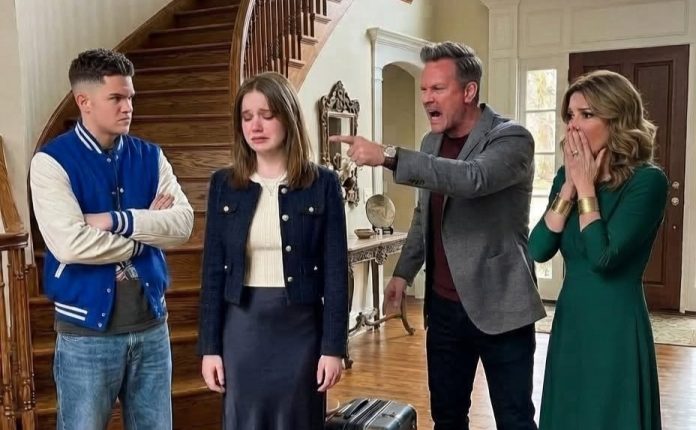
Daniel appeared in the doorway.
“It was temporary financing.”
Kendra faced him.
“Stop using the word temporary for things that become permanent.”
He entered slowly.
Without his anger, he looked older than forty-four. His hair was thinning at the temples. The expensive watch I had given him for his fortieth birthday flashed beneath the barn lights.
“I made mistakes,” he said.
Caleb laughed bitterly.
“You formed a fake family company.”
“It isn’t fake. It is registered.”
“That does not help.”
“I was trying to keep my firm alive.”
“By selling Mom’s land.”
“By arranging a transaction that benefited everyone.”
“You mean benefited you first.”
Daniel turned toward me.
“I knew you would fight any sale before hearing the numbers.”
“So you changed the numbers.”
“I presented the future risk.”
“You invented a tax emergency.”
“There will be taxes eventually.”
“There will also be rain eventually. I do not flood the house in preparation.”
Lily covered a nervous smile.
Daniel pointed at the notebook.
“You record everything anyone ever received from you, and you think that makes you morally superior.”
“No.”
“Then why keep it?”
“Because memory changes when entitlement grows.”
He stared at me.
“What does that mean?”
“It means a child remembers spending summers working on a ranch but forgets the tuition that allowed him to spend the rest of the year somewhere else. A mother remembers welcoming her family but forgets she is allowed to lock her own gate. A husband remembers himself as the man who built everything because his wife chose not to correct him.”
Rachel looked at the notebook.
“You said Dad’s story wasn’t true.”
I sat down.
For years, I had avoided this moment.
Jack had been dead eight years, and I still felt protective of the shape his memory occupied in our children’s hearts.
He had been charming, generous, stubborn, proud, and loved.
He had also nearly destroyed us.
“In 1998,” I began, “the ranch was losing money. We had two years of drought, poor cattle prices, and loans on equipment your father purchased too quickly.”
Daniel folded his arms.
“Every ranch struggled in 1998.”
“Yes.”
“Dad recovered.”
“No. I recovered it.”
The words sounded harsher aloud than they had in my mind.
I opened the leather notebook to a marked page.
“Your father invested in a recreational development project outside San Marcos. Cabins, horse trails, a private lake. He believed wealthy families from Austin would pay to join.”
Caleb frowned.
“I’ve never heard about that.”
“Neither had I until the bank called.”
Jack had borrowed against cattle and used a business line of credit connected to the ranch. He had also guaranteed construction loans for a partner who disappeared when the project failed.
The total exposure was more than six hundred thousand dollars.
In 1998, that number felt like the end of the world.
“We could have lost everything,” I said.
Daniel shook his head.
“Dad would have told me.”
“You were sixteen.”
“He talked to me about the ranch.”
“He talked to you about the version of himself he wanted you to see.”
I hated saying it.
I hated the pain that moved across Daniel’s face.
But truth delayed does not become kinder. It only becomes heavier.
I continued.
“My mother had died the year before. I used almost all the inheritance she left me to satisfy the worst debt. I sold a small property in Blanco. I negotiated new terms with the bank. I worked nights doing books for a feed supplier and two local contractors. I cut ranch expenses, changed the breeding program, sold equipment, and kept records of every dollar.”
I lifted the notebook.
“This was the first ledger.”
Rachel whispered, “Why didn’t you tell us?”
“Because your father was ashamed.”
“Why protect him?”
“Because he asked me to. Because he stopped drinking after that year. Because he worked hard to rebuild. Because I loved him. Because I thought protecting his dignity would protect our family.”
Daniel’s eyes were wet, though his voice remained sharp.
“You expect me to believe Dad contributed nothing?”
“I did not say that.”
“You’re saying this place belonged to you.”
“The original land belonged to me. The survival of it belonged to both of us, but not in the way he described.”
Beth nodded slowly.
“I knew about the San Marcos project.”
Every head turned.
Daniel stared at her.
“You knew?”
“Jack called me once when he was drinking. He said Evelyn might leave him.”
“You let us believe he built everything.”
Beth’s face crumpled.
“It was not my story to tell.”
“It was my father.”
“It was your mother’s pain.”
Daniel walked toward the open barn door again, then stopped.
“All my life, he said I would take care of the ranch one day.”
“I know,” I said.
“He told me it would be mine.”
“I know.”
“Did you hear him?”
“Yes.”
“And you never corrected him.”
“No.”
“Why?”
“Because when you were sixteen, you loved this place. You woke before sunrise and followed him everywhere. He had just nearly lost the ranch, and promising it to you made him feel as if he still had a future.”
Daniel pressed both hands to the back of his neck.
“So I built my life around a lie.”
“You left Texas after college and worked in Dallas.”
“Because he told me to learn business first.”
“You came home six weekends in ten years.”
“I had a career.”
“Yes.”
“Now you use that against me.”
“I am not using it against you. I am telling you that inheritance is not created by expectation.”
He looked toward the pasture beyond the barn.
“I could have come back.”
“You could have.”
“If I had known.”
“What would you have done?”
He opened his mouth, then closed it.
That was the question beneath everything.
Would Daniel truly have abandoned commercial real estate, private schools, country-club clients, and his carefully built Dallas life to manage cattle and broken water lines?
Or had he loved the idea of inheriting the ranch more than the life required to sustain it?
Kendra asked, “Is there a succession plan?”
“Yes.”
Daniel turned.
“You said your will was private.”
“It is.”
“But there’s a plan?”
“There has been one for five years.”
“With whom?”
“Sofia, Samuel, two agricultural advisers, and a trust officer.”
His expression hardened again.
“You discussed the future of the ranch with employees but not your children.”
“I discussed ranch operations with people who participate in ranch operations.”
“There. That is exactly the contempt I’m talking about.”
“Daniel,” Caleb said, “she asked me three years ago whether I wanted to be involved.”
Everyone looked at him.
Daniel’s face went still.
“What?”
Caleb rubbed his palms over his jeans.
“She asked whether Marisol and I would consider moving closer and learning the management side.”
“And you said no?”
“I said not then. Ben was little. Marisol’s mother was sick.”
“You never told me.”
“It wasn’t your decision.”
Daniel looked at Rachel.
“Did she ask you?”
Rachel nodded.
“After Dad died. She asked whether I wanted a formal role in healthcare planning and the family trust. I said I was overwhelmed.”
His eyes returned to me.
“You asked them.”
“I asked each of you separately.”
“You never asked me.”
“That is true.”
“Why?”
The barn seemed to shrink around us.
I opened the notebook to another marked page.
“Because in 2020, you sent me a proposal to place the ranch under your firm’s management. It included an annual advisory fee, authority to negotiate land options, and a clause allowing your company to recover expenses from ranch assets.”
“That was a professional proposal.”
“You charged your own mother for a plan you copied from a commercial portfolio.”
“I was trying to help.”
“When I declined, you did not ask what I wanted. You said I was afraid of modern business.”
His jaw moved.
“I don’t remember that.”
“I wrote it down.”
Of course I had.
That was the notebook’s power.
Not revenge.
Continuity.
It remembered what pride edited out.
A small figure appeared at the barn entrance.
Ben stood there holding a sealed envelope.
“Dad,” he said to Caleb, “I found this in Grandma’s notebook.”
“You were told not to touch it.”
“It fell out.”
He handed it to me.
Across the front, in my handwriting, were the words:
TO WHICHEVER CHILD READS FAR ENOUGH TO ASK WHAT THIS COST ME.
Daniel stared at the envelope.
I had forgotten placing it there.
Inside was a brass key and a note directing the reader to a locked cabinet in the ranch office.
Caleb looked at me.
“What’s in the cabinet?”
“The second notebook.”
“What second notebook?”
“The one your father kept.”
Daniel’s eyes lifted.
“Dad had a notebook?”
“Only for one year.”
“What did he write in it?”
I looked at my eldest son.
“The truth.”
Part 5 — Jack’s Notebook
We entered the house for the first time that weekend shortly after noon.
Not because everything had been forgiven.
Because truth had moved from the barn to the locked cabinet in my office, and none of us could pretend we did not need to follow it.
I established rules.
No one wandered through the bedrooms.
No one opened drawers.
No one removed documents.
Daniel surrendered his phone to Kendra after Samuel warned that photographing private records could complicate matters.
The briskets went into the outdoor smoker because food should not be punished for human foolishness. Luis tended the fire. Sofia prepared beans and cornbread. The younger children played under the live oaks, their laughter drifting through the open windows.
Inside the office, the adults gathered around my desk.
I unlocked the lowest cabinet.
Jack’s notebook lay beneath old insurance policies and cattle records.
It was smaller than mine, covered in cracked brown leather. His initials were stamped in one corner.
JRH.
Daniel touched them with one finger.
“I’ve never seen this.”
“He gave it to me six months before he died.”
“Why didn’t you show us?”
“He asked me not to unless the ranch became a source of conflict.”
Caleb glanced toward the gate.
“He knew us well.”
I opened the notebook.
Jack’s handwriting slanted heavily to the right, the ink fading in places.
The first pages contained expenses, loan balances, and lists of equipment to sell. Then the entries became personal.
I handed the notebook to Daniel.
“Read it.”
He hesitated.
“Out loud?”
“Yes.”
His voice was unsteady when he began.
March 12, 1998. Evelyn found the San Marcos guarantee. She did not shout. I wish she had. She sat at the kitchen table and asked me how much. I lied three times before telling her. Six hundred twelve thousand, not counting interest. I have never felt smaller.
Daniel stopped.
Kendra stood beside him, her expression unreadable.
He continued.
March 20. Bank meeting. Evelyn knew every number. I knew none of them. She proposed selling Blanco, applying Ruth’s inheritance, restructuring cattle debt, and taking over all accounts. I wanted to refuse because I am the husband. I agreed because the other choice was losing her land.
Rachel covered her mouth.
Jack described my night work, the arguments, the silence between us, and the day I removed his authority to borrow against the ranch.
He described his humiliation when neighbors praised him for “saving the place.”
I accepted praise that belonged to Evelyn. At first I told myself I was protecting our reputation. Then I realized I liked the story better than the truth.
Daniel lowered the notebook.
“I need a minute.”
“No,” I said softly. “Keep reading.”
He looked at me with something close to anger.
But he continued.
June 4, 1999. Daniel followed me during fence checks. He talks about running Cedar Ledge one day. I told him it would be his. Evelyn heard. Later she asked why I promised what was not mine. I said a boy needs a future. She said promises become debts when children believe them. She was right, but I was too proud to say it.
Daniel’s voice broke on the final sentence.
He sat down.
Noah stepped closer but did not touch him.
The next entries covered the slow recovery.
Jack quit drinking.
He took over field work and rebuilt trust with our employees.
He apologized to me repeatedly, though not always in words. Sometimes apology looked like a repaired fence, coffee beside my ledger, or quietly refusing a business opportunity he would once have chased.
The notebook did not reduce him to his worst decision.
It made him human.
That was why I kept it.
Near the end was an entry written shortly before his death.
Daniel read it silently.
“What does it say?” Rachel asked.
He handed the notebook to me.
I read Jack’s words aloud.
Evelyn says the children are not entitled to Cedar Ledge. My first instinct is to disagree, but I know the instinct comes from wanting my name to continue. The land survived because she loved it more faithfully than I did. I hope the children understand that inheritance is not proof of love. If they fight her for this place, they are not defending me. They are repeating me.
No one spoke for a long time.
Outside, the wind moved through the live oaks.
Finally, Daniel said, “You could have shown me this years ago.”
“Yes.”
“Why didn’t you?”
“Because I hoped you would become the man your father became after his mistake without needing to repeat the mistake first.”
“That is not fair.”
“No.”
He looked surprised.
I continued.
“It was not fair to let you carry his promise. It was not fair to protect his image so completely that you misunderstood mine. I believed silence was kindness. I was wrong.”
That admission changed the room.
Rachel sat beside me.
“You should have told us.”
“I know.”
“You let us make jokes about the notebooks.”
“I know.”
“We thought Dad handled the serious things.”
“I know.”
Her eyes filled.
“And you let us.”
“Yes.”
She leaned against my shoulder, and for a moment she was eight years old again, exhausted after a fever, trusting me to remain upright.
“I’m sorry, Mom.”
“So am I.”
Across the desk, Daniel closed his father’s notebook.
“What happens now?”
Samuel answered.
“First, Blackridge must be informed that no authorized sale exists.”
“They’ll sue me,” Daniel said.
“They may seek repayment of the retainer.”
“I don’t have it.”
Kendra flinched.
“What happened to all seventy-five thousand dollars?”
Daniel stared at the floor.
“Payroll. Rent. Debt.”
“How much debt?”
He did not answer.
She repeated the question.
“How much?”
“About three hundred and eighty thousand.”
Noah sat down heavily.
Ella whispered, “Are we losing the house?”
“No,” Daniel said.
Kendra said nothing.
That frightened the children more.
Daniel turned to me.
“If Blackridge cancels the agreement, my firm collapses.”
“There is no agreement.”
“Their investment committee believed there was.”
“Because you lied.”
“I overstated the family’s control.”
“You fabricated consent.”
“I thought once everyone saw the numbers, they would agree.”
“You made sure they saw false numbers.”
“I was desperate.”
The room tightened around that word.
Desperation explained much.
It excused nothing.
I wanted to reach for my son. I also wanted to strike the desk hard enough to make him feel the years he had reduced me to an obstacle.
Instead, I asked, “When did you decide my consent did not matter?”
His face changed.
“That’s not what I thought.”
“When did you decide I could be handled after dinner?”
“I used the wrong language.”
“When did you decide your siblings’ signatures were tools?”
“The software—”
“Stop blaming software.”
He closed his eyes.
“I thought I could fix everything before anyone was hurt.”
Kendra laughed once, hollowly.
“That is what people say after hurting everyone.”
A vehicle approached outside.
Not one of ours.
The office window faced the driveway. Through it, I saw a black SUV stop near the house.
Two men and one woman stepped out.
The woman wore a cream-colored business suit unsuited to ranch dust. One man carried a metal document case. The other unfolded a survey map across the hood.
Daniel stood so quickly that his chair toppled.
“No.”
Samuel moved toward the window.
“Were you expecting Blackridge today?”
“Not until Monday.”
The woman looked toward the house and waved.
Sofia entered the office from the hallway.
“Mrs. Hart, they said they have an appointment with the Hart Family Holdings board.”
Daniel rushed toward the door.
Samuel blocked him.
“No private conversation.”
“They can’t see us like this.”
Kendra stared at him.
“Like what?”
“Divided.”
“We are divided.”
The Blackridge representatives waited on the porch.
Samuel invited them into the living room, where everyone could hear.
The woman introduced herself as Caroline Mercer, vice president of land acquisitions.
“We apologize for arriving early,” she said. “Mr. Vale asked us to advance the title review because survey access was confirmed.”
“By whom?” Samuel asked.
Caroline looked at Daniel.
“Mr. Hart.”
“He did not have authority.”
Her expression became cautious.
“Our documents indicate that the family holding company approved the transaction eleven to one.”
“There is no valid family ownership vote,” Samuel said. “Mrs. Hart owns one hundred percent of the property.”
The man with the case frowned.
“We were advised that legal title remained temporarily in Mrs. Hart’s name but beneficial control had transferred through a family arrangement.”
“That is false.”
Caroline turned to Daniel.
“You certified the ownership structure.”
Daniel’s mouth opened.
Nothing came out.
She removed a folder from the case.
“We relied on that certification when issuing your consulting advance and authorizing preliminary expenditures.”
Kendra stepped forward.
“He used our signatures without permission.”
Caroline’s professional calm slipped.
“Is that accurate?”
Rachel said, “Yes.”
Caleb added, “None of us knew what we were signing.”
Caroline closed the folder.
“We need to contact our counsel.”
“Please do,” Samuel said.
She looked at me.
“Mrs. Hart, we had no intention of proceeding without valid owner consent.”
“You intended to obtain my signature after my son assembled my family in my house.”
Her face reddened.
“We were told you supported the transaction in principle but resisted formal paperwork.”
“You were told what made your deal easier.”
Caroline glanced toward Daniel with open anger.
“We are leaving.”
At the door, she stopped.
“There is one additional issue.”
Daniel’s face was gray.
Caroline continued.
“Blackridge is not the only party that relied on Hart Family Holdings. Mr. Hart used the proposed option agreement as collateral support in a private financing application.”
Kendra whispered, “What financing application?”
Caroline looked at Daniel.
“A two-hundred-thousand-dollar emergency business loan.”
Daniel closed his eyes.
Kendra took one step away from him.
“Tell me you did not borrow money against a ranch your mother never agreed to sell.”
He could not.
Because he had.