Part 6: What Daniel Had Already Done
The formal estate meeting took place on Tuesday afternoon.
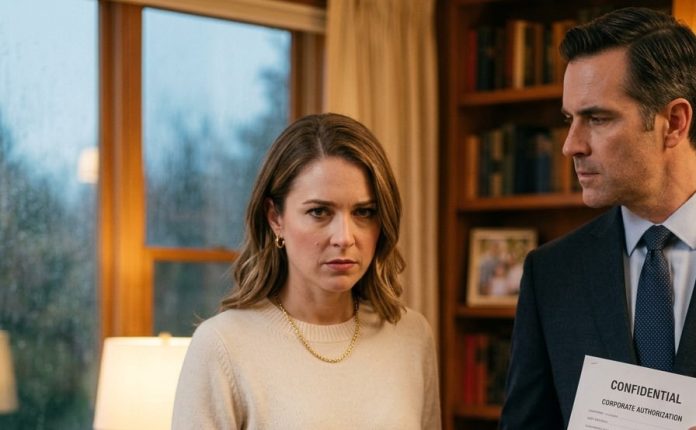
Daniel arrived with an attorney.
I arrived with Nathan.
Samuel sat at the head of the conference table and reviewed the trust, personal property list, bank accounts, debts, and charitable gifts.
Dad had left modest amounts to Emily, Caleb, and Lily for education or housing. He left his tools to Nathan and several handmade pieces of furniture to specific relatives.
Mom’s jewelry was divided between me and Daniel’s children.
The seventy-five-thousand-dollar conditional gift to Daniel remained exactly as described at the cemetery.
Daniel’s attorney asked detailed questions about Dad’s capacity, medication, witnesses, and prior wills. Samuel answered every one.
Then Samuel opened a separate file.
“There is another matter.”
Daniel leaned back.
“What now?”
“Three weeks before Thomas died, someone contacted the county planning office about subdividing the Bennett property.”
I looked at Daniel.
His expression did not change.
Samuel continued.
“The inquiry included a preliminary development sketch showing twelve residential lots.”
Nathan’s hand tightened around mine.
Daniel’s attorney turned toward him.
“Did you submit that?”
“I asked a consultant to review possibilities.”
“You did this before Dad died?” I asked.
“It was preliminary.”
“You had no ownership.”
“I believed I would inherit.”
“Based on what?”
“Dad promised me years ago.”
Samuel placed an old letter on the table.
“Your father anticipated that claim.”
The letter was dated nine years earlier.
It was from Dad to Daniel after a discussion about the property.
Samuel read the relevant sentence:
I am willing to consider leaving you part of the acreage if you become involved in maintaining it and if Laura agrees that it serves the family fairly. This is not a promise, and I do not consent to any sale or development planning while I am alive.
Daniel’s lawyer stared at him.
“You told me the promise was unconditional.”
“It was understood.”
“No,” Samuel said. “It was explicitly conditional.”
Daniel pointed toward the sketch.
“A planning inquiry is not a sale.”
“You represented yourself as the future owner,” Samuel replied.
“I expected to be.”
“You also contacted a lender about using the anticipated inheritance as collateral.”
I turned toward him.
“What?”
Daniel looked at his attorney.
“This is privileged financial information.”
“Not when the lender contacted Thomas to verify ownership.”
Samuel produced an email.
Dad had received it four months earlier.
The bank asked him to confirm Daniel’s statement that the property would transfer to him under an existing estate plan.
Dad had refused.
That was the week Daniel stopped answering all calls.
The truth settled into place.
Daniel had not stayed away only because Dad criticized him.
He had already tried to use the house before Dad’s death.
When Dad refused to support the loan and challenged him, Daniel cut contact.
“You were borrowing against his house while he was alive,” I said.
“I was preparing an investment.”
“You were using an inheritance you didn’t have.”
“The deal would have benefited everyone.”
“Dad didn’t want it.”
“Dad didn’t understand modern development.”
“He understood the word no.”
Daniel stood.
“This meeting is over.”
His attorney remained seated.
“No, it isn’t.”
Daniel looked at him.
“What?”
“Sit down.”
The authority in the attorney’s voice surprised everyone.
Daniel slowly returned to his chair.
His lawyer turned toward Samuel.
“Does the trust treat the planning inquiry as an attempt to force a sale?”
“Not by itself.”
“And the collateral representation?”
“That may violate the condition requiring acknowledgment that no promise existed.”
Daniel’s face changed.
“You said I had twelve months.”
“To repay the loan,” Samuel said. “The release must be signed before distribution.”
“I’ll sign it.”
His attorney looked at him.
“Signing means acknowledging under oath that no binding promise was made.”
“I understand.”
“It may affect statements you gave the lender.”
Daniel’s eyes narrowed.
“What are you saying?”
“I’m saying you cannot claim an unconditional promise to obtain financing and then deny that promise to collect an inheritance without potential legal consequences.”
For the first time, Daniel seemed frightened.
“What happens if I don’t sign?”
“The seventy-five thousand passes to hospice.”
“And my share of the house?”
“You have no ownership share.”
“This is unbelievable.”
Samuel closed the file.
“Your father gave you a choice. He did not guarantee that either option would be comfortable.”
Daniel stood again.
This time, no one stopped him.
At the door, he turned toward me.
“You think you’ve won.”
“I lost Dad.”
“That isn’t what I mean.”
“I know.”
“You’ll sell the house eventually.”
“Maybe.”
“And when you do, you’ll keep everything.”
“The trust decides how proceeds are distributed.”
“You’ll control it.”
“With an independent co-trustee.”
“You always wanted to be in charge.”
I almost laughed.
All my life, Daniel had received the larger room, the first car, the business money, and the benefit of every doubt. Yet the first time responsibility came with authority, he called it greed.
“I wanted you to visit him,” I said. “That was all.”
He left.
Two weeks later, Daniel filed a notice indicating he intended to challenge the trust.
His attorney withdrew from representation three days afterward.
A second lawyer reviewed the documents and advised him against litigation.
The medical capacity records were strong. The witnesses were independent. The recorded loan inquiry undermined Daniel’s claim that Dad had promised him the property.
Most importantly, the trust included a no-contest clause that would eliminate Daniel’s conditional gift.
He abandoned the challenge.
But he did not sign the release.
For eleven months, the seventy-five thousand remained unresolved.
During that time, we began restoring the house.
Nathan and I moved in temporarily to care for the property. Emily chose Dad’s old study as a place to prepare for university exams. We left the living room mostly unchanged.
Dad’s blue blanket remained folded over the chair.
His photograph stayed on the mantel beside Mom’s.
Every room carried both comfort and pain.
One afternoon, while cleaning the workshop, I found a small wooden box with my name carved into the lid.
It was the box Samuel had brought before the funeral.
Inside was a brass key and another letter from Dad.
Laura,
This is the key to the workshop cabinet your mother always called my “museum of unfinished things.”
Most of it is junk.
A few pieces may be worth saving.
I suspect that description applies to families too.
You cannot finish every broken relationship by yourself.
You cannot sand another person smooth without wearing away your own hands.
Leave some things unfinished.
Let people return only if they are willing to do part of the work.
And please replace the back step before somebody breaks an ankle.
Love,
Dad
I laughed and cried at the same time.
Then Nathan replaced the back step.
Part 7: The Brother Who Finally Entered the House
Daniel returned to the family house thirteen months after Dad’s death.
He did not call first.
I saw his car from the kitchen window on a Sunday afternoon. For a moment, panic tightened my chest. The trust prohibited him from entering without permission if his purpose involved estate property.
But Daniel did not approach the door immediately.
He stood beside the driveway looking at the house.
He seemed older.
His company had suffered financial trouble after two development projects stalled. Rebecca had separated from him six months earlier. Caleb rarely spoke to him. Lily had stopped asking him for money after every conversation became a lecture about loyalty.
I opened the front door but remained inside.
“What are you doing here?”
Daniel looked toward me.
“I came to talk.”
“About the trust?”
“No.”
“Then about what?”
“Dad.”
I studied his face.
“Come onto the porch.”
He seemed disappointed that I did not invite him inside, but he nodded.
We sat in the two wooden chairs Dad had built when I was a teenager.
For several minutes, Daniel said nothing.
Then he took a folded document from his coat.
“I signed the release.”
I did not reach for it.
“Why?”
“The deadline passed.”
“The gift went to hospice last month.”
“I know.”
“Then the release changes nothing.”
“It changes the lie.”
I looked at him.
He rubbed his hands together.
“Dad never promised me the house.”
Hearing the words aloud felt strangely quiet.
“No,” I said.
“He said he might leave me part of the land if I helped maintain it.”
“You never did.”
“I thought discussing development counted.”
“It didn’t.”
“I know.”
We sat in silence.
Daniel looked toward the garden.
“Do you remember the treehouse?”
“Yes.”
“Dad promised we could build it together.”
“You left after twenty minutes.”
“I had baseball practice.”
“You had three hours before practice.”
He smiled faintly.
“You remember everything.”
“Someone had to.”
His smile disappeared.
“I kept thinking about that letter.”
“Which one?”
“The one at the grave.”
I said nothing.
“He knew exactly what I would do.”
“He hoped he was wrong.”
“That’s worse.”
“Yes.”
Daniel stared at the porch floor.
“The day you called and said hospice thought he had days left, I was showing investors a property.”
“You could have left.”
“I know.”
“I called again.”
“I know.”
“He asked for you.”
Daniel’s face tightened.
“I know.”
“No, you didn’t hear him.”
“Laura—”
“He could barely speak. He tried to unlock his phone. I called you twice. You rejected the second call.”
Daniel closed his eyes.
“I was angry.”
“So was he.”
“I thought if I went, he would make me apologize.”
“Would that have been unbearable?”
“At the time, yes.”
“And now?”
“Now I would let him say anything if I could sit in that room for five minutes.”
The answer did not repair anything.
But it was the first time Daniel had described regret without blaming someone else.
“I hated him,” he said.
“I know.”
“No. I hated that he saw through me.”
I looked at him.
“He always praised Laura for being dependable. He praised Nathan for helping. He talked about Emily constantly. Every conversation felt like a list of ways I had failed.”
“Did he actually list them?”
“Not always.”
“Then some of that list belonged to you.”
Daniel nodded slowly.
“Yes.”
A car passed on the road.
Leaves moved through the garden.
“I told myself he favored you,” he continued. “That made everything easier. If you were the favorite, then I didn’t have to ask why you were the one sitting with him.”
I swallowed.
“Dad loved you.”
“I know.”
“He asked whether you knew that before he died.”
Daniel’s face broke.
For the first time since we were children, I watched my brother cry without anger.
He covered his eyes.
“What did you tell him?”
“I said yes.”
“Did he believe you?”
“I think he wanted to.”
Daniel bent forward, elbows on his knees.
I let him cry.
I did not touch him.
Dad’s letter had been right. I could not carry Daniel. Comfort offered too quickly might become another way of rescuing him from the full weight of his choices.
After several minutes, he wiped his face.
“Can I see Dad’s chair?”
The request was quiet.
I looked through the open doorway.
The blue blanket remained folded over the arm.
“You may come inside for ten minutes.”
Daniel nodded.
“And you don’t touch any estate papers or remove anything.”
“I won’t.”
“If you start discussing the house, the visit ends.”
“I understand.”
I stepped aside.
Daniel entered slowly.
His eyes moved across the living room—the mantel, the clock, Mom’s porcelain lamp, Dad’s reading glasses resting beside the chair.
He stood in front of the chair but did not sit.
Then he noticed the photograph on the table.
It showed Dad, Daniel, and me beside the unfinished treehouse. Daniel was fourteen, smiling broadly with a hammer over his shoulder. I was ten and covered in sawdust.
“Why did he keep that?” Daniel asked.
“Because you were his son.”
Daniel touched the edge of the frame.
“He should have thrown it away.”
“No.”
“I threw him away.”
“That doesn’t mean he stopped loving you.”
Daniel looked at me.
“Do you forgive me?”
The old version of me would have answered immediately.
She would have said yes because Daniel was crying, because Dad was gone, because family gatherings would be easier, because forgiveness sounded noble.
But forgiveness given to end discomfort is often only another form of surrender.
“I don’t know yet,” I said.
He looked hurt.
I continued.
“I believe you regret not coming. I don’t know whether you understand what you did to Dad, to me, or to Emily.”
“I’m trying.”
“Trying will have to become behavior.”
“What do you want me to do?”
“I’m not giving you a list.”
“Then how am I supposed to fix it?”
“You start by accepting that I may never make you feel fixed.”
Daniel looked toward Dad’s chair.
“Can I visit again?”
“Ask first.”
“Will you say yes?”
“Maybe.”
He nodded.
It was not the answer he wanted.
For once, he accepted it.
Before leaving, he placed the signed release on the entry table.
“I know the money is gone,” he said.
“It funded six hospice rooms.”
“Samuel told me.”
“Dad would be pleased.”
Daniel looked toward the living room.
“More pleased than if I had received it.”
“Probably.”
He almost smiled.
Then he walked to his car.
Over the next two years, Daniel visited occasionally.
At first, every visit was supervised by tension. Emily refused to speak to him for months. Nathan remained polite but distant. Rebecca eventually divorced him, though they slowly became better co-parents after Daniel began counseling.
He never regained a financial interest in the family house.
That mattered.
Reconciliation should not restore every privilege removed by accountability.
But Daniel helped repair the barn roof. He attended the hospice fundraiser held in Dad’s name. He apologized to Emily without asking her to comfort him.
On the third anniversary of Dad’s death, we gathered at the cemetery.
Daniel arrived early.
He brought no lawyer, no property documents, and no demands.
He carried a small wooden birdhouse he had built from cedar.
Dad used to make birdhouses every spring.
Daniel placed it beside the grave.
“I know it’s crooked,” he said.
I examined it.
One side leaned slightly.
“Dad would have made you rebuild it.”
“He did. Twice, when I was twelve.”
Emily smiled despite herself.
We stood together beneath the old oak tree.
The family was not restored to what it had been.
Perhaps it had never been what we imagined.
Dad was gone.
Mom was gone.
Trust remained uneven.
Some wounds had closed. Others had simply stopped bleeding.
Yet Daniel had finally come to the cemetery for something other than an inheritance.
As we prepared to leave, he touched Dad’s headstone.
“I’m sorry I came too late,” he whispered.
I heard him, but I did not answer for Dad.
That apology belonged between them.
On the drive home, I thought about the morning of the funeral.
Daniel had arrived demanding the family house before Dad’s coffin entered the ground. He believed inheritance was proof of rank—that the son who carried the surname should receive the land, regardless of who had carried the father.
But Dad understood something Daniel did not.
A family house is not only timber, brick, acreage, and market value.
It is the place where someone waits for your car in the driveway.
It is the room where a dying father keeps his phone nearby.
It is the chair beside the bed that remains empty because one person is always too busy.
Daniel believed Dad denied him the house.
The truth was harder.
Dad left him a door.
Not the front door to the property.
A smaller, more difficult door—the chance to admit what he had done, accept what he had lost, and return without demanding ownership.
It took him more than a year to open it.
And when he finally did, I remembered Dad’s final instruction to me:
Leave some things unfinished. Let people return only if they are willing to do part of the work.
So I did not rebuild my brother.
I did not erase the funeral.
I did not pretend he had arrived in time.
I simply allowed him to stand beside the damage and decide whether he was finally willing to help repair it.