Part 1: The Birthday Dinner
The secret came out during my father’s sixtieth birthday dinner.
Twenty-three relatives had gathered at my parents’ house. The dining room table had been extended with two folding tables, and every available chair had been pulled in from somewhere else.
My mother, Diane, had spent weeks preparing.
She ordered a chocolate cake from Dad’s favorite bakery, printed old family photographs, and arranged them on a display board in the living room. There were pictures of Dad as a child, pictures from his wedding, and pictures of him holding my brothers and me when we were babies.
My brothers, Nathan and Luke, were making jokes about Dad’s age.
Dad stood at the head of the table with a glass of wine and thanked everyone for coming.
My aunt Rebecca sat near the opposite end.
Rebecca was my mother’s younger sister. She was forty-nine, unmarried, and had always been described as “complicated.”
That was the word my family used when they wanted to avoid saying that she was unpredictable.
Rebecca could be generous and affectionate one moment, then cruel the next. She disappeared for months without contacting anyone, then returned acting as if no time had passed. She started arguments at holidays, borrowed money she rarely repaid, and had a habit of revealing private information whenever she felt ignored.
My mother tolerated more from her than anyone else did.
“Rebecca had a difficult start in life,” Mom always said.
Nobody explained what that meant.
At Dad’s birthday dinner, Rebecca had been drinking since the afternoon.
By the time dessert was served, she had emptied most of a bottle of red wine.
Dad stood to make a short speech.
He thanked Mom for arranging the evening. He thanked his brothers for traveling. Then he looked at Nathan, Luke, and me.
“And most of all,” he said, “I’m grateful Diane and I raised three wonderful children.”
Everyone applauded.
Rebecca laughed.
It was not a warm laugh.
The applause stopped.
Mom looked at her.
“Rebecca.”
“What?” Rebecca asked.
Dad tried to continue.
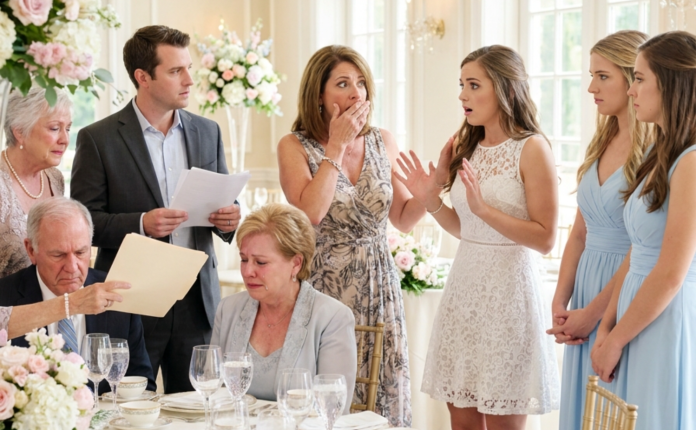
Rebecca lifted her wineglass.
“Three children,” she said. “That’s one way to describe it.”
The room became quiet.
My cousin Melissa stared down at her plate. My grandmother, who was eighty-four at the time, closed her eyes.
Mom placed both hands on the table.
“Please don’t do this tonight.”
Rebecca looked directly at me.
“Has nobody ever told Sophie why she looks exactly like me?”
I felt every person at the table turn toward me.
I thought she was making one of her usual inappropriate jokes.
I forced a smile.
“We don’t look that much alike.”
Rebecca tilted her head.
“We have the same eyes.”
Mom stood.
“Rebecca, stop.”
“The same nose,” Rebecca continued. “The same hair. Even the same way of getting quiet when everyone else is lying.”
Dad walked toward her.
“You need to leave.”
Rebecca ignored him.
She looked at me and said, “You’re thirty-two years old. Don’t you think you deserve to know who your real mother is?”
For a moment, I did not understand the sentence.
I looked at Mom.
Her face had gone completely white.
Dad grabbed Rebecca’s chair and pulled it away from the table.
“That’s enough.”
Rebecca stood, knocking over her wineglass.
Red wine spilled across the white tablecloth.
Then she said the words that split my life into before and after.
“I’m your mother, Sophie.”
Nobody laughed.
Nobody denied it.
That was how I knew.
I stared at my mother, the woman who had packed my school lunches, stayed beside me when I had pneumonia, helped me choose my wedding dress, and called me every Sunday.
“Tell me she’s lying,” I said.
Mom’s lips moved, but no sound came out.
Dad looked at the floor.
My brothers stared at our parents.
Nathan spoke first.
“What is she talking about?”
Rebecca began crying.
“I had Sophie when I was seventeen.”
Mom rushed toward her.
“You promised.”
“I was a child,” Rebecca shouted. “You all decided everything for me.”
My grandmother said Rebecca’s name sharply.
Rebecca pointed at her.
“You don’t get to silence me again.”
Dad tried to lead Rebecca toward the door.
She pulled away.
“Sophie deserves the truth.”
“I asked for the truth thirty seconds ago,” I said. “Nobody answered me.”
Mom turned toward me.
Her eyes were full of tears.
“Sophie, please. Let’s go somewhere private.”
“No.”
The word came out louder than I expected.
“If this is true, everyone in this room already knows more about my life than I do.”
My grandmother looked away.
That was when I understood that this was not a secret shared by two or three people.
Several older relatives knew.
Some of them had watched me grow up.
They attended my birthdays, graduation, and wedding. They listened while I talked about inheriting my mother’s smile and my father’s stubbornness.
All those years, they had known.
I looked at Mom again.
“Is Rebecca my biological mother?”
She began to sob.
“Yes.”
My father sat down as if his legs had stopped working.
My brothers started asking questions at the same time.
I barely heard them.
The room felt too warm. The lights seemed too bright.
Rebecca stepped toward me.
“I wanted to tell you.”
I moved away.
“Do not touch me.”
Her face collapsed.
Mom reached for my hand.
I moved away from her too.
“You told me I was born at St. Mary’s Hospital.”
“You were.”
“You told me you were in labor for fourteen hours.”
Mom covered her mouth.
I remembered hearing that story every birthday.
Dad always joked that I had been stubborn before I was even born.
I looked at him.
“Were you there?”
He shook his head.
“I arrived afterward.”
“You told me you held Mom’s hand.”
“I held Diane’s hand while we waited.”
The sentence was technically true.
That somehow made it worse.
The stories had been constructed from carefully selected pieces of truth.
Rebecca wiped her face.
“I didn’t give you away because I didn’t love you.”
“Stop,” Mom said.
“You took her,” Rebecca replied.
“I raised her.”
“She was mine first.”
Dad stepped between them.
“Sophie is not property.”
Every person in the room fell silent.
I looked around at my relatives.
Some were crying.
Others seemed fascinated, as if they were watching a family drama instead of the collapse of my identity.
I picked up my purse.
Dad asked where I was going.
“I don’t know.”
My husband, Daniel, followed me outside.
He had said nothing because there was nothing useful to say.
We reached the car before Mom came running after us.
“Sophie, please wait.”
I turned around.
“How long were you planning to keep this from me?”
She stopped.
That was the first question she could not avoid with tears.
“I don’t know.”
“You had thirty-two years.”
“We were trying to protect you.”
“From what?”
She looked back toward the house.
“From all of this.”
I got into the car.
As Daniel drove away, I looked through the rear window.
Mom stood in the driveway.
Rebecca appeared in the doorway behind her.
For the first time in my life, I looked at both women and had no idea which one I belonged to.
Part 2: The Story Everyone Knew Except Me
Daniel and I spent the night at a hotel.
Our home was only twenty minutes away, but I could not bear the thought of my family appearing at our door.
My phone rang constantly.
Mom called twelve times.
Dad called six.
Rebecca sent more than thirty messages.
My brothers created a group chat demanding answers.
I turned off my phone.
That night, I barely slept.
I kept thinking about small things.
My mother never had photographs of herself pregnant with me.
She said she hated cameras because she had gained weight.
There were no pictures from the hospital.
She said the camera had been stolen from Dad’s car.
My birth certificate listed Diane and Michael Carter as my parents.
I had never questioned it.
Why would I?
The next morning, Daniel brought coffee and sat beside me.
“You don’t have to decide anything today,” he said.
“I don’t know what I’m deciding.”
“Who you want to speak to.”
“They all lied.”
“Yes.”
He did not soften it.
That was one of the reasons I married him.
My family tried to make painful truths easier by changing them. Daniel let them stay true.
I turned my phone back on and called my oldest brother, Nathan.
He answered immediately.
“Are you okay?”
“No.”
“Neither Luke nor I knew.”
I believed him.
Nathan was thirty-six and Luke was twenty-nine. Nathan had been four when I was born, too young to understand. Luke came later.
According to Nathan, our parents had told them the truth after I left the birthday dinner.
Rebecca became pregnant at seventeen.
She refused to identify the father.
Our grandparents were deeply religious and feared the scandal would damage the family’s reputation.
Mom was twenty-six and had recently suffered her third miscarriage.
She and Dad had been trying to have a child for five years.
Grandma proposed the solution.
Rebecca would leave town during the pregnancy and stay with relatives. After the birth, Mom and Dad would adopt the baby privately.
The family would tell everyone that Mom had been pregnant but had kept it quiet due to medical complications.
Because the family lived in a small community, Mom and Dad moved to another city before I was born.
By the time they returned two years later, most people accepted the story.
“Who knew?” I asked.
Nathan listed the names.
Grandma.
Grandpa, before he died.
Two great-aunts.
Our uncle Peter.
A family lawyer.
Possibly several older church friends.
Mom and Dad.
Rebecca.
At least nine people had protected the secret.
I asked why Rebecca agreed.
Nathan said there were two versions.
Mom claimed Rebecca never wanted to raise a child and willingly signed the adoption papers.
Rebecca claimed she was pressured, threatened, and told she would destroy my life if she kept me.
“Which one do you believe?” I asked.
“I don’t know.”
That became the answer to everything.
I called Dad next.
He asked to meet.
I told him to explain over the phone first.
He sounded exhausted.
“We loved you from the moment we knew you existed.”
“That was not my question.”
He paused.
“Rebecca was frightened. Your mother was grieving. Your grandparents were worried about what would happen.”
“What would happen to whom?”
“To everyone.”
That word was doing too much work.
“What did Rebecca want?”
“At first, she said she didn’t know.”
“And later?”
“She wanted to keep you.”
I closed my eyes.
Dad continued quickly.
“But she was seventeen. She had no job, no home, and no plan. The father was not involved.”
“So you took me.”
“We adopted you.”
“Did she freely agree?”
He was silent.
I asked again.
“Did Rebecca freely agree?”
“She signed the papers.”
“That is not the same thing.”
Dad admitted that Grandma had threatened to send Rebecca to a home for unwed mothers if she refused.
Grandma also told her she would receive no financial support.
Mom promised that Rebecca could remain in my life as an aunt.
According to Dad, Rebecca accepted that arrangement.
“Did she?”
“For a while.”
I remembered Rebecca at my childhood birthdays.
She always brought expensive gifts, even when she had little money.
She wanted to hold me in photographs.
Mom sometimes became tense when Rebecca hugged me for too long.
I had assumed they simply disliked each other.
“Why didn’t you tell me when I became an adult?”
Dad sighed.
“There was never a good time.”
“At eighteen?”
“You had just started college.”
“At twenty-one?”
“You were in a serious relationship.”
“At twenty-five?”
“You were planning your wedding.”
“At thirty?”
“Your mother had surgery.”
“There would always be a reason.”
“I know.”
“No, I don’t think you do.”
He began crying.
He said I was his daughter in every way that mattered.
I believed he loved me.
That was part of what made the lie unbearable.
I called Rebecca last.
She answered with, “My baby.”
I nearly hung up.
“Do not call me that.”
“I’m sorry.”
“Tell me what happened.”
Her version was harsher.
She became pregnant by a twenty-four-year-old married man named Robert Hayes.
He was a youth leader at the church her family attended.
When she told him, he denied the relationship and threatened to say she had pursued him.
Rebecca told Grandma.
Grandma blamed her.
The family hid the pregnancy to protect the church, the man, and their reputation.
Rebecca was sent to stay with an aunt three states away.
She said she wanted to keep me.
Grandma told her she would be homeless and that the state would eventually take the baby anyway.
Mom visited during the seventh month of pregnancy.
“She told me you would have a stable home,” Rebecca said. “She said I could watch you grow up.”
“Did you agree?”
“I was seventeen and terrified.”
“Did you sign the adoption papers?”
“Yes.”
“Did you understand them?”
“I understood that everyone would abandon me if I didn’t.”
I asked why she had waited thirty-two years.
Her answer was not simple.
At first, she was allowed to visit often.
Then she began calling herself “Mama” when we were alone.
Mom found out and limited contact.
When I was six, Rebecca threatened to tell me.
Grandma convinced her to wait until I was eighteen.
When I turned eighteen, Mom begged her not to interfere with college.
At twenty-one, Dad paid off some of Rebecca’s debts after she again threatened to tell me.
At twenty-five, Mom promised they would tell me after my wedding.
Every delay became another delay.
“Did they pay you to stay quiet?” I asked.
Rebecca began crying.
“Sometimes.”
The answer made me sick.
“You accepted money?”
“I was struggling.”
“You sold my truth.”
“No. It wasn’t like that.”
“What was it like?”
She had no answer that made it better.
I ended the call.
That afternoon, Mom sent me a photograph.
It showed her holding me as a newborn.
She looked younger than I had ever seen her. Her face was tired and full of love.
The message said:
Whatever else is true, this is true too.
I stared at the photograph for a long time.
She was right.
But so was Rebecca.
That was the problem.
The truth was not replacing one mother with another.
It was forcing me to accept that both women had loved me, lied to me, and used me to survive their own choices.
Part 3: The Records in the Locked Drawer
Three days after the dinner, I met my parents at their house.
Daniel came with me but waited in the living room while Dad, Mom, and I sat at the kitchen table.
The birthday decorations were gone.
A faint red stain remained on the white tablecloth where Rebecca’s wine had spilled.
Mom looked as if she had not slept.
She placed a wooden box in front of me.
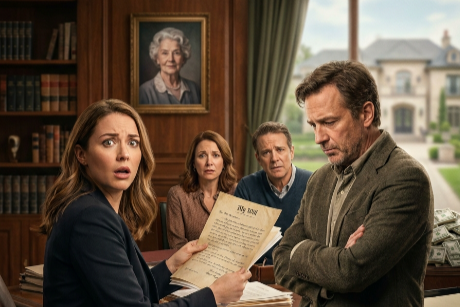
Inside were adoption records, hospital documents, letters, and photographs.
My original birth certificate listed Rebecca Anne Carter as my mother.
The space for the father’s name was blank.
My birth name had been Sophie Anne Carter.
Mom and Dad kept my first name when they adopted me.
“I chose Sophie,” Rebecca later told me.
That meant even my name came from a story nobody had shared.
The adoption papers were signed nine days after my birth.
Rebecca’s signature appeared shaky.
Grandma and Grandpa signed as witnesses.
I found a letter Rebecca had written to Mom from the hospital.
Please let me see her again before you leave. I know we agreed, but I need more time. I don’t think I can do this.
Mom said she never received it.
It had been found among Grandma’s papers after Grandpa died.
Grandma had intercepted it.
Another letter was from Mom to Grandma.
Rebecca is changing her mind. I cannot survive losing another baby. Please help her understand this is best.
I looked at Mom.
“You knew she wanted to keep me.”
Her face crumpled.
“I knew she was confused.”
“She asked for more time.”
“We were all emotional.”
“You wrote that you could not survive losing another baby.”
“I had already prepared for you. Your room was ready.”
“So because you wanted me, she could not?”
Mom stood abruptly.
“That is not fair.”
“No, it isn’t.”
Dad told us both to calm down.
I turned toward him.
“What did you want?”
He looked surprised.
Nobody had asked about his part.
“I wanted a family.”
“Did you know Rebecca was being pressured?”
“I knew your grandparents believed adoption was best.”
“That is not what I asked.”
Dad admitted he had doubts.
He worried the adoption would destroy the sisters’ relationship.
He worried I might eventually learn the truth from someone else.
Still, he went along with it because Mom was desperate to become a parent.
“I told myself we were saving you,” he said.
“From what?”
“Poverty. Scandal. An unstable home.”
“You did not know what my life with Rebecca would have been.”
“No.”
“You only knew what life with you could be.”
“Yes.”
For once, he did not hide behind a softer answer.
I continued looking through the box.
There were photographs of Rebecca holding me as a baby.
In some, she looked joyful.
In others, she looked as if she had been crying.
There were birthday cards she had written but never given me.
A card from my fifth birthday said:
You have your mother’s laugh. I wish you knew which mother I meant.
I had to stop reading.
Mom said she kept the cards because she could not destroy them.
“Why didn’t you give them to me?”
“Because they would have raised questions.”
“That was the point.”
She began defending herself.
She said Rebecca was unstable.
She reminded me of the drinking, the debt, and the disappearing.
“She was not capable of raising you.”
“Maybe not at seventeen.”
“She did not become more stable.”
“Did losing me contribute to that?”
Mom looked away.
The conversation became impossible after that.
Every question sounded like an accusation because most answers revealed a choice someone regretted.
Before leaving, I asked about Robert Hayes, my biological father.
Mom said he died seven years earlier.
He had remained married to the same woman and had three children.
My half-siblings.
I felt another piece of the floor disappear.
“Did he know I existed?”
“Yes.”
“Did he ever ask about me?”
Dad answered.
“Once.”
“When?”
“When you were about ten.”
“What did he want?”
“He was running for a position on the church board. He wanted confirmation that nobody would expose the affair.”
I laughed without humor.
“He wanted to know whether I was still a secret.”
Dad nodded.
I found Robert’s obituary online that evening.
It described him as a devoted husband, father, and respected leader in his community.
There was a photograph of him surrounded by his family.
I studied his face for signs of myself.
I found none.
The obituary listed his children: Matthew, Grace, and Olivia.
I located them on social media.
Matthew was forty.
Grace was thirty-seven.
Olivia was thirty-four, only two years older than me.
They had grown up with the father who denied me.
I did not contact them.
I did not know whether they knew about Rebecca or me.
Rebecca called the next morning and demanded to know what Mom had shown me.
I told her about the documents.
“She kept them?”
“Yes.”
“That’s rich.”
I asked about the letters.
Rebecca said she wrote dozens.
Some were returned unopened.
Others vanished.
Once, when I was twelve, she mailed me a letter explaining everything.
Mom intercepted it.
I remembered that year.
Rebecca suddenly disappeared for nearly eighteen months.
The family said she had moved to Arizona for work.
In reality, Mom and Dad had threatened to cut off contact permanently if she tried to tell me again.
Rebecca went into a severe depression and entered a treatment program.
“I’m not proud of everything I did,” she said. “But I never stopped loving you.”
“Why reveal it at Dad’s birthday?”
Silence.
“Why that way?”
She began to explain that she had been drinking.
I stopped her.
“You could have called me privately. You could have written a letter. You could have asked me to meet.”
“I was angry.”
“At whom?”
“At all of them.”
“So you used me to hurt them.”
“No.”
“That is exactly what happened.”
She started crying.
I felt no comfort in her tears.
Rebecca had wanted the truth exposed, but she had chosen the most destructive possible moment.
She had not considered what I needed.
She had considered what would hurt the family most.
For thirty-two years, everyone claimed their choices were made for me.
The adoption was for me.
The silence was for me.
The birthday confession was for me.
Yet not one person had asked what I wanted.