PART 1
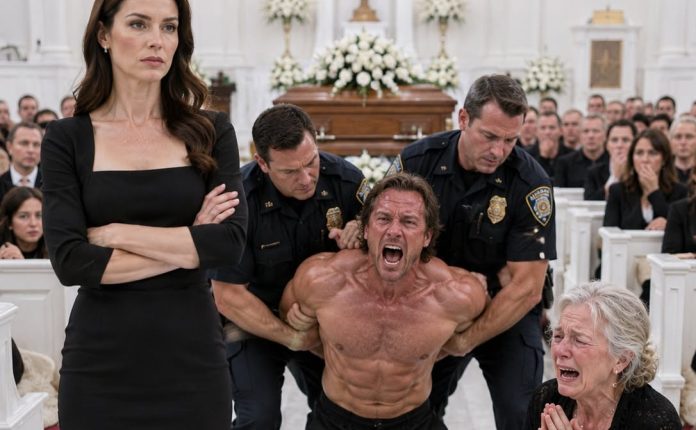
“Your wife and daughter are no longer part of this family,” my mother said from the living room window, holding a glass of wine while snow piled onto my wife’s shoulders outside.
I had imagined my return very differently.
For eighteen months, I had been deployed overseas with the U.S. Army. Eighteen months away from home. Away from our house in an upscale neighborhood outside Charlotte, North Carolina. Away from my wife’s laugh and the sweet smell of my newborn daughter after her evening bath.
I survived mortar attacks, roadside explosives, endless patrols, and sleepless nights by repeating one thought:
When I get home, Emily will open the door holding our baby.
But on that freezing December night, there was no welcome home.
A winter storm had delayed military flights across half the country. After landing in Charlotte, I borrowed a truck and drove as far as I could before fallen trees and ice blocked the roads.
The last few hundred yards, I walked.
My boots were covered in slush.
My duffel bag hung over my shoulder.
My heart pounded like a teenager’s.
Then I saw the suitcases.
Two of them.
Half-buried in snow.
And then I saw my wife.
Emily Carter.
She was curled against a porch column, her lips blue, her hair frozen against her face. In her arms, wrapped beneath a thin winter coat, was our four-month-old daughter, Sophie.
“Emily!”
I dropped my bag and rushed forward.
My knees hit the frozen concrete.
I tore off my gloves and checked her face, her hands, her neck.
Sophie let out a weak cry.
Barely a sound.
“Emily, look at me,” I said. “It’s me.”
Her eyes opened slightly.
“Jacob…”
I pulled off my military jacket and wrapped it around the baby.
“What happened?”
Her lips trembled.
“Your parents…”
She swallowed.
“They said we weren’t family anymore. They changed the locks.”
Something inside me froze harder than the snow around us.
“The house belongs to your father now,” she whispered.
At that moment, the front door opened.
Standing beneath the chandelier was my mother, Rebecca Hayes, wearing a silk robe.
Behind her stood my father, Richard Hayes, holding a whiskey glass.
He looked annoyed.
Like someone had interrupted dinner.
“Well,” he said. “The soldier finally made it home.”
I carefully lifted Emily into my arms.
Sophie cried softly against my chest.
Anger slammed into my ribs.
But the military had taught me one thing:
The first person to lose control loses the fight.
“Move.”
My mother lifted her chin.
“That woman has been poisoning you against us. She spent your money, broke every rule in this house, and tried to steal company documents.”
Emily barely managed a whisper.
“You emptied the accounts…”
My father laughed.
“What accounts? Everything you have came from this family.”
I stepped toward the doorway.
My father tried to block me.
One look stopped him.
He moved aside.
I carried my wife through the foyer, leaving melted snow across the Italian marble floors my mother loved showing off to guests.
“You threw my entire world into the snow,” I said quietly.
Neither of them spoke.
I looked directly at them.
“Now I’m going to recover every dollar, every key, and every secret you stole.”
My father smirked.
“You’re a government-paid sergeant. Don’t threaten people who can destroy you with a single phone call.”
That was his first mistake.
Upstairs, I laid Emily on the bed and checked Sophie.
Her tiny hands were ice cold.
But she was breathing.
I called 911.
While waiting for paramedics, I heated towels, wrapped them in blankets, checked Emily’s pulse, and refused to let my parents come near either of them.
“You’re overreacting,” my mother said from the doorway.
“They were only outside a few minutes.”
“The doctor can tell us how many minutes it takes for a baby to die from exposure,” I replied.
She went silent.
Twelve minutes later, the ambulance arrived.
The paramedics confirmed hypothermia.
Emily explained that she’d been outside nearly two hours.
My mother covered her mouth.
Not because she felt guilty.
Because the neighbors had started watching.
“Oh wonderful,” she muttered. “Now everyone will talk.”
I didn’t answer.
After the ambulance left, my father held out his hand.
“Give me the house keys. Tomorrow we’ll sit down and discuss this like men.”
Instead, I picked up my soaked duffel bag.
Hidden beneath the lining was a waterproof folder sealed with black tape.
Inside were bank statements.
Property records.
Corporate documents.
Financial audits.
Email archives.
Military investigation reports.
For six months, while my parents believed I was trapped halfway around the world, I had quietly tracked every transaction.
The house wasn’t my father’s.
The company wasn’t either.
And before sunrise, my parents were going to learn that the son they called soldier boy had returned home carrying far more than a duffel bag.
But when I opened the folder, I discovered something that wasn’t mine.
A sealed envelope.
Someone had slipped it inside.
Across the front, written in black marker:
FINAL EVIDENCE AGAINST EMILY
My stomach tightened.
Inside was a lie so perfect it could destroy my wife before I had the chance to save my family.
PART 2
At Charlotte Medical Center, the doctor didn’t waste time.
“If your wife and daughter had remained outside another hour,” he said, “we’d be having a very different conversation.”
I sat beside Emily’s hospital bed.
She was covered in warming blankets.
An IV ran into her arm.
A bruise marked her wrist.
Sophie slept inside a heated bassinet, her cheeks slowly regaining color.
“Tell me everything,” I said.
Emily swallowed.
“Three weeks after Sophie was born, your mother moved in.”
My jaw tightened.
“Then your father started bringing company files into the house. They went through your mail. Your office records. Your laptop backups.”
“What else?”
“They took my debit card. Said I couldn’t be trusted with money.”
I felt anger building again.
Emily continued.
“They showed me a power of attorney with your signature. It said your father controlled your accounts and the house.”
“I never signed one.”
“I know.”
Tears filled her eyes.
“But they knew things from our private messages. Things only you and I should have known.”
She looked away.
“They said you were tired of me. That you didn’t want to come home.”
My chest tightened.
Emily’s voice cracked.
“They even said Sophie wasn’t your daughter.”
I reached into my jacket pocket.
The envelope.
Inside was a DNA report.
According to the paperwork, Sophie wasn’t mine.
It looked authentic.
Official seals.
Laboratory signatures.
Verification numbers.
And a handwritten note from my mother.
“When you finally open your eyes, you’ll understand why we had to remove her.”
It was a trap.
A very carefully built trap.
“Did they hurt you?” I asked quietly.
Emily hesitated.
Too long.
“My mother didn’t.”
I stared at her.
Emily lowered her eyes.
“Your father didn’t either.”
Another pause.
Then:
“Your mother shoved me when I tried to get Sophie’s winter coat.”
The room went silent.
“She said if I didn’t leave, she’d call Child Protective Services and report me as an unfit mother.”
I kissed Emily’s forehead.
“You’re not alone anymore.”
The next morning, I returned to the house with my phone secretly recording.
I found my mother stuffing Emily’s clothes into trash bags.
My father was in his office speaking on speakerphone.
“Call an emergency board meeting,” he ordered.
“My son came back unstable. We need to declare him mentally incompetent before he does something stupid.”
I walked inside.
Neither of them had heard me.
“You should be at the hospital,” my mother snapped.
“You should explain why $1.8 million disappeared from my deployment account.”
For the first time, she looked nervous.
“I don’t know what you’re talking about.”
My father emerged from the office.
“That money was invested.”
“You transferred it to Blue Ridge Holdings.”
His expression flickered.
Blue Ridge Holdings was a shell company registered under his accountant’s brother.
“You’ve been snooping,” he said.
“I’ve been auditing.”
He laughed.
“I built Hayes Construction from nothing.”
“No,” I replied.
“My grandfather built it.”
Silence.
“He left it to me,” my father said.
“He left you forty-nine percent.”
The room froze.
I placed a certified letter on his desk.
My grandfather had placed fifty-one percent of the company into a trust under my name.
Control transferred to me on my thirty-fifth birthday.
I had turned thirty-five while overseas.
My father had hidden every notification.
“Since last Tuesday,” I said, “I own the majority of this company.”
He ripped the letter in half.
“One piece of paper changes nothing.”
“It changes who can order a forensic audit.”
That afternoon, the board meeting began.
My father arrived confident.
Gray suit.
Personal attorney.
Perfect smile.
My mother sat beside him looking like a victim.
“Ladies and gentlemen,” my father announced, “my son is suffering from combat stress. His wife manipulated him. She attempted to steal company documents.”
The attorney displayed the forged power of attorney.
Then the fake DNA report.
Emily joined by video from the hospital.
When my mother saw her, she smiled.
“Poor thing,” she said. “She doesn’t even know who Sophie’s father is.”
Then the boardroom doors opened.
And everything changed.
A trust representative entered.
A forensic accountant.
Two military investigators.
And the company’s outside counsel.
The accountant connected her laptop to the projector.
Six years of financial records filled the screen.
Fake vendors.
Duplicate invoices.
Hidden accounts.
Payroll fraud.
Tax theft.
And my deployment money flowing directly through Blue Ridge Holdings.
My father stopped smiling.
But my mother leaned toward me and whispered:
“Even if you find the money, you’ll never prove we wanted them dead.”
I touched the phone recording in my pocket.
And at that exact moment, a text message arrived from the hospital.
Jacob, the DNA test was fake. But the lab found something much worse.