The heavy, soundproofed doors of the Paris media summit were a marvel of modern architecture, specifically designed to block out the chaotic, relentless noise of the bustling French capital below. Inside the conference room, the atmosphere was one of refined intellectual intensity, but no amount of acoustic paneling or thickness of reinforced glass could block out the sudden, violent vibration of my cell phone against the polished oak table.
It was exactly 8:00 AM in France. I was an investigative journalist, a veteran of exposing corporate malfeasance and political rot, and I was right in the middle of moderating a high stakes keynote panel regarding global corruption and digital privacy. I was sitting under the bright stage lights, listening to a whistleblower from Zurich, a notebook open in front of me.
I usually ignored my phone during these panels because in my line of work, focus is everything. But out of the corner of my eye, the screen illuminated and I saw the caller ID flash across the cracked glass.
“Principal Henderson – Oakridge Elementary.”
My heart performed a sharp, erratic flutter against my ribs while a cold prickle of unease washed over my skin. A school principal does not call a parent who is overseas on assignment unless every other local emergency contact has failed.
I stood up so quickly my chair scraped loudly against the floorboards and I excused myself abruptly, offering a hurried, unconvincing apology to the microphone before leaving my esteemed colleagues and a room full of international journalists staring in confusion. I pushed through the heavy doors and stepped out into the quiet, heavily carpeted hallway where the silence felt absolutely oppressive.
“Hello, Mrs. Henderson?” I answered, my voice tight, my mind already racing through a dozen mundane possibilities to stave off panic. “Is everything alright and what time is it back in the quiet suburbs of Vermont?”
“Mr. Hayes,” the principal’s voice came through the earpiece, she sounded remarkably controlled while attempting a professional veneer, but beneath that thin layer of composure, I could hear a distinct, vibrating thread of absolute, unadulterated panic. “It is two o’clock in the morning here, Benjamin. I am calling you from my office.”
I stopped walking because my shoes felt glued to the patterned carpet, and the ambient, distant noise of the hotel hallway faded into a dull, rushing roar in my ears. “Two in the morning?” I echoed, the words feeling foreign and wrong in my mouth. “Why are you at the school, Mrs. Henderson, and where is Sophie? She is supposed to be with my wife at her grandfather’s sprawling estate.”
“Sophie is here with me, Benjamin,” Mrs. Henderson said softly, her voice cracking on the final syllable.
The air vanished from my lungs in a single, violent rush and a jagged, freezing shard of ice slid down my throat, lodging securely and painfully in the center of my chest. The world began to tilt on its axis.
“She just showed up at the school front entrance,” Mrs. Henderson continued, her breath shuddering over the international connection. “The night watchman found her banging her fists against the reinforced glass doors, but Benjamin, she is barefoot and she is bleeding heavily from the soles of both feet. She is freezing cold, shivering so hard we can barely keep a blanket on her, and she is in a severe state of clinical shock, refusing to speak because her vocal cords seem completely locked.”
“Is she safe?” I shouted into the phone, the seasoned, objective investigative journalist evaporating into the ether, replaced instantly by a terrified, desperate father. “Where is she right now and did you call the police?”
“The police are with her now in the nurse’s office, and paramedics are actively wrapping her in heated blankets,” Mrs. Henderson reassured me quickly, trying to de escalate my rising hysteria. “Physically, she is secure, but Benjamin, she will not talk and the officers tried to ask her what happened, who she was running from, so we gave her a notepad and a pen to see if she could at least write it down.”
“What did she write?” I demanded, my hands shaking so violently I almost dropped the sleek metal device, pressing it harder against my ear, desperate for the answer and terrified to hear it.
Mrs. Henderson took a shaky, profound breath and I could hear the rustle of paper over the line. “She just keeps writing the exact same sentence over and over again, filling the whole page.”
“What did she write, Diane?”
“Grandpa hurt me.”
The hotel hallway spun into a blur of beige and gold while my knees weakened. My seven year old daughter, my quiet, sweet, incredibly smart little girl who loved collecting smooth stones and reading books about space, had somehow fled her grandfather’s massive, highly secured, gated suburban estate in the middle of the freezing Vermont night.
She had navigated the heavy security, run three miles barefoot over unforgiving asphalt, broken glass, and sharp gravel, bypassing dozens of warmly lit houses just to seek refuge at the only place outside her home she felt safe.
“I am on my way,” I choked out, “do not let her out of your sight.”
I hung up the phone, bolted back into the conference room ignoring the shocked faces of the panelists, grabbed my leather laptop bag from the table, and sprinted for the elevators without offering a single word of explanation to my team. As the glass elevator descended rapidly toward the lobby of the French hotel, my fingers fumbled frantically over the screen of my phone to dial my wife, Abigail.
She was supposed to be staying at her father’s sprawling estate in the affluent suburbs for the weekend with Sophie while I was overseas. It was supposed to be a quiet weekend of bonding.
Ring, ring, ring. “Hi, you’ve reached Abigail, I can’t come to the phone right now, leave a message.”
I cursed loudly, the sound echoing in the empty elevator car, and I dialed her number again, my thumb pressing the screen so hard it almost cracked. Voicemail again. Where the hell was she? How could a mother sleep through her child fleeing the house into the freezing night?
My mind spinning with dark possibilities, I pulled up the contact for my father in law, Senator William Fletcher.
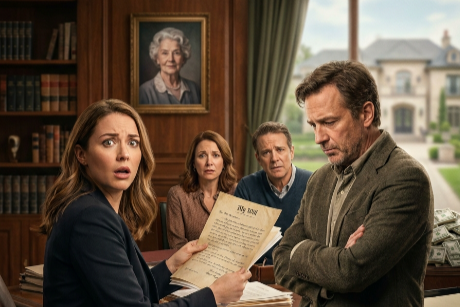
William was a prominent, incredibly powerful, and deeply entrenched politician in the state of Vermont. He was currently gearing up for a ruthless, highly publicized gubernatorial run. He was a man obsessed with optics, control, and the immaculate preservation of his own formidable legacy.
He tolerated my presence in the family primarily because my journalism awards looked good in his campaign brochures, a progressive badge of honor he could flaunt. But behind closed doors, he clearly viewed my analytical, probing nature as a liability because I was a man who dug up secrets while he was a man who buried them.
The line connected and he answered on the second ring. His voice was smooth, deep, and entirely untroubled, echoing with the unearned confidence of a man who owned the world.
“Benjamin,” William rumbled, a hint of patronizing amusement in his tone. “It’s a bit early for international calls, isn’t it, and I thought you were saving the world in Paris? Is everything alright?”
“William, where is Sophie?” I yelled, completely abandoning the polite, tense political theater we usually engaged in. “She walked to her school, she is bleeding from her feet, and the principal called me saying she wrote that you hurt her.”
“Benjamin, stop,” William interrupted.
His tone didn’t shift into the frantic panic of a grandfather learning his granddaughter was hospitalized. It dropped into a chilling, dismissive, and incredibly cold register. It was the exact voice of a seasoned, untouchable politician shutting down a hostile reporter at a press conference.
“I do not interfere in your parenting choices, Benjamin,” William stated flatly, his words clipped and measured. “And I certainly do not interfere with the dramatics of your child, so if the girl decided to wander off in the middle of the night to throw a tantrum because her mother told her to go to bed, that is a reflection on your lack of discipline, not me.”
“She ran three miles barefoot, William, and she wrote that you hurt her.”
“I am in the middle of a highly sensitive, critical campaign cycle,” William continued, his voice rising just enough to drown me out, entirely unbetted by the accusation. “I will not have police cars with flashing lights showing up at my front gates over a spoiled child’s bad behavior because it is terrible for optics. Handle it yourself, Benjamin, and control your daughter before she creates a scandal.”
Click.
He hung up on me. I stared at the phone screen as the elevator doors pinged open into the lavish, marble floored lobby. The sound of the busy hotel rushed in, but I was frozen. A seven year old child had fled his house, bleeding into the freezing night, and the man who was supposed to protect her called it dramatics.
I realized then, with a horrifying, absolute certainty that turned my blood to ice, that my daughter hadn’t run away from a bad dream. She had run away from a monster.
I immediately dialed my older sister, Rachel. She lived in a quiet neighborhood twenty minutes outside of the main city. She was a tough, no nonsense pediatric nurse and the only person I trusted absolutely.
“Rachel, wake up,” I commanded the second the line connected, not giving her time to utter a sleepy greeting.
“Benjamin? What time is it—”
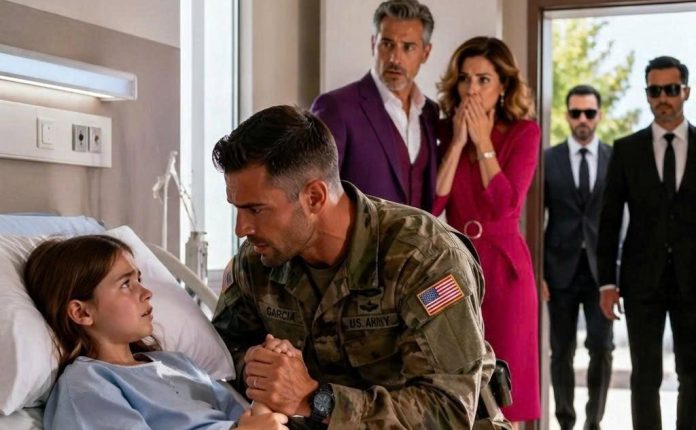
“Get your keys and get to Oakridge Elementary right now,” I ordered, my voice shaking with a terrifying intensity. “Sophie is there, she is hurt, and they are transferring her to Mountain View Memorial Hospital. Do not, under any circumstances, let Abigail or William near her until I get there. If they show up, you tell the police they are the primary suspects in an assault and you stand between them and that door.”
“I am in my car,” Rachel said, the sleep instantly vanishing from her voice, replaced by a fierce, primal, protective instinct. “I won’t let them touch her, Benjamin, I swear it, just get on a plane.”
I ran out of the hotel, hailed a black cab, and offered the driver double his fare to break every speed limit to Charles de Gaulle Airport.
Seven hours. Seven agonizing, claustrophobic, torturous hours trapped in a pressurized metal tube flying over the dark expanse of the Atlantic Ocean. I had managed to secure a seat on the very first available flight out of Paris, but boarding the plane felt like stepping into a sensory deprivation chamber.
The plane’s internet was spotty at best, cutting out every few minutes, leaving me entirely cut off from the world. My mind was left entirely alone in the dim cabin lighting to construct a thousand horrific, vivid scenarios of exactly what Senator William Fletcher had done to my little girl.
I sat by the window, staring out at the impenetrable blackness, gripping the armrests until my knuckles turned stark white. I pictured Sophie crying, I pictured the harsh, cold asphalt tearing at her bare soles, and I tried to imagine the absolute, suffocating terror she must have felt, a tiny girl in a nightgown, running alone in the dark.
My thoughts drifted to Abigail. We had been married for ten years. When we met, she was a passionate, idealistic political science major who claimed she wanted to use her family’s influence to dismantle corrupt systems. But over the last few years, as her father’s political ambitions grew, I watched a slow, insidious change creep over her.
She became obsessed with the campaign, the optics, and the legacy. She started defending her father’s more ruthless tactics, claiming the ends justified the means. Had she changed so much that she would ignore a crisis?
I squeezed my eyes shut, a headache pounding behind my temples, knowing I couldn’t afford to fall apart. I needed to be the investigative journalist who dismantled empires. If William had hurt my daughter, I was going to burn his political kingdom to the absolute ground.