My name is Rachel, and for most of my life, my father was little more than a shadow that lingered at the edges of old photographs and unanswered questions. He abandoned me when I was only three years old, disappearing without a goodbye, explanation, or promise to return. My mother became both parents overnight, working endless hours to keep a roof over our heads and food on the table. She waitressed during the day, cleaned offices at night, and somehow still found the strength to smile when she came home. Whenever I asked about my father, she never spoke with hatred. Instead, she would simply say, “Some people leave because they’re broken inside.” As a child, I accepted that answer. As an adult, I realized she was shielding me from a far harsher truth.
For years, I learned to live without expecting anything from him. I graduated school, built a career, got married, and created a stable life despite the hole he left behind. Eventually, I stopped imagining dramatic reunions or heartfelt apologies. Then, on a rainy Tuesday evening, twenty-seven years after he vanished, my doorbell rang. Standing on my porch was a frail, aging man with gray stubble, sunken cheeks, and trembling hands. For a moment, I didn’t recognize him. Then I saw the familiar eyes from old photographs hidden in my mother’s closet. He looked exhausted and sick. Quietly, he asked if I was Rachel. The sound of his voice sent a wave of emotions through me—anger, confusion, curiosity, and a strange longing I thought I had buried years ago.
He explained that he was dying from terminal lung disease. He had no insurance, no savings, and no family willing to take him in. According to him, he had nowhere else to go. Every sensible person in my life warned me not to trust him. My friends thought I was making a terrible mistake. Even my husband gently reminded me that people do not abandon their children for decades without serious reasons. Yet despite every warning, I opened my door and invited him inside. A part of me still wanted something I had never truly had—a father. No matter how old I became, there was still a child inside me hoping for approval, affection, and a chance to heal the wound his absence had left behind. That hope clouded my judgment more than I realized.
During the first few weeks, things seemed surprisingly positive. He cried while apologizing for the years he missed and claimed leaving had been the greatest regret of his life. He shared stories about places he had lived, mistakes he had made, and hardships he had endured. Some nights, we sat at the kitchen table until dawn, talking about life and lost time. For the first time, I allowed myself to believe reconciliation might actually be possible. I paid his hospital bills, purchased his medications, cooked his meals, and stayed awake through nights when he struggled to breathe. Caring for him felt like investing in a future relationship that had never existed. Every act of kindness carried the hope that perhaps we could rebuild what had been broken, even if we had started decades too late.
Gradually, however, small cracks began appearing in the picture he had painted. He started asking questions that felt oddly specific. He wanted to know the value of our house, whether my husband and I had life insurance, and whose names were listed on property documents. At first, I dismissed the questions as harmless curiosity from an elderly man confronting his mortality. But the frequency of those conversations made me uncomfortable. Then one evening, while carrying a cup of tea toward his room, I heard him speaking on the phone through a partially open door. His voice was low and secretive. “She won’t check until I’m gone,” he whispered. “By then the transfer will already be finalized.” The words sent an icy chill through my body, and for the first time, genuine suspicion took root.
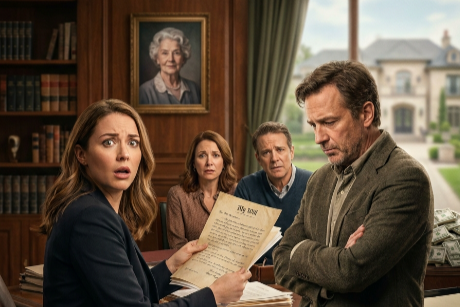
That night, after he fell asleep, I wrestled with my conscience before doing something I never imagined I would do. I searched through his coat pocket. Inside, I found a thick envelope stuffed with documents. My hands shook as I began reading. The pages revealed that he had secretly arranged paperwork naming himself as a partial beneficiary of assets connected to my estate, including interests tied to our home, financial accounts, and insurance policies. Hidden among legitimate hospital forms were documents I had unknowingly signed, trusting him completely. The betrayal hit me like a physical blow. I felt sick as I realized that while I had been sacrificing my time, money, and emotional energy to care for him, he had been quietly positioning himself to benefit financially from my trust and generosity.
As I continued reading, the truth became even uglier. Tucked among the paperwork were copies of letters exchanged between my father and a woman named Denise. Through those letters, the entire story unraveled. Denise had been his longtime girlfriend and financial caretaker. When she discovered he was terminally ill and drowning in debt, she left him. Suddenly abandoned and desperate, he needed a new source of support. One letter contained a sentence that shattered any remaining illusion I had about his motives: “You always said Rachel would eventually feel guilty enough to take care of you. Looks like you were right.” I sat on the kitchen floor until sunrise, crying quietly. Every apology he had offered, every tear he had shed, and every expression of regret suddenly felt calculated and manipulative.
The following morning, I confronted him directly. At first, he denied everything. Then he attempted to minimize his actions, claiming he had only been protecting himself. Eventually, his patience disappeared, and so did the mask he had been wearing. With an irritated sigh, he admitted he needed financial security and believed I could provide it. When I accused him of manipulating me, he exploded. He insisted that because he was dying, his actions should be excused. Then he said something I will never forget: “You owe me something. I’m your father.” Hearing those words clarified everything. Fatherhood is not simply biology. It is responsibility, sacrifice, love, and presence. He had abandoned those obligations nearly three decades earlier. The title he demanded had never been earned through his actions.
When I told him he needed to leave, his demeanor transformed completely. The remorseful old man disappeared, replaced by someone angry, entitled, and cruel. He accused me of being selfish and heartless, just like my mother. He threatened lawsuits and insisted that after everything he had suffered, he deserved compensation. The absurdity of hearing a man demand payment for abandoning his own child was almost surreal. Yet strangely, that confrontation brought a sense of clarity. For years, I had clung to fantasies about who he might become if given another chance. In that moment, those fantasies died. My husband immediately contacted attorneys, changed account access, and reviewed every document. Fortunately, because of evidence showing manipulation and his medical condition, most of the paperwork could be legally challenged and reversed before any lasting damage occurred.
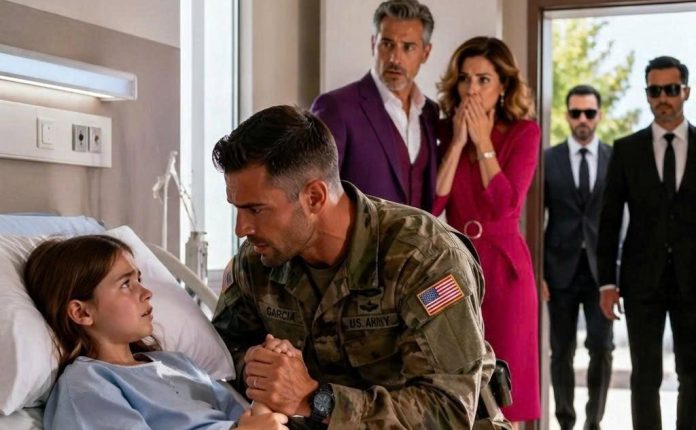
Within two weeks, my father was transferred to a state hospice facility. The months that followed were emotionally complicated. I did not miss him, but I mourned the dream of having a father who genuinely loved me. Eventually, a hospice nurse called to say he was asking for me repeatedly. Against my better judgment, I visited him. He looked small, weak, and frightened in the hospital bed. For a brief moment, compassion threatened to erase my anger. Then he grasped my hand and whispered that I still owed him forgiveness. I looked at him quietly before answering, “No. What I owed myself was finally learning the difference between love and guilt.” He died three days later. Almost no one attended his funeral. The silence surrounding his burial felt like the most honest reflection of the life he had chosen to live.
Last year, my husband and I welcomed our first daughter into the world. Holding her in my arms changed the way I viewed everything that had happened. When I rock her to sleep, I often think about how easily people confuse obligation with love and guilt with compassion. My father taught me a painful lesson, though not the one he intended. I learned that caring about someone’s suffering does not require sacrificing your own future. You can show kindness without surrendering your boundaries. Most importantly, I learned that loving a parent does not mean rescuing them from consequences they created themselves. Sometimes the bravest thing an abandoned child can do is stop carrying responsibilities that never belonged to them and finally choose their own peace instead.